

Poutnov Ruin
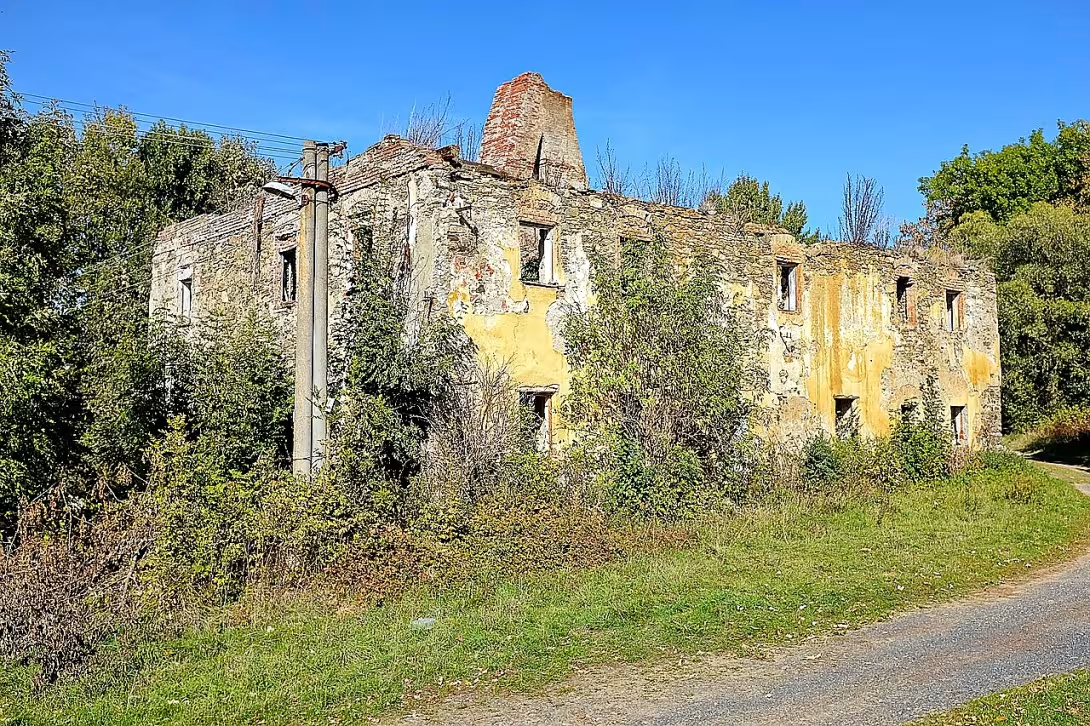
Poutnov is a ruin of a Baroque chateau in the village Poutnov northwest of Teplá in the district of Karlovy Vary in Cheb. The building was built in the 17th century and today it bears witness to changes in the mansion in this location.
The history of the mansion here goes back to the Middle Ages. The first written mention dates back to 1456, when there is evidence of a fortress in the property of Dyez Hofer. However, it is assumed that some construction was here in the 14th century. In the first half of the 17th century the village was divided between two owners. While Jiří Kfelíř of Zakšov was housed in the house, the House of Schindel of Hirschfeld built a Baroque chateau on the edge of the old sailing court after 1627.
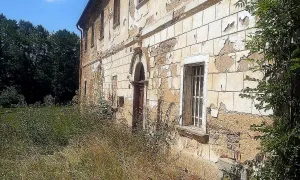
The chateau is a rectangular one-storey building with a smooth facade, broken by a crown ledge and modern windows. On the ground floor there is an entrance hall with stairs to the first floor, kitchen and corridor. Two rooms are located on both sides of this section. The original architectural elements are preserved in three ground floor spaces and part of the 18th century window or door lining.
The property has changed many times over time. The House of Schindels held the chateau until the 1940s, then was acquired by the Elite captain Jan Ott z Ottilienfeldu and his son Karel. In the short term, between 1803 and 1804, the chateau was owned by the Pilgrims before it was bought by Johann Weiss of Cheb. Subsequently, the assets were exchanged between Karl of Ottilienfeld, Jan Knoll, Egid Sölch and Albrecht Dejm of Srtej. From 1865 it belonged to Alfred Beaufort-Spontin and his descendants until the 20th century.
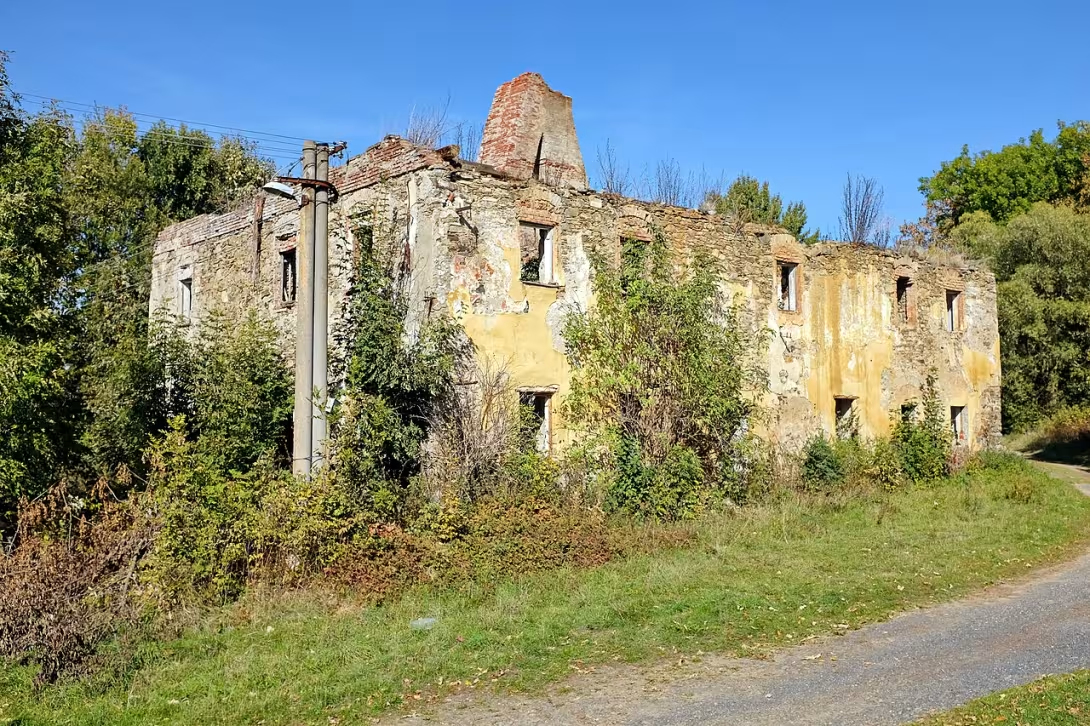
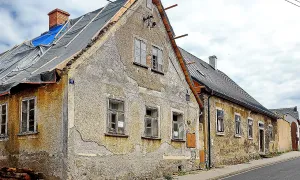
In modern times, the building stopped serving as a mansion and turned into a residential house. After World War II, it was inhabited in the building until the 1980s. After that, the house was abandoned and began to decay. Due to flowing water, a significant degradation of the building has occurred. It damaged the roof, the perimeter wall and the ceiling on the first floor, which led to today's state of ruin.
Poutnov offers visitors a view of the remains of Baroque architecture in its current, crude form. It is a place where one can monitor the gradual decomposition of a building that once represented the status of local noble families. The visit to this building allows you to study closely the remains of the historical lining and vault in a quiet environment of the forgotten mansion.
Then and now
Drag the slider to compare how the landmark may have looked when it was built with the view today.
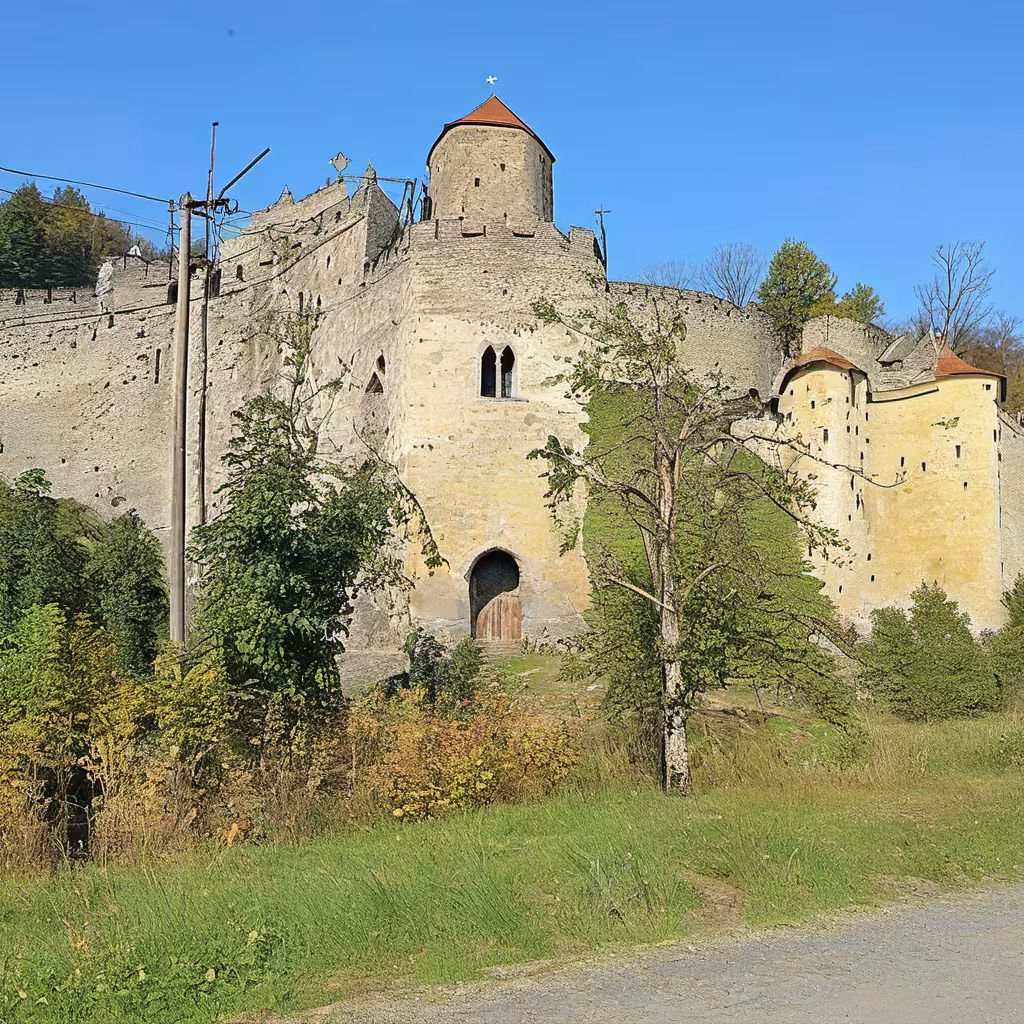
The historical appearance on the left is an AI-generated visualisation and serves as inspiration only.
Historical milestones
- 1456
- first written mention of the fortress in Poutnov
- 1627
- the position of the Baroque Schindela Chateau from Hirschfeld
- 1803
- the chateau bought by the poutnovsky subjects
- 1865
- Alfréd Beaufort‑Spontin acquired the property and his family held it until the 20th century
Architectural development
The original medieval fortress was replaced by a one-storey Baroque building with a smooth facade and a full vaults in three ground rooms. There were no significant modifications in the 19th century, but after World War II, the house was partly converted into a living space. Since the 1980s, the condition deteriorated by the influence of flowing water, which damaged the groves and walls.
Historical events
1456 - first written mention of the fort in Poutnov; 1627 - Schindel built a Baroque chateau; 1803 - Poutnovsky subjects bought the chateau; 1945 --1980 - the chateau was inhabited until the 1980s, then abandoned.
Owners
Schindeles (until the 1840s), Jan Ott z Ottilienfeldu and son Karel (from 1800 years), Poutnov subjects (1803 Actions 1804), Johann Weiss (1804), Jan Knoll, Egid Sölch, Albrecht Dejm from Střítež, Alfréd Beaufort‑Spontin (from 1865 to the 20th century).
Points of interest
- The first written mention of the dyez hofer's estate is from 1456. - The Baroque chateau was built by the Schindel family of Hirschfeld after 1627. - The original elements are preserved in three ground floor areas and part of the 18th century lining. - Between 1803 and 1804 the chateau was briefly owned by local subjects. - The building served as a residential house until the 1980s, then began to decay.
Guide
This guide is narrated by a synthetic voice generated by artificial intelligence.
Show guide text
This text was created by artificial intelligence and has not been editorially reviewed. It may contain inaccuracies.
Welcome to the village of Poutnov at Teplá. You are standing before the silent witnesses of ancient times, the ruins of the former Baroque chateau. Now, if you look around you, you will see traces of a building that once dominated this landscape, but now it is slowly subject to time. Perhaps at first glance you will be interested in the very feeling of emptiness and peace surrounding this place. It is a space where history meets nature and where every stone tells its own story of the rise and subsequent decline of noble settlements in our region.
Let us now look together at how this place was created and who once lived here. To understand the current state, we need to go back far back in time. The first written mention of the fortress in Poutnov dates back to a thousand four hundred fifty-six when it was owned by a man named Dyeze Hofer. At that time it was therefore a much more modest fortified mansion, which was mainly used for the protection and management of nearby land. But the real change came much later, namely after a year of six hundred twenty-seven. It was at this time that members of the House of Schindel of Hirschfeld built a Baroque chateau, which replaced the older medieval fortress. This family probably wanted to express its power and social position, which is why there was a building corresponding to the fashion trends and requirements for comfort and representativeness.
Now that you're standing in front of these remains, let's try to focus on what really survived from that time. Even though the chateau is a ruin today, there are still details that carry us back to the eighteenth century. Please pay attention to the lower parts of the building. If you look at the ground floor, notice that in several places there are still preserved rolled vaults. These round ceilings are proof of the craftsmanship of the builders while showing how the building was constructed to last centuries. In addition to these vaults, you can see in some parts the remains of the 18th century lining. Take a closer look at the frame of the doors or windows where traces of the stone working at the time are still visible. These tiny details are today the most valuable fragments that allow us to imagine what the chateau looked like at the time of its greatest glory.
The history of this house is fascinating by its variability, because over the centuries many different owners have gone through it. The chateau was not only a symbol of power, but it served at different times as an ordinary house. Among the important figures that connected their paths to this place were, for example, the Elite captain Jan Ott z Ottilienfeldu. Imagine what discussions and political plans were likely to take place in these walls when such an important official held up. Later, the estate came into the hands of the Beaufort-Spontin family. Specifically, in the year one thousand eight hundred sixty-five, Alfred Beaufort-Spontin acquired this property. His family held the chateau until the 20th century, which means that there was a generation of family life, celebrations and sadness, which gradually formed the character of this place.
Speaking of owners, there is one really interesting fact that deviates from the usual pattern of noble settlements. Something unusual happened in the year one thousand eight hundred and three. The chateau was bought for a short time by the Pilgrim subjects themselves. It's a very unusual moment in history when property, which was symbols of power over people, got into the hands of these people. Although this period lasted only briefly, in the years one thousand eight hundred three to one thousand eight hundred four, it points to the dynamics of social relations at the time and perhaps to the desire of local people for some recognition or autonomy. It's a little historical mystery moment that gives this place a human dimension.
After World War II, the chateau still had a chance at another life because it was inhabited at the time. People tried to live in these areas and keep them going, but fate had other plans. Since the 1980s, the chateau began to collapse sharply. Without sufficient care and investment, the construction began to collapse, leading to its current state of ruin. It is sad to see how quickly a work that has been created with such care can be destroyed, but there is also something poetic about it. Nature slowly takes back what was once taken from it and forms part of the landscape from the building.
Now that you've learned about the fate of the Schindeles, Beaufort-Spontinos and the courage of the local subjects, I suggest you just walk quietly through the surrounding space. Feel the atmosphere of this place, think about how many people have passed here in the last 600 years and what dreams they have brought here. Look again at these preserved vaults and imagine how the steps of the nobles or the voices of the servants once sounded.
Poutnov is a place that teaches us fleeting and endurance of history. Although we no longer see the whole building in its baroque beauty, the fragments left behind are strong enough to witness the past. Thank you for walking together through the history of this house. I wish you the rest of the day and enjoy the peace and beauty of this corner of the Karlovy Vary Region. Say goodbye to these ruins and go out and discover the other secrets that this region holds.
Tips for visitors
The best time to visit is spring and autumn months, when surrounding nature highlights the melancholy atmosphere of baroque ruins. We recommend to travel to the place in comfortable shoes suitable for the field.
Arm yourself with good shoes and plenty of water because it is a more free space in nature. We also recommend taking insect repellent.
For the best pictures we recommend a golden hour before sunset, when low light beautifully paints the remains of the walls of the former Schindele family. Focus on the details of baroque elements in contrast to the surrounding greenery.
For families with children, the place is suitable for exploring history in the form of a game in the field. Children can explore the remains of an old medieval mansion on which the chateau was later built.
Frequently asked questions
Can the monument be visited?
This is a ruin. Such sites are often freely accessible, but some can only be visited with a guide or are closed for safety reasons. We have not verified the current situation – take care and respect any restrictions.
Where is the monument?
Location: Teplá, Karlovarský kraj. The map on this page shows the exact spot.
For kids
Imagine going back to the past, until the Czech nobles ruled over this country. The town where the chateau Poutnov stands today was a small town that lived in silence and peace.
There were people here who lived for a living through agriculture, trade and war. The chateau was their refuge, where they met for council and protection. It was a time when the Czech Kingdom fought for its territory against foreign troops.
Businesses nearby
Do you run a restaurant, accommodation, shop, museum, rental, wellness or other visitor service near this monument? Show yourself directly to the people heading to it — this is how they will see you in the app and on the web:
Nearby
Okolí hradu je tvořeno lesy a polemi. Nedaleko se nachází další historické památky.
Accommodation nearby
Trips and activities nearby
Guided tours, tickets and activities nearby from GetYourGuide
Affiliate link: if you buy from the partner, we may receive a commission. The price for you does not change.
Search tours and activities →Themed route
Here is the route design on the site of the monument:
1. Poutnov (ruin) - The main destination of the trip. Explore the remains of the historical walls and wonders of this former chateau. 2. Tanks - Space within the area that allows you to perceive the scope of the original fortification. 3. Tower - The elevated part of the building from where you can admire the surrounding landscape. 4. Park - Around the ruins the spreading greenery, which serves to relax after a sightseeing tour.
Seasonal recommendations
Spring
Specific: This time of year the chateau is surrounded by floral cover and the forests are full of life. The lighting is solar, which creates an amazing atmosphere. Special lighting at night breaks the night silence and creates a romantic atmosphere.
Local traditions: Spring flower and fruit markets take place around the chateau. There is also a spring music festival that attracts visitors from all over the region.
Practical advice: We recommend visiting the chateau from 9 a.m. to 15 a.m. to avoid large crowds. Don't forget to wear comfortable clothes and shoes to walk the woods. The best time to visit is Friday or Saturday.
Summer
Specific: Summer is a period of life and energy. The woods are full of flowers and forest animals. The lighting is solar, which creates an amazing atmosphere. In the evening, the chateau breaks with night lighting, which breaks silence.
Local traditions: Summer fruit and vegetable markets take place around the chateau. There is also a festival of summer music that attracts visitors from all over the region.
Practical advice: We recommend visiting the chateau from 10 a.m. to 4 p.m. Don't forget to wear comfortable clothes and shoes to walk the woods. The best time to visit is Friday or Saturday.
Autumn
Specific: Autumn is a period of full colour and light. The woods are full of yellow and red leaves, creating an amazing atmosphere. The lighting is solar, which creates an amazing atmosphere.
Local traditions: Autumn fruit and vegetable markets take place around the chateau. There is also an autumn music festival that attracts visitors from all over the region.
Practical advice: We recommend visiting the chateau from 9 a.m. to 15 a.m. to avoid large crowds. Don't forget to wear comfortable clothes and shoes to walk the woods. The best time to visit is Friday or Saturday.
Winter
Specific: Winter is a period of silence and white cover. The woods are full of snow, which creates an amazing atmosphere. The lighting is artificial, which breaks the night silence and creates a romantic atmosphere.
Local traditions: Winter fruit and vegetable markets take place around the chateau. There is also a festival of winter music that attracts visitors from all over the region.
Practical advice: We recommend visiting the chateau from 10 a.m. to 4 p.m. Don't forget to wear warm clothes and shoes to walk the woods. The best time to visit is Friday or Saturday.
Visualizations and artistic views


The visualisations are generated by artificial intelligence and serve as inspiration.
Photos from the area
Real photos taken near the monument


Zdroj a licence jsou uvedeny u každého snímku.
Tips from visitors
No tips yet. Be the first!
Log in and add your tip.
Sources and literature
Photos: Lubor Ferenc / CC BY-SA 4.0 — Wikimedia Commons. The author and licence also appear when you hover over the image.
Faktickým podkladem tohoto textu byl článek na Wikipedii, jehož autory jsou přispěvatelé Wikipedie. Článek je dostupný pod licencí CC BY-SA 4.0.
Location on the map
Příběhy a pověsti
Legendy, pověsti a příběhy spjaté s touto památkou
Fotografie návštěvníků
Přidat fotografiiZatím žádné fotografie. Buďte první, kdo přidá fotografii z návštěvy!
Máte k místu vzpomínku nebo zajímavý příběh?
Log in a přidejte svou fotografii nebo hodnoťte.
Za ověřenou návštěvu v aplikaci získáte víc bodů — poznáme podle GPS, že jste na místě.
Reviews and comments