






Pustý zámek (hrad, okres Česká Lípa) Rock castle
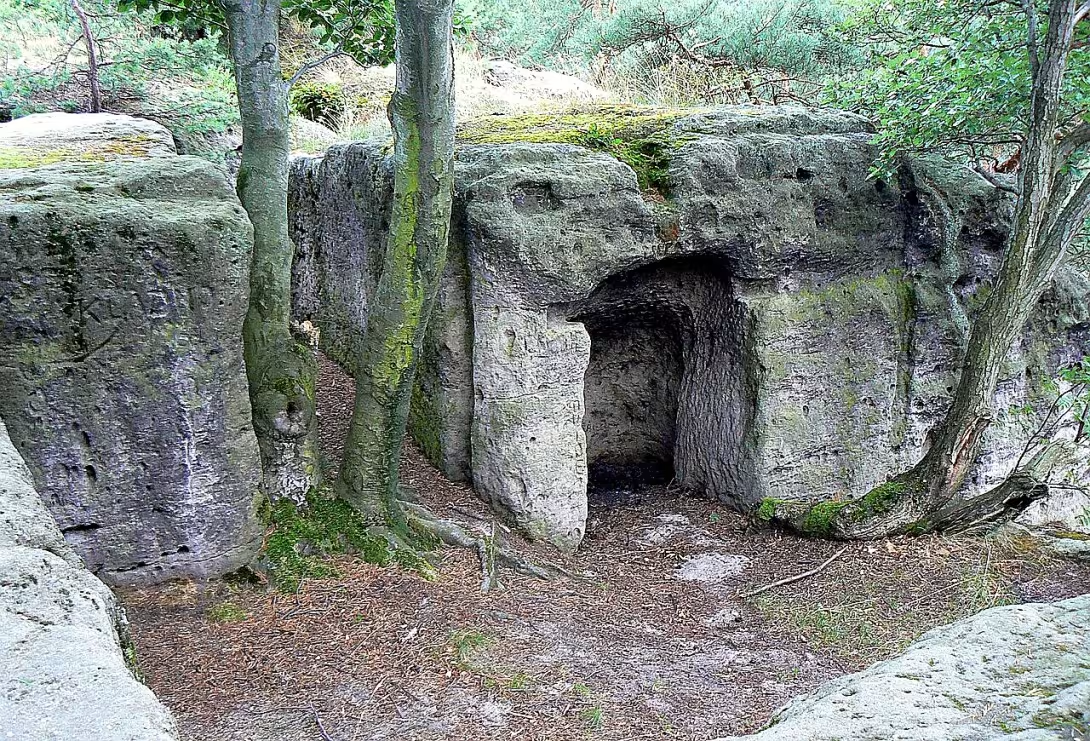
The barren castle near Zakšín, also known as Wüstes Schloss, is a rock castle built on a pseudosharpina in the southern part of the district of Česká Lípa. It is located in the village of Dubá and belongs to the protected landscape area of Kokorovsko - Máchov region. This historical monument, today's ruin, was once the seat of Berkovci of Dubé and is important for its architecture and history.
The history of the Hollow Castle dates back to the second half of the 13th century. Archaeological findings such as pottery fragments confirm the existence of the castle until the early 14th century. It is possible that he was abandoned at that time and later resettled around 1400. The first written mention of the village of Zakšín, linked to this location, dates back to 1402. At that time, the village belonged to the castle of Chap, which was later destroyed. Václav Berka z Dubé started using the adjoining from Zakšín and his son Aleš Berk also. Since 1460, Zakšín has been referred to as a village which the Berks joined at the end of the 15th century to the estate of Old Berstejn.
The architecture of the Hollow Castle is characteristic of the rock castle. The castle was built on a pseudosharpe made of Turon sandstone. The construction site consisted of three separate rock blocks, separated by a ditch of between one and two metres and a width of two metres at the bottom. The castle buildings were partially dug into the rock and wood prevailed in the above-ground structures, although the use of masonry is only documented on the west side. The castle consisted of three sections: the first served only defensive purposes and was separated from the second section by another ditch of up to eight metres wide. The second and third sections separated the rock gap. The buildings have been preserved in a rock cut by a slab and an auction to anchor the beams. On the second section there are visible oblong rectangular structures, indistinct traces of another four-sided structure and a round object which could serve as a water tank. On the third section there is a large plough with a trapezoid plan, which can be hypothetically the remains of the residential building.
The property and administration of the Hollow Castle was connected to the castle estate of Chap and later Berkovci of Dubé. Václav Berka z Dubé, who used the addition from Zakšín, and his son Aleš Berk were key figures in the history of this site. Since 1460, the village of Zakšín has been linked to the estate of Old Berstejn.
The possibility that the castle existed in two periods between which it was not inhabited is interesting. On the third section there is a smaller chute with a semicircular finish which could serve as a chapel or kitchen.
Today the remains of the Hollow Castle are accessible on a red marked tourist route, leading from Zakšín to the crossroads of Rač and further to Nejdězí. This site is not only a cultural monument protected as part of the Kokořín Region - Máchov landscape, but also offers a view of the history and architecture of the Middle Ages.
The empty castle near Zakšín is an example of the rich history and architectural heritage of the Czech Republic. His remains bear witness to the past, when the walls were not only defensive structures, but also centres of power and life. Exploring these ruins is a valuable experience for anyone interested in history or architecture, and offers a unique view of the past in a beautiful natural location.
Then and now
Drag the slider to compare how the landmark may have looked when it was built with the view today.
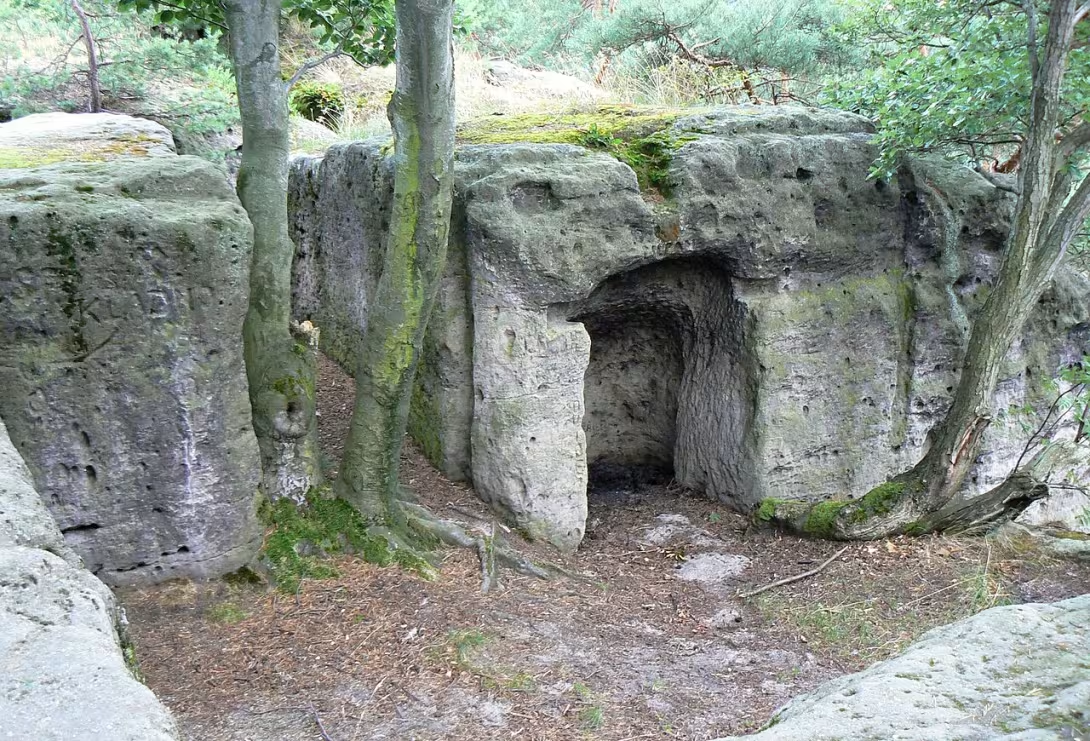
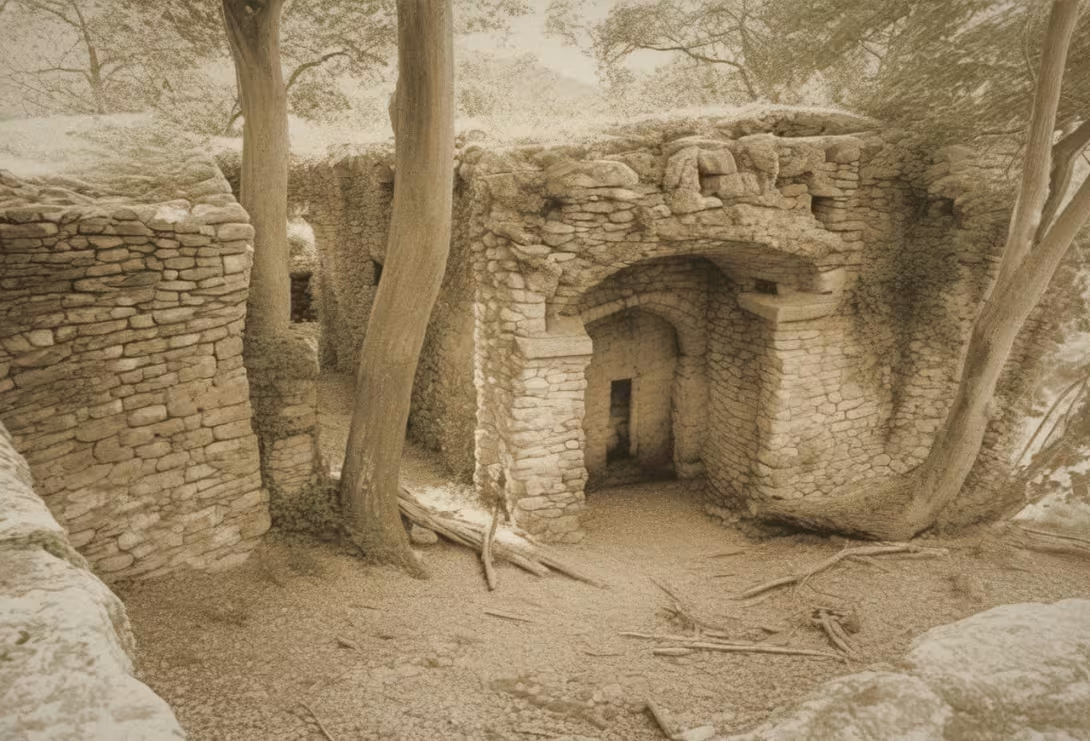
The historical appearance on the left is an AI-generated visualisation and serves as inspiration only.
Historical milestones
- 1402
- First written mention of the village of Zakšín.
- 1430
- He inherited the Aleš Berk.
Architectural development
The castle consisted of three rock blocks separated by a moat. The fortification was partly wooden, using masonry on the west side to balance the terrain. In the castle there were subways and pits for mooring beams.
Historical events
- 1402
- First written mention of the village of Zakšín.
- 1430
- Clown inherited Aleš Berk, son of Václav Berka from Dubé.
Owners
The castle was connected to Castle Chap, later became a part of Berkovci from Dubé. Václav Berka z Dubé used the adjoining from Zakšín and his son Aleš Berk used it. Since 1460, the village of Zakšín has been linked to the estate of Old Berstejn.
Points of interest
- The empty castle is a rock castle built on a pseudosharkasse in the southern part of the district of Česká Lípa. - The history of the Hollow Castle dates back to the second half of the 13th century and was once the seat of Berkovci of Dubé. - The castle was built on a pseudosharpe, made up of Turon sandstone, with three partitions separated by a moat and a rock crevice. - On the third section there is a smaller chute with a semicircular finish which could serve as a chapel or kitchen. - The empty castle is part of the protected landscape area of Kokořín - Máchov region.
Guide
Show guide text
This text was created by artificial intelligence and has not been editorially reviewed. It may contain inaccuracies.
Welcome to the Hollow Castle, this fascinating historical monument located in the picturesque surroundings of Dubé. You are standing right in front of the remains of this rock wall, which boasts a unique pseudosharking structure built on Turon sandstone. If you look around you, you'll see ruins with those distinct layers of history that talk about a past full of adventure and power struggles.
The empty castle has roots dating back to the second half of the 13th century. He was once the seat of the Berkovci of Dubé, an influential family who played a key role in Czech history. The first written mention of the village of Zakšín, where the castle is located, dates back to 1430, when the Zakšín estate was inherited by Aleš Berk. This historical context helps us to better understand the importance and importance of this place.
Take a look up at the ruins of the castle where there may have been once wooden and stone structures. An interesting architectural feature is a pseudosharpish building that was designed to make it seem like the castle is on the island, while in fact it is only an artificial section. Three partitions of the castle are separated by moat and rock terrain, which gives the complex a unique character.
The key personality associated with this location is Václav Berka z Dubé, which was part of the Berk family and played an important role in Czech history. Aleš Berk, whose name is inextricably linked to Zakšín, inherited this area in the 15th century, indicating a long history of family influence and heritage.
One of the interesting things about the Hollow Castle is its location within the protected area of Kokořín - Máchov region. This site is not only a historical but also a natural heritage, which offers beautiful views and possibilities to explore the surrounding landscape.
Let's move on to the conclusion of our guide. The empty castle is really a place full of secrets and stories that await discovery. I hope this visitor has inspired you to explore this fascinating place again. May your journey into the past become full of discoveries and surprises. Thank you for your attention and happiness on other trips!
Tips for visitors
The best time to visit the Hollow Castle is from May to October when the conditions are ideal for walking and hiking. At this time you can enjoy warm days and beautiful natural greenery of the surrounding region of Kokořín - Mácha region.
Parking can be found near the tourist route which leads from the Zakšín to the Nejdězí. We recommend using a personal car for the best access to the site. Public transport is also available; Check the current connection and options in the search engine.
When visiting, remember to bring shoes suitable for walking on uneven terrain, protective sunglasses and plenty of drinking water. Thanks to the rock nature of the castle, it is also useful to carry a hat or coat to protect against the sun.
Photography on the Desert Castle offers several views, especially in the morning or in the evening, when light is softer and shadow effects add drama. The best places for photos are from the castle area overlooking the surrounding landscape.
It is possible to visit other interesting places such as the remains of Nejdězí Castle in the vicinity of the Hollow Castle. For families with children it is suitable to visit the whole region of Kokořín - Máchov region, which offers various natural entertainment and educational activities.
Businesses nearby
Do you run a restaurant, accommodation, shop, museum, rental, wellness or other visitor service near this monument? Show yourself directly to the people heading to it — this is how they will see you in the app and on the web:
Nearby
The remains of the castle are accessible on the tourist route leading from Zakšín to Nejdězí. It is located in the protected landscape area of Kokořín - Máchov region.
Accommodation nearby
Themed route
Thematic cruise route: A barren castle and surroundings
1. Tourist line from Clown to Nedví - * Type *: Tourist line - This track is an ideal start for the journey to the Hollow Castle. The track offers beautiful views of the forest landscape and an opportunity to explore local flora and fauna. Its slight inclination makes travel even with children or older people comfortable.
2. The remains of the castle - * Type *: Rock Castle - The main destination of the route is the Hollow Castle itself, which boasts exceptional history and breathtaking views of the surrounding countryside. Visiting this place offers valuable knowledge of the past of the region and an opportunity to explore its architectural remains.
3. Protected Landscape Region Kokorín - Máchov Region - * Type *: Protected area - After visiting the castle it is advisable to explore the surrounding protected landscape. This area offers peace and opportunity to relax in nature. It is an ideal place for a picnic or short walks that allow you to enjoy the views of the woodland and perhaps even a random encounter with wild animals.
4. Nedví - * Type *: Village - After exploring the castle you can visit the village of Nedvozí, which is located near the end point of the route. This place offers the opportunity to relax and enjoy the quiet touch of rural life. Moreover, it is a suitable place to stop if you want to explore the history and culture of the region in more detail.
This route offers a combination of historical knowledge, natural beauty and peaceful rural experiences.
Seasonal recommendations
Spring at the stone castle in Dubé brings awakening nature and changing light, which underlines dramatic silhouettes of ruins. At this time, the surrounding forests are covered with lush greenery, and laurels and other Alpine plants bloom on rock cliffs, creating contrast with grey sandstone. The atmosphere is calm and thoughtful, ideal for those who seek to connect with history without disturbing influences. Practically the spring visit is balanced because the main tourist season has not started yet, but the weather can be variable. It is recommended to dress in layers in order to adapt quickly to sudden changes in temperature or rain. The best way is to hit the field in the late afternoon, where the sun shines at an angle that highlights the texture of rocks and shadows, while avoiding the morning humidity on the trails.
Summer offers the longest days and brightest lighting, which reveals every detail of stone walls and rock formations. Nature is in full bloom, but at the same time, it is the period of the greatest rush. In the main summer season larger groups of visitors can be expected, especially on weekends and holidays. In order to enjoy the panorama without any unnecessary rush, it is crucial to arrive as early as possible in the morning, ideally right after opening, or late in the afternoon, when the crowd's pressures gradually disperse. Clothes should be light and breathable, but it is essential to have enough drinking water and protective cream with you because there is no shadow on exposed rock surfaces. Sunglasses and hat are a necessary accessory at this time in order to stay in the field for a long time.
Autumn brings a unique atmosphere where the woods around the castle are painted in golden and red shades. The lighting is softer and warmer, which creates a romantic and slightly melancholic tone, perfect for photo images of ruins. Nature slowly prepares for sleep, making the surroundings quieter and quieter than summer. Practical advice focuses on preparing for colder weather and shorter days. It is advisable to have a warm jacket with you, because the evening's cold comes faster. The best time to visit is in the morning, when the light is brightest and the temperature is still tolerable, but it must be assumed that it is getting dark earlier. Trails can be slippery because of falling leaves, so you need shoes with good heel and anti-slip soles.
Winter on a deserted castle in Dubé is an experience for lovers of harsh beauty and silence. The lighting is short and sharp, often white and cold, highlighting the cold hardness of sandstone and ice crusts on rocks. Nature is calm, the trees are bare and the sky is often gray, which gives the place a mysterious and lonely touch. Practically, a winter visit requires thorough preparation. Hot clothes, including gloves, hats and waterproof jackets, are an absolute necessity, because the wind in the high place can be unpleasantly cold. Due to shorter daylight and safety reasons, it is best to visit the memory in the late morning when visibility is best and temperature is highest. Care should be taken for sliding surfaces and possible ice surfaces, therefore suitable footwear with high heel and ideally with spikes.
Visualizations and artistic views


The visualisations are generated by artificial intelligence and serve as inspiration.
Photos from the area
Real photos taken near the monument


Zdroj a licence jsou uvedeny u každého snímku.
Tips from visitors
No tips yet. Be the first!
Log in and add your tip.
Sources and literature
Fotografie: Huhulenik / CC BY 3.0 — Wikimedia Commons. The author and licence also appear when you hover over the image.
Faktickým podkladem tohoto textu byl článek na Wikipedii, jehož autory jsou přispěvatelé Wikipedie. Článek je dostupný pod licencí CC BY-SA 4.0.
Location on the map
More monuments – Dubá
Show all in the municipality
Příběhy a pověsti
Legendy, pověsti a příběhy spjaté s touto památkou
Fotografie návštěvníků
Zatím žádné fotografie. Buďte první, kdo přidá fotografii z návštěvy!
Přihlaste se a přidejte svou fotografii nebo hodnoťte.
Za ověřenou návštěvu v aplikaci získáte víc bodů — poznáme podle GPS, že jste na místě.
Reviews and comments