






Skalka (usedlost na Smíchově) Homestead
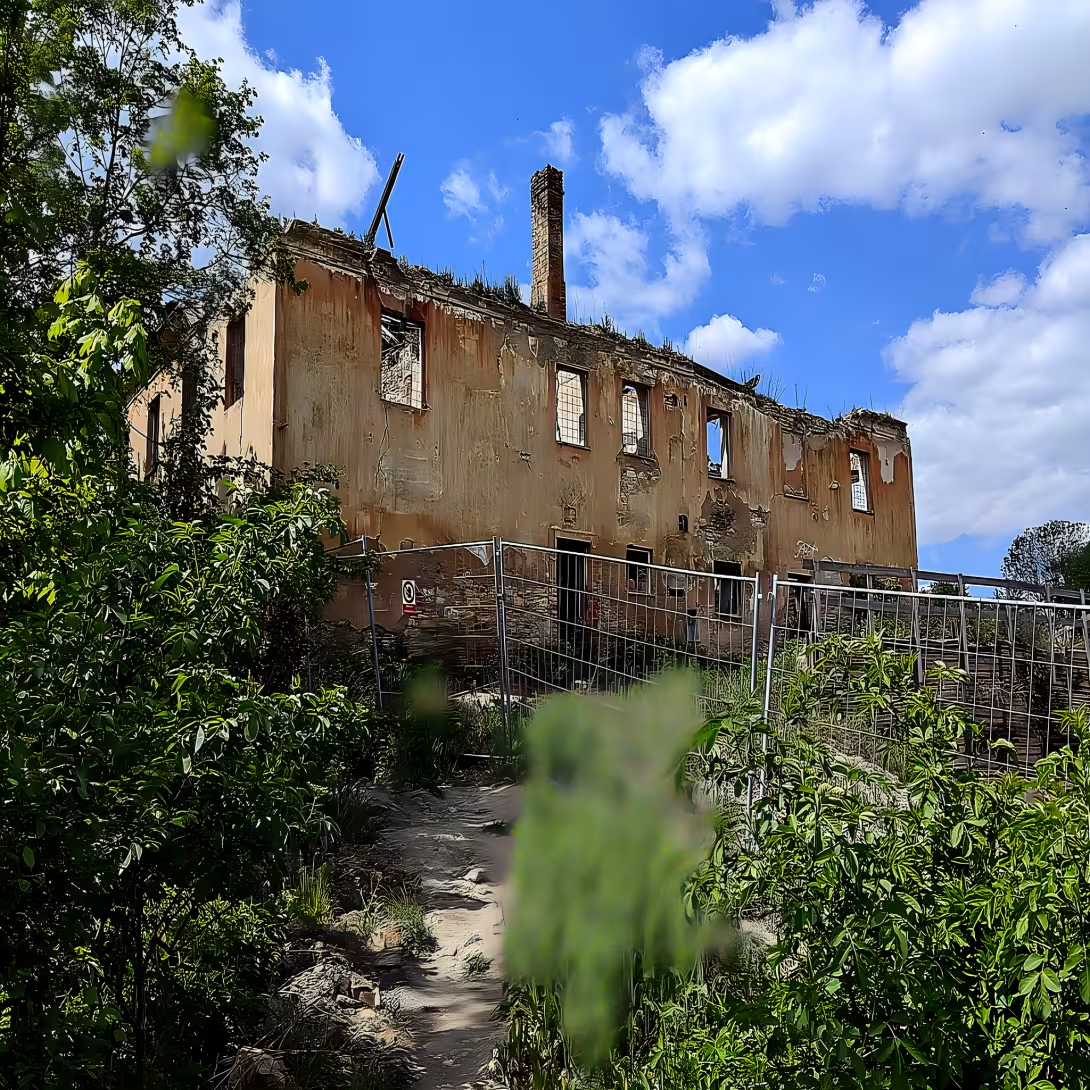
Skalka is a Baroque farmstead located in Prague's Smíchov district on Skalka hill near Plzeňská třída and a sports area with a rugby field. The site holds historical significance dating back to the 14th century, when vineyards were first mentioned. It was documented in 1599 when Dorota Skálová purchased two vineyards there. By the late 18th century, the farmstead evolved into its current form and underwent significant changes in the 20th century. Despite being under monument protection since 1964, it is now abandoned and deteriorating.
The origins of Skalka are linked to vineyards known as Klemperna and Kovařská, acquired by Dorota Skálová in 1599. Historical sources suggest these vineyards may have existed since the 14th century, though it's unclear if "Skalka" referred to the vineyards or their owner. The farmstead likely emerged as a three-winged U-shaped structure towards the end of the 18th century, reflecting its Baroque origins.
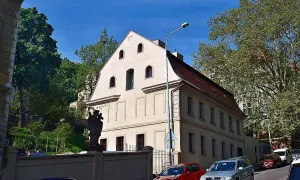
Architecturally, Skalka initially featured a three-winged U-shape with two shorter side wings opening into a courtyard and an oblong residential building that has been preserved. However, this single-story building's historical character was significantly altered during modernization in 1963. It was transformed into a one-story structure with a high gable roof and small dormers, losing its original decorative elements. Surrounding the farmstead are remnants of an English park and a perimeter wall with an interesting gate featuring ashlar pillars capped by a cornice.
Ownership changes at Skalka began with Dorota Skálová in 1599. The farmstead remained largely unchanged until modernization in 1963. It has been under monument protection since 1964, highlighting its cultural and historical importance. In 2022, the Premiot group acquired Skalka and initiated plans for reconstruction, including two nearby residential buildings.
Key events at Skalka include Dorota Skálová's acquisition of the vineyards in 1599 and the architectural modification in 1963. These changes reflect its historical roots and modern interventions. The site has been protected as a monument since 1964, underscoring its cultural significance despite neglect.
Today, Skalka stands abandoned and decaying, with overgrowth evident across the property. Despite these challenges, it remains an intriguing destination for those interested in Prague's historical landscapes. Visitors can explore its architectural evolution from Baroque origins to modern adaptations and appreciate its historical context. The Premiot group's efforts aim to restore and repurpose this culturally significant location.
Skalka is more than a relic of the past; it represents a bridge between history and contemporary urban development. Its preservation and potential revitalization offer an opportunity to explore Prague's rich cultural heritage, making it worthwhile for those interested in architectural history or urban landscape evolution.
Then and now
Drag the slider to compare how the landmark may have looked when it was built with the view today.
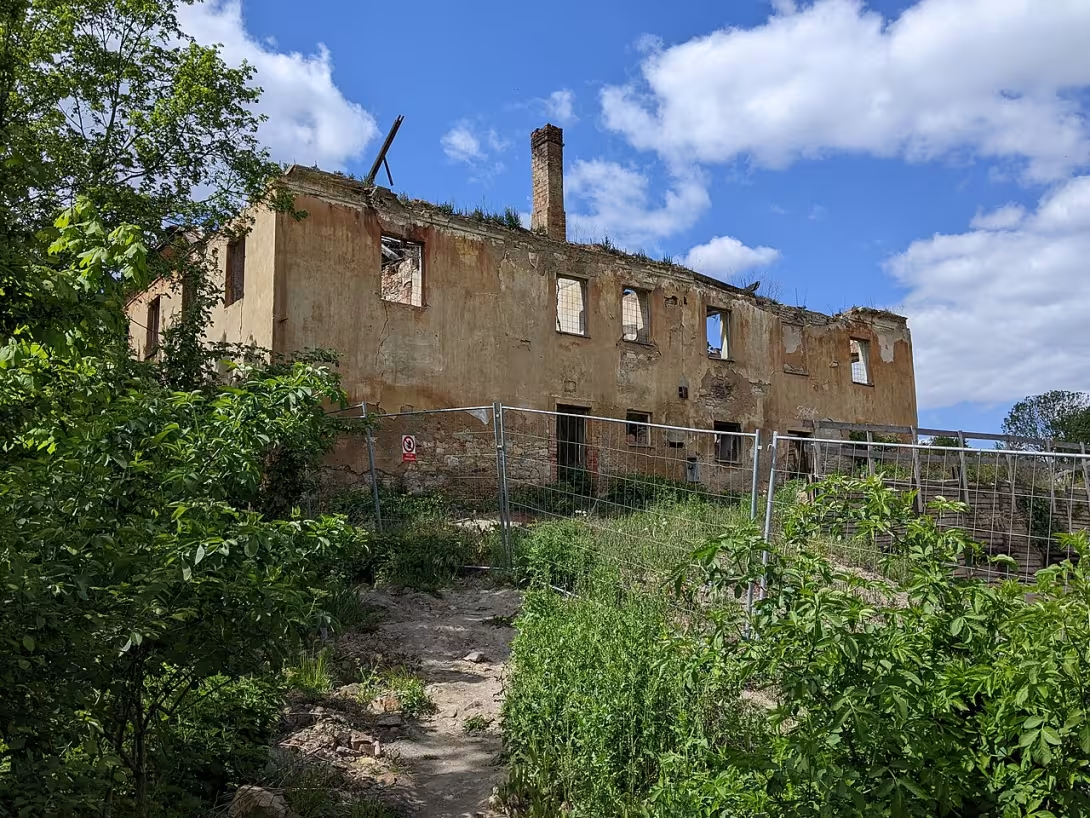
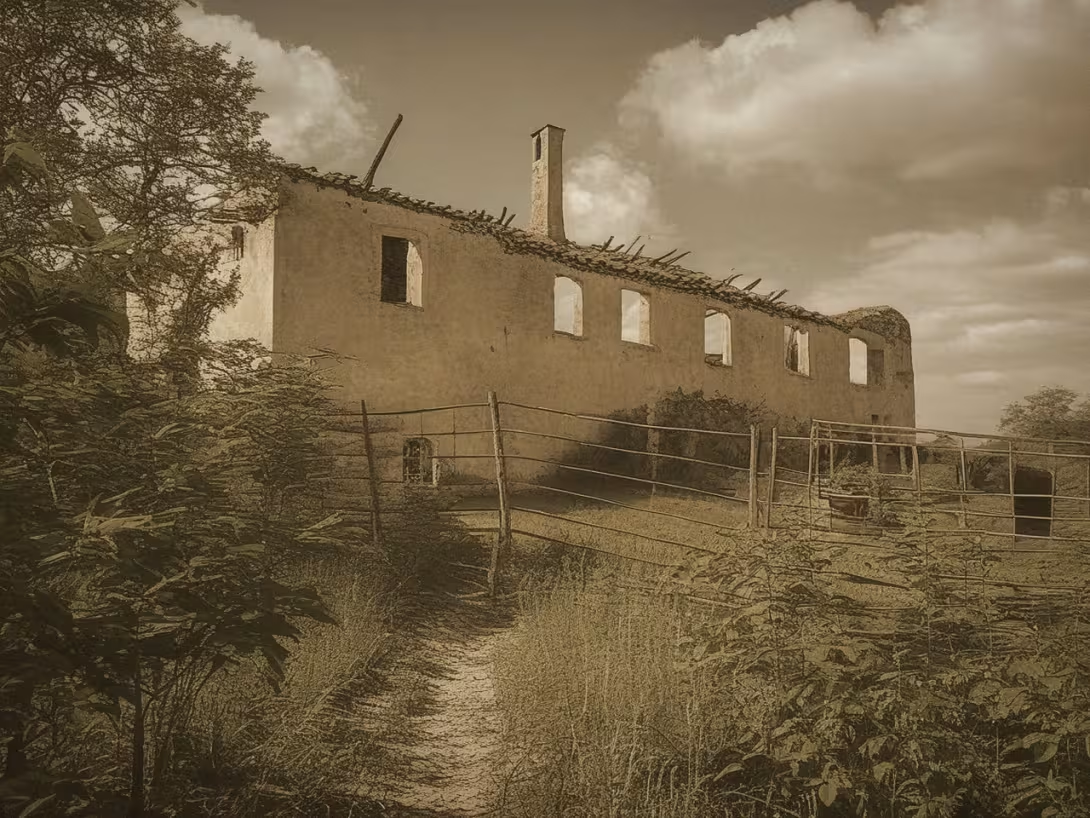
The historical appearance on the left is an AI-generated visualisation and serves as inspiration only.
Historical milestones
- 1599
- Dorota Skálová purchased the Klemperna and Kovařská vineyards at the site.
- 1963
- The building was modified into a single-story structure with a high gable roof and no decorations.
- 1964
- The farmstead was placed under monument protection.
- 2022
- The Premiot group became the owner and began a project for reconstruction.
Architectural development
The farmstead likely originated in the late 18th century as a three-winged U-shaped Baroque structure. In 1963, it was modified into a single-story building with a high gable roof and small dormers, losing its original decorations. The site also contains remnants of an English park and a perimeter wall with ashlar pillars.
Historical events
In 1599, Dorota Skálová purchased vineyards on the site. The building underwent a modern modification in 1963. It has been under monument protection since 1964.
Owners
Dorota Skálová (1599); Premiot group (since 2022).
Points of interest
- Skalka is a Baroque farmstead located in Prague's Smíchov district on Skalka hill near Plzeňská třída and a sports area with a rugby field. - The site holds historical significance dating back to the 14th century, when vineyards were first mentioned.
Guide
Show guide text
This text was created by artificial intelligence and has not been editorially reviewed. It may contain inaccuracies.
Welcome to Smíchov. Please, take a moment to settle in, adjust your headphones, and simply look around you. You are standing here, on the crest of Skalka hill, before a site that whispers stories of a very different Prague. Right now, you are looking at the building known as Skalka. At first glance, it might seem modest, perhaps even understated compared to the grand palaces of the city center, but this farmstead is a survivor. It is a place where the rural past of the city still clings to the landscape, even as the modern bustle of Plzeňská třída and the energy of the nearby rugby field surround it. As you gaze at the structure before you, try to see past the current stillness and imagine this hill not as a city district, but as a lush, green slope dedicated to the earth and the vine.
To truly understand what you are seeing, we have to travel back much further than the walls of the current building. The history of this specific patch of land begins long before the farmstead was ever constructed. We must go back to the 14th century. Imagine this entire hillside covered in rows of grapevines, their leaves shimmering in the sun, producing wine for the people of Prague. For centuries, this area was defined by agriculture, a quiet sanctuary of cultivation on the edge of the expanding town. The site was prized for its soil and its exposure to the light, making it an ideal spot for vineyards.
As we move forward in time to the year 1599, a specific name enters the records of this place: Dorota Skálová. She was a woman of means and ambition who purchased the Klemperna and Kovařská vineyards right here on this site. When you think of Dorota Skálová, imagine her overseeing these lands, managing the harvest, and contributing to the agricultural legacy of Smíchov. It was through people like her that this hill became an established center of production, setting the stage for the physical structures that would eventually follow.
The farmstead you see today likely took its primary shape toward the end of the 18th century. In those days, it was a classic Baroque farmstead, designed for utility but possessing the characteristic elegance of the era. If you could travel back to that time, you would see a very different silhouette. The complex was originally a three-winged, U-shaped structure. This layout was typical for the time, creating a protected inner courtyard where the daily work of the farm took place—the hauling of carts, the storage of tools, and the processing of the harvest. It was a self-contained world of labor and residence, a Baroque outpost that blended the needs of a working farm with the architectural tastes of the late 1700s.
Now, I invite you to look closely at the building as it stands before you today. You will notice that it does not look like a traditional Baroque palace. This is because the building underwent a dramatic transformation in 1963. During that year, the structure was heavily modified. The original U-shape was lost, and it was converted into the single-story building you see now. Notice the high gable roof that dominates the silhouette. If you look at the walls and the facade, you will see a striking lack of ornamentation. The decorations that might have once adorned a Baroque farmstead were removed, leaving behind a stark, simplified appearance. This modification reflects a specific moment in the mid-20th century when functionality and simplicity often overrode historical embellishment. While some might see this as a loss, it creates a unique, almost minimalist aesthetic that tells the story of the building's survival through different political and architectural eras.
Despite these drastic changes in 1963, the value of the site was not forgotten. Just one year later, in 1964, the farmstead was officially placed under monument protection. This was a crucial turning point. It meant that despite its modified state, the state recognized that Skalka was a vital piece of Prague's historical fabric. It was no longer just an old farm; it was a monument to the agricultural history of Smíchov and the evolution of the city's outskirts.
As you stand here, consider the strange contrast of this location. On one side, you have the deep, silent history of the 14th-century vineyards and the legacy of Dorota Skálová. On the other, you have the sounds of the modern city and the shouts of athletes from the nearby rugby field. It is a place where different centuries collide. For a long time, the building remained in a state of abandonment, a silent witness to the passing decades, its walls holding the memories of both the Baroque farmers and the 20th-century renovators.
However, the story of Skalka is not one of decay, but of renewal. In 2022, a new chapter began when the Premiot group became the owner of the property. They have launched a project for reconstruction, aiming to breathe new life into these old walls. While the building may still show the scars of time and the simplicity of its 1963 renovation, there is a sense of anticipation in the air. The goal is to preserve the essence of this historical landmark while making it viable for the modern world.
Before you move on, I want you to take one last look at the facade and the surrounding slope. Try to imagine the layers of time beneath your feet. Beneath the grass and the pavement lie the remnants of those ancient vineyards. Above you is a roof that has seen the transition from the Baroque era to the socialist period and now into the 21st century. The mystery of Skalka lies in its adaptability—how a place can start as a vineyard, become a three-winged Baroque farm, transform into a simplified single-story house, and eventually find its way toward a modern rebirth.
Thank you for spending these few minutes with me and with the history of Skalka. As you leave this spot and head back toward the heart of Smíchov, carry with you the image of Dorota Skálová and the scent of the long-gone vineyards. We invite you to continue exploring the hidden corners of the city, where every hill and every old wall has a story to tell. Enjoy the rest of your journey through Prague.
Tips for visitors
The best time to visit Skalka is during the late spring or early autumn months when the weather is mild, making it ideal for exploring both the historical site and its surrounding areas. During these seasons, you can enjoy pleasant temperatures that are perfect for walking around the farmstead and nearby sports area without the discomfort of extreme heat or cold. Additionally, visiting in this timeframe often means fewer crowds, allowing for a more intimate experience with the site's rich history.
Parking is available near Skalka, but it’s advisable to check local resources or use a map application for specific details on parking spots close to Plzeňská třída. Public transportation can also be used to reach the area; however, you should verify current bus and tram routes that serve Smíchov to ensure convenient access. The proximity of Skalka to public transit options makes it accessible without needing a car.
When visiting Skalka, consider bringing comfortable walking shoes as there are several areas to explore on foot, including the farmstead itself and the nearby sports area. A hat and sunscreen are also recommended due to the open nature of the site, which can lead to sun exposure during sunny days. Additionally, carrying a water bottle will help keep you hydrated throughout your visit.
For photography enthusiasts, Skalka offers several picturesque spots that capture its historical essence, especially at golden hour when the light is soft and warm. The hilltop location provides sweeping views of Smíchov, making it an excellent spot for landscape shots. Inside the farmstead, natural lighting can enhance the textures and details of the Baroque architecture.
In addition to Skalka, there are other attractions within a 30-minute drive or public transport ride from Smíchov that you might consider visiting. The sports area nearby offers recreational activities like rugby, which could be interesting if you enjoy watching live sports events. Exploring these local amenities can complement your visit to the historical site by providing a broader experience of the region's culture and lifestyle.
Businesses nearby
Events nearby

Zdroj akcí: otevřená data měst a obcí ČR (Národní katalog otevřených dat) a kalendář akcí Národního památkového ústavu.
Nearby
The farmstead is situated on the Skalka hill, near Plzeňská třída and a sports area that includes a rugby field.
Accommodation nearby
Trips and activities nearby
Guided tours, tickets and activities nearby from GetYourGuide
Affiliate link: if you buy from the partner, we may receive a commission. The price for you does not change.
Search tours and activities →Themed route
1. Plzeňská třída (Thoroughfare) – Start your walk along this main road to approach the destination. 2. Skalka hill (Hill) – Ascend the hill to reach the historical site. 3. Skalka (usedlost na Smíchově) (Historical farmstead) – Explore the main historical landmark located on the hill. 4. Sports area (Recreational area) – Conclude your trip at the nearby sports grounds, which include a rugby field.
Seasonal recommendations
Spring: Visiting Skalka during spring offers a unique experience as the estate begins to awaken from its winter slumber. The natural surroundings are lush and vibrant, with blooming flowers adding splashes of color against the backdrop of Smíchov's historic charm. This season provides softer lighting conditions that highlight the intricate details of the architecture, making it an ideal time for photography enthusiasts. Visitors should be prepared for unpredictable weather; layers are advisable as temperatures can fluctuate significantly throughout the day. Early mornings or late afternoons tend to offer a more serene atmosphere with fewer crowds.
Summer: Summer at Skalka is characterized by long daylight hours and warm, inviting weather that encourages exploration of its grounds. The lush greenery provides a picturesque setting, perfect for picnics or leisurely walks. However, the popularity of outdoor activities during this season can lead to larger crowds, so arriving early in the day is recommended to avoid peak times. Comfortable walking shoes and light clothing are ideal due to the heat, and carrying water is essential to stay hydrated under the summer sun.
Autumn: The autumnal months transform Skalka into a tapestry of warm hues with its deciduous trees shedding leaves in shades of red, orange, and gold. This season offers a tranquil atmosphere as visitors enjoy the cooler temperatures and the soft, diffused light that enhances the estate's historic features. It is an excellent time for photography, capturing the essence of Smíchov’s heritage against nature's autumnal backdrop. Layered clothing is recommended to adjust to varying temperatures throughout the day, and it is advisable to check opening hours as they may be reduced during this season.
Winter: Winter at Skalka brings a quiet, almost mystical atmosphere as snow blankets the estate, creating a serene and picturesque scene. The stark beauty of the landscape contrasts with the historic architecture, offering unique photographic opportunities. Visitors should dress warmly in layers and wear sturdy footwear for navigating potentially slippery paths. Due to shorter daylight hours and colder weather, it is wise to plan visits during midday when there’s more natural light available. Keep in mind that opening times may be limited, so checking ahead is recommended.
Visualizations and artistic views


The visualisations are generated by artificial intelligence and serve as inspiration.
Photos from the area
Real photos taken near the monument


Zdroj a licence jsou uvedeny u každého snímku.
Tips from visitors
No tips yet. Be the first!
Log in and add your tip.
Sources and literature
Fotografie: MartinVeselka / CC BY-SA 4.0, rozlišení zvýšeno umělou inteligencí — Wikimedia Commons. The author and licence also appear when you hover over the image.
Faktickým podkladem tohoto textu byl článek na Wikipedii, jehož autory jsou přispěvatelé Wikipedie. Článek je dostupný pod licencí CC BY-SA 4.0.
Location on the map
Příběhy a pověsti
Legendy, pověsti a příběhy spjaté s touto památkou
Fotografie návštěvníků
Zatím žádné fotografie. Buďte první, kdo přidá fotografii z návštěvy!
Přihlaste se a přidejte svou fotografii nebo hodnoťte.
Za ověřenou návštěvu v aplikaci získáte víc bodů — poznáme podle GPS, že jste na místě.
Reviews and comments