



Smíchovská radnice Town hall
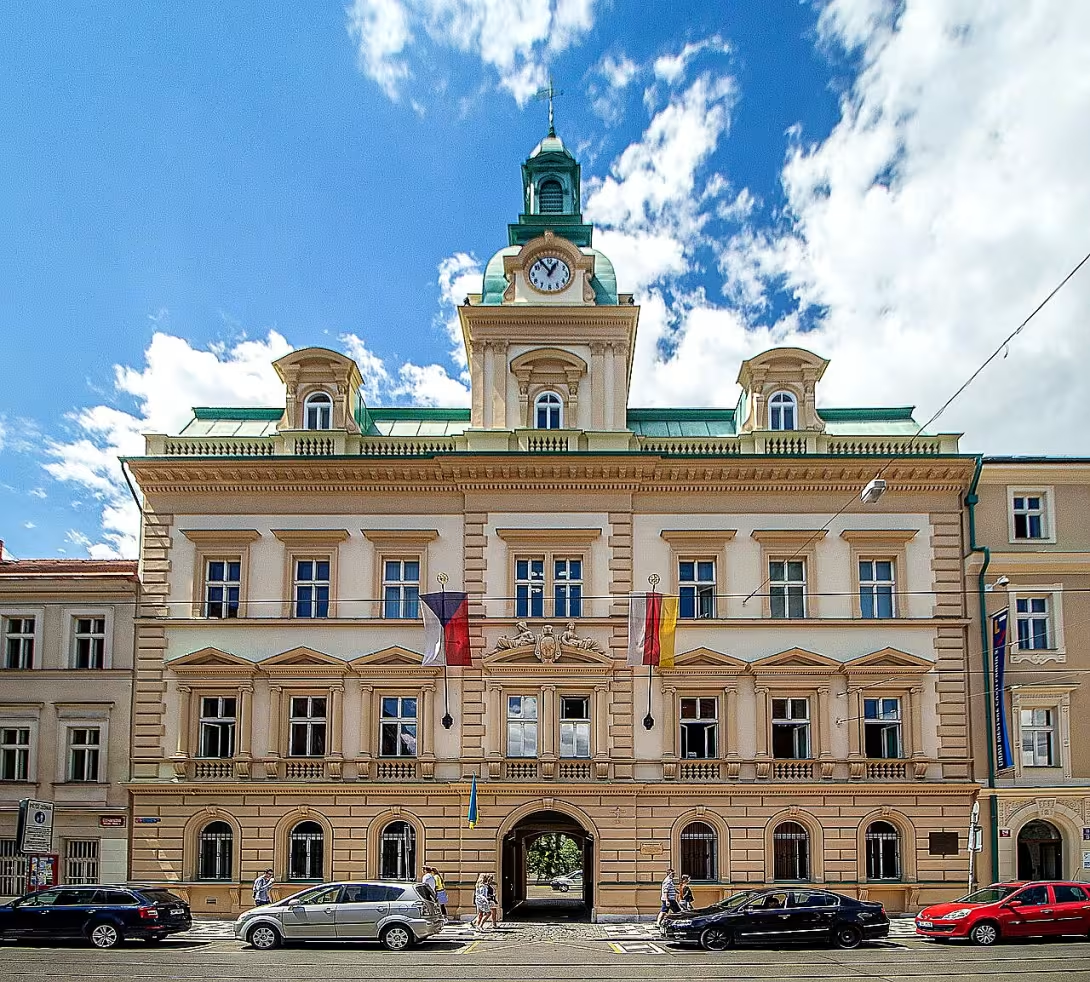
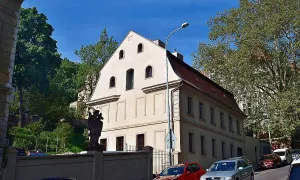
Smíchovská radnice is a non-Renaissance building in Prague 5, which served as the administrative centre of the village Smíchov. The building at the address Štefánikova street 13 has been included in the list of real cultural monuments since 1976. It represents an important example of the architecture of history.
The history of the administration centre in Smíchov began in October 1848 with the first election of the municipal council. His first mayor was Josef Ulian. In 1853 they built a one-storey building for c and k. The city administration originally rented only two rooms in this house, but that was enough over time. In 1858 the then purkmaster and builder Josef Barth bought the building for 17,000 gold pieces.
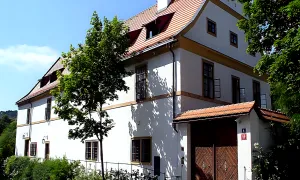
The current form of the town hall was created by a large reconstruction in 1874. The building was then raised by the second floor and supplemented by a clock tower. The design of the facade and representative space was developed by architect Josef Schulz. The eight-axis facade in a non-orenessant style has a medium risalite and a bowling ball for the attics. The whole building is covered by a Mansard roof with two skylights and a smoking tower and a lantern. Tower clock with circular dial was made by Prague watchmaker Václav Krečmer. Plastic decoration with city emblem and two allegorical sculptures was created by sculptor Antonín Popp.
In addition to the administrative premises of the town hall in 1874 it also took practical facilities. There were stables for three pairs of horses and space for the fire brigade, including its equipment. At that time, the surrounding infrastructure developed significantly. In 1874 a horse tram was introduced on the Karlín-Smíchov route with a stop right outside the town hall and in 1876 the whole street was paved with a mosaic.
In the building at different times there were important purkmasters. Among them was, for example, the manufacturer František Ringhoffer in 1862, a wood merchant Petr Fisher, who was responsible for the construction of the Smíchov water plant, or Karel Dimmer, contributing to the construction of the brewery. An important event was a visit of emperor Franz Joseph I. in 1866.
There were other important objects in the immediate vicinity of the town hall. In house no. 235 there was a German girls' school from 1872 to 1920 and in house no. 230 there was a cafe U Holuby. The New Romanesque parish church of St. Wenceslas is located opposite the town hall and the Portheimka Castle is nearby.
Smíchovská radnice remains an important witness to the expansion of industrial Smíchov and the development of the city administration. Its architecture and history from the time of the Austrian Empire make it a valuable goal for every interested person in Prague urban planning. Visiting this place offers insight into the administrative and social life of old Smíchova.
Historical milestones
- 1848
- First choice of municipal council Smíchova.
- 1853
- The position of the original one-story building at the site of today's town hall.
- 1858
- Redemption of the whole house by the magistrate Josef Barth for 17,000 gold pieces.
- 1874
- Rebuilding the building, raising the floor and adding the clock tower.
- 1976
- The inclusion of the building in the list of real cultural monuments.
Architectural development
The original one-story building from 1853 was rebuilt in 1874, increased by the second floor and supplemented by a clock tower. The facade is in a non-orenessant style with a mansard roof, a skylight and a central risalite. There were also spaces for the fire brigade and stables for horses.
Historical events
In 1866 the Emperor František Josef I. visited the building In 1874 there was a significant reconstruction and expansion of the building.
Points of interest
- The building at 13 Štefánikova Street has been included in the list of cultural monuments since 1976. - In 1858, the then purkmaster and builder Josef Barth bought the building for 17,000 gold pieces. - The current form of the town hall was created by a large reconstruction from 1874 when the building was increased by the second floor and supplemented by a clock tower. - Tower clock with circular dial was made by Prague watchmaker Václav Krečmer and plastic decoration was created by sculptor Antonín Popp. - In 1874 City Hall also held stables for three pairs of horses and space for the fire department including its equipment.
Guide
Show guide text
This text was created by artificial intelligence and has not been editorially reviewed. It may contain inaccuracies.
Welcome to the heart of Smíchov. You are standing in front of a building that tells the story of the rise of one of Prague's most important neighborhoods by its appearance and history. In front of you is Smíchovská radnice, a building that served as the administrative center of the then village Smíchov in its greatest glory. If you look at her now, you'll see a building that radiates dignity and stability. It is a place where in the past the fate of local people was decided, where disputes were resolved and the development of the area was planned. Now let's go back in time together to understand how this building was created. It all began in the year of eight hundred forty eight, when the first election of the municipal council Smíchova took place. It was a period of great change and the need for its own administration became necessary. A few years later, in the year eight hundred and fifty-three, the original building was built in the place where you are now standing. At the time, however, she looked quite different than today. Imagine a one-story building instead of the present house. It was a more modest building, which was supposed to perform its function, but did not reflect the ambitious growth Smíchov experienced in the coming decades. Now pay attention to the architecture itself before you. The building is today in a neo-Renaissance style, which means it draws on the elements of the Renaissance, but interprets them in a way that was modern in the devięth century. Look at the front of the house. Notice his eight-axis facade, which means the building has eight windows wide. This rhythm gives the construction balance and symmetry. Your eyes should now go higher. Look up at the clock tower that dominates the entire city hall. The tower is not only a practical element for time monitoring, but it also served as a symbol of the city's power and independence. In addition to the tower, note the plastic decoration on the facade. If you look closely, you will see a city emblem that proudly resembles the identity of Smíchov. The whole project in its later form was worth the architect Josef Schulz, who was able to combine the functionality of the administrative building with aesthetic beauty. In order to understand why the building looks like this, we need to stop by the key personalities that were connected to this place. One of the most important characters was the Purkmaster Josef Barth. He was a man with a vision, a builder and a man who wanted the best for Smíchov. In the year eight hundred and fifty-eight he made a very bold move. He bought the whole house for $17,000. It was a considerable sum at the time, but it was an investment in the future of the village for Mr. Barth. It is thanks to its activities and the subsequent development of an area where important people such as František Ringhoffer or Antonín Popp were active, Smíchov became an industrial centre. People who formed the economic backbone of Prague met in the building at different times, and there were no visitors of high personalities, including Emperor Franz Joseph first. Now let's get to the part that might interest you. You might wonder why the building is so high and massive when we mentioned that it originally only had one floor. The answer lies in the year eight hundred and seventy-four. This year, there was an extensive reconstruction that essentially created the city hall as you see it today. The building was increased by one floor and the clock tower was added at this time. This change was not only aesthetic, but a direct reflection of how fast Smíchov grew. The village became richer and more important, so her town hall had to grow along with her. It is fascinating to think that one building can be such a mirror to social and economic progress. The interesting fact is that this building, located in Štefánik Street under number 13, is now protected by law. Since the year nine hundred seventy-six it has been registered as a real-estate cultural monument. This means that its value is no longer only in administrative use, but in its historical and architectural value for the whole city. When you look at it today, you see not only walls and windows, but a monument to the time when a small village became a modern urban district. Feel the atmosphere of this place now. Smíchov has changed around this town hall many times. From the industrial suburb with the factories he became a modern center with offices and shops, but this building remains a fixed point that connects the past with the present. He is a silent witness to all the changes that took place in Prague for five years. I hope this short trip to history has helped you to better perceive the beauty and importance of Smíchov Town Hall. Look at her for the last time in one piece, see her neoRenaissance line, and remember Purkmaster Barth and his seventeen thousand gold ones that helped create this place. I now invite you to further explore the area. Smíchov has another story hidden in every street waiting to be discovered. We wish you a pleasant continued journey and enjoy the beauty of our city. Goodbye.
Tips for visitors
The best time to visit is in the morning or late afternoon, when the sun hits the neoRenaissance facade at a pleasant angle, which will highlight the details of the building. You can easily transport to the centre of Smíchova by car and public transport; Check the specific connection in the current search engine.
Since it is a building in operation, we recommend taking only a camera and comfortable shoes to walk around. Since there are no inspections inside, focus on the external observation of architecture.
For the best photos we recommend you search for an angle that captures the entire city hall size. Ideal light for façade images is on clear days when the colours and shapes of the building are the most distinctive.
Near the town hall you can visit the New Romanesque parish church of St. Wenceslas, which stands directly opposite, or take a walk to Portheimka.
Families with children appreciate walking around buildings and observing ancient details on the facade, which may be a good introduction to the history of Prague 5.
Frequently asked questions
Can the monument be visited?
The building is in use (offices, a school, shops and the like). The interior is generally accessible only during operating hours and tours are not usually offered; we have not verified the details. You can see the exterior from the street.
Where is the monument?
Location: Smíchov. The map on this page shows the exact spot.
Why is the monument protected?
It is listed in the Central List of Cultural Monuments of the Czech Republic as a cultural monument (register no. 1000153236).
Businesses nearby
Do you run a restaurant, accommodation, shop, museum, rental, wellness or other visitor service near this monument? Show yourself directly to the people heading to it — this is how they will see you in the app and on the web:
Events nearby

Zdroj akcí: otevřená data měst a obcí ČR (Národní katalog otevřených dat) a kalendář akcí Národního památkového ústavu.
Nearby
Naproti radnici stojí novorománský farní kostel svatého Václava a v blízkosti se nachází letohrádek Portheimka.
Accommodation nearby
Trips and activities nearby
Guided tours, tickets and activities nearby from GetYourGuide
Affiliate link: if you buy from the partner, we may receive a commission. The price for you does not change.
Search tours and activities →Themed route
Smíchovská radnice Type: Historical building and administrative centre Why is it worth visiting: This important building serves as the main destination of our trip and represents the architectural boasting of the whole territory. Here you can see the exterior decoration and start your walk around the area.
St. Wenceslas's Parish Church Type: Sacral construction Why is it worth a visit: This spiritual monument is right across from the town hall and will impress you with its new Romanesque appearance. Its tower and stone facade form an impressive dominant area.
Portheimka Type: Historical building and cultural space Why is it worth a visit: In the immediate vicinity of the town hall and the church there is this picturesque building surrounded by a smaller area. It offers a pleasant stop during a tour of local monuments.
Seasonal recommendations
Spring at Smíchov brings awakening urban greenery in adjacent parks and on the waterfront, where the first sun rays pleasantly irradiate the historical facade of the official building and create a contrast to the busy transport pulse of the surrounding crossroads. During this period you will appreciate lighter coat and fixed shoes for walking around the waking surroundings, the best time for admiring the architecture from the outside is in the morning, when the sun ideally illuminates the main facade.
Summer is characterized by a long day of bright light, which is reflected from large windows and lets the details of stone panelling stand out, while the surrounding trees provide shade on adjacent sidewalks. The practical advice for warm days includes the choice of breathtaking clothes, sunglasses and plenty of fluids to go, as the facade is heated strongly from the hot asphalt in the afternoon and the best atmosphere for exterior photography offers an evening's golden hour.
Autumn transforms the surrounding alleys into a varied palette of yellow and red colours that fall from the crows of trees and create a melancholy background for admiring this public building, accompanied by frequent foggy hares. On colder autumn days, dress yourself in warmer waterproof clothes with windbreaker because the river is often cold, and plan a visit to the morning hours where the air is the most transparent and the streets are less crowded with people rushing for duty.
Zima halí Smíchovskou radnici do tichého rázu, kdy sice chybí tradiční venkovní trhy, ale ranní mrazy a občasný sněhový poprašek dodávají architektonickým prvkům slavnostní a vážný výraz. Pro zimní obchůzku vnějšku budovy je nezbytně nutné velmi teplé zimní oblečení, čepice a rukavice, neboť čekání na tramvaj nebo delší stání venku při pozorování detailů prověří vaši odolnost vůči chladu, přičemž nejlepší světelné podmínky pro snímky bez blesku panují kolem poledne, kdy je slunce nejvýše nad obzorem.
Visualizations and artistic views

The visualisations are generated by artificial intelligence and serve as inspiration.
Photos from the area
Real photos taken near the monument


Zdroj a licence jsou uvedeny u každého snímku.
Tips from visitors
No tips yet. Be the first!
Log in and add your tip.
Sources and literature
Photos: VitVit / CC BY-SA 4.0 — Wikimedia Commons. The author and licence also appear when you hover over the image.
Faktickým podkladem tohoto textu byl článek na Wikipedii, jehož autory jsou přispěvatelé Wikipedie. Článek je dostupný pod licencí CC BY-SA 4.0.
Location on the map
Příběhy a pověsti
Legendy, pověsti a příběhy spjaté s touto památkou
Fotografie návštěvníků
Zatím žádné fotografie. Buďte první, kdo přidá fotografii z návštěvy!
Log in a přidejte svou fotografii nebo hodnoťte.
Za ověřenou návštěvu v aplikaci získáte víc bodů — poznáme podle GPS, že jste na místě.
Reviews and comments