



Socha svatého Filipa Nerejského Statue
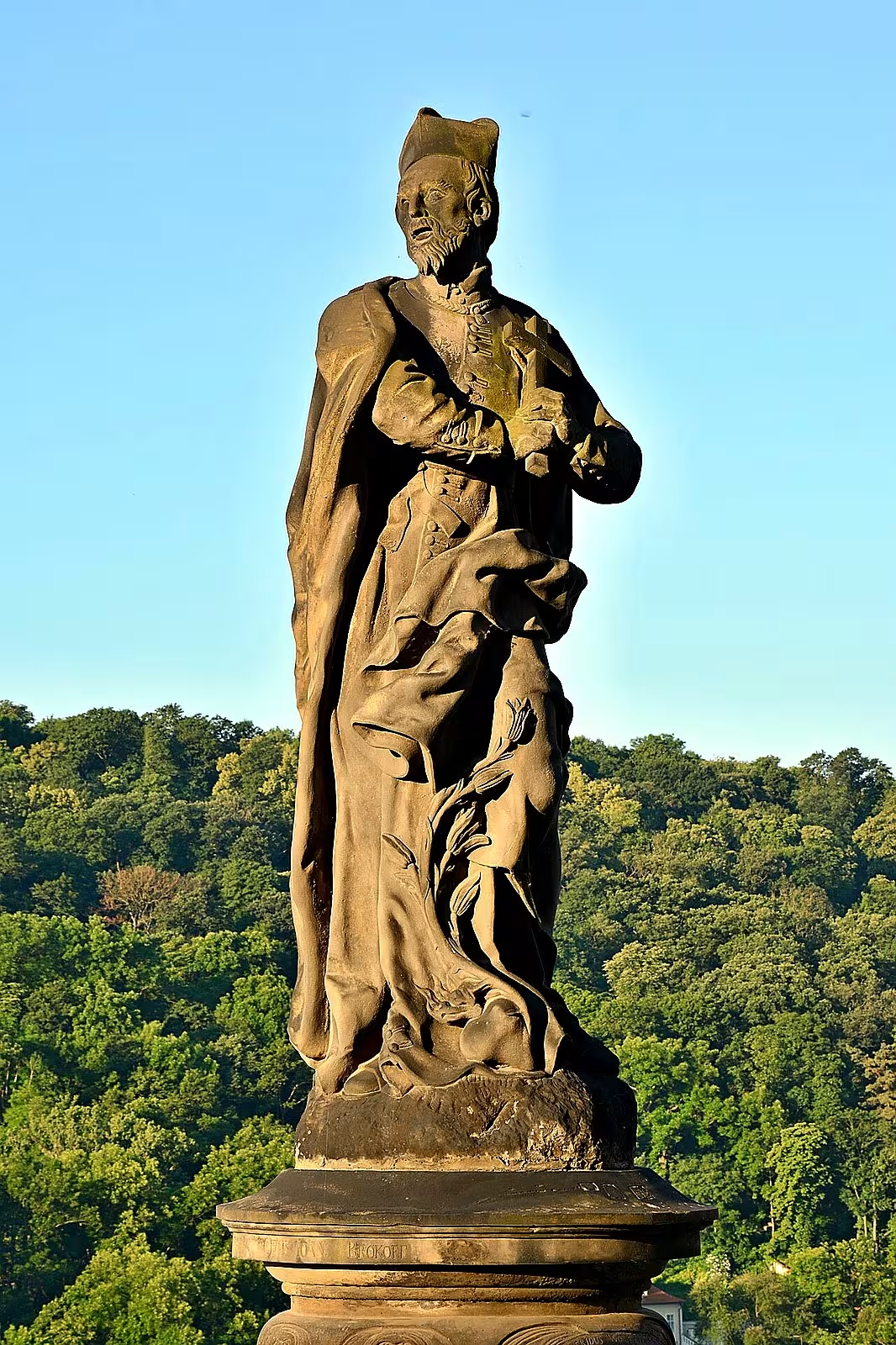
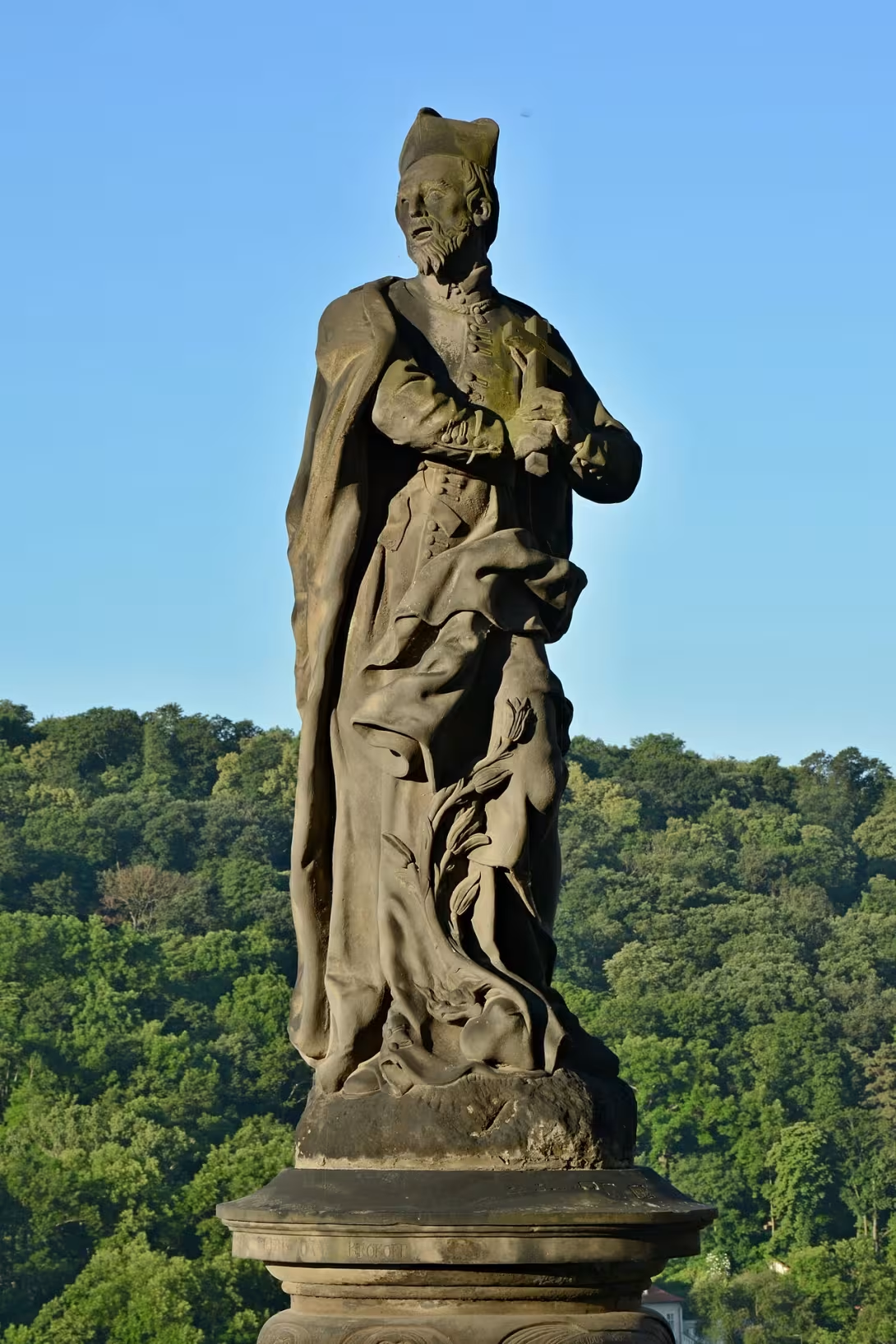
The Baroque statue of St. Philip of Nerei, dated 1715, stands at Hradčanská Square in Prague, where the castle ramp meets the Castle Stairs. This work from the Brokoff family workshop is a top example of baroque sculpture.
The creation of the statue began in 1714 when the imperial butler František Helfríd hrabě Voračický z Paběnic received permission from the Czech Chamber. Originally, the statue was to represent St. John Sarkandro according to Jan Brokoff's design, but in the end Filip of Nerei was chosen. In 1715 it was completed by the sons of Jan Brokoff, especially Ferdinand Maximilian Brokoff, with the help of Michal Jan Josef Brokoff's brother.
The saint is shown in contrast with the head facing the right shoulder. He wears a priest's robe, a cloak and a biret, while a missionary crucifix presses his breasts. At his feet lies the heart, from which grows a stem of lily with flowers, a symbol of pure heart. The contrast between the head and the crucifix, together with the rotating drapera of the shell, gives the dynamics.
The statue stands on a sandstone pedestal in the shape of a pillar with a circular ledge head. The column is decorated with canelura and acanthus leaves pointing down, supplemented with lily flowers. It says Opus Joan, Brokoff. The front side of the pedestal has an authentic inscription and coat of arms of Count Vorachiký with three winged helmets, in whose centre there is a small label with initials of emperors Ferdinand III and Leopold I. The material is sandstone from Kostelka nad Labem, except for the inscription plate made of slivenecan limestone.
After the installation in 1715, the statue was transferred near the Archbishop's Palace. In 1764 she reached her current place, where she placed a cartouche with a Latin text about Filip Nerejský as the founder of the Oratorians and patron of happy death. The back of the inscription quotes words about blessed pure hearts.
During 1728, 1782 and 1888, the statue was repaired and some parts of it replaced. In 2020 she passed a complex restaurant. Thanks to its location, the saint turns to visitors climbing the stairs.
Socha svatého Filipa Nerejského is a valuable example of the Baroque art and skills of the Brokoff workshop. Its detailed processing and symbolism make it an important stop in Hradčanská Square.
Then and now
Drag the slider to compare how the landmark may have looked when it was built with the view today.

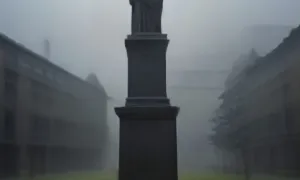
The historical appearance on the left is an AI-generated visualisation and serves as inspiration only.
Historical milestones
- 1714
- Getting permission from the Czech Chamber to make a statue.
- 1715
- Completion of the statue in Jan Brokoff's workshop and installation on Hradčanská Square.
- 1764
- Transferring the statue to the present place between the castle ramp and the Castle Stairs.
- 2020
- A sculpture restaurant.
Architectural development
The statue is made of sandstone, while the inscription plate on the pedestal is made of limestone from the slime. It stands on a decorated column with canelura and acanthus leaves. In 1728, 1782 and 1888, the statue was repaired and some parts replaced by new ones.
Historical events
In 1715 the statue was installed near the Archbishop's Palace and in 1764 it was transferred to its present place. In 2020 she passed a complex restaurant.
Points of interest
- The Baroque statue of St. Philip of Nerejský stands at Hradčanská Square in Prague and is the work of the Brokoff family. - The statue was originally intended for the depiction of St. John Sarkandro, but in the end it represents Philip of Nerei. - The saint is depicted with missionary crucifix and symbols of a pure heart like a lily growing from the heart. - The statue stands on a sandstone pedestal with columns decorated with cannulura and acanthus leaves, with the inscription Opus Joan: Brokoff. - During 1728, 1782, 1888 and in 2020 the statue was repaired or restored.
Guide
Show guide text
This text was created by artificial intelligence and has not been editorially reviewed. It may contain inaccuracies.
Welcome to the heart of historical Prague, a place where every gesture and every stone seems to tell stories of centuries old. You are standing in Hradčanská Square, at the point where the journey up the castle ramp meets the majestic rise to the plot stairs. Can you feel the strange atmosphere that rules here? It's where history stops and allows you to take a closer look. Before your eyes is a monumental Baroque statue that has been watching over this passage for decades, even for centuries. Pay attention to her now, let your eyes flow through her lines and feel the calm that radiates from this work.
Now look closer to the holy figure himself. Note how it is depicted in the priesthood, which gives it nobility and at the same time acts very human. He holds in his hands a missionary crucifix, a symbol of his faith and the relentless paths he made to his mission. Now, if you can, get a little closer and focus your eyes on his heart. You'll see something completely unusual and beautiful - the lily that grows out of his heart. This flower is not just an ornament, it is a powerful symbol of purity and integrity, which perfectly complements his whole attitude. This whole composition, this movement, and this emotion carved by an artist, are supposed to lead you to a deeper sense of his life and message.
Now I want to take you back to when this stone began to turn into a work of art. Let's go back to the beginnings of the seeded century. Imagine a year of a thousand seven hundred fourteen. At that time, it had to be a big deal in order to make such a work possible. It was necessary to obtain permission from the Czech Chamber, which at that time was a crucial step for any important construction or sculpture work. And then everything started. In a thousand and seven hundred and fifteen, the statue was finally finished. But it wasn't one man's work. This statue is the result of an entire family's efforts, which at that time dominated the Prague sculpture craft.
History was created in the workshop of the famous John Brokoff. The main creator was Ferdinand Maximilian Brokoff, but he wasn't alone. His brother, Michal Jan Josef Brokoff, and his father, Jan Brokoff, contributed to his work. Imagine the workshop, the dust from the stone, the sound of the hammer and the rhymes, as the Brokoff family together tried to create something that would last for centuries. This cooperation between father, son and brother has given the work an incredible strength and unity that you can still feel today when you look at the statue.
Now pay attention to how this place changed over time. The statue is not exactly where it was first built. It was originally installed in Hradčanská Square in the year of the thousand seven hundred fifteen, but the time and needs of the city had other plans. In the year of the thousand seven hundred and sixty-four, the statue was transferred to its present place, right here, to the interface between the castle ramp and the plot steps. This relocation has given her new meaning and new coordinates in the space where we meet her today. And even in recent history, people took care of her. In the year two thousand twenty, the statue went through a thorough restoration and care, so that its baroque beauty could preserve its face even for future generations.
And now I'm going to tell you something that may surprise you. This statue, which you now admire as a depiction of St. Philip of Nerei, should not have been what it is from the beginning. It's one of the interesting things we often find in art history. The original intention was different. When she started working on her design, this statue was supposed to represent St. John Sarkandro. How did it happen that the character changed and now carries the attributes of Philip of Nerei? It remains one of those little mysteries that baroque art hides in itself and makes us think about how the perception of saints and works of art changes over the years.
Looking at the statue, you can also recall the names of the people who connected with this place and this piece. In addition to the famous Brokoff family, the name of František Helfrid, Count Vorachický of Pabenice, is also here in history. The history of these people, their ambitions and their influence on what our city looks like today, is an inseparable part of every stone you see here.
Now that you know almost everything you can about this statue, I suggest you look at it once more, but this time not as a mere piece of stone. Look at her as a witness of time, who saw the coming and going of a generation that survived changes in politics and architecture. Feel the connection between the baroque past and your presence.
But don't just stand here. Hradčany offers an infinite number of other treasures waiting for you. Continue along the ramp towards the castle complex, or panic on the stairs to discover the next secret of this place. Every step can lead you to another wonder. Thank you for spending this moment with us and for being interested in the history of this beautiful city. We wish you a beautiful and inspiring next trip to Prague's sights. Goodbye.
Tips for visitors
The best time to visit the statue of St. Philip of Nerei is early morning or late afternoon when there are fewer people and the light is ideal for photography. This time will allow you to enjoy the quiet atmosphere of Hradčanský Square while taking excellent photos.
Access to the statue is easy by car and public transport.
When preparing for the tour, you prefer to wear sunglasses, comfortable shoes and water. It may also be useful to have a map or use a navigation app on your phone for easier orientation.
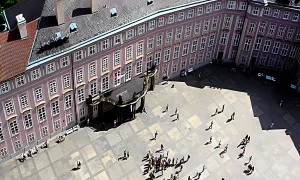
The best place for photography is Hradčanská Square itself, where the statue stands. Light in the early morning and late afternoon is ideal for capturing details of baroque art. When shooting, also note the panoramic views of Hradčany, which are visible here.
In the vicinity of the statue you will find several attractions such as Prague Castle and Archbishop's Palace. These historic places offer rich cultural experiences. For families with children, a trip to the Castle Stairs can be an interesting activity where children can enjoy movement and beautiful panorama.
Frequently asked questions
Can the monument be visited?
This is a structure in a public space that can usually be seen from outside free of charge. We have not verified that this particular one is freely accessible.
Where is the monument?
Location: Hradčany, Hlavní město Praha. The map on this page shows the exact spot.
Why is the monument protected?
It is listed in the Central List of Cultural Monuments of the Czech Republic as a cultural monument (register no. 1000151642).
Businesses nearby
Do you run a restaurant, accommodation, shop, museum, rental, wellness or other visitor service near this monument? Show yourself directly to the people heading to it — this is how they will see you in the app and on the web:
Events nearby

Zdroj akcí: otevřená data měst a obcí ČR (Národní katalog otevřených dat) a kalendář akcí Národního památkového ústavu.
Nearby
Hradčanské náměstí, Pražský hrad, Arcibiskupský palác a Zámecké schody.
Accommodation nearby
Trips and activities nearby
Guided tours, tickets and activities nearby from GetYourGuide
Affiliate link: if you buy from the partner, we may receive a commission. The price for you does not change.
Search tours and activities →Themed route
Thematic cruise route from the village Hradčany
1.Socha svatého Filipa Nerejského (statue) This statue is located in one of the most famous places in Prague and serves as a spiritual oasis for many visitors. It is a place where peace and comfort can be found, while the statue itself is a beautiful work of art.
2. Castle Square This historic square is located near the statue of St. Philip of Nerei and is famous for its architectural beauty. It's a place where you can walk around baroque buildings and enjoy the atmosphere of old alleys.
3. Prague Castle This famous castle is one of the main attractions of Prague, offering views of the whole city and historical monuments. Visit him for your architecture and rich history, which is reflected in his building elements.
4. Archbishop's Palace It is located in Hradčanská Square and is famous for its elegant architecture and historical significance. It is a place where you can explore beautiful interiors and understand the spiritual and cultural heritage of the area.
5. Castle Stairs These famous stairs connect Hradčanská Square with Prague Castle and are a popular place for tourists and locals. They are known for their beautiful architecture and view of the surrounding monuments, which is an ideal place for photos.
This route offers a combination of historical, cultural and spiritual experiences in one of the most important parts of Prague.
Seasonal recommendations
Spring: In the spring season, the atmosphere around the statue of St. Philip of Nerejský in Hradčany is full of newly waxed flowers and smiling sunlight. Flowers in the surrounding courtyard are in their best form, creating an attractive background for photography and relaxation. At this time the weather may still be cold in the morning, so it is advisable to dress on layers. Visit the memory in the early afternoon time when the sun is warmer and the crowds can be milder.
Summer: Summer brings long sunny days and warm air around the statue of St. Philip the Nerei. The sun illuminates the statue in full, which increases its beauty and attracts many visitors. This season it is recommended to visit the memory early in the morning or later in the evening to avoid large crowds during the noon hours. Don't forget sun protection, such as hats and UV cream.
Autumn: Autumn brings wonderful colours of leaves and temperate temperatures in Hradčany. The sun illuminates the statue of St. Philip of Nerei in a golden reflection, creating a unique atmosphere. At this time the weather may be irregular and sometimes rainy, so it is advisable to prepare for the diversity of the climate. The best time to visit is Wednesday week when crowds are usually less intense.
Winter: Winter atmosphere around the statue of St. Philip of Nerei in Hradčany is characterized by cold temperatures and possible snow cover, which gives the place unique beauty. Sun rays illuminate the statue on bright winter days, with evening visits offering views of illuminated monuments. It is necessary to wear warm clothes and wear protective shoes for cold ground. This season the opening time may be shorter, so it is advisable to visit the memory in the early hours of the day.
Visualizations and artistic views


The visualisations are generated by artificial intelligence and serve as inspiration.
Photos from the area
Real photos taken near the monument

Zdroj a licence jsou uvedeny u každého snímku.
Tips from visitors
No tips yet. Be the first!
Log in and add your tip.
Sources and literature
Photos: Gampe / CC BY-SA 4.0 — Wikimedia Commons. The author and licence also appear when you hover over the image.
Faktickým podkladem tohoto textu byl článek na Wikipedii, jehož autory jsou přispěvatelé Wikipedie. Článek je dostupný pod licencí CC BY-SA 4.0.
Location on the map

Příběhy a pověsti
Legendy, pověsti a příběhy spjaté s touto památkou
Fotografie návštěvníků
Zatím žádné fotografie. Buďte první, kdo přidá fotografii z návštěvy!
Log in a přidejte svou fotografii nebo hodnoťte.
Za ověřenou návštěvu v aplikaci získáte víc bodů — poznáme podle GPS, že jste na místě.
Reviews and comments