






Stará vodárna (Chrudim) Waterworks
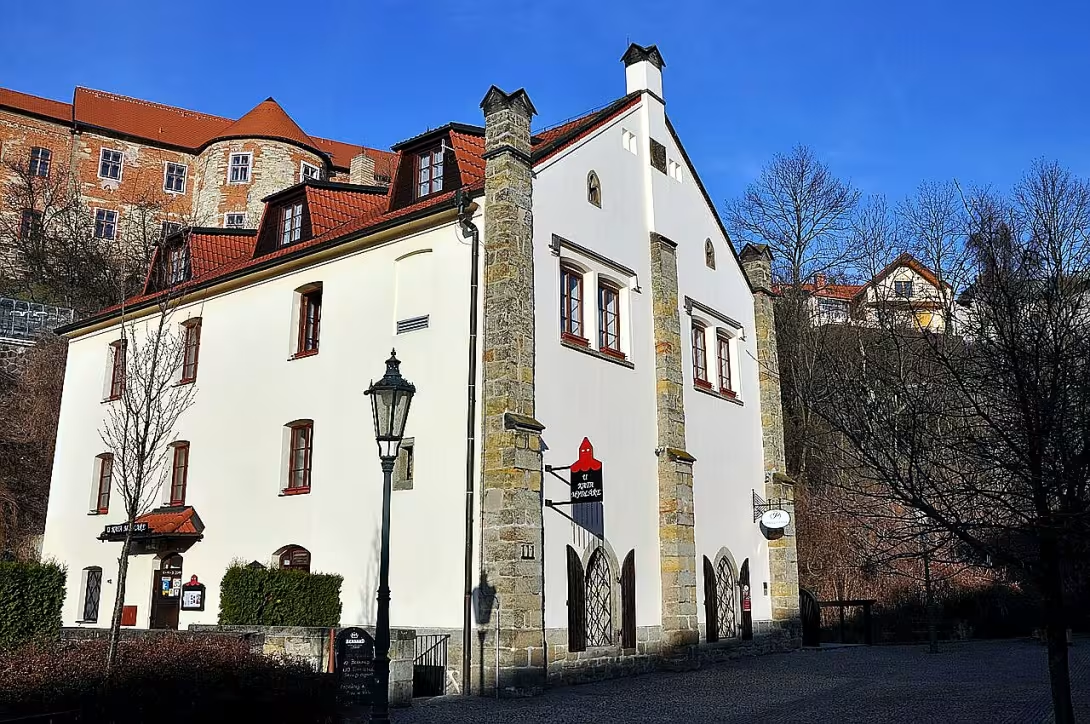
The old water plant in Chrudim, located on U Vodárny Street, is a Baroque building built in 1670 and since 1958 protected as a cultural monument of the Czech Republic. This historical structure is remarkable not only by its architectural character, but also by a long tradition of service to the local population. The water plant replaced the original medieval water plant and was key to supplying water to the city, reflecting the importance of infrastructure projects during the reign of Emperor Leopold I.
The creation of the Old Waterworks is closely linked to the development of urban services in the 17th century, when it was built on the site of the former Soukenic Valchs. In 1670, it was built by Wolf Gruber, a chief of state from Mikulov in Dietrichstein, for the price of 556 gold and 3 tailors. This project was an important step in the development of local infrastructure and reflected a broader trend in urban services expansion during the baroque era.
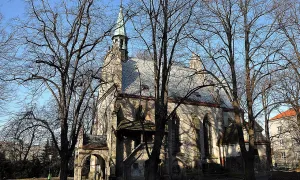
The Old Waterworks are originally built in the Baroque style, but in 1852 it was rebuilt into a neo-gothic style by architect František Schmoranz older. This reconstruction included the installation of a stone city emblem by Jan Kokesh and other decorative elements that gave the building its characteristic appearance. The two-storey structure is set in a slight slope above the former drive, with the main face decorated with stone pillars and portals.
During its existence, the Old Waterworks went through a number of changes. After the reconstruction in 1852 it served as part of the city's water pipeline, which supplied water to various parts of the city until 1951. In 1994- 1995 the building was reconstructed into a restaurant and wine bar U kata Myslářářa, which brought new life to this historical structure. The current water wheel was installed in 1996 as part of the reconstruction.
An interesting feature of the Old Waterworks is its stone city emblem, which adds historical value to the building. This element of architecture was carved by Jan Kokeš and his work was awarded 15 gold pieces.
Today the Old Water House is not only a cultural monument, but also a popular place for visitors to Chrudim. Its historical architecture and rich past make it an ideal place for those who want to know local heritage. Visiting this monument offers a unique view of the history and development of urban services in the Czech Republic, which makes it an essential part of every travel plan to Chrudim.
Then and now
Drag the slider to compare how the landmark may have looked when it was built with the view today.
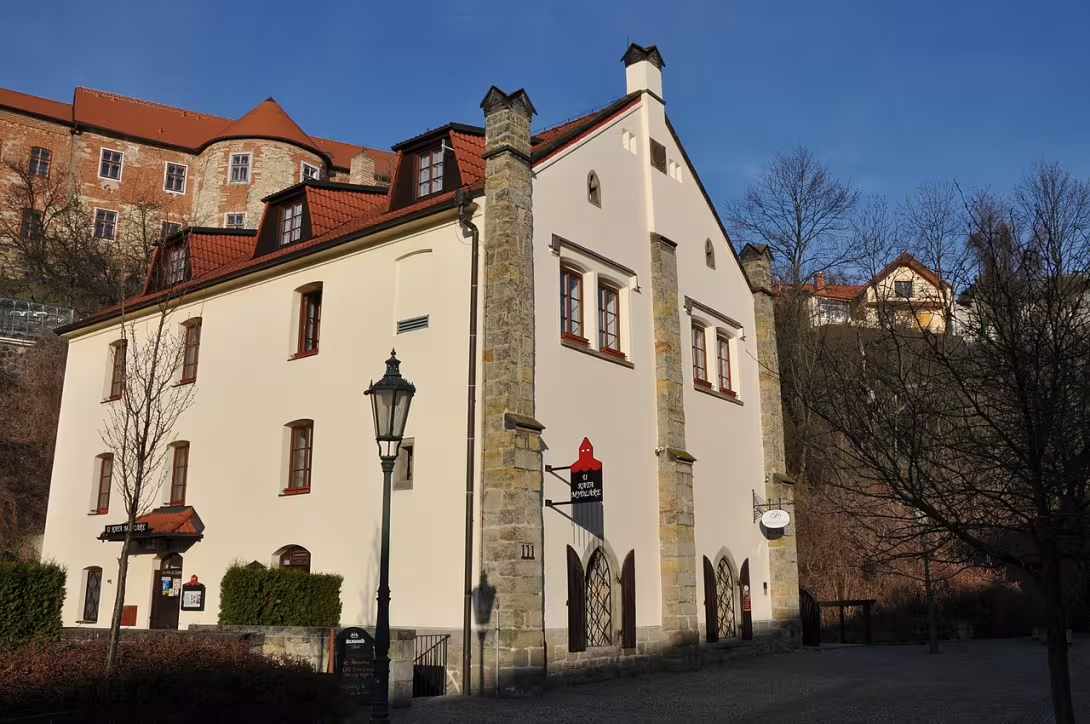
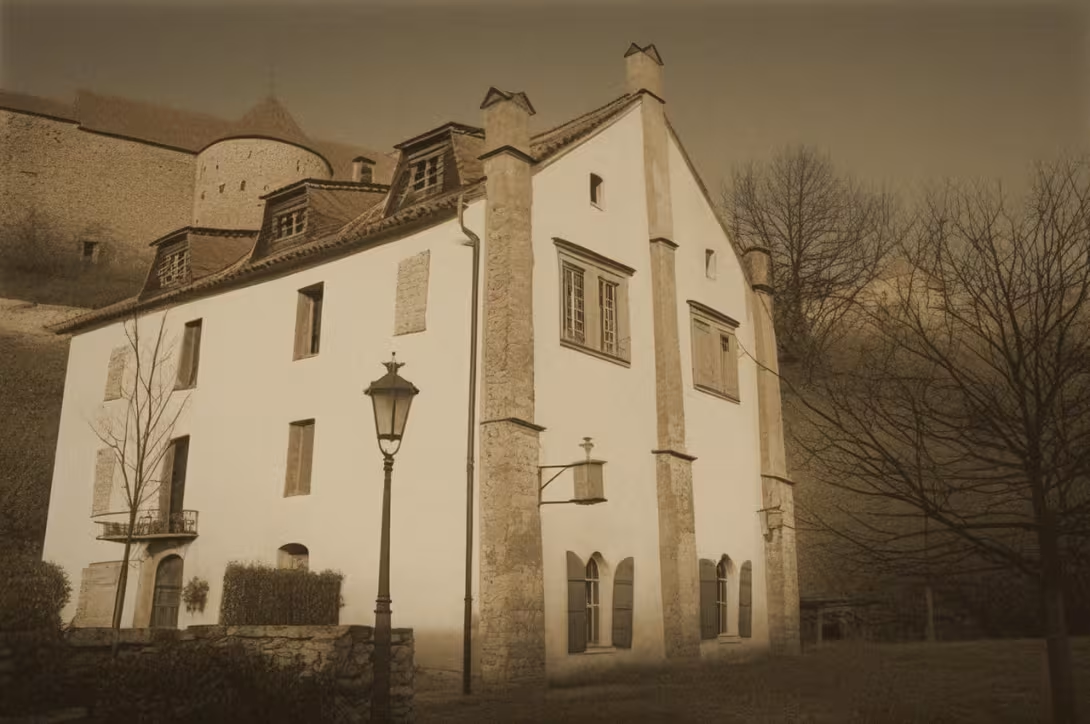
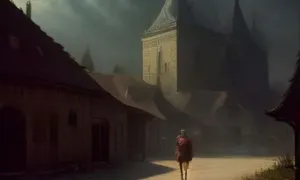
The historical appearance on the left is an AI-generated visualisation and serves as inspiration only.
Historical milestones
- 1670
- Construction of a new water plant.
- 1852
- Rebuilding to neo-gothic style.
Architectural development
The original Baroque structure was rebuilt in 1852 into a neo-gothic style. The water supply facility included a water bike and a water tower, which served to supply the city with water.
Historical events
- 1670
- Construction of a new water plant on the site of the former soukenice valley.
- 1852
- Rebuilding the building into a neo-gothic style and introducing new technologies for water supply.
- 1994
- Reconstruction of the building to the restaurant and wine bar U kata Mysláří.
Points of interest
- The building was built in 1670 by Wolf Gruber at the site of the former soukenic waltz. - Originally it was Baroque, but in 1852 the architect František Schmoranz starší rebuilt it into a neo-gothic style. - On the building there is a stone city emblem by Jan Kokesh, whose work was paid 15 gold ones. - In the years 1994-1995, the water plant was reconstructed into a restaurant and wine bar U kata Myslára. - The current water bike was installed in 1996.
Guide
Show guide text
This text was created by artificial intelligence and has not been editorially reviewed. It may contain inaccuracies.
Welcome to Chrudim, a city of rich history where every stone tells its own story. Right now, you are facing one of the very interesting structures, which may not look like the most significant temple or castle at first sight, but its importance to the life of the people in the past was absolutely crucial. In front of you is the Old Water Room. Stop for a moment, take a breath and feel the atmosphere of this place. Look at the building as a whole. You see a structure in front of you that connects several different layers of time and different architectural ideas. It is a place where the practical purpose of the city's water supply met with aesthetic desire to create beautiful and representative buildings.
To understand why this building looks like this, we need to go back deep into the past together. Imagine Chrudim in the seventeenth century. By that time, the city knew that it needed a reliable system for water distribution, and the original medieval water plant was no longer enough with its capacity or construction condition. So it came in 1670, when this new water plant was built. Its creator was Wolf Gruber. It's fascinating to think that this building wasn't created in an empty field, but it did replace something that was here a long time ago. Before the water plant there was a soukenic Valcha, a place where substances and wool were processed. You can say that this place has since been linked to water and work that was necessary for the development of the city.
Now that you're standing in front of the front, let's think about how the building was changing over time. When Wolf Gruber finished it in 1670, it was built in Baroque style. At that time, the Baroque was a symbol of power, stability and a certain pomp. However, time has constantly shifted our tastes and ideas of what is beautiful. More than one hundred seventy years later, namely in 1852, there was a fundamental change. The city decided to rebuild the building to match modern taste. Architect František Schmoranz starší entered the game. He transformed the building into a neo-gothic style.
Now look carefully at the details you see. The Novogotics that Schmoranz left behind tried to return to the spirit of the Middle Ages, but with the precision and technical possibilities of the nineteenth century. Note the general engraving and shapes that radiate from the building. It's a fascinating contrast when the baroque foundation was given a neo-gothic robe. It is this layery that makes the waterworks unique. It's not just one stop in time, but a dialogue between two different ages.
When you look at the facade, I suggest you pay attention to one very specific detail. Look for a stone city emblem. This small but important element was made by Master Jan Kokesh. It's a fascinating testimony about the craft work of that time. What's interesting about this character is the record of its origin. The historical evidence indicates that one unit of the currency at that time was paid for its completion. It may sound like a trifle today, but for us it means that even the smallest details have been carefully planned and their work has been properly appreciated. This character is like the signature of the author in the painting, which reminds us that behind every stone was a particular person with his talent and February work.
When we think about the people who were connected to this place, we have to mention the two main architects. Wolf Gruber laid the foundation and made sure the city had water. František Schmoranz starší then ensured that the building had a dignified appearance, which we see in it today. Although the water plant is no longer serving its original technical purpose, its value has only increased over time. In 1958, the building was officially recognised and protected as a cultural monument of the Czech Republic. This means that the state has acknowledged that this building is an important part of our common identity and history, which we must preserve for future generations.
Now try to imagine how many people have passed through here over the centuries. How many craftsmen controlled the current of water here, how many inhabitants of Chrudim owed this very building for having water running in their houses. It's a place where there's a daily need to survive with high art architecture. It's basically a water machine that was wrapped in a beautiful stone coat.
You might wonder why this building was so important. In a time when there were no modern pipeline networks like we know today, the waterworks were the heart of the city. Without it, life in Chrudim would be much harder. And that's why so much effort has been invested in it, why it was converted and why aesthetic elements like the city emblem were inserted into it. The water plant was not just a utility, it was a pride of the city.
Now that you know the story of this building, I suggest you reconstruct the building over and over again from different angles to see the light hit it. Try to imagine the transition from baroque fullness to neo-gothic elegance. Feel the silence that surrounds this memory today, and contradict it with the noise of the soukenic valley that was once here, or with the call of the people who were here decades ago.
The old water plant is a reminder that even the things we take for granted, such as tap water, have in the past required enormous engineering efforts and architectural vision. It's a bridge between the Middle Ages, Baroque and modern times.
Thank you for stopping by this beautiful monument. I hope this short trip to history has helped you see the Old Water Room in a new light. We now invite you to further explore Chrudim. Go through the surrounding alleys, look for more hidden details and be inspired by the spirit of this city. We wish you a pleasant continuation of your discovery and enjoy every moment you spend in this historic space. See you next time.
Tips for visitors
The best time to visit the Old Waterworks in Chrudim is usually spring or autumn when the weather is mild and the surrounding greenery provides a beautiful contrast to the historic building. There are also fewer tourists at these times, which allows for a calmer tour and better images without crowds. If you are planning a visit in the summer months, avoid the midday hours when the heat may be unpleasant, and focus on the morning or evening light.
Transport availability is ensured both by car and public transport. For visitors arriving by car, it is advisable to search for the nearest available parking spaces around the site Chrudim II, whether public parking or private offers nearby. If you travel by public transport, check the current connections and departure times in the search engine, because the lines can be changed. The place is accessible by foot from the city centre, which is a pleasant alternative for those who want to enjoy a walk.
When visiting, bring comfortable shoes as the surrounding area can be unpaved or slightly uneven. We recommend having drinking water, especially in warmer months, and a light snack if you plan to stay longer. If the forecast is rain, don't forget the umbrella or waterproof jacket, so that bad weather doesn't spoil the experience of a tour of the historic building.
For photography is ideal morning or late afternoon light that highlights details of the neo-gothic reconstruction from 1852 and baroque elements of the original building from 1670. Look for angles that capture the contrast between the old and the new architectural layer. If the sky is cloudy, use soft light for images with fine shadows. We recommend to carry a tripod for longer exposure, especially if you want to capture details of the facade or surrounding landscape.
Since the ground does not include specific surroundings for trips, focus on the monument itself and its historical context. If you have time, you can see other historic buildings near Chrudim, which are often part of the city's monument zone. For families with children it is important that children have enough energy to walk, and it is advisable to talk to them about the history of water industry, so that the visit is educational and fun. If children are small, consider visiting in calmer hours so they are not interrupted by the crowd.
Businesses nearby
Do you run a restaurant, accommodation, shop, museum, rental, wellness or other visitor service near this monument? Show yourself directly to the people heading to it — this is how they will see you in the app and on the web:
Events nearby
Zdroj akcí: otevřená data měst a obcí ČR (Národní katalog otevřených dat) a kalendář akcí Národního památkového ústavu.
Nearby
🏰 Historic sites (269)
- Muzeum loutkářských kultur 0.1 km Břetislavova 74
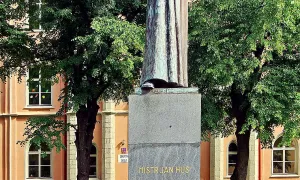
- Jan Hus 0.1 km
- Muzeum barokních soch 0.2 km
- Galerie ART Chrudim 0.2 km web
- Tomáš Garrigue Masaryk 0.2 km
- plk. Jaroslav Kudláček - RAF 0.3 km
- Regionální muzeum v Chrudimi 0.5 km
- Kalliopé 0.8 km
- Josef Vaněk a Karel Kudrna 0.9 km
- Jan Šnajdr (1945) 1.5 km
- Lukáš Syrůček (2009) 1.6 km
- sv. Jan Nepomucký 2.6 km
- Topol 3.2 km
- Morový sloup 3.4 km
- sv. Jan Nepomucký 3.5 km
- Zámek Slatiňany 3.5 km +420 469 681 112 web
- Helena Stránská 3.6 km
- Pavel Stránský 3.6 km
- Zámek Medlešice 3.8 km
- Obětem boje 1. a 2. světové války 3.8 km
🍽️ Restaurants and dining (439)
- Giles burger 0.1 km
- U Petra 0.2 km
- Restaurace U Haničky 0.2 km Resselovo náměstí 6 +420 778 451 849 web
- Greenhaus 0.2 km
- V Mraveništi 0.3 km Novoměstská 59
- Yi Pin Xiang 0.3 km
- AKafe 0.3 km
- Pizzerie pod náměstím 0.3 km
- Kateřina 0.3 km
- Döner Kebab Belkis 0.3 km
- Restaurace Chrudimský lokál Sport 0.3 km +420777600606 web
- Hospůdka u Václava 0.3 km
- La Bella 0.3 km
- Celia 0.4 km
- U Čerta 0.4 km
- Bistro Filištínská 0.4 km
- Festuňk 0.4 km
- Americana 0.4 km
- Staročeská restaurace 0.4 km
- Kruh Zdraví 0.6 km
🏨 Accommodation (46)
- Žižka I. 0.1 km
- Penzion U Náhonu 0.1 km
- Slavie 0.4 km
- Penzion Na Sklepích 1.0 km web
- Bonet 4.4 km
- Farma Slunečný Dvůr 7.8 km +420 602 240 944 web
- Penzion a restaurace Šenk 7.9 km web
- Bačalský mlýn – welness 7.9 km
- Bačalský mlýn 7.9 km +420 466 610 651;+420 731 904 888 web
- Penzion Jasopa 8.4 km Průmyslová 560 +420 725 565 534 web
- Penzion Skylark 8.8 km Teplého 1673 +420 605 001 555 web
- Ubytovna 9.0 km web
- Ubytování v Pardubicích 9.2 km
- Hotel Euro 9.3 km Jiráskova 2781 +420 466 414 255 web
- Bílý Beránek 9.3 km
- Arnošt 9.3 km web
- Birdie 9.3 km Hlaváčova 392
- Penzion City 9.4 km Hronovická 708 +420 777 002 272 web
- Penzion Cafe City 9.4 km Hronovická 708 +420 777 002 272 web
- Hotel Kristl 9.5 km +420 739 287 636 web
🚲 Rentals and sport (61)
- Sportovní Hala Chrudim 0.3 km
- Vesna OK Sport 0.3 km
- Fitcentrum 0.4 km Palackého třída 806
- Sportisimo 1.1 km
- Radan Štulík 3.8 km
- Okolokola.cz 4.4 km +420776666770 web
- Elektrokolo servis 5.0 km web
- Cyklo Pejcha 7.9 km Chrudimská 145 +420 733 735 500 web
- HOBBY BIKE - cykloservis 8.4 km Staňkova 2114 web
- Sportovně střelecký klub TMS Pardubice 8.4 km web
- Wanted sport s.r.o. 8.6 km náměstí Dukelských hrdinů 2233 +420 732 650 792 web
- Cyklo Bike 8.9 km
- Areál orientačního běhu 9.0 km web
- Prospektiva 9.0 km +420 608 500 608
- Vektor sportcentrum 9.0 km web
- Sportovní hala Heřmanův Městec 9.3 km +420 776 748 685 web
- Brouzdaliště 9.3 km
- Cyklo POKR 9.5 km 17. listopadu 216 web
- Global Sport 9.5 km +420775070712 web
- Hřiště pro veřejnost 9.6 km Pod Zahradami 317 web
🥾 Hiking and nature (113)
- Park Republiky 0.2 km
- Zieglerovy sady 0.2 km
- Klášterní zahrady 0.3 km
- Městský park 0.9 km
- Střelnice 1.0 km
- Červená studánka 1.2 km web
- Piškvorky 1.7 km
- Naučné hranolky 1.7 km
- Habrov 3.5 km
- Na podhůře 3.6 km web
- Zámecký park 3.7 km
- Rozhledna Bára 3.9 km web
- Podhůra 4.1 km
- Lokace polního opevnění 1778–1779 4.1 km web
- Na skalách 4.1 km
- Lokace polního opevnění 1778–1779 4.3 km web
- Lokace polního opevnění 1778–1779 4.5 km web
- Lokace polního opevnění 1778–1779 4.6 km web
- Hůra 4.7 km
- Na kopci 4.8 km
Accommodation nearby
Themed route
1. Old waterworks - type: historical object. Here you will explore the history of working with water. 2. Tanks - type: open space. You can observe the details of the building and architecture of the complex. 3. Water tower - type: technical construction. This part of the building used to store water and shows old technical procedures. 4. Exposure - type: museum section. In these areas you will see historical instruments and machines used for cleaning water.
Seasonal recommendations
In spring, the water plant shines new greenery and the surrounding parks begin to bloom. The atmosphere is fresh and full of hope, which is accompanied by a fine spring light. We recommend visiting a memorial in the morning when there are fewer visitors. Clothes should be laminated to protect you from sudden cooling.
The summer season brings a radiant sun and dense shade of trees that offers relief from heat. The environment works live and in color. Because of the season, it is advisable to come right at the opening to avoid the biggest crowds. Don't forget light, breathable clothes and plenty of fluid to go.
In autumn, the landscape around the waterworks turns into golden and brown tones, while the morning mist adds mystery to the place. The light is softer and the shadows are more. It's ideal to plan a visit until late afternoon. Due to humidity, the best accessories are waterproof shoes and a warm sweater.
In winter, the monument is peaceful and steep, often in the embrace of frost or snow. The landscape is in neutral colours and the atmosphere is very quiet. It is necessary to wear warm winter clothes and watch the shortened opening hours. We recommend a visit at noon when there is the most daylight.
Visualizations and artistic views


The visualisations are generated by artificial intelligence and serve as inspiration.
Photos from the area
Real photos taken near the monument


Zdroj a licence jsou uvedeny u každého snímku.
Tips from visitors
No tips yet. Be the first!
Log in and add your tip.
Sources and literature
Photos: Ben Skála / CC BY-SA 3.0 — Wikimedia Commons. The author and licence also appear when you hover over the image.
Faktickým podkladem tohoto textu byl článek na Wikipedii, jehož autory jsou přispěvatelé Wikipedie. Článek je dostupný pod licencí CC BY-SA 4.0.
Location on the map
Příběhy a pověsti
Legendy, pověsti a příběhy spjaté s touto památkou
Fotografie návštěvníků
Zatím žádné fotografie. Buďte první, kdo přidá fotografii z návštěvy!
Log in a přidejte svou fotografii nebo hodnoťte.
Za ověřenou návštěvu v aplikaci získáte víc bodů — poznáme podle GPS, že jste na místě.
Reviews and comments