






Starý Herštejn Ruin
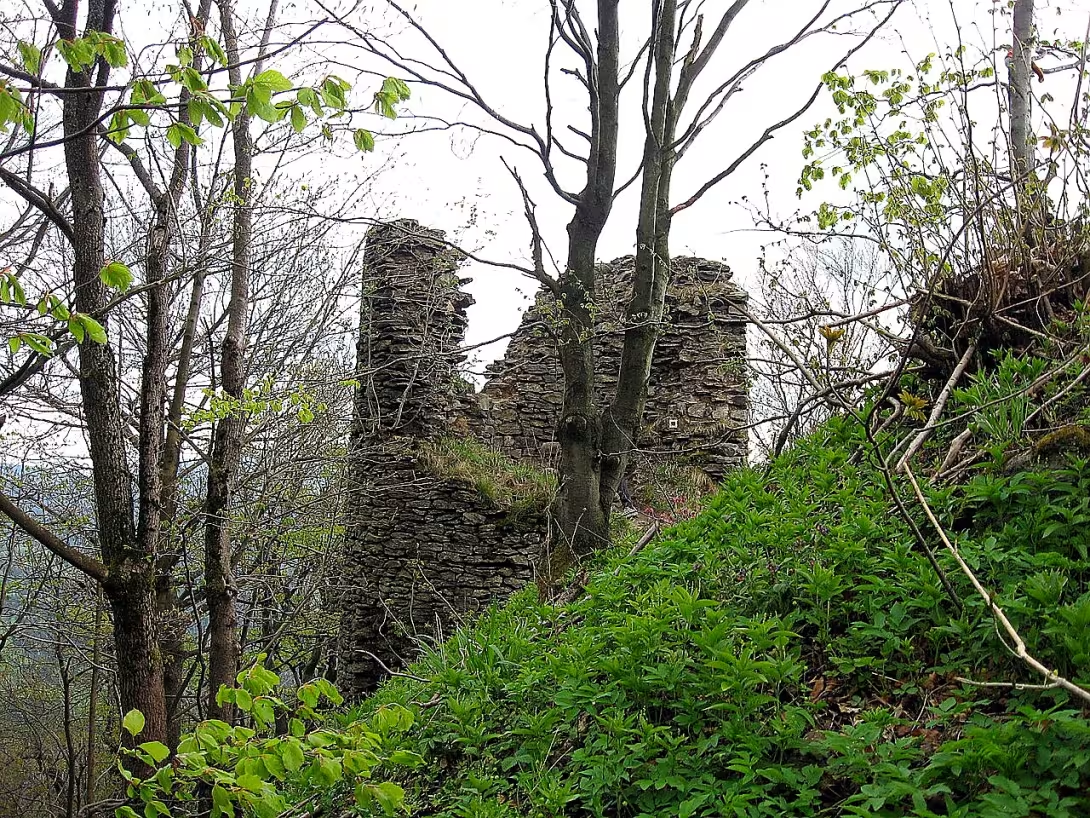
Starý Herštejn is a medieval castle ruin located in the Czech Forest within the Starý Herštejn nature reserve. Situated approximately sixteen kilometers southeast of Domažlice near Vranov u Pivoně, this site stands as a testament to its historical significance and architectural evolution from the mid-13th century. Recognized as a cultural monument of the Czech Republic, it offers insights into medieval fortifications and ecclesiastical defense strategies.
The origins of Starý Herštejn trace back to the mid-13th century, with evidence suggesting its foundation before 1266 by members of the German nobility rather than a ruling monarch. Its first documented mention in 1272 associates it with Protivce z Herštejna, though subsequent ownership and affiliations remain somewhat ambiguous between Starý and Nový Herštejn. By 1328, Oldřich z Leuchtenberka had acquired the castle, later selling it to Jindřich Bavorský for a thousand kop grošů—a sum not fully paid, leading to its eventual acquisition by King Jan Lucemburský. In 1331, the castle was sold to Jan IV. z Dražic, who administered it alongside Horšovský Týn, utilizing it as an ecclesiastical stronghold.
Architecturally, Starý Herštejn underwent several phases of development. The site features remnants of walls and moats that once protected its bailey, along with a partially preserved bergfried. Initially serving as a fortified stronghold, the castle's gatehouse was enhanced with a small forebuilding in later stages. Despite being destroyed during the Hussite Wars in 1510 by Zdeňek Lev’s army, recent restoration efforts have focused on stabilizing and preserving its remaining structures.
Ownership of Starý Herštejn shifted through various hands over the centuries. After Jan IV. z Dražic's administration, it was held as collateral by Petr Ebrzvín z Hradiště before being captured during the Hussite Wars in 1421 by forces from Domazlice. Bernard Ebrzvín later transferred ownership to Ctibor z Volfštejna, who eventually passed it on to Zdeňek z Drštky. By 1506, Zdeněk Dobrohost z Ronšperka acquired the castle, whose garrison became notorious for raiding merchants and travelers, leading to its destruction in 1510.
Today, Starý Herštejn stands as a significant historical monument, offering visitors a glimpse into medieval life and architecture. The site is accessible via a trail that leads to the ruins, providing panoramic views of the surrounding Czech Forest. Recent restoration efforts have included stabilizing the castle's remaining structures using a replica of a medieval crane, enhancing its appeal as both a historical site and a scenic viewpoint.
Starý Herštejn remains an important cultural landmark, reflecting the turbulent history and architectural ingenuity of medieval Bohemia. Its ruins invite exploration and appreciation for those interested in history, architecture, or simply enjoying the natural beauty of the Czech Forest. Visitors are encouraged to experience this remarkable site, where history and nature converge.
Then and now
Drag the slider to compare how the landmark may have looked when it was built with the view today.
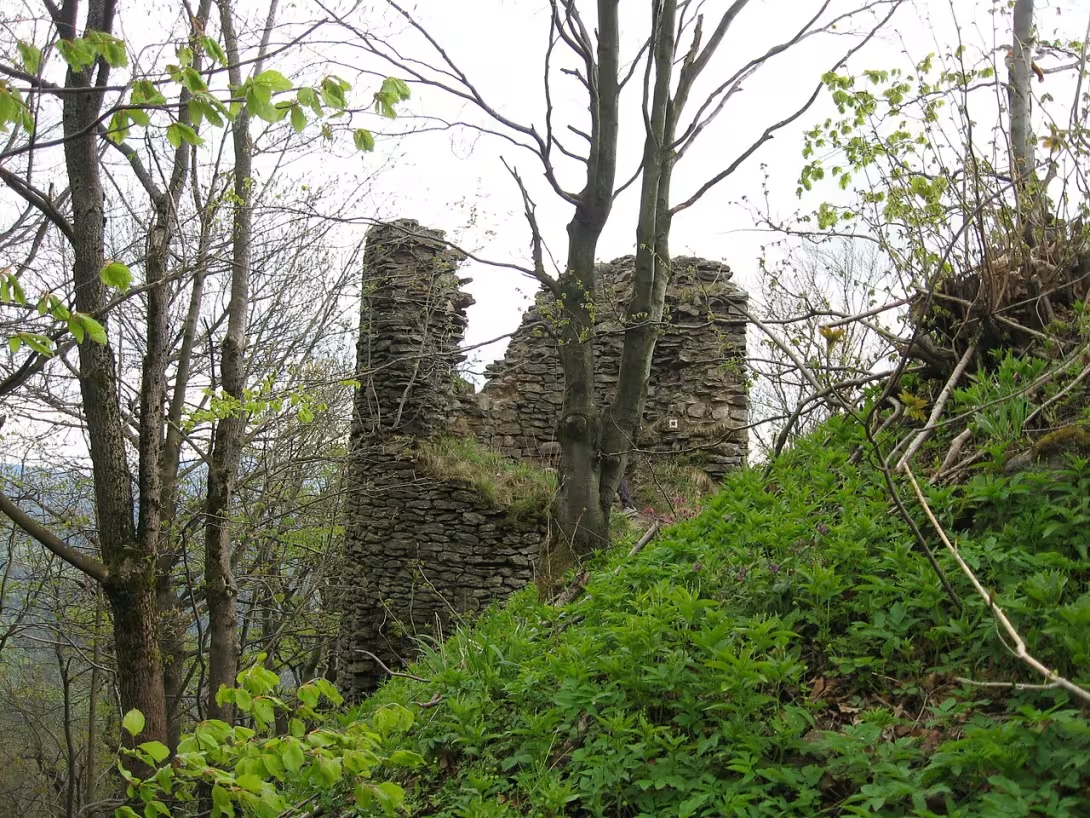
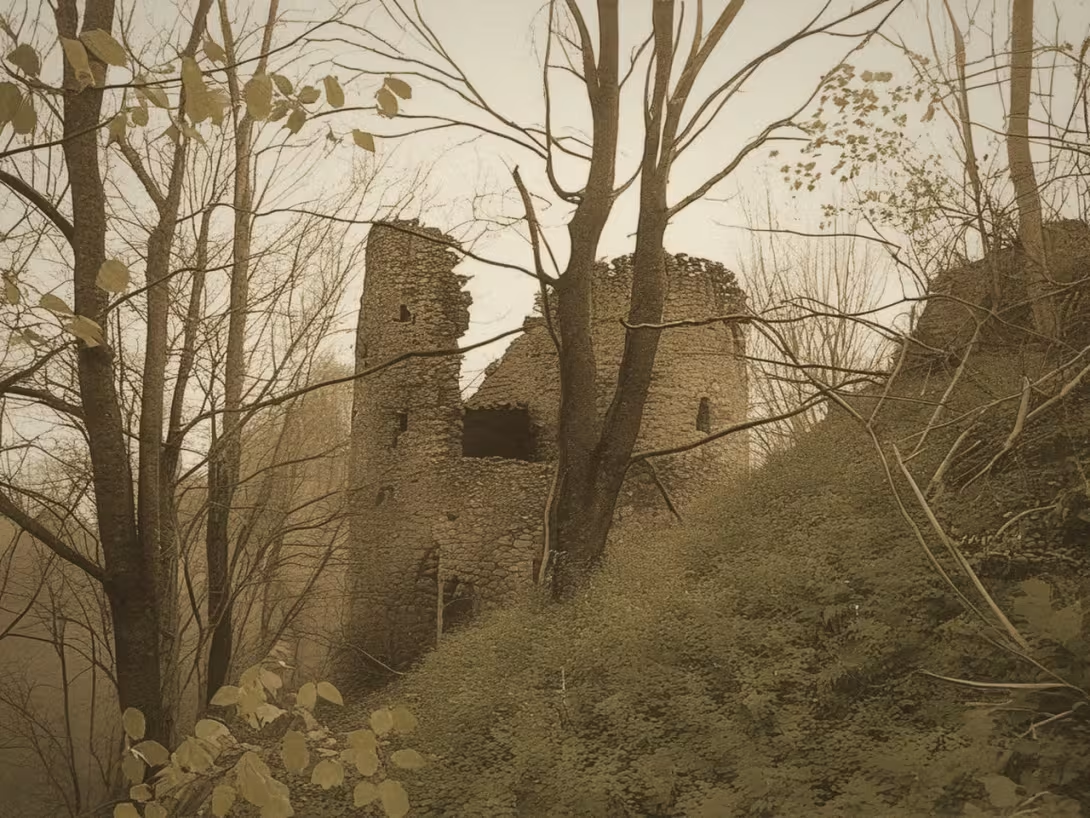
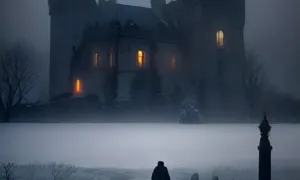
The historical appearance on the left is an AI-generated visualisation and serves as inspiration only.
Historical milestones
- 1272
- First documented mention of Starý Herštejn.
- 1421
- Captured by Domazlice forces during the Hussite Wars.
- 1510
- Dismantled and destroyed by Zdeňek Lev's army.
Architectural development
Starý Herštejn underwent several architectural phases, initially serving as a fortified stronghold. The castle featured defensive structures such as walls, moats, and a bergfried. Over time, it saw modifications including the addition of a small forebuilding to its gatehouse. Despite being destroyed in 1510, recent restoration efforts have focused on stabilizing remaining structures.
Historical events
First documented mention in 1272.
Captured by Domazlice forces during the Hussite Wars in 1421.
Dismantled and destroyed by Zdeňek Lev's army in 1510.
Owners
Oldřich z Leuchtenberka (before 1328)
Jindřich Bavorský (after 1328)
Jan Lucemburský (mid-14th century)
Jan IV. z Dražic (1331)
Zbyněk z Osvračína (as administrator for Jan IV.)
Petr Ebrzvín z Hradiště (before 1420)
Bernard Ebrzvín (transferred to Ctibor z Volfštejna)
Ctibor z Volfštejna (1437)
Zdeňek z Drštky (1427)
Zdeněk Dobrohost z Ronšperka (1506)
Points of interest
- Starý Herštejn's foundation is attributed to the German nobility rather than a ruling monarch, highlighting its unique origins in the mid-13th century. - The castle was sold by Oldřich z Leuchtenberka to Jindřich Bavorský for a thousand kop grošů, but due to an incomplete payment, it eventually became part of King Jan Lucemburský's possessions.
- Despite its destruction during the Hussite Wars in 1510, recent restoration efforts have utilized a replica medieval crane to stabilize and preserve the remaining structures of Starý Herštejn.
- Bernard Ebrzvín transferred ownership of Starý Herštejn to Ctibor z Volfštejna, who later passed it on to Zdeňek z Drštky, illustrating a complex history of changing hands through various noble families.
- The castle's garrison under Zdeněk Dobrohost z Ronšperka became infamous for raiding merchants and travelers, contributing to its eventual destruction in 1510.
Guide
This guide is narrated by a synthetic voice generated by artificial intelligence.
Show guide text
This text was created by artificial intelligence and has not been editorially reviewed. It may contain inaccuracies.
Welcome to the historic site of Starý Herštejn, a medieval castle ruin nestled within the enchanting Czech Forest and part of the Starý Herštejn nature reserve. As you stand here, take a moment to absorb the serene ambiance that surrounds this ancient structure. The remnants of walls and moats whisper tales from centuries past, while the partially preserved bergfried stands as a silent sentinel amidst the verdant landscape.
The origins of Starý Herštejn date back to around the mid-13th century when it was constructed by German nobility rather than a ruling monarch—a unique foundation story for its time. This castle served as an important defensive stronghold, safeguarding ecclesiastical properties near Horšovský Týn. Its strategic significance is evident in the remnants you see today.
As you explore, notice the architectural details that have withstood the test of time. The walls and moats that once protected its bailey are faint yet discernible against the backdrop of nature's reclaiming efforts. While much has been lost to history, these elements offer a glimpse into the castle’s formidable past.
Starý Herštejn is steeped in rich historical narratives involving notable figures such as Oldřich z Leuchtenberka and Jindřich Bavorský. The castle was sold by Oldřich z Leuchtenberka to Jindřich Bavorský for a thousand kop grošů, but due to an incomplete payment, it eventually changed hands in unexpected ways. This transaction is just one of many intriguing stories that paint the vibrant history of this site.
The castle's journey through time includes its capture by Domazlice forces during the Hussite Wars in 1421 and its eventual dismantling and destruction by Zdeňek Lev's army in 1510. These events mark pivotal moments in the life of Starý Herštejn, reflecting broader historical currents that swept across the region.
One fascinating aspect of this site is its foundation attributed to German nobility rather than a monarch, highlighting its unique origins and significance during the mid-13th century. This detail adds an intriguing layer to your understanding of medieval power dynamics and settlement patterns in Bohemia.
As you continue your exploration, let your imagination wander through the stories that have unfolded here over the centuries. Whether it's pondering the strategic decisions made by historical figures or simply enjoying the tranquility of this historic landscape, there is much to discover at Starý Herštejn.
Thank you for joining us on this journey into history. We invite you to delve deeper into the mysteries and stories that await here. May your visit inspire a lasting appreciation for the rich tapestry of our shared past. Safe travels as you continue exploring the wonders of Plzeňský kraj.
Frequently asked questions
Can the monument be visited?
This is a ruin. Such sites are often freely accessible, but some can only be visited with a guide or are closed for safety reasons. We have not verified the current situation – take care and respect any restrictions.
Where is the monument?
Location: Vranov, Plzeňský kraj. The map on this page shows the exact spot.
Why is the monument protected?
It is listed in the Central List of Cultural Monuments of the Czech Republic as a cultural monument (register no. 24139/4-2151).
Businesses nearby
Do you run a restaurant, accommodation, shop, museum, rental, wellness or other visitor service near this monument? Show yourself directly to the people heading to it — this is how they will see you in the app and on the web:
Nearby
Starý Herštejn is situated in the Czech Forest, near Vranov u Pivoně. The area includes natural features such as dense forests and rolling hills, with Horšovský Týn nearby.
Accommodation nearby
Themed route
Thematic Vltour: Exploring the Ruins of Old Herštejn and Its Surroundings
1. Old Herštejn (zřícenina)
Type: Historical Site
Why Visit: Begin your journey at this captivating medieval castle ruin nestled in the Czech Forest near Vranov u Pivoně. The remnants of Old Herštejn offer a glimpse into its storied past, with scenic views from its elevated position amidst dense forests and rolling hills. Explore the ruins to imagine life during the castle's heyday.
2. Czech Forest Trails
Type: Nature Walk
Why Visit: After exploring the castle, embark on a leisurely hike through the surrounding Czech Forest trails. These paths offer an immersive experience in nature with lush greenery and serene landscapes that provide a perfect backdrop for reflection or photography. The forest's tranquility complements the historical aura of Old Herštejn.
3. Horšovský Týn
Type: Nearby Town
Why Visit: A short drive from Vranov u Pivoně, Horšovský Týn is a charming town known for its well-preserved medieval architecture and vibrant cultural scene. Stroll through the historic streets to admire traditional buildings and visit local shops or cafes. The town's rich history and welcoming atmosphere make it an ideal stop on your itinerary.
4. Vranov u Pivoně
Type: Village
Why Visit: Conclude your tour in Vranov u Pivoně, a picturesque village near the ruins of Old Herštejn. Enjoy the peaceful ambiance and explore local landmarks or simply relax in one of its quaint cafes. The village offers a perfect end to your day with its scenic views and authentic Czech charm.
This thematic route provides an enriching blend of history, nature, and culture, allowing you to fully appreciate the beauty and heritage of Old Herštejn and its surroundings.
Seasonal recommendations
Spring: Visiting Starý Herštejn during spring offers a unique experience as the castle ruins are enveloped by blooming wildflowers and lush greenery, creating a vibrant tapestry of colors that enhance the historic atmosphere. The gentle warmth of the sun accentuates the textures of the ancient stones, while occasional rain showers add to the mystical allure of the site. To fully enjoy this season, visitors should arrive early in the day when the light is soft and the crowds are fewer. Comfortable walking shoes and a light jacket are advisable due to unpredictable weather.
Summer: Summer at Starý Herštejn is characterized by long days filled with warm sunshine that bathes the ruins in golden hues, highlighting their majestic beauty. The surrounding landscape bursts into life with dense foliage and vibrant wildflowers, offering picturesque views for photography enthusiasts. However, this is also the peak tourist season, so it’s wise to visit early in the morning or later in the afternoon to avoid large crowds. Staying hydrated and wearing sun protection are essential due to the intense summer heat.
Autumn: Autumn brings a magical transformation to Starý Herštejn as the foliage turns into fiery shades of red, orange, and yellow, creating an enchanting backdrop for exploring the ruins. The cooler temperatures make it an ideal time for leisurely walks through the historic site, with fewer visitors compared to summer months. To fully appreciate this season’s beauty, dress in layers to accommodate fluctuating temperatures and consider bringing a camera to capture the stunning autumnal scenery.
Winter: Winter at Starý Herštejn offers a serene and atmospheric experience as snow blankets the ruins, giving them an ethereal appearance under the soft winter light. The quietness of the site during this season provides a unique opportunity for reflection and photography without the distraction of crowds. Arriving with hot drinks can also enhance the cozy experience amidst the chilly air.
Visualizations and artistic views


The visualisations are generated by artificial intelligence and serve as inspiration.
Photos from the area
Real photos taken near the monument


Zdroj a licence jsou uvedeny u každého snímku.
Tips from visitors
No tips yet. Be the first!
Log in and add your tip.
Sources and literature
Photos: Jik jik / CC BY-SA 3.0 — Wikimedia Commons. The author and licence also appear when you hover over the image.
Faktickým podkladem tohoto textu byl článek na Wikipedii, jehož autory jsou přispěvatelé Wikipedie. Článek je dostupný pod licencí CC BY-SA 4.0.
Location on the map
More monuments – Vranov
Show all in the municipality

Příběhy a pověsti
Legendy, pověsti a příběhy spjaté s touto památkou
Fotografie návštěvníků
Zatím žádné fotografie. Buďte první, kdo přidá fotografii z návštěvy!
Log in a přidejte svou fotografii nebo hodnoťte.
Za ověřenou návštěvu v aplikaci získáte víc bodů — poznáme podle GPS, že jste na místě.
Reviews and comments