






starý židovský hřbitov v Sušici Jewish cemetery
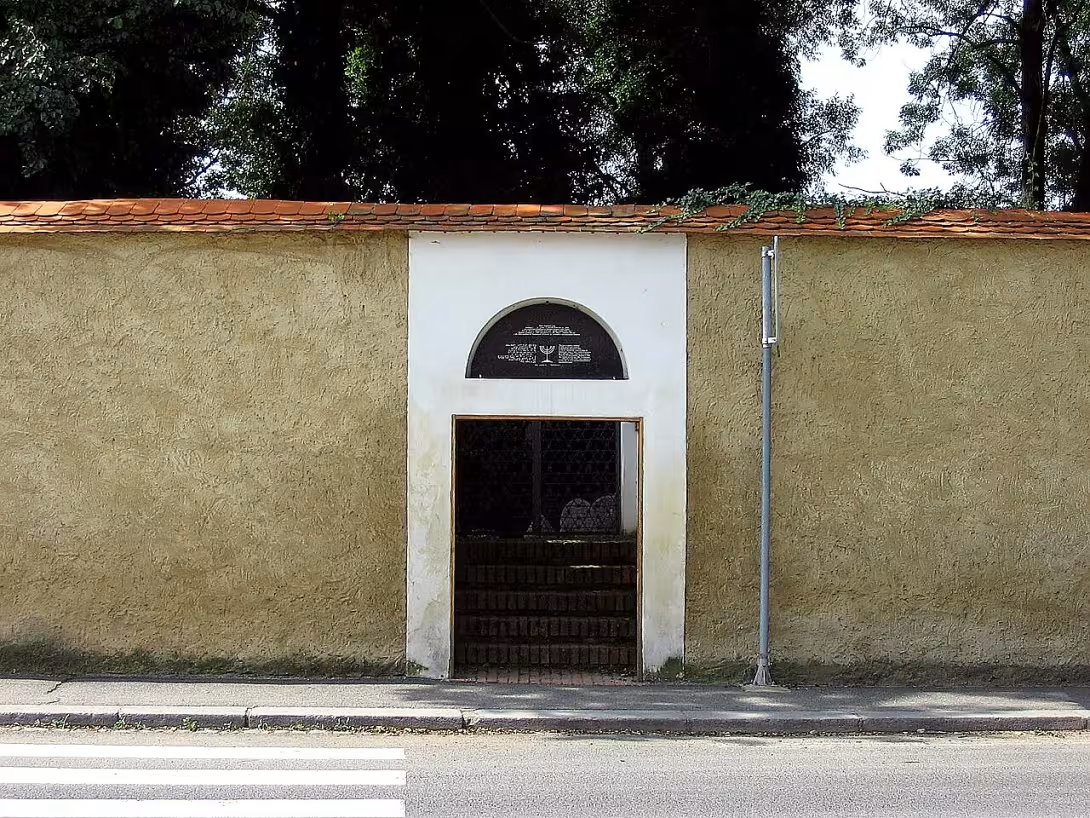
The old Jewish cemetery in Susici is a cultural monument founded in 1626, located near the city walls between the river Volšovka and the street of the Týkopy. This historical object is important thanks to preserved tombstones with Zemmava funeral plastic, which shows the history of the Jewish population of the city.
The cemetery was used for funerals until 1875 when it was last held. Since then, the new Jewish cemetery in Susici has served this purpose.
There are 150 tombstones in the cemetery, the oldest of which dates back to 1703. Epitaphs are cultivated, and their design is consistent with a nutty style, characteristic floral motifs and star symbols, including three-star symbols. There is one Levite kit, but no Koheni blessing. In 1987- 1988, a layman's reconstruction took place in which some tombstones lost their original eastern orientation.
The owner of the cemetery is the Federation of Jewish Communities. Above the entrance there is a stone lunette with a menor and information about the fate of Jewish inhabitants of the city. A forged gate leads to the cemetery, which is locked.
Major families whose names are listed on tombstones include Fürth, Hahn, Weil and Schwarzkopf. There are also tombstones of the Kubý family, originating in Prague.
After reconstruction and documentation in 2014, the cemetery is in very solid condition. Located near the Square of Liberty and the city walls.
This monument represents an important document of local history and artistic expression of the time. It is advisable to visit it for viewing preserved tombstones and understanding the history of the local Jewish community.
Then and now
Drag the slider to compare how the landmark may have looked when it was built with the view today.
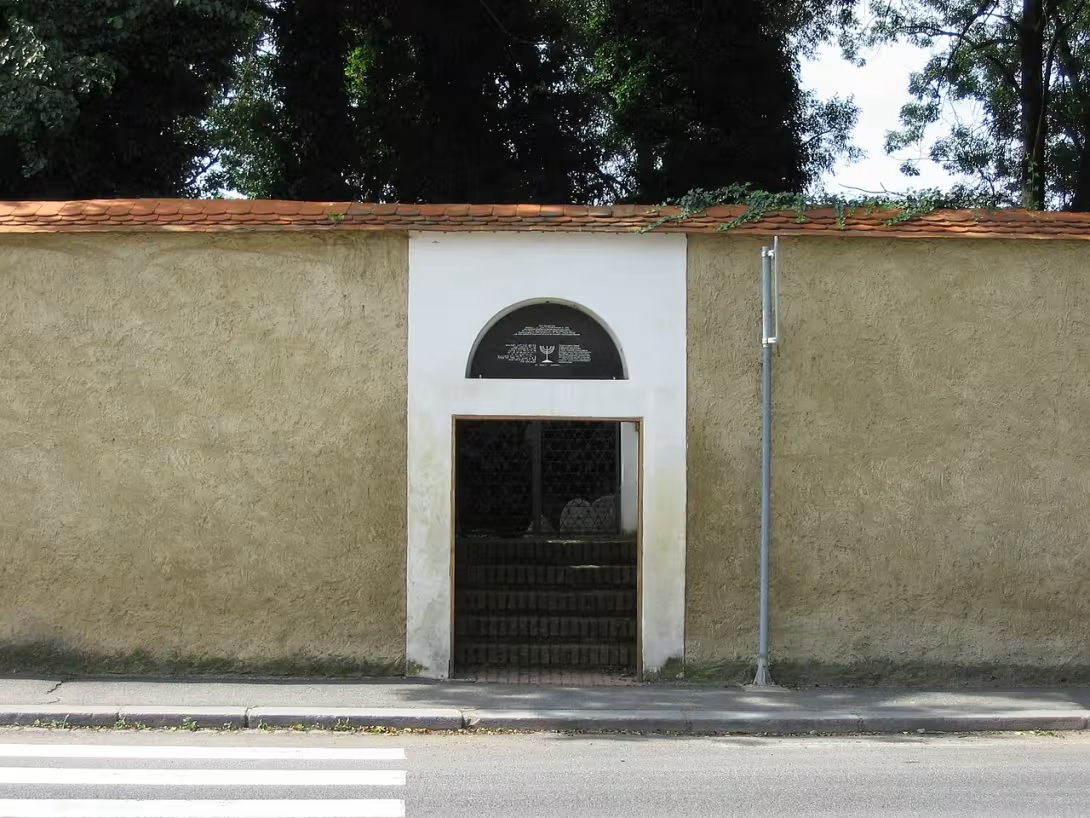
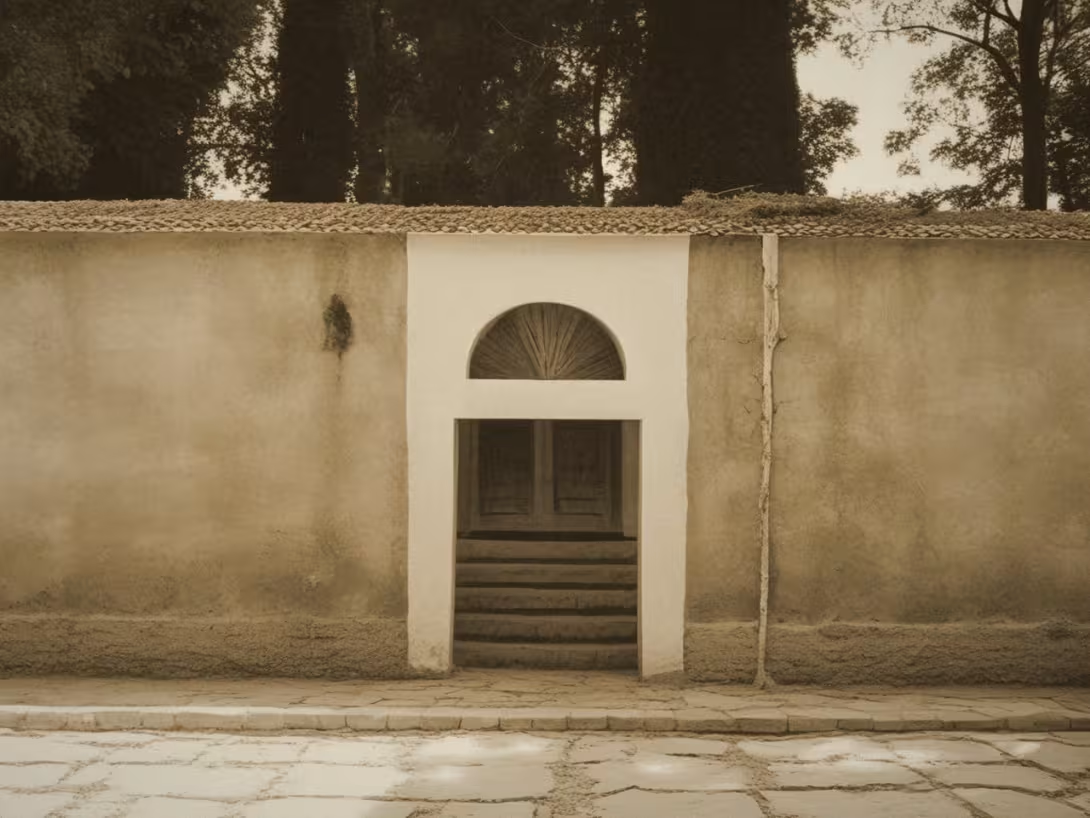
The historical appearance on the left is an AI-generated visualisation and serves as inspiration only.
Historical milestones
- 1626
- Establishment of a cemetery
- 1703
- The creation of the oldest tombstone
- 1875
- Last funeral
- 2014
- Reconstruction and documentation
Architectural development
The cemetery contains less than 150 tombstones with funeral plastic in Zemava style. The flower motifs and motifs of stars are characteristic. The reconstruction was carried out at the site between 1987- 1988 and 2014.
Historical events
Established in 1626, last funeral in 1875, lay reconstruction in 1987- 1988 and documentation in 2014.
Owners
Federation of Jewish Communes
Points of interest
- The cemetery was founded in 1626 and is located near the city walls between the Volšovka River and the Tvýkopy Street. - There are 150 tombstones in the cemetery, the oldest of which dates back to 1703. - Epitaphs have a nutty style with floral motifs and star symbols. - In 1987- 1988, a layman's reconstruction took place, in which some tombstones lost their original eastern orientation. - The important families listed on the tombstones include Fürth, Hahn, Weil, Schwarzkopf and Cuba.
Guide
Show guide text
This text was created by artificial intelligence and has not been editorially reviewed. It may contain inaccuracies.
Welcome to the old Jewish cemetery in Susici, one of the key historical sites of this beautiful Czech city. When you're right in front of him, the strange atmosphere of ancient and silent will surround you. Instead of this peace, it is located near the city walls, between the river Volšovka and the street of the Tapkope, which gives it a unique character. The cemetery is protected as a cultural monument of the Czech Republic, which shows its historical importance.
Look around and you'll see less than 150 tombstones that form this cemetery complex. The oldest of them dates back to 1703, suggesting a long-term burial site for this Jewish village. At that time the Jewish village in Susici was a permanent home for many families who spent their lives here and where they also found their last rest.
Now take a closer look at some of the special epitaph. Observe their nutty style, which is decorated with floral motifs and star symbols. These elements are not merely decorative; are an expression of the rich cultural tradition of Jewish inhabitants of this region.
Among the personalities buried in this cemetery, we find the families of Fürth, Hahn, Weil and Schwarzkopf. Rodina Kubie is also among those who left a trail in the history of this place. Each of these families contributed to the cultural heritage of Susice and their stories are still part of the local memory.
The interesting thing is that the cemetery underwent reconstruction in 1987- 1988 and again in 2014. These efforts were aimed at preserving the historical integrity of this place and ensuring its protection for future generations.
Let's move on to the next part of the cemetery so you can see the details you might miss at first glance. Notice how floral motifs on the tombstone reflect the life cycle and faith of the inhabitants of this area.
Before you go any further, we're going to invite you to stop for a moment and think about the history of this place. Every tombstone is like a book about the life of an individual or a family that has come back here for centuries.
Thank you for your attention to this important historical place. We hope this cemetery inspired you and made you think deeply about the history of Susice. If you have time, explore other historical monuments of the city and enjoy the wealth of its cultural heritage. Goodbye!
Tips for visitors
The best time to visit is the late afternoon when soft light hits old tombstones, creating an atmosphere suitable for photography. Focus on details of sandstone stones and contrast with surrounding greenery.
The location is available by car and by public transport; Check the current connection and parking possibilities in the city centre in the internet search engine.
We recommend shoes suitable for walking on historical terrain. For families with children, the cemetery is a suitable place to contemplate the history and honor the memory of the ancestors in a quiet environment.
In the immediate vicinity of the cemetery we recommend to walk along the Volšovka River, see the city walls, visit Svoboda Square or head for the new Jewish cemetery.
Frequently asked questions: - What are the opening times of the cemetery? The current opening hours can be found on the official site of the sights. - How much is the entrance to the old Jewish cemetery? Admission is paid on site, the current price list can be found on the official site of the sights. - How do I get to the cemetery? The location is available by car and by public transport; Check the current connection in the search engine.
Businesses nearby
Do you run a restaurant, accommodation, shop, museum, rental, wellness or other visitor service near this monument? Show yourself directly to the people heading to it — this is how they will see you in the app and on the web:
Events nearby
Zdroj akcí: otevřená data měst a obcí ČR (Národní katalog otevřených dat) a kalendář akcí Národního památkového ústavu.
Nearby
City walls, Volšovka River, Liberty Square and a new Jewish cemetery.
Accommodation nearby
Themed route
1. The Square of Liberty (Type: City Square) - A central place that is an ideal beginning for sightseeing. 2. City walls (Type: Historical construction) - This monument will guide you through the historic part of the city. 3. Volšovka River (Type: Water flow) - The picturesque flow of water, which gives the walk a peaceful touch. 4. Old Jewish cemetery in Susici (Type: Memorial) - The main destination of the trip, which offers a view of historical tombstones. 5. New Jewish cemetery (Type: Memorial) - The final point of the route that complements the view of Jewish history in the place.
Seasonal recommendations
Spring at the old Jewish cemetery in Susici brings a particularly poetic atmosphere where nature wakes up and the surrounding vegetables gradually intensify the contrast with the dark sandstone tombstones. Light can be soft and diffuse during this period, which underlines embossed details and inscriptions on stones. For visitors, the spring season is ideal from the point of view of calm, as there are still no large summer crowds of tourists. I recommend visiting a memorial in the late afternoon, when the sun is no longer so intense and the shadows extend, creating dramatic visual effects. Clothes should be layered because spring weather is usually variable and cold wind or light rain can occur. The main benefit is the possibility to walk around the cemetery in total silence and privacy, without the need to share space with large groups.
Summer offers the longest daylight, which allows a detailed tour of the whole area of the cemetery even in the late hours. Sun rays fall directly on stone surfaces, so it is necessary to count on higher temperature and drought. In the main summer season, Susice is a popular destination for hikers, which is why it is best to arrive as early as possible in the morning, ideally right after opening, to avoid crowds and noisy traffic. I recommend wearing light, breathable clothes, a hat and always carrying enough drinking mode, because the shadows in the cemetery are relatively few. The afternoon hours may be less suitable for walking due to direct sun and possible heat, which can be physically difficult when staying out longer.
Autumn transforms the atmosphere of the cemetery into a deeply melancholy and thoughtful mood. The colored leaves of trees and falling leaves create a natural carpet on the ground and on the tombstones, which gives the place a specific character. Light is lower and warmer, often golden, which highlights the texture of the old sandstone. It is a period when visitors can focus on the historical context and spiritual dimension of the place without disturbing effects of summer tourism. I recommend waterproof clothing because autumn rains are more frequent and colder. The best time to visit is the late afternoon, when the sun falls down with a low arc and shadows extend, creating dramatic and photographically attractive scenes. Peace and quiet are at their maximum in this period.
Winter in the cemetery in Susici is an experience that requires determination but rewards visitors with a unique sense of loneliness and eternity. Snow covering tombstones and roads creates a clean, white contrast with dark stones, which is visually very impressive. Short days and low sun mean that the light is sharp and the shadows are long, which can be challenging for orientation but also dramatic. It is necessary to wear warm winter clothes, winter shoes with a good heel due to possible slip on the frost or snow and gloves. It is best to visit the memory in the afternoon, when it is the hottest and the sun is the highest. In advent time, the surroundings may be quieter, but the cemetery itself remains a place for quiet contemplation where time seems to stop.
Visualizations and artistic views


The visualisations are generated by artificial intelligence and serve as inspiration.
Photos from the area
Real photos taken near the monument


Zdroj a licence jsou uvedeny u každého snímku.
Tips from visitors
No tips yet. Be the first!
Log in and add your tip.
Sources and literature
Fotografie: Jiekeren / CC BY-SA 3.0 — Wikimedia Commons. The author and licence also appear when you hover over the image.
Faktickým podkladem tohoto textu byl článek na Wikipedii, jehož autory jsou přispěvatelé Wikipedie. Článek je dostupný pod licencí CC BY-SA 4.0.
Location on the map
Příběhy a pověsti
Legendy, pověsti a příběhy spjaté s touto památkou
Fotografie návštěvníků
Zatím žádné fotografie. Buďte první, kdo přidá fotografii z návštěvy!
Přihlaste se a přidejte svou fotografii nebo hodnoťte.
Za ověřenou návštěvu v aplikaci získáte víc bodů — poznáme podle GPS, že jste na místě.
Reviews and comments