



Strakova akademie Public building
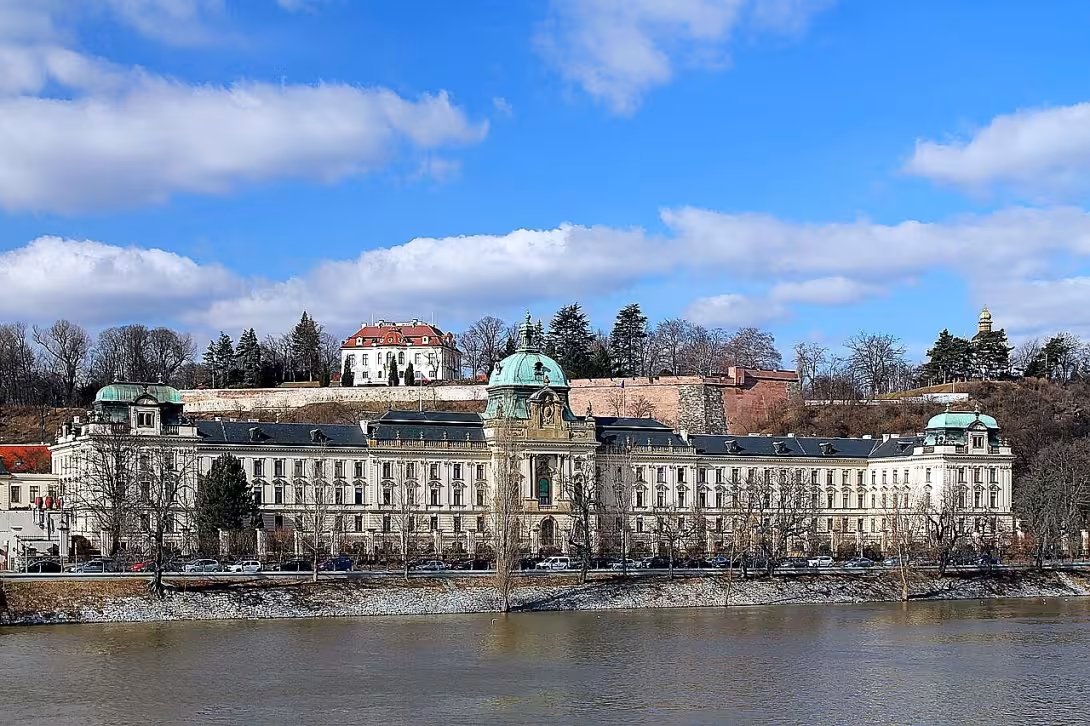
Strakova akademie is an eclectically neo-Baroque public building located on the left bank of Vltava in Prague, specifically on the Malá Strana. Built between 1893 and 1896 according to the designs of architect Václav Roštlapil, she opened her door on 21 March 1897. The original purpose was to provide student college for the poor sons of Czech nobility. Today it is the seat of the Office of the Government of the Czech Republic, which shows its significant historical and political impact.
The creation of the Strak Academy was inspired by the will of the imperial secret council of Count John Peter Straka of Nedabylic and Libcan. The Count referred his property to the establishment of a foundation "for the education of poor youth from higher levels" in 1710, but administrative intervention by the Government of Vienna made it difficult to fulfil its purpose. It was only at the beginning of the 19th century that the foundation was actually founded. Count Magpie's funds enabled the promotion of noble scholarships of both languages, although the educational institute itself was built only in the late 19th century.
The architecture of the Strakka Academy is an example of a neo-Baroque style with eclectic elements, which reflects the time of its creation. The building was designed by architect Václav Roštlapil and equipped with luxurious interior for approximately sixty scholarships. The sculptors Josef Mauder and Celda Klouček were involved in her decoration, who placed the statues under the dome of the building. The Garden of the Academy, built under the supervision of František Thomayer, was divided into 17,000 m ² and contributed to the overall aesthetic effect.
The original owner of the Strak Academy was a foundation based on the legacy of Count John Peter Straka. After 1918, with the emergence of Czechoslovakia and the disappearance of noble titles, there have been dramatic changes in the use of the building. The government took over parts of the building for official use, which included the Ministry of People's Supply and Statistical Office. After the First World War, the building became the seat of the Central Union of Czechoslovak Students, which placed the academic library and all-student archives there. In 1938, the Strak Foundation was abolished by the Earth Authority.
Key events in the history of the Strakka Academy included its transformation into the Red Cross Hospital during the First World War, when a hospital with 470 beds was set up in the building. In the years 1939-1941, large modifications took place under the protectorate government, which transformed the interior for new purposes. After the war the building was used as the seat of the Bureau of the Government and later became home to the Office of the Government of the Czech Republic.
Today Strakova akademie is not only a historical monument, but also a functional office. Its rich history and architectural importance make it an interesting destination for those who want to know both the past and the present of the Czech Republic. The symbolic revelation of the commemorative plaque with part of the will of Count John Peter Straka in 1997 confirms its connection with the spiritual tradition of the Czech nation and the legacy of past generations. Exploration of this building offers a view of the changes that have been passed not only by Strakova akademie itself, but also by the whole country.
Then and now
Drag the slider to compare how the landmark may have looked when it was built with the view today.
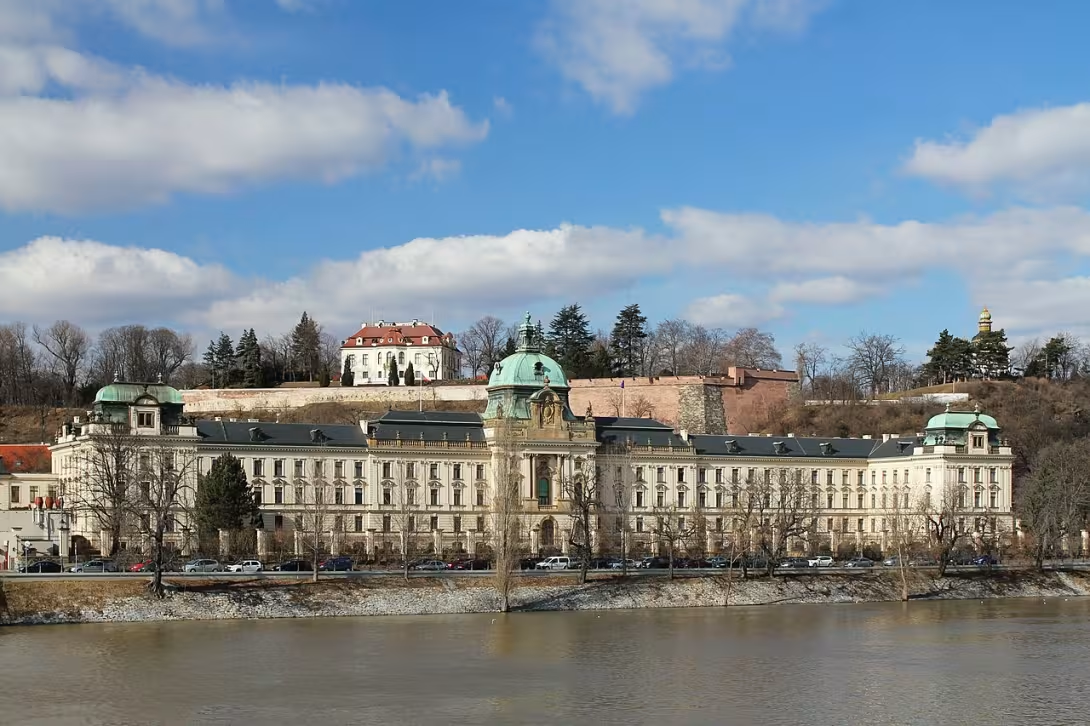

The historical appearance on the left is an AI-generated visualisation and serves as inspiration only.
Historical milestones
- 1897
- The opening ceremony of the Strake Academy.
- 1914
- Transforming into Red Cross Hospital during World War I.
Architectural development
The building was designed in Neo-Baroque style with the share of sculptors Josef Mauder and Celda Klouček in her decoration. In the years 1939-1941 there were large building modifications under the protectorate government.
Historical events
- 1897
- The opening ceremony of the Strake Academy.
- 1914
- Transforming into Red Cross Hospital during World War I.
- 1938
- Cancellation of the Strak Foundation by the Earth Authority.
Owners
The original foundation based on the legacy of Count John Peter Straka of Nedabylic and Libcan, subsequently transferred to the government after 1918.
Points of interest
- Strakova akademie is an eclectically neo-Baroque public building located on the left bank of Vltava in Prague, specifically on the Malá Strana. - Built between 1893 and 1896 according to the designs of architect Václav Roštlapil, she opened her door on 21 March 1897. - The original purpose was to provide student college for the poor sons of Czech nobility. - The creation of the Strak Academy was inspired by the will of the imperial secret council of Count John Peter Straka of Nedabylice and at Libcan, who referred his property to the establishment of a foundation "for the education of poor youth from higher states" in 1710. - Today it is the seat of the Office of the Government of the Czech Republic, which shows its significant historical and political impact.
Guide
Show guide text
This text was created by artificial intelligence and has not been editorially reviewed. It may contain inaccuracies.
Welcome to the heart of Prague, where history touches the present with every stone and every detail. You're standing in front of one of the most important buildings in this part of town. Look around you and feel the atmosphere of the Little Party. Feel the calm that brings the proximity of the river, and the gravity that radiates from these walls. The Strakova akademie stands before your eyes. It's a building that dominates this left bank of the Vltava with its presence. Its appearance is immediately visible and gives the impression of grandeur and stability. Feel the power coming out of this place while you're looking at its vast facade.
To understand why this building seems so dignified, we must return to the time it began to build. More than a century ago, in the late nineteenth century, Prague was undergoing major changes. At this very time, between a thousand and eight hundred ninety-three and a thousand and eight hundred ninety-six, intensive work took place here. The goal was not just to create an ordinary house, but a place with a clear purpose and a high social significance. The whole process culminated in a thousand eight hundred ninety-seven, when the Academy was ceremonially opened. At that time Prague was a city full of ambition and this building was to be their materialisation.
Now pay attention to the very appearance of the building that now surrounds you. If you look at its structure, you'll notice that its style is very specific. Architect Václav Roštlapil, who was behind all this work, chose a style that we call eclectically neo-Baroque. What does it mean to you when you're standing right in front of him? It means the architect didn't want to be limited by a single rule. Instead he took various historical shapes and joined them into one, harmonious and rich whole. When you look at the facade, try to perceive the richness and movement that this style brings. It's not just a flat wall, it's a complex composition designed to create wonder and respect. Feel the elegance and the pursuit of perfection that Roštápil put into every design. This building is not just a building, it is a work of art that seeks to combine history with the modern idea of beauty.
The original idea of this place was very noble. Strakova akademie was not built as a seat of power, but as a place for young people. It served as a student college for the sons of Czech nobles who did not have enough property to ensure their own residence. Imagine those young men who were here at the end of the nineteenth century looking for their way, studying and preparing for their future lives. It was a place full of hope, education and social growth.
But the history of this place is full of unexpected turns. Every building has a soul that changes by what happens in it. And Strakova akademie changed her soul several times. We can remember here the personalities that relate to this place or its era. The name of the Academy refers to Jan Peter Strak from Nedabylic and Libcan, which gives the place depth and historical feel. There were people in these areas who formed society. We can also remember names like Josef Trakal or lawyer Alexander Zeyer. Each one of these names is part of a wider story that took place here.
But history has a much more serious and darker side. Imagine a year of a thousand eight hundred fourteen. The world changed the moment the First World War broke out. Even this building had to change its role. Instead of a quiet study and the life of the students, it became a hospital of the Red Cross. Imagine the atmosphere where these spaces turned into a place where life was fought, where wounds were healed, where fear and hope were ruled. This transformation from home to hospital for students is one of the strongest stories this place tells. It shows us how much life and function can change depending on the fate of the world.
And that is where one of the greatest attractions of this place lies. This building has gone an incredible way from student college to hospital to today's condition. Nowadays, students are no longer present or treated by the sick. Strakova akademie became the seat of the Government of the Czech Republic. It's a place where things of the highest importance to the nation are decided. There's a fascinating contrast between what she was before and what she is now. The place that was designed to build individuals became the center of state governance. This transformation of functions is a fascinating reminder of how society changes and how the needs of the country change.
Now if you look at the building again, try to see all these layers in it. You see the architecture of Václav Roštlapil, you see students from the late nineteenth century, you see hospitals from the Great War and you see today's government in it. It's all here on one.
Thank you for spending this moment with us and for choosing to pay attention to this place. We hope that this view of the Strak Academy helped you better understand its meaning and its beauty. Continue along the road around the Vltava and the narrow streets of the Little Party. Every building you meet has its own voice and its own story, just waiting for someone to hear it. We will brighten up a pleasant walk and look forward to your further discovery of the beauty of our history. Until the next meeting.
Tips for visitors
The best time to visit the Strakka Academy is in the spring or autumn period when the light is softer and more pleasant in the photograph. This time of year also offers beautiful lights on the facades of the building.
When you visit, take a high-quality camera and perhaps even a monopod if you plan to photograph the details of the building. It is also important to carry a protective umbrella or umbrella for any sudden weather.
Photos from outside Strakka Academy offers the best angles from the Vltava side, where the building is illuminated by sunlight. Interesting places for photos are also adjacent streets and Malá Strana Square.
The Spanish Gate and Clementinum are located in the vicinity of the Strakka Academy, specifically in the midway of 30 minutes. These places are ideal for further exploring historical monuments in the Malá Strana.
Frequently asked questions
Can the monument be visited?
The building is in use (offices, a school, shops and the like). The interior is generally accessible only during operating hours and tours are not usually offered; we have not verified the details. You can see the exterior from the street.
Where is the monument?
Location: Malá Strana. The map on this page shows the exact spot.
Why is the monument protected?
It is listed in the Central List of Cultural Monuments of the Czech Republic as a cultural monument (register no. 1000151121).
Businesses nearby
Do you run a restaurant, accommodation, shop, museum, rental, wellness or other visitor service near this monument? Show yourself directly to the people heading to it — this is how they will see you in the app and on the web:
Events nearby

Zdroj akcí: otevřená data měst a obcí ČR (Národní katalog otevřených dat) a kalendář akcí Národního památkového ústavu.
Nearby
🏰 Historic sites (1685)
- Marie Charousková 0.1 km
- F. Boček 0.1 km
- Kunsthalle Praha 0.1 km web
- Památník Okřídleného lva 0.2 km
- Hotel Praha 0.2 km
- Ivan Grigorijevič Gončarenko 0.2 km
- Meleagros a Atalanta 0.2 km
- Kotva 0.2 km
- Památník obětí a vítězů druhého odboje 0.2 km
- Žižkovský vysílač 0.2 km
- Budova Komerční banky 0.2 km
- Ústřední telekomunikační budova 0.2 km
- Muzeum Kouzlo starých časů 0.2 km Valdštejnská 150/4 +420 723 960 308 web
- Merkur a Venuše 0.2 km
- Apollón 0.2 km
- Démétér 0.2 km
- Olympos 0.2 km
- Bakchus 0.2 km
- Venuše 0.2 km
- Polyhymnia 0.2 km
🍽️ Restaurants and dining (5472)
- Na Klárově 0.1 km U železné lávky 130/16 +420 257 531 754 web
- El Pablo 0.2 km web
- Hanavský pavilon 0.2 km Letenské sady 173 +420 233 323 641 web
- Metro café 0.2 km
- Caffe Pension Pohádka 0.2 km
- Občanská plovárna 0.2 km U Plovárny 337/1 web
- Villa Richter 0.3 km Staré zámecké schody 251/6 +420 702 205 108 web
- Lootea 0.3 km U Lužického semináře 118/23 web
- Bagel Lounge Malostranska 0.3 km +420 775 290 255 web
- Vojanův Dvůr 0.3 km U Lužického semináře 119/21 web
- Café Mánes 0.3 km
- Marina ristorante 0.3 km Alšovo nábřeží 10 +420 605 454 020 web
- Cafe Rudolfinum 0.3 km Alšovo nábřeží 79/12 +420 703 181 182 web
- Bufet Právnická 0.3 km web
- Menza právnická 0.4 km náměstí Curieových 11000 +420 221 005 280 web
- Coffee Break 0.4 km
- Černý orel 0.4 km U Lužického semináře 40 +420 257 531 738
- Fürstenberská zahrada cafe 0.4 km
- Staroměstský Pilíř 0.4 km
- Antricote 0.4 km
🏨 Accommodation (815)
- Boutique Hotel Klarov 0.1 km U Železné lávky 12 +420 257 535 555 web
- Hotel KLARINN 0.1 km U Železné lávky 14 +420 226 808300 web
- Hoffmeister 0.2 km Pod Bruskou 144/7 +420 251 017 111 web
- Pension Pohádka 0.2 km Valdštejnská 4a
- Charles Bridge Apartments 0.4 km Cihelná 3
- Royal Palace Hotel 0.4 km
- U Páva 0.4 km U Lužického semináře 32 +420 257 533 573 web
- Tkalcovský dvůr 0.5 km U Lužického semináře 28
- Hergetův palác 0.5 km Cihelná 2
- Apartment Charles Bridge - View 0.5 km U Lužického semináře 26
- Quentin Prague Hotel 0.5 km
- Augustine 0.5 km Letenská 33/12 +420 266 112 233 web
- MyHouse Apartments 0.5 km
- Historic Centre Apartmens III 0.5 km U Lužického semináře 22
- Fairmont Golden Prague 0.5 km Pařížská 30
- Four Seasons Hotel Prague 0.5 km Veleslavínova 1098/2a +420 221 427 000 web
- Apartmány Karlův most 0.5 km U Lužického semináře 18
- Prague Castle Romantic Apartments 0.5 km U Lužického semináře 18
- Hotel Waldstein 0.5 km Valdštejnské náměstí 6
- Hotel U Zlaté studně 0.5 km U Zlaté studně 4 +420 257 011 213 web
🚲 Rentals and sport (540)
- Health Club&Spa InterContinental 0.5 km Pařížská 30
- Klub Slunečnice 0.6 km Maiselova 7
- Asoss 0.6 km Široká 15
- Tilak 0.7 km Badeniho 5/29
- Darkslide.cz 0.7 km +420 725 378 449 web
- VIBRO 0.8 km Na Valech 32
- Florbal expert 0.8 km
- Euro Segway Prague 0.8 km +420 731 731 013 web
- Tělocvičná jednota Sokol Praha Dejvice I. 0.9 km +420 224 313 820 web
- Ultraant 0.9 km
- Prahabike 0.9 km Dlouhá 708/24 +420 732388880 web
- Squash Haštal 1.0 km Haštalská 20 web
- 4camping 1.0 km Jaselská 21
- HUDYsport 1.0 km Na Perštýně 355/14 +420 224 218 600 web
- Ultimo 1.0 km web
- bazén Tyršův dům 1.0 km
- Finebike 1.1 km web
- Sportovní hala Královka 1.1 km web
- U Tyrše 1.1 km Jaselská 464/38 +420 224 319 738 web
- Tělocvičná jednota Sokol Bubeneč 1.1 km
🥾 Hiking and nature (481)
- Park na Klárově 0.2 km
- Letenský profil 0.2 km
- park Holubička 0.2 km
- park Cihelná 0.3 km
- Staré zámecké schody 0.3 km
- Vyhlídka Maleni 0.4 km
- Vojanovy sady 0.4 km
- Starý židovský hřbitov 0.4 km web
- Certovka 0.5 km
- grotta 0.5 km
- Vinárna Čertovka 0.5 km Vinárna Čertovka
- Nejužší ulička v Praze 0.5 km
- Letná 0.5 km
- Moravská bašta 0.5 km
- Letenské sady 0.5 km
- Zlatá ulička 0.6 km
- Malostranská mostecká věž 0.6 km +420 607 050 434 web
- Zrcadlová kaple 0.7 km
- Barokní knihovní sál 0.7 km web
- Dolní Jelení příkop 0.7 km
Accommodation nearby
Trips and activities nearby
Guided tours, tickets and activities nearby from GetYourGuide
Affiliate link: if you buy from the partner, we may receive a commission. The price for you does not change.
Search tours and activities →Themed route
Thematic cruise route: Strakova akademie and surroundings
1. Strakova akademie (public building) Type: Historical public building Why is worth a visit: This important building is home to many cultural and artistic events. Its history dates back to the 18th century, when it was built as part of a noble mansion. Today it serves as a centre for various public events and exhibitions.
2. Church of St. Anne Type: Religious monument Why is it worth a visit: This Baroque church is one of the most famous and impressive sacral objects on the Lesser Side. František Maximilián Kaňka designed his important architecture, making him interesting for lovers of history and architecture.
3. Square of the Republic Type: Public Square Why is it worth visiting: This central square is one of the most lively parts of Prague. It is famous for its elegant restaurants, cafés and shops. The square has also become a place for various public events and demonstrations.
4. Church of St. Nicholas Type: Historical church Why is it worth a visit: This Gothic church is the oldest on the Lesser Side and has a rich history dating back to the 13th century. Its important architecture and works of art make it a attraction for visitors interested in historical monuments.
5. Mikulandan Street Type: Historical street Why is it worth a visit: This alley is known for its small but characteristic houses and its peaceful environment. It is an ideal place for a brief moment of relaxation and a tour of the picturesque architecture of the Little Party.
This route offers visitors the opportunity to explore the rich history and culture of the village Malá Strana, with emphasis on its most important monuments.
Seasonal recommendations
Spring: In the spring season Strakova akademie is surrounded by flowering shrubs and trees that bring live green shine to the surrounding environment. Sunshine days mingle with rainy moments, creating a shear of lighting around the building. For a visit it is advisable to take your clothes to variable weather - a short jacket or a suspender that protects against violent storms. The best time to visit is in the morning when the air is fresh and fewer people are moving on the streets.
Summer: During the summer season, the dazzling sun colors Strak's Academy with a light that emphasizes its historical architecture. The warm air is often filled with the scent of a flowering bush and trees on the surrounding squares. For the visit it is advisable to prepare light clothes that protect against sunlight, and to not lack head protection - hat or scarf can be useful. The best time to visit is morning or evening to avoid the hottest hours.
Autumn: In the autumn season, trees and shrubs are acquired around the Strakka Academy of Color Gloss, which adds a special atmosphere to the surroundings. Sunshine days mingle with colder evenings, creating a comfortable change of temperature during the day. It is advisable to prepare your clothes for changing weather - a short jacket for cooler evenings and a light dress to protect from sunlight. The best time to visit is in the first hours of the morning or late afternoon to avoid cooler evenings.
Winter: In winter, Strakova akademie is lit by cold light rays that highlight its historical architecture. Freezing air can be filled with the smell of snow or glaciers if the weather is cold enough. For a visit it is important to prepare warm clothes - long coat and hat for head protection are necessary. The best time to visit is in the first hours after the sun when there is less cool air and more light on the building.
Visualizations and artistic views


The visualisations are generated by artificial intelligence and serve as inspiration.
Photos from the area
Real photos taken near the monument

Zdroj a licence jsou uvedeny u každého snímku.
Tips from visitors
No tips yet. Be the first!
Log in and add your tip.
Sources and literature
Photos: This image is a work by Miloslav Rejha (User:M.Rejha). When reusing, please credit me as: Miloslav Rejha, Wikimedia Comm / CC BY-SA 3.0 — Wikimedia Commons. The author and licence also appear when you hover over the image.
Faktickým podkladem tohoto textu byl článek na Wikipedii, jehož autory jsou přispěvatelé Wikipedie. Článek je dostupný pod licencí CC BY-SA 4.0.
Location on the map

Příběhy a pověsti
Legendy, pověsti a příběhy spjaté s touto památkou
Fotografie návštěvníků
Zatím žádné fotografie. Buďte první, kdo přidá fotografii z návštěvy!
Log in a přidejte svou fotografii nebo hodnoťte.
Za ověřenou návštěvu v aplikaci získáte víc bodů — poznáme podle GPS, že jste na místě.
Reviews and comments