






Sýpka u dubečské tvrze Granary
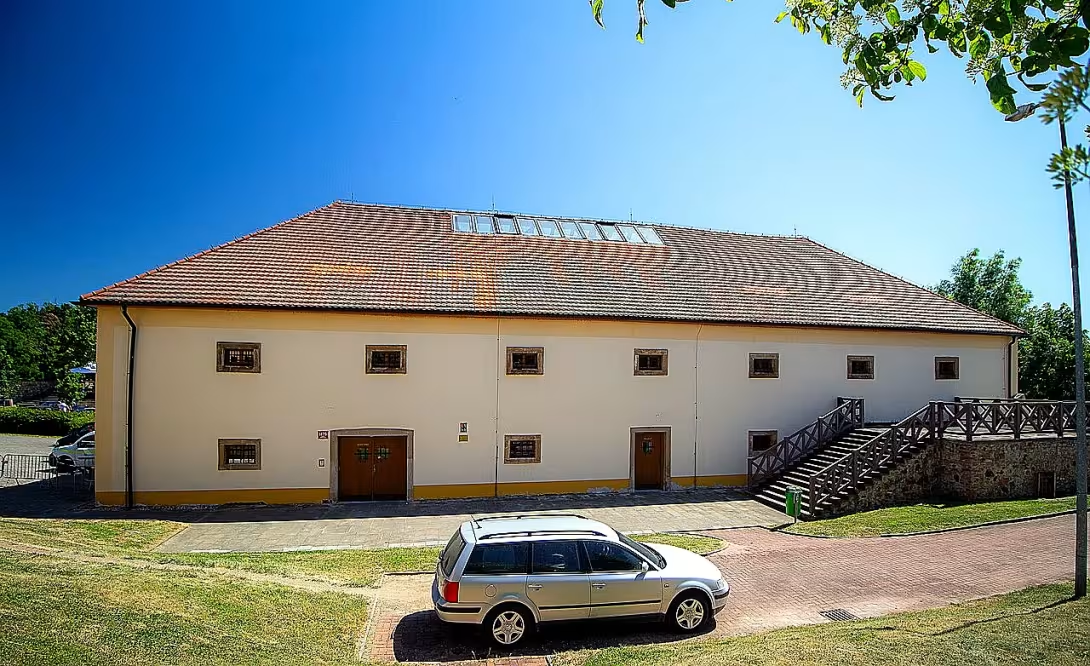
Sýpka u dubečské tvrze is a multi-story granary located in the western corner of Panská zahrada in Prague, within the municipality of Dubeč. Built before 1841, this landmark was originally part of the now-vanished Dubeč manor estate. It is a protected cultural monument of the Czech Republic, valued for its architectural features and historical importance.
The building dates back to the early 19th century, when it served the needs of the former manor. As an integral part of the estate, the granary reflects the agricultural practices and storage requirements of that era.
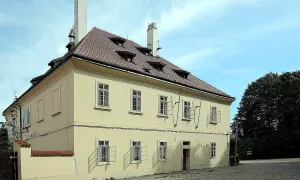
Architecturally, the structure is characterized by a rectangular floor plan and a tiled gable roof. Its smooth plaster lacks decorative elements, maintaining a functional aesthetic typical of utilitarian buildings from the period. Stone-framed windows punctuate the walls, though some have been bricked up over time. The ground floor consists mostly of barrel-vaulted rooms, enhancing the building's structural integrity and charm. Additionally, an entrance leads to largely filled-in cellars, hinting at its past use for storage.
Ownership was tied to the Dubeč manor, which no longer exists. The granary remains as a solitary vestige of the vanished estate. This transition from an active facility to a standalone monument underscores changes in land use and ownership over time.
Today, the Sýpka u dubečské tvrze stands near the ruins of the former Dubeč fortress within Panská zahrada. Its preservation highlights its heritage and architectural value. Visitors can explore the site to gain insight into 19th-century estate management and its role in the broader context of Prague's history.
The granary offers a unique glimpse into the past, making it a worthwhile visit for those interested in historical architecture and cultural heritage. Its enduring presence serves as a testament to the region's rich legacy, inviting reflection on its significance within Prague's storied landscape.
Historical milestones
- Early 19th century
- Construction of the granary as part of the Dubeč manor estate
- Before 1841
- The building was already completed and operational
- Late 19th century
- Gradual decline and disappearance of the Dubeč manor estate
- Modern era
- Designation as a protected cultural monument of the Czech Republic
Architectural development
The building is a multi-story structure with a rectangular layout and a tiled gable roof. It features smooth plaster without decoration and rectangular windows set in stone frames, some of which have been bricked up. The ground floor rooms mostly contain barrel vaults, and there is an entrance to vaulted cellars that are largely filled in.
Historical events
The granary was built prior to 1841 as part of the Dubeč manor estate.
Owners
The Dubeč manor (dubečský dvůr), which no longer exists.
Points of interest
– Built before 1841, the granary was originally part of the now-vanished Dubeč manor estate. – The structure features a rectangular floor plan, a tiled gable roof, and smooth plaster without decorative elements. – The ground floor consists mostly of barrel-vaulted rooms, and there are largely filled-in cellars. – Some of the building's stone-framed windows have been bricked up over time. – It is a protected cultural monument located in the western corner of Panská zahrada in Prague.
Guide
Show guide text
This text was created by artificial intelligence and has not been editorially reviewed. It may contain inaccuracies.
Welcome to this quiet corner of Panská zahrada here in Dubeč. Please, take a moment to settle in, adjust your headphones, and simply look at the building standing before you. You are looking at the Sýpka u dubečské tvrze. At first glance, it may seem like a modest, silent structure, but this building is a rare survivor, a physical echo of a world that has almost entirely vanished from this landscape. As you stand here, notice the stillness of the surroundings and the way this multi-story granary anchors the western corner of the garden. It possesses a certain stoic quality, doesn't it? It is a building designed for a very specific, practical purpose, and that utility is exactly what has allowed it to endure while other, perhaps more grand, structures around it succumbed to time.
To understand why this building is here, we have to travel back nearly two centuries. We are stepping into the early nineteenth century, a time when the rhythm of life in Dubeč was dictated by the seasons and the harvest. This granary was constructed during this period as a vital part of the Dubeč manor estate. While we do not know the names of the architects who drew the plans or the specific laborers who laid the stones, we know that by the time 1841 arrived, the building was already fully completed and operational. In those days, a granary was not just a warehouse; it was the treasury of the estate. Grain was the primary currency of the rural economy, and the ability to store it safely, dry, and protected from pests was the difference between prosperity and ruin for the manor.
Now, I invite you to take a closer look at the architecture. As you scan the building from the ground up, you will notice its very clear, rectangular floor plan. There is no pretense here, no unnecessary flourishes or grand entrances. This was a workspace, a place of storage. Look at the walls; you will see a smooth plaster finish. Notice how there are no decorative elements, no ornate carvings or colorful frescoes. This simplicity is intentional. The beauty of the Sýpka u dubečské tvrze lies in its honesty and its proportions. It tells us that the priority of the builders was function and durability.
If you look upward, your eyes will meet the tiled gable roof. This classic shape was essential for the climate of the region, ensuring that rain and snow would slide off easily, protecting the precious grain stored within from moisture and rot. The height of the building is also significant. Being a multi-story structure, it allowed the manor to maximize its storage capacity on a relatively small footprint of land.
While you cannot see through the walls, I want you to imagine the interior structure, which is one of the most fascinating aspects of this building. On the ground floor, the rooms are characterized by barrel vaults. These curved ceilings were not for decoration; they were a brilliant engineering choice. Barrel vaults are incredibly strong and capable of supporting the immense weight of the grain stored on the floors above. When you look at the exterior now, try to visualize those heavy, arched ceilings beneath the surface, holding up the history of the estate.
As you stand here, it is helpful to reflect on what is missing. The Sýpka u dubečské tvrze did not exist in isolation. It was once part of a bustling complex, the heart of the Dubeč manor. Imagine the sounds that would have filled this air in the mid-1800s: the creak of heavy wooden wagons, the shouting of workers, the neighing of horses, and the constant movement of sacks being hauled up into the upper stories. The manor was the center of local power and administration, a place where the land was managed and the community revolved.
However, as we move toward the late nineteenth century, the story changes. The Dubeč manor estate began a gradual decline. Like many such estates across the region, the economic and social shifts of the era led to its slow disappearance. One by one, the buildings that once surrounded this granary were torn down, fell into ruin, or were simply absorbed back into the earth. The manor itself vanished, leaving behind a void in the landscape. And yet, for reasons that are partly due to its sturdy construction and partly due to luck, the granary remained. It became a lonely sentinel, the last remaining witness to the vanished grandeur of the manor.
There is a certain mystery in that survival. Why did the granary stay while the manor fell? Perhaps it was because its utility remained useful even after the estate's power faded. Today, this building is recognized as a protected cultural monument of the Czech Republic. This designation ensures that its simple lines and sturdy walls are preserved for us to see today, serving as a bridge between the modern streets of Prague and the rural, feudal past of Dubeč.
As you spend a few more minutes here, I encourage you to walk slowly around the perimeter of the building. Feel the atmosphere of Panská zahrada. Notice how the smooth plaster of the walls catches the light and how the rectangular silhouette stands out against the greenery. Think about the thousands of harvests that passed through these doors and the generations of people whose livelihoods depended on the contents of this building. It is a reminder that history is not always found in gold leaf and marble palaces, but often in the sturdy, silent structures that served the everyday needs of the people.
The Sýpka u dubečské tvrze may not tell its stories through inscriptions or portraits, but it speaks through its form. It speaks of hard work, of agricultural necessity, and of the inevitable passage of time. It is a quiet monument to a lost way of life.
Thank you for joining me at this stop. Please, take your time to soak in the surroundings and perhaps take a few photographs of the gable roof and the clean lines of the facade. When you are ready, you may continue your exploration of Dubeč, carrying with you the image of this resilient survivor. Enjoy the rest of your walk through Panská zahrada. Farewell.
Tips for visitors
The best time to visit Sýpka u dubečské tvrze is during the late spring or early autumn months. During these times, the weather is generally pleasant, making it ideal for exploring both the granary and its surroundings in Panská zahrada. The natural light enhances the historical ambiance of the site, providing a serene backdrop for visitors to appreciate its architectural details.
Parking and transportation options are available nearby. You can drive to the area or use public transport. For those opting for public transit, it's advisable to check current routes online to find the most convenient option. Once you arrive, walking is recommended as it allows you to fully experience the tranquil environment of Panská zahrada.
When planning your visit, consider bringing a camera and comfortable walking shoes. The granary itself offers unique photographic opportunities, especially during the golden hours of early morning or late afternoon when the light casts soft shadows that accentuate its historical features. Don't forget to bring water and perhaps a hat for sun protection if you're visiting in warmer months.
For families with children, Sýpka u dubečské tvrze can be an engaging experience. The open spaces of Panská zahrada are perfect for kids to explore while parents enjoy the historical aspects of the site. Nearby attractions within a 30-minute walk include the remains of the Dubeč fortress, which offers additional insights into the area's rich history and provides more space for children to run around.
Businesses nearby
Do you run a restaurant, accommodation, shop, museum, rental, wellness or other visitor service near this monument? Show yourself directly to the people heading to it — this is how they will see you in the app and on the web:
Events nearby
Zdroj akcí: otevřená data měst a obcí ČR (Národní katalog otevřených dat) a kalendář akcí Národního památkového ústavu.
Nearby
The monument is located near the remains of the former Dubeč fortress and within the Panská zahrada area.
Accommodation nearby
Trips and activities nearby
Guided tours, tickets and activities nearby from GetYourGuide
Affiliate link: if you buy from the partner, we may receive a commission. The price for you does not change.
Search tours and activities →Themed route
Thematic Tour Itinerary: Sýpka u dubečské tvrze and Surroundings
1. Sýpka u dubečské tvrze - *Type:* Historical Monument - This granary is a fascinating relic from the era of the former Dubeč fortress, offering insights into the agricultural practices of the past. Its proximity to the ruins makes it an ideal starting point for exploring local history.
2. Remains of the Former Dubeč Fortress - *Type:* Historical Ruins - A short walk from the granary, these remnants provide a glimpse into medieval military architecture and life in the region. Visitors can explore the site to imagine its past significance as a defensive stronghold.
3. Panská zahrada Area - *Type:* Scenic Parkland - Located near both the granary and fortress remains, Panská zahrada offers a serene environment perfect for relaxation and reflection. The area is ideal for enjoying nature while contemplating the historical context of Dubeč.
This itinerary provides a cohesive exploration of Sýpka u dubečské tvrze and its immediate surroundings, ensuring a rich experience steeped in history and natural beauty.
Seasonal recommendations
Spring brings a gentle awakening to the landscape surrounding the Sýpka u dubečské tvrze. As the weather warms, the surrounding vegetation begins to green up, offering a fresh and vibrant backdrop to the historic structure. The light during this season is soft and diffused, creating a serene atmosphere that is ideal for contemplative visits. Visitors should expect moderate crowds, as the weather becomes more inviting for outdoor activities. It is advisable to dress in layers, as spring mornings can still be chilly while afternoons grow warmer. Arriving in the late morning often provides a balance between pleasant temperatures and fewer people, allowing for a more personal experience with the site.
Summer offers the most vibrant natural scenery, with lush greenery and full foliage framing the historical monument. The long daylight hours extend the window for exploration, and the bright sunlight enhances the textures and details of the old architecture. However, this peak season also attracts the largest number of visitors, so planning is crucial to avoid the busiest midday hours. Comfortable, breathable clothing and sturdy walking shoes are essential for navigating the area. To beat the heat and the crowds, it is best to arrive early in the morning when the air is cooler and the site is quieter. Bringing water and sun protection is highly recommended for a comfortable visit during these warm months.
Autumn transforms the area into a tapestry of warm colors as the leaves change, providing a picturesque setting that is particularly appealing for photography. The air becomes crisp and cool, adding a distinct atmospheric quality to the visit. This season often sees a decline in tourist numbers compared to summer, offering a more tranquil experience. Visitors should prepare for cooler temperatures by wearing warm jackets and long sleeves. The light in autumn is often golden and low-angled, which can dramatically highlight the structural features of the monument. Mid-morning visits are ideal, as the sun rises higher, warming the air slightly while still avoiding the potential for early afternoon rain.
Winter presents a stark and quiet contrast to the other seasons, with bare branches and potentially snow-covered grounds creating a minimalist aesthetic. The short days mean that visiting hours are naturally limited, and the cold weather significantly reduces the number of tourists, ensuring a peaceful atmosphere. Proper winter gear, including heavy coats, gloves, and hats, is mandatory for comfort and safety. The light is dim and often overcast, which can lend a somber and reflective mood to the visit. It is best to visit during the midday hours when the sun is at its highest point, providing the most warmth and visibility. Checking the specific opening times for the winter season is important, as they may be shorter than in other months.
Visualizations and artistic views


The visualisations are generated by artificial intelligence and serve as inspiration.
Photos from the area
Real photos taken near the monument


Zdroj a licence jsou uvedeny u každého snímku.
Tips from visitors
No tips yet. Be the first!
Log in and add your tip.
Sources and literature
Fotografie: VitVit / CC BY-SA 4.0 — Wikimedia Commons. The author and licence also appear when you hover over the image.
Faktickým podkladem tohoto textu byl článek na Wikipedii, jehož autory jsou přispěvatelé Wikipedie. Článek je dostupný pod licencí CC BY-SA 4.0.
Location on the map
Příběhy a pověsti
Legendy, pověsti a příběhy spjaté s touto památkou
Fotografie návštěvníků
Zatím žádné fotografie. Buďte první, kdo přidá fotografii z návštěvy!
Přihlaste se a přidejte svou fotografii nebo hodnoťte.
Za ověřenou návštěvu v aplikaci získáte víc bodů — poznáme podle GPS, že jste na místě.
Reviews and comments