



Tritónova kašna Fountain
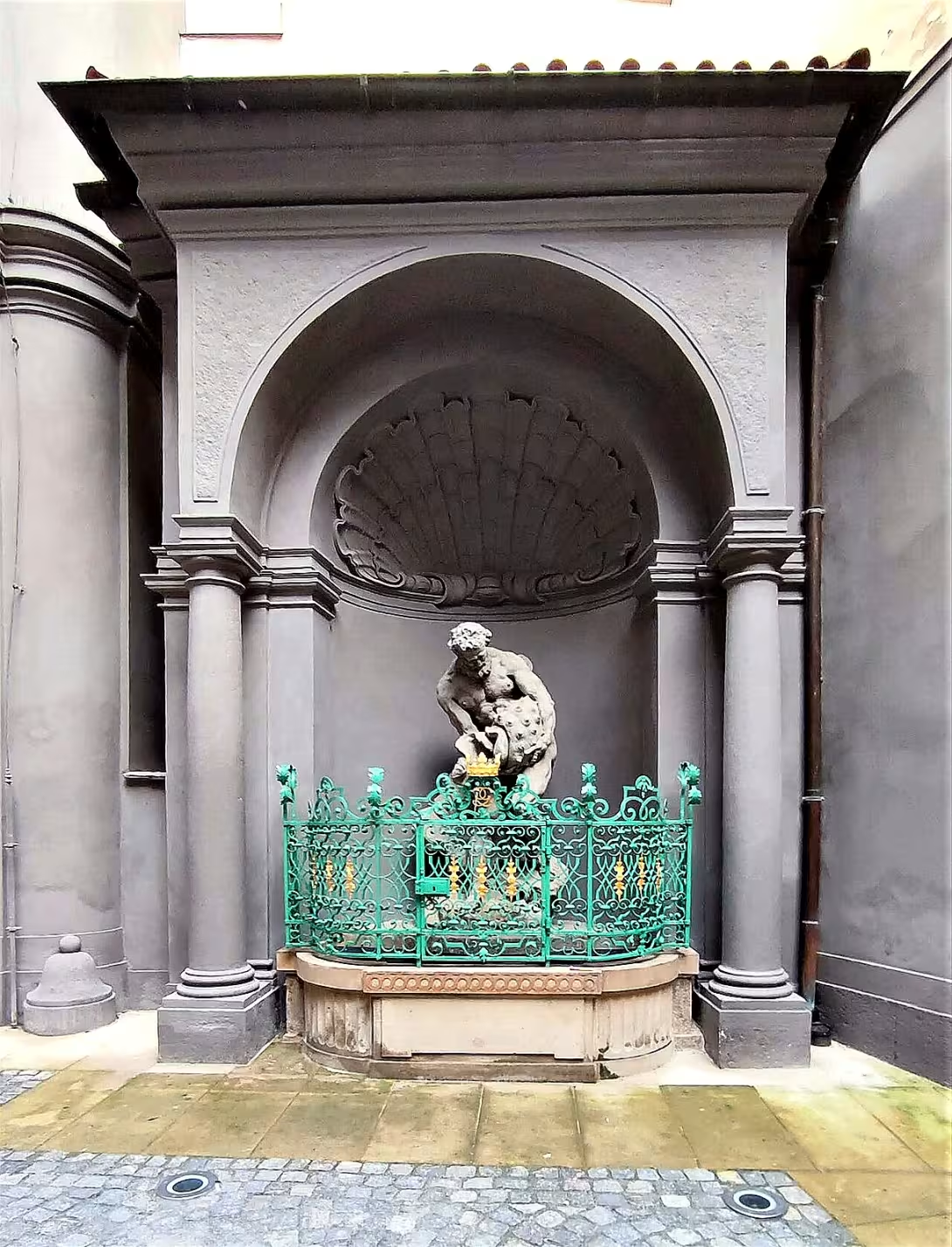
Tritónova Kašna is a baroque stone fountain located in the courtyard of Clam-Gallas Palace in Prague's Old Town. Commissioned between 1714 and 1716 by Count Filip Josef Gallas and his wife Marie Anna Gallasová, it exemplifies the artistic and architectural achievements of its era. Notably, this fountain features a unique depiction of the ancient god Triton without fish-like attributes, making it an essential part of Prague's cultural heritage.
The origin of Tritónova Kašna dates back to 1714-1716 when Count Filip Josef Gallas and his wife commissioned it as part of a broader decorative program for Clam-Gallas Palace. The project included various sculptural elements such as colossal Hercules figures and sculptures of Greek gods, all crafted from East Bohemian sandstone in the workshop of Matyáš Bernard Braun. This period marked an era when Baroque art flourished across Europe, characterized by dramatic expressions and grandeur, influencing architectural developments in Bohemia.
Architecturally, Tritónova Kašna is distinguished by its baroque style, featuring a three-dimensional sculpture of Triton set within a shallow edicule adorned with mussel relief. Flanked by Tuscan columns, the fountain's design includes a neoclassical base added in the late 18th century when modifications flattened its basin and introduced inscriptions. The central figure of Triton is depicted as an athletic old man turning on a rock, holding a large shell from which water flows through a narrow tube—a departure from typical baroque representations.
Ownership of the fountain transitioned to Christian Clam-Gallas in later years, whose initials were inscribed on the surrounding iron fence. This period also saw changes in the fountain's structure and function, reflecting broader trends in architectural adaptation and urban development within Prague.
Throughout its history, Tritónova Kašna has witnessed significant events, including modifications in the late 18th century that altered its basin and added a neoclassical base. In recent years, from 2019 to 2022, the entire Clam-Gallas Palace underwent re-coating with a uniform gray paint, altering the original color of the sandstone but preserving its historical essence.
Today, Tritónova Kašna remains an accessible and significant monument within Prague's Old Town. Its unique artistic features and historical context make it a worthwhile visit for those interested in Baroque art and architecture. The fountain continues to captivate visitors with its distinctive representation of Triton, offering a glimpse into the rich cultural tapestry of 18th-century Bohemia.
Then and now
Drag the slider to compare how the landmark may have looked when it was built with the view today.
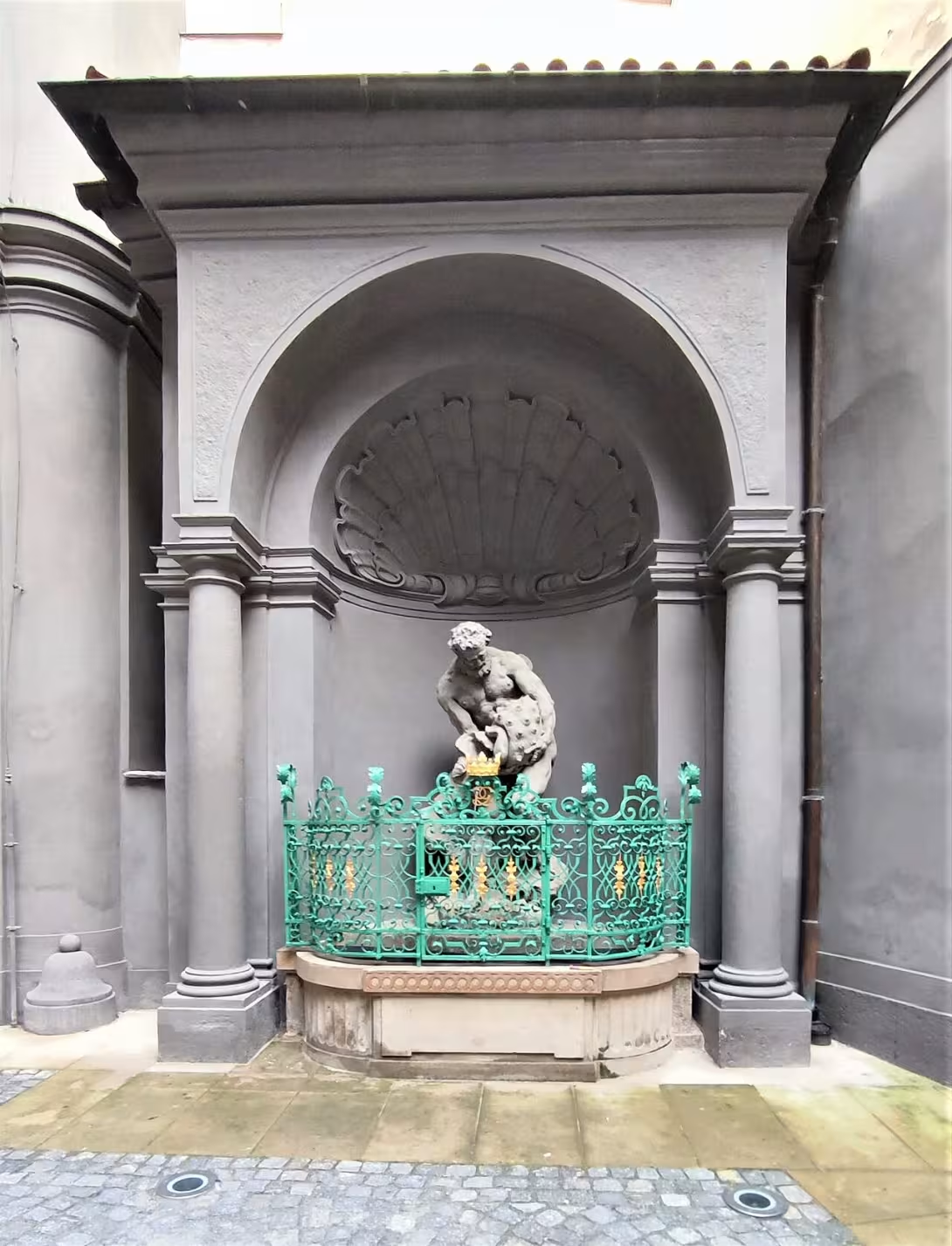

The historical appearance on the left is an AI-generated visualisation and serves as inspiration only.
Historical milestones
- 1714-1716
- The Tritón Fountain was commissioned and built.
- Late 18th century
- Addition of a neoclassical base and modifications to the basin.
- 19th century
- Ownership transferred to Christian Clam-Gallas.
- 2019-2022
- The entire Clam-Gallas Palace was repainted in a uniform grey color.
Architectural development
Originally featuring a larger water reservoir, the fountain underwent significant changes in the late 1700s when its basin was flattened and adorned with a neoclassical base. In recent years, from 2019 to 2022, the entire Clam-Gallas Palace, including Tritónova kašna, received a uniform gray coating that altered the original color of the sandstone.
Historical events
The fountain was commissioned and completed between 1714-1716 as part of the decorative program for Clam-Gallas Palace.
In the late 18th century, modifications included flattening its basin and adding a neoclassical base with inscriptions.
Owners
The fountain was commissioned by Count Filip Josef Gallas and his wife Marie Anna Gallasová, née Colonna von Fels, as part of the palace's sculptural decoration in the early 18th century. It later became associated with Christian Clam-Gallas, whose initials were inscribed on a surrounding iron fence.
Points of interest
– Unlike typical baroque depictions of Triton with fish-like features, Tritónova Kašna portrays him as an athletic old man without such attributes, offering a unique artistic interpretation. – The fountain's design includes a neoclassical base added in the late 18th century, showcasing how architectural styles evolved and merged over time at this site. – Originally crafted from East Bohemian sandstone by Matyáš Bernard Braun’s workshop, the sculptures surrounding Tritónova Kašna are part of a larger decorative program that included colossal Hercules figures and other Greek gods. – Christian Clam-Gallas later owned the fountain and added his initials to the iron fence, reflecting how ownership changes influenced its historical narrative and physical appearance. – The entire Clam-Gallas Palace, including Tritónova Kašna, underwent a re-coating with gray paint from 2019 to 2022, altering the original sandstone color but preserving its historical essence.
Guide
This guide is narrated by a synthetic voice generated by artificial intelligence.
Show guide text
This text was created by artificial intelligence and has not been editorially reviewed. It may contain inaccuracies.
Welcome to the heart of Prague's historic center, where you now stand before a remarkable piece of baroque artistry: Tritónova Kašna. As you adjust your headphones and prepare for an auditory journey, take a moment to soak in the scene surrounding you. Nestled within the courtyard of the Clam-Gallas Palace, this fountain is more than just a splash of water; it's a portal into a bygone era.
The Tritónova Kašna was commissioned between 1714 and 1716, a period marked by artistic flourishing under the patronage of influential figures like Filip Josef Gallas. The fountain’s creator, Matyáš Bernard Braun, crafted this work during his peak creative years. His vision brought to life a unique interpretation of Triton, diverging from typical baroque depictions that often include fish-like features. Instead, here you see an athletic old man turning on a rock, holding a large shell—a testament to the artist's innovative spirit.
As you gaze upon this masterpiece, notice the intricate details that define its charm. The three-dimensional sculpture of Triton is set against a backdrop that has evolved over time. In the late 18th century, a neoclassical base was added, enhancing the fountain’s elegance and reflecting changing architectural tastes. This fusion of styles adds layers to your experience as you explore this historic site.
The history of Tritónova Kašna is intertwined with notable personalities such as Marie Anna Gallasová, whose influence helped shape its legacy. Ownership transitioned through generations, eventually falling into the hands of Christian Clam-Gallas in the 19th century. Each era left its mark, contributing to the fountain's storied past.
One intriguing aspect that sets Tritónova Kašna apart is its artistic interpretation of Triton himself. Unlike typical baroque depictions with marine embellishments, this representation offers a unique perspective—a nod to Braun’s creative genius. It invites you to ponder the artist's intention and the cultural context of his time.
As your auditory tour draws to a close, take one last look around this enchanting courtyard. The Tritónova Kašna stands as a testament to Prague's rich artistic heritage, inviting you to delve deeper into its history and appreciate the artistry that has stood the test of time. Thank you for joining us on this journey through sound and imagination. We hope it inspires you to explore more of what this historic city has to offer. Safe travels, and may your adventures continue to be filled with discovery!
Tips for visitors
The best time to visit Tritónova kašna is during the late spring or early fall when the weather is pleasant, allowing you to comfortably explore the courtyard of Clam-Gallas Palace and its surroundings without the summer crowds or winter chill. During these seasons, the vibrant colors of Prague's Old Town are particularly striking, enhancing your experience at this baroque fountain.
Transportation options include both public transit and driving. The area is well-served by trams and buses that pass through nearby streets, making it easy to reach on foot from several points in Prague’s Old Town. Always check for current transport options online before your visit.
When visiting Tritónova kašna, it's advisable to bring comfortable walking shoes as you'll likely explore other parts of Prague Old Town after enjoying the fountain. A camera or smartphone is recommended to capture the intricate details of the baroque sculpture and the charming atmosphere of the courtyard. Additionally, consider bringing a light jacket, even in warmer months, as evenings can be cool.
For photography enthusiasts, early morning or late afternoon provides the best natural lighting for capturing Tritónova kašna. The soft sunlight during these times highlights the details of the Triton sculpture and creates beautiful shadows that add depth to your photos. Try different angles around the courtyard to find unique perspectives of this historic fountain.
Nearby attractions within a 30-minute walk include the Old Town Square, known for its historical architecture and vibrant atmosphere, and the Astronomical Clock, which is a must-see for its intricate design and hourly show. For families with children, consider visiting Prague Castle, where interactive exhibits can engage younger visitors while offering stunning views of the city.
Frequently asked questions
Can the monument be visited?
This is a structure in a public space that can usually be seen from outside free of charge. We have not verified that this particular one is freely accessible.
Where is the monument?
Location: Staré Město, Hlavní město Praha. The map on this page shows the exact spot.
Why is the monument protected?
It is listed in the Central List of Cultural Monuments of the Czech Republic as a national cultural monument. It is protected as part of a larger listed ensemble.
Businesses nearby
Do you run a restaurant, accommodation, shop, museum, rental, wellness or other visitor service near this monument? Show yourself directly to the people heading to it — this is how they will see you in the app and on the web:
Events nearby

Zdroj akcí: otevřená data měst a obcí ČR (Národní katalog otevřených dat) a kalendář akcí Národního památkového ústavu.
Nearby
Tritónova kašna is situated in the courtyard of Clam-Gallas Palace on Husovo náměstí, surrounded by other historical buildings and monuments within Prague's Old Town.
Accommodation nearby
Trips and activities nearby
Guided tours, tickets and activities nearby from GetYourGuide
Affiliate link: if you buy from the partner, we may receive a commission. The price for you does not change.
Search tours and activities →Themed route
Tematická výletní trasa: Historické nádvoří a architektura Starého Města
1. Clam-Gallas Palace (Palác Clam-Gallas)
Typ: Palác
Proč stojí za návštěvu: Začněte svůj výlet u paláce Clam-Gallas, který je klenotem architektury baroka ve Starém Městě. Jeho historie sahá až do 17. století a nabízí nádherné interiéry s bohatou dekorací, které odrážejí jeho důležitost v pruských dějinách.
2. Tritónova kašna (kašna)
Typ: Kašna
Proč stojí za návštěvu: V centru pozornosti je Tritónova kašna, umístěná v nádvoří paláce. Tato barokní kašna je jedinečným příkladem díla sochaře Matthiasa Bernarda Braunera a je známá svou detailní prací a symbolickými prvky, které zobrazují Tritóny a morské bohy.
3. Husovo náměstí (Husovo Square)
Typ: Náměstí
Proč stojí za návštěvu: Po prozkoumání kašny se podíváte na Husovo náměstí, které je živým centrem Starého Města. Toto historické náměstí bylo pojmenováno po Janu Husovi a poskytuje pohled na další významné budovy a architektonické prvky, které odrážejí bohatou minulost oblasti.
4. Kostel svatého Mikuláše (Church of St. Nicholas)
Typ: Kostel
Proč stojí za návštěvu: Není daleko od Husova náměstí se nachází kostel svatého Mikuláše, jedna z nejstarších sakrálních budov v Praze. Jeho gotický interiér a historie sahající do 12. století činí tento kostel klíčovou památkou pro pochopení duchovního a kulturního vývoje Starého Města.
5. Kostel svaté Anny (Church of St. Anne)
Typ: Kostel
Proč stojí za návštěvu: Už jen pár minut chůze od kostela svatého Mikuláše najdete kostel svaté Anny, známý svou barokní architekturou a bohatou historií. Tento kostel byl postaven na místě starší kaple v 17. století a je důležitým připomínkem proměn v náboženském životě oblasti.
Tato trasa nabízí pohled na klíčové historické a architektonické prvky Starého Města, které jsou úzce spojeny s Tritónovou kašnou a jejím okolím.
Seasonal recommendations
Spring: Spring at Triton's Fountain is a time of rebirth and vibrant colors, as the historic Staré Město area awakens with blooming flowers and lush greenery. The gentle warmth of the season makes it an ideal time to explore the intricate details of the fountain, which are beautifully illuminated by the soft spring sunlight. Visitors can enjoy the mild weather while strolling through the cobblestone streets that surround this iconic landmark. It's advisable to wear comfortable layers as temperatures can vary throughout the day. The early morning or late afternoon hours are best for avoiding larger crowds and fully appreciating the serene atmosphere.
Summer: Summer at Triton's Fountain is characterized by long, sunny days perfect for soaking in the lively energy of Prague’s Old Town. The fountain becomes a popular gathering spot for both locals and tourists alike, offering a refreshing respite from the bustling city life. The warm weather encourages visitors to spend time outdoors, enjoying picnics or leisurely walks along the Vltava River nearby. Due to increased foot traffic during this peak tourist season, it's recommended to arrive early in the morning to avoid crowds. Light and breathable clothing is ideal for staying comfortable under the summer sun.
Autumn: Autumn brings a magical transformation to Triton’s Fountain, as the changing leaves cast a warm, golden glow over the historic site. The cooler temperatures make it an inviting time to explore Prague's charming streets without the sweltering heat of summer. This season is particularly enchanting during the late afternoon when the setting sun enhances the colors and creates a picturesque scene around the fountain. Visitors should dress in layers to accommodate fluctuating temperatures throughout the day, and consider bringing a light jacket for the crisp evenings.
Winter: Winter at Triton's Fountain offers a unique charm with its frosty air and snow-covered surroundings that create a fairy-tale atmosphere in Prague’s Old Town. The historic architecture is beautifully accentuated by twinkling lights and festive decorations, making it an ideal time to capture stunning photographs. While the fountain itself may not be as lively without flowing water, the surrounding area remains enchanting with its winter allure. Visitors should dress warmly in layers and opt for comfortable footwear suitable for walking on potentially icy paths. It's best to visit during daylight hours when the fountain is open, as operating hours are typically shorter during this season.
Visualizations and artistic views


The visualisations are generated by artificial intelligence and serve as inspiration.
Photos from the area
Real photos taken near the monument


Zdroj a licence jsou uvedeny u každého snímku.
Atmosphere of the place
This atmospheric visualisation of the place and period was generated by artificial intelligence. It is not real footage of the location.
Tips from visitors
No tips yet. Be the first!
Log in and add your tip.
Sources and literature
Photos: Dobroš / CC BY-SA 4.0 — Wikimedia Commons. The author and licence also appear when you hover over the image.
Faktickým podkladem tohoto textu byl článek na Wikipedii, jehož autory jsou přispěvatelé Wikipedie. Článek je dostupný pod licencí CC BY-SA 4.0.
Location on the map

Příběhy a pověsti
Legendy, pověsti a příběhy spjaté s touto památkou

Fotografie návštěvníků
Zatím žádné fotografie. Buďte první, kdo přidá fotografii z návštěvy!
Log in a přidejte svou fotografii nebo hodnoťte.
Za ověřenou návštěvu v aplikaci získáte víc bodů — poznáme podle GPS, že jste na místě.
Reviews and comments