






Trojstranný obelisk v Riegrových sadech na Vinohradech Monument
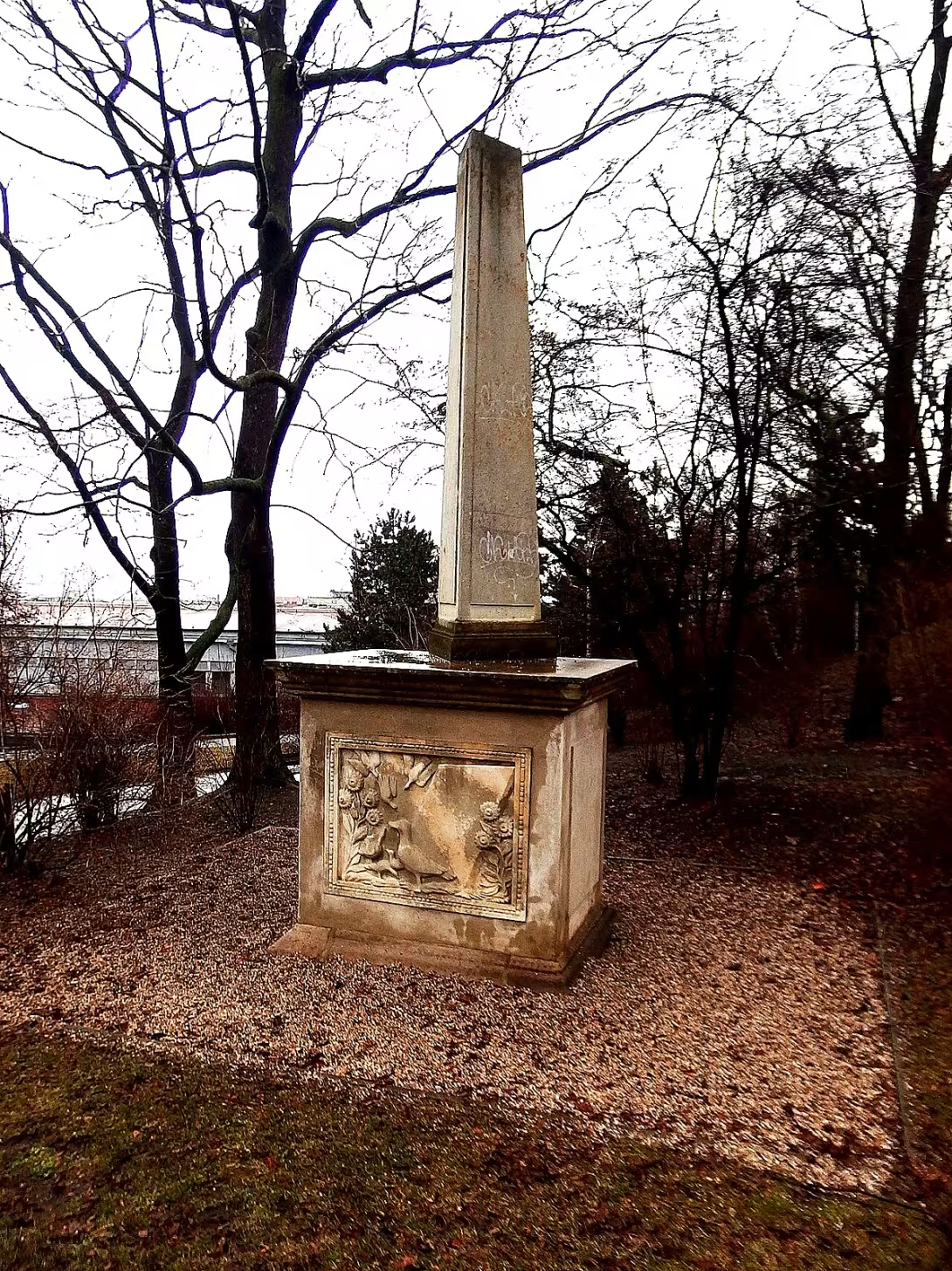
Trojstranný obelisk v Riegrových sadech na Vinohradech is a Classicist monument dedicated to the memory of Brigitta Taafe Cali. It was built by her husband Josef Emanuel Canal from Malabaila after her death in 1810. The monument is located in the northeast part of the park in the town of Vinohrady, Prague 2.
This sandstone monument is remarkable by its unconventional triangular base. On the plinth there are reliefs of the bird family, which represent the birth alliances. The work was created by an unknown author by a mowing method.
Obelisk is closely linked to the history of Rieger orchards, the former garden of the Canal, the foundation of which was laid by Josef Emanuel Count Canal. After the death of Brigitta Taafe in 1810, the monument was built as a reminder of her personality. Its unique shape and location in the park emphasize the personal and historical context of origin. In the first half of the 19th century, Classicism was the dominant direction of architecture and design, affecting the shape of this monument.
Architectural construction is made of sandstone by cutting method. The shape resembles a slender needle with a triangular base, making it different from more traditional obelisks. The quadary plinth decorated with bird family reliefs represents alliances and adds a personal dimension to the piece. This architectural choice reflects a classical tendency to simplicity, symmetry and the use of ancient elements.
The ownership and administration of the obelisk remained largely in the hands of the Canale family. Josef Emanuel Count Canal was not only the initiator of his position but also the principal owner of the property. After his death, the care of the memory continued in the following generations of the family.
The key moment in the history of the memorial was the death of Brigitta Taafe, which led to his creation. Obelisk is also known as Bird Obelisk or Sláp- obelisk Brigitta Canal, which highlights its personal importance to the family.
Today, the Tripartite obelisk in the Rieger orchards stands as a testament to the historical and personal importance of the Canal family. It is open to the public and offers visitors the opportunity to become acquainted with the classical architecture and history of 19th century Prague. Its unique shape and position in the park makes it an interesting destination for lovers of history and art.
The monument is not only a reminder of Brigitta Taafe's personality, but also proof of the influence of Classicism on Czech architecture. The visit offers a view of the past and an inspiration for the recognition of historical personalities and events that shaped today's Prague.
Then and now
Drag the slider to compare how the landmark may have looked when it was built with the view today.
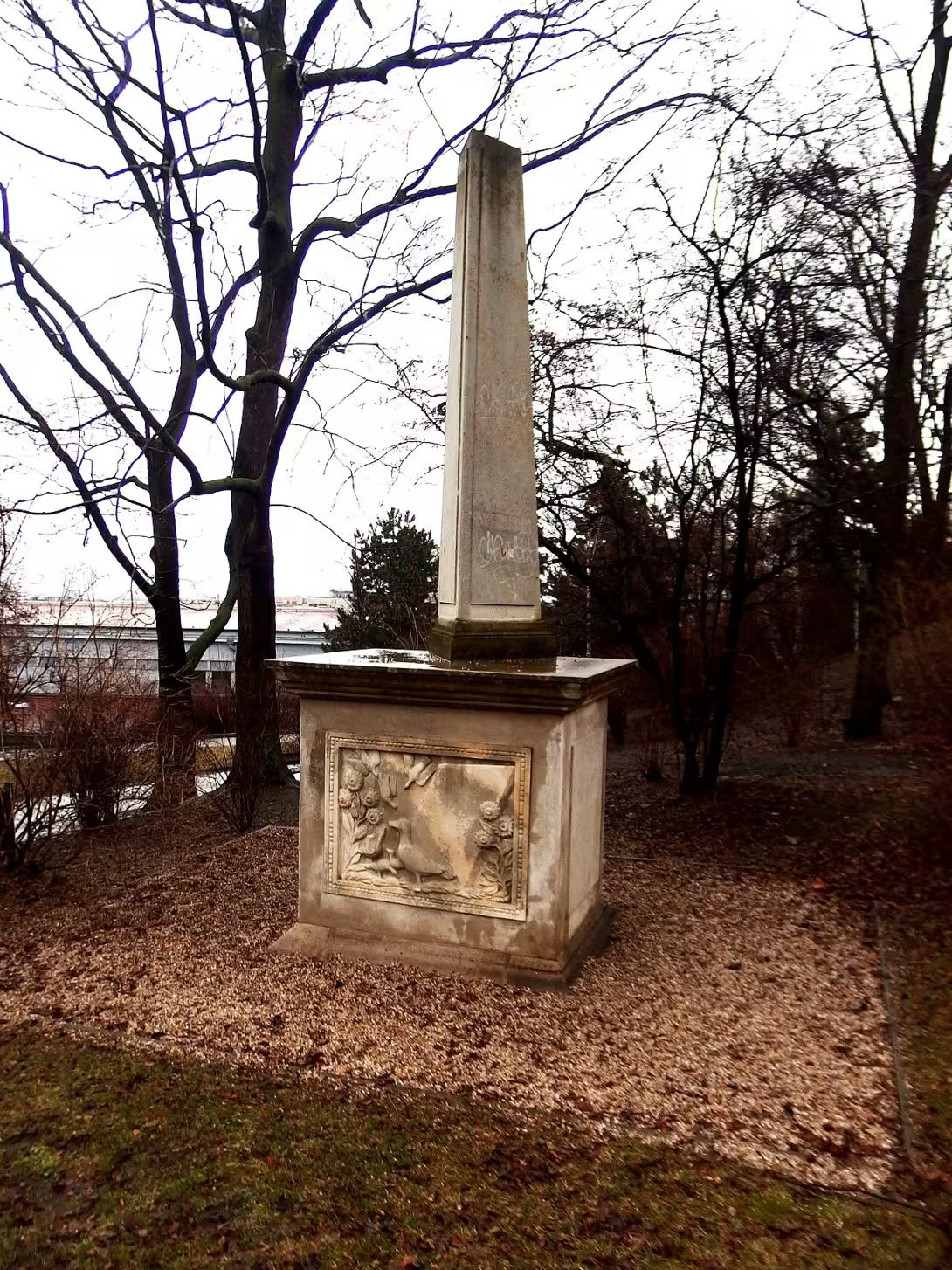
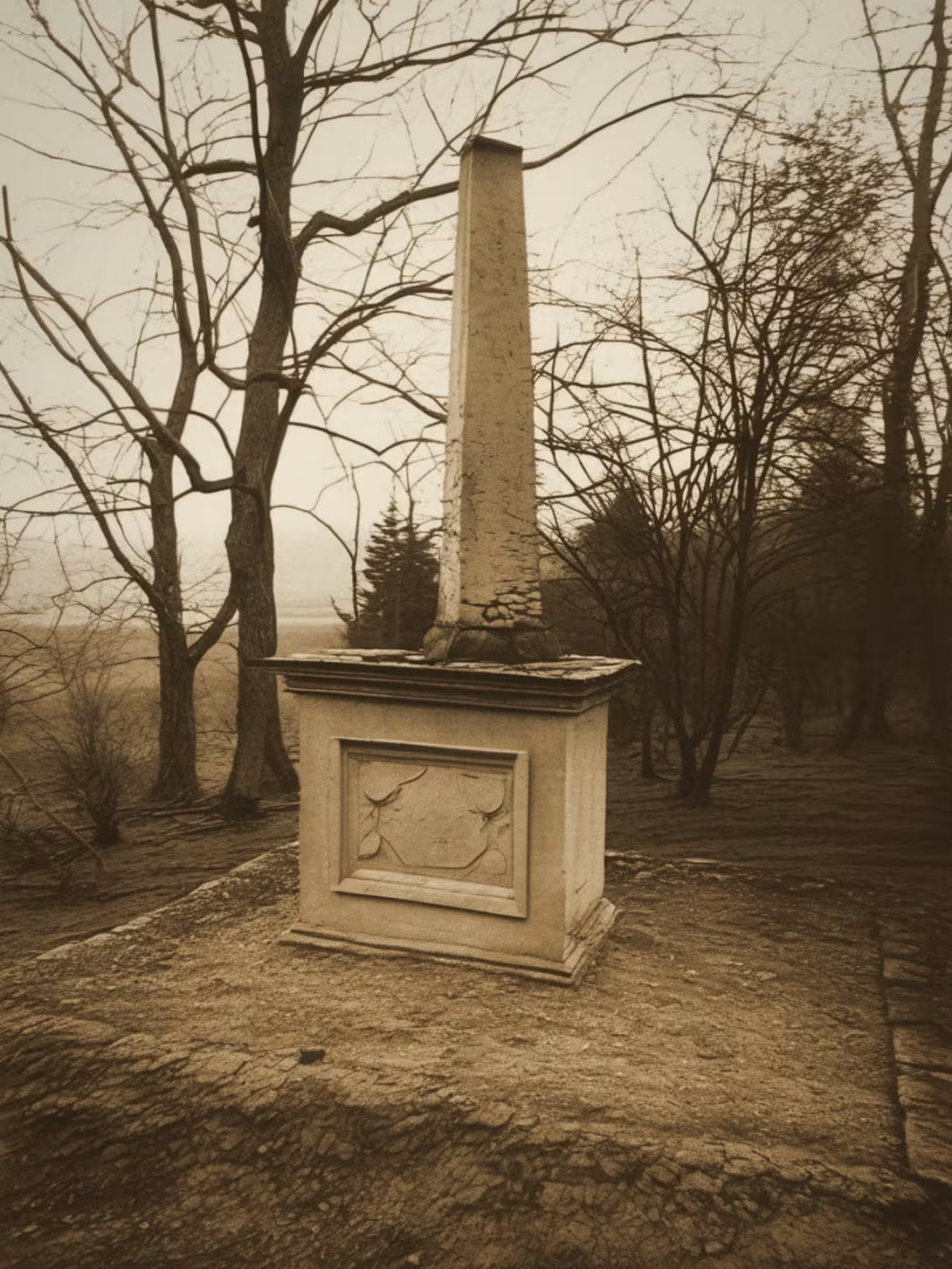
The historical appearance on the left is an AI-generated visualisation and serves as inspiration only.
Historical milestones
- 1810
- The death of Brigitta Taaf Cali, which led to the idea of a memorial
- around 1840
- The creation of a triangular obelisk in Rieger orchards
- first half of the 19th century
- The period of dominance of Classicism, which influenced the shape of the memorial
Architectural development
The monument is made from sandstone by cutting. It has the form of an unconventional slender needle with a triangular base. The obelisk is placed on a plinth in the shape of a block with family alliances.
Historical events
1810 - the death of Brigitta Taaf Cali, which led to the construction of an obelisk.
Points of interest
- A three-sided obelisk is a classic monument dedicated to Brigitta Taafe's Canal. The memorial was built after her death in 1810 by her husband Joseph Emanuel Canal of Malabila. - The obelisk has an unconventional triangular base and is made from sandstone by cutting. - There are bird family reliefs on the plinth that represent the birth alliances. - The monument is located in the northeast part of Rieger orchards in Vinohrady.
Guide
Show guide text
This text was created by artificial intelligence and has not been editorially reviewed. It may contain inaccuracies.
Welcome to the Rieger orchards. You have just stopped in a quiet part of this vast green space where history meets the daily rest of the people of Vinohrad. In front of your eyes is something very special and very noble. You are standing right in front of a sandstone monument, which, in its slender form, attracts the looks of anyone who stops in this park. It's a tripartite obelisk, a monumental work that carries a deep story about love, loss and eternal memory. Before we go into his detailed viewing, let us just for a moment perceive his presence in this environment. Feel how its sandstone color differs from the surrounding green trees and how its geometric shape works in the natural environment of the park.
This monument is not just an ordinary stone pillar. It's an expression of deep human emotion. To understand why this object is standing here, we have to go back to the early nineteenth century. The whole story begins in 1810. In that year, there was an event that had forever changed the life of a noble family. Brigitta Taafeová Canalová died. Her departure left in the heart of her husband, Count Joseph Emanuel Canal of Malabaila, such a void that could not be filled with anything but a constant reminder of her existence. The Count has decided that her name must not be forgotten. He wanted to create something that would be time-resistant, something that would stand as a witness to her beauty and her life together.
However, the construction of this obelisk itself did not arise immediately after its death. The process of making and implementing this work took some time. It is estimated that this triangular obelisk was erected around 1840. This means that when you watch it today, you are looking at a work that was created at a time when there was an art movement called Classicism in all of Europe and here. This period placed great emphasis on order, harmony, balance and purity of shapes. And these are the properties you can perceive on this monument in every millimeter of it. Classicism sought to return to the ideals of ancient times, to the perfection of geometry and to make art seem calm and dignified. And it is this calm and dignity that radiates this sandstone pillar.
Now please pay attention to the architecture itself and what you see right in front of you. Look at its shape. Unlike many other monuments that are usually quadrilateral or round, this obelisk is unique to its triangular base and triangular body. It is a very unconventional solution, which gives the whole piece dynamic and unexpected lightness. The obelisk takes the form of a slender needle, which elegantly dials up to the sky. This whole object is standing on a solid, block plinth. This is a solid base for the whole vertical structure and gives stability.
If you approach it, you may notice the amazing work of a sculptor. This whole monument is made of sandstone using a mopping method. This means that every detail, every edge and every line was created manually, using tools that required great patience and precision. Sandstone is a material that is beautiful and easy to work with but is also sensitive to the will of time and elements. Yet he stands here and reminds us of his fortress. Now pay attention to the most beautiful part of the base. On this block plinth are decorated reliefs. If you look closer, you'll see a picture of a bird family. These fine, carved shapes of birds give the whole monument a human to gentle dimension. This family of birds can be seen as a symbol of life, family, and perhaps as a metaphor for Brigitta herself and her loved ones who stayed behind. It is a fascinating contrast between the strict geometry of the entire obelisk and the tenderness of these animal figures.
Looking at this monument, we cannot avoid the idea of the character of Count Joseph Emanuel Canal from Malabaila. Imagine his decision. At a time when technology was not as advanced as today, he had to organize the production of such a work, seek out the best craftsmen and ensure that his vision was fulfilled exactly as he felt in his heart. So this obelisk is not only a work of art in the age of Classicism, but above all it is a monumental expression of personal sadness and devotion. Every notch in the sandstone, every plane of the triangular substate carries the trace of his will to preserve his wife's memory.
There is also a certain mystery in this place that you should be aware of. Why the triangle? Why choose such an unusual number of pages? In art, a triangle can symbolize many things - it can mean unity, it can represent a combination of three components, or it can simply be a reflection of the search for new, unprecedented beauty at a time when everything else seemed long ago defined. This geometric anomaly makes you stop and think, which is exactly what such a monument should want from a visitor.
Now that you've studied the history, architecture, and the emotions that this monument carries, I suggest you stop for a while and just observe silently how light changes on its sandstone surface. Each angle of impact of the sun's paper may highlight another part of the relief or another edge of this slender needle. It's the moment when history becomes a living part of your present moment.
Thank you for spending your time in this small but important place in the heart of the Vinohrad. We hope this story of love and classical beauty has enriched you. Please continue to walk the Rieger set, discover the next corner of this park and enjoy the peace this place offers. Goodbye.
Tips for visitors
The best time to visit is spring or autumn afternoon, when the Rieger orchards are pleasant heat and trees offer a beautiful background for a walk. In summer I recommend the morning hours to avoid the heat and dense crowd, while in winter the monument is visible and calm, but it can be cold. Since it is an outdoor monument in the park, there is no limitation in times when you can come, but light conditions affect the experience.
Transport to this part of Prague is very easy. The location is available both by car and by public transport; Check the current connection and departure times in the search engine or on the transport company website. If you arrive by car, parking in the centre can be challenging, so consider using public transport or parking nearby and a short walk through the orchards.
Bring comfortable shoes to walk on grassy and reinforced roads in the park. We recommend having a water bottle and a light snack with you, as refreshments may not always be available in the immediate vicinity of the monument. Depending on the season, pack sunglasses, hat or umbrella.
For photography is the best light in the morning or late afternoon when the sun shines at an angle and creates long shadows that give sandstone obelisk depth and texture. You can get the best views from different sides of the triangular column to capture all the inscriptions and reliefs dedicated to Brigitta Taafe's Canal. Try shooting from a distance to see the obelisk in the context of the green Rieger orchards.
In the surrounding area you can walk on Rieger's orchards, which offer a quiet atmosphere and green areas. For families with children this place is ideal for a short walk where children can play on the lawn and observe nature. The monument is accessible to all, including prams, if you choose reinforced paths in the park.
Businesses nearby
Do you run a restaurant, accommodation, shop, museum, rental, wellness or other visitor service near this monument? Show yourself directly to the people heading to it — this is how they will see you in the app and on the web:
Events nearby

Zdroj akcí: otevřená data měst a obcí ČR (Národní katalog otevřených dat) a kalendář akcí Národního památkového ústavu.
Nearby
Riegrovy sady, městská část Vinohrady v Praze 2.
Accommodation nearby
Trips and activities nearby
Guided tours, tickets and activities nearby from GetYourGuide
Affiliate link: if you buy from the partner, we may receive a commission. The price for you does not change.
Search tours and activities →Themed route
1. City area Vinohrady in Prague 2 - urban area. It offers a walk between beautiful houses and streets with a pleasant atmosphere. 2. Rieger sets - city park. It is a place to relax in nature with beautiful views of the city. 3. Trojstranný obelisk v Riegrových sadech na Vinohradech - monument. It represents an interesting architectural element located in the heart of the green.
Seasonal recommendations
Spring: In the spring the park wakes up and trees begin to bloom around the monument. The light is fine and the colors are fresh, which creates a pleasant atmosphere. I recommend you take a few layers of clothes because it may still be cold in the morning. The best is to come early in the morning, when the gardens are the most quiet.
Summer: There are a lot of people in the gardens in the summer months, and the air gets hot. The shadows of trees around the monument provide a pleasant cold. The atmosphere is alive and full of people resting on grass. Due to large crowds and high temperatures, it is best to arrive early in the morning to enjoy the memory in peace. Don't forget the light clothes and plenty of fluid.
Autumn: Autumn brings golden and brown leaves to Rieger's sets. The sun is lower, creating long and beautiful shadows on the stone body of the monument. The atmosphere is calm and nostalgic. Prepare stronger shoes because wet leaves on the road can be slippery. An ideal visit in the afternoon is when the sun best illuminates the building.
Winter: Zimą park looks steep and bare branches of trees surround the monument. If snow falls, the monument is very noble and the silence in the gardens is deep. It is necessary to dress thoroughly, including caps and gloves, as cold wind can blow in open air. Visit the place around noon when there is the most light and the least frost.
Visualizations and artistic views


The visualisations are generated by artificial intelligence and serve as inspiration.
Photos from the area
Real photos taken near the monument

Zdroj a licence jsou uvedeny u každého snímku.
Tips from visitors
No tips yet. Be the first!
Log in and add your tip.
Sources and literature
Photos: Palickap / CC BY-SA 4.0 — Wikimedia Commons. The author and licence also appear when you hover over the image.
Faktickým podkladem tohoto textu byl článek na Wikipedii, jehož autory jsou přispěvatelé Wikipedie. Článek je dostupný pod licencí CC BY-SA 4.0.
Location on the map
More monuments – Vinohrady
Show all in the municipality

Příběhy a pověsti
Legendy, pověsti a příběhy spjaté s touto památkou

Fotografie návštěvníků
Zatím žádné fotografie. Buďte první, kdo přidá fotografii z návštěvy!
Log in a přidejte svou fotografii nebo hodnoťte.
Za ověřenou návštěvu v aplikaci získáte víc bodů — poznáme podle GPS, že jste na místě.
Reviews and comments