






U tří divých mužů House
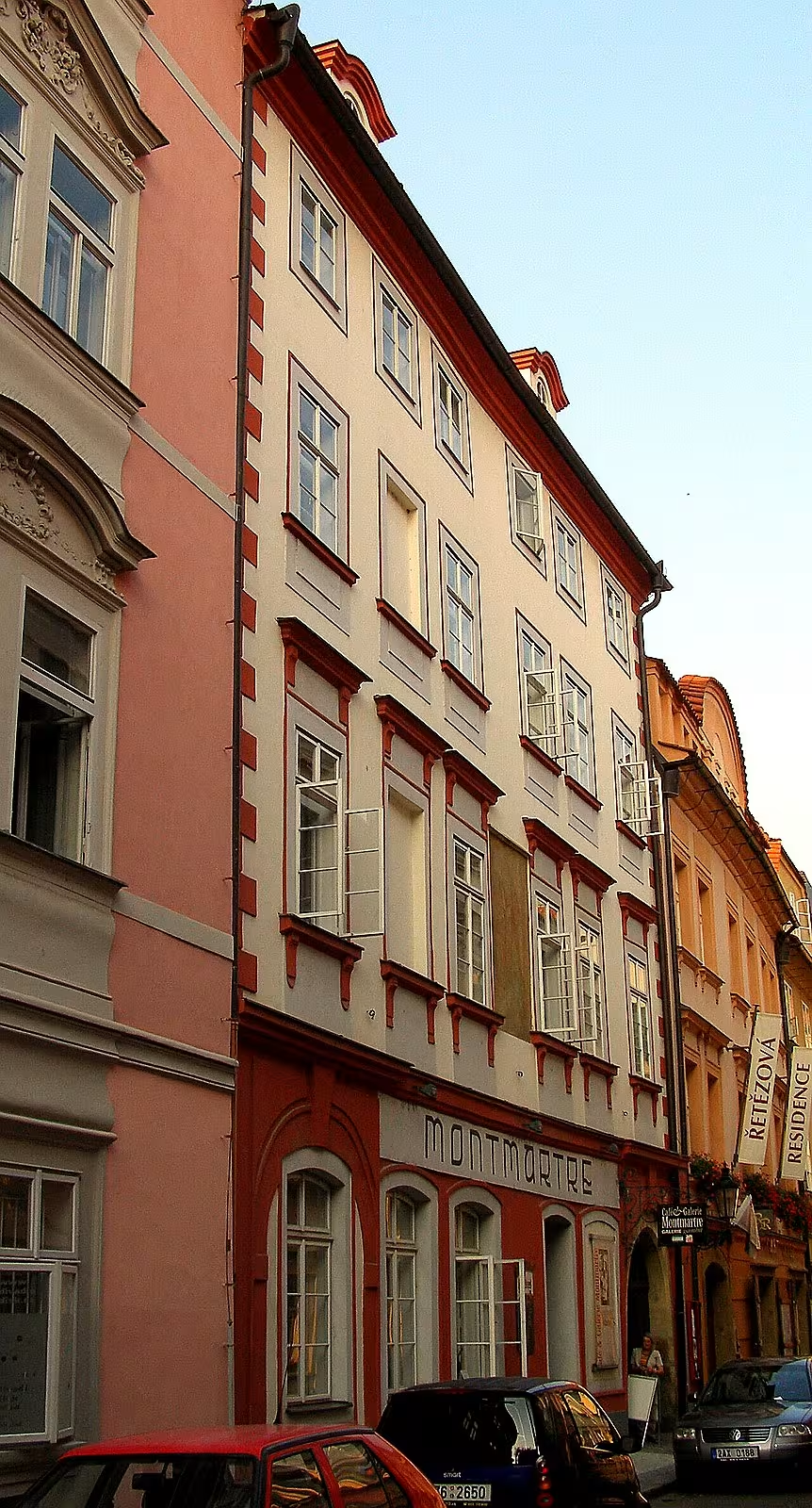
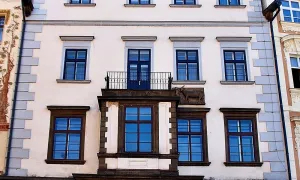
The house U tří divých mužů, also known as the Shandovský House, is a classic monument in the Prague street of Chain in Old Town. The historical object excels with a rich history and architectural character that reflects the city's changes over the centuries. Thanks to the famous cabaret Montmartre, the house has become a symbol of Prague's artistic life and is still a popular place for cultural events.
Originally there were Gothic buildings, which were gradually renaissance and baroque. The contemporary classical form of a three-storey building with a trapezoid yard was acquired in 1811 after extensive reconstruction. This architectural change corresponded to the building trends at the time and contributed to the unique appearance of the house.
In the 20th century there was a famous cabaret Montmartre, which was the center of Prague's artistic life. The company was a popular meeting place of important painters, literary and musicians such as E. E. Kisch, František Kysela, Jaroslav Hašek and Eduard Bass. The interior of the cabaret later decorated the works of František Kyla and Vratislav Hugo Brunner, which underlined its unique atmosphere.
The name of the house comes from a rumor of fraudulent people-eaters who were in fact just disguise bastards. This 1791 story became part of a local legend. In the dance hall, right on the plaster is preserved allegorical painting of the seven major sins of man created by Brunner.
Today in the house "The Three Savages" is a cafe that serves as a place for various cultural events and lectures. The building retains its historic spirit. It is worth visiting not only for architecture, but also for the possibility of immersing yourself in rich Prague culture and history. This monument reminds of changes in the artistic life of the city and remains an important place for anyone who wants to understand the spirit of Prague.
Historical milestones
- 1791
- The famed human-eating scam at the owner Barbara Puchlová
- 1811
- Classicist building reconstruction
- 1898
- The birth of Czech painter Jan Bauch
- 1911
- Establishment of cabaret and café Montmartre Josef Waltner
Architectural development
The building was built on two original Gothic objects which underwent Renaissance and Baroque reconstruction. In 1811 a classicist three-storey building was built with a trapezoidal courtyard and enclosed rooms. The interiors were later decorated with paintings by František Kyla and Vratislav Hugo Brunner.
Historical events
1791: Famous fraud with people-eaters, 1811: Classicist reconstruction of the building, 1898: Born of painter Jan Bauch, 1911: Establishment of cabaret Montmartre.
Owners
Barbora Puchlová (1791)
Points of interest
- The house is also known as the Shandovský house and is located in the Prague street of the Chain. - The current three-storey form with the trapezoid yard was acquired after the reconstruction in 1811. - In the 20th century there was a famous cabaret Montmartre, which was the center of Prague's artistic life. - The name comes from a rumor of fraudulent man-eaters who were in fact disguised as bastards. - In the dance hall is preserved allegorical painting seven major sins of man by Wroclaw Hugo Brunner.
Guide
Show guide text
This text was created by artificial intelligence and has not been editorially reviewed. It may contain inaccuracies.
Welcome to the heart of Prague's Old Town, one of those alleys where history intersects with legends in every stone. Stop for a moment and breathe deeply into the atmosphere of Chain Street. Right now, you're standing in front of a building that seems peaceful, but its walls hide stories that are in many other than calm. The U tří divých mužů house stands before you, which many also know under the name Shandov house. Look at him. He's a constant witness to the transformation of our city, which carries a layer of centuries.
When you look at this facade today, you see the result of a long development. This house wasn't built in one form at a time. Its roots go deep into the Middle Ages, where there were Gothic objects. Imagine what this area looked like centuries ago, at a time of narrow alleys and wooden buildings. Over time, however, tastes and needs changed, and so the house was gradually rebuilt. First in the Renaissance spirit, then in the Baroque spirit, until he finally gets the face you see today. The current classical form, which dominates space, was created in 1811. Notice this three-story building. Classicism has brought with it order, cleanliness and some silences, which in contrast to the surrounding baroque chaos is very balanced. If you had the opportunity to look inside, you would encounter an interesting architectural element, which is the trapezoid yard. It is this detail that gives the building its specific character and reminds us that Prague houses are often like labyrinth houses where space bends and surprises.
Now that you have an idea of what the house looks like, let's dive into its soul, which is made up of people and events. The history of this place is not only about stones, but about passion, deceit and art. Let's go back in time for more than two years until 1791. That's when one of the bizarre legends that makes Prague so fascinating took place. The owner of the house, a woman named Barbora Puchle, was involved in an incredible fraud. It was said that things were going on in the house that were bordering on insanity, and in the center of these stories, it was her and the rumors of the people-eaters. It is a dark and disturbing piece of Prague folklore, which still carries a veil of mystery over the house. It is from these bizarre stories and legends that the name U tří divých mužů is likely to come from, which carries a touch of something extraordinary, even supernatural.
But the U tří divých mužů is not just a place of dark legends. In the 20th century it became a place of light, music and intellectual turbulence. In 1911 Josef Waltner established a cabaret and a coffee shop Montmartre. Imagine how the smoke bells of cigarettes, the sound of the piano and the calls of the most influential personalities of the time began to be mixed in these areas. Montmartre was not just an ordinary enterprise, it was the real center of Prague's artistic life. Here were the people who formed modern Czech culture, literature and music.
Now that you're looking at the facade, try to imagine who's been through here. Among the regular guests and friends of this place was Jaroslav Hašek. Imagine the author of the Good Soldats of Sveyk sitting here with a cup in his hand, with his typical ironic smile and watching the outside world, from which he subsequently made his genius jokes. Together with him could be E. E. Kisch, a legendary journalist and reporter who, with relentless curiosity, sought the truth in detail. Musicians and intellectuals such as František Kysela, Eduard Bass or Vratislav Hugo Brunner met in these premises. It was a time when the cafe served as a living room for a whole generation of artists. Here the ideas were born, there was a passionate discussion about the future of art and here the fates of people who changed the face of Czech literature and music were connected.
A personal connection of the house with specific families is also interesting. In 1898 Czech painter Jan Bauch was born here. It's fascinating to think that in a house that was so strongly associated with performance and music, a man who was devoted to art began his life. It only confirms that the Shandov house was a true incubator of creativity.
If you're standing in front of this building today, you may find it just one of the many houses on Chain Street. But if you stop and listen, you may hear the echoes of the laughter of the Montmartre cabaret, the whisper of Barbara Puchlo's time or the silent footsteps of the painter John Bauch. This house is like a book where every chapter tells a different story. From gothic foundations to classicist silver to stormy life in the first half of the last century.
Notice how light reflects from the walls and how the house fits into the rhythm of the surrounding architecture. It's a place where the high one meets the low one, the art of fraud and the history of legend. It's exactly what makes Prague so unique. Every detail, from 1811 engraved in the history of reconstruction to the names of the personalities who spent their evenings here, is a mosaic of Prague's genius loci.
Now, before you go any further, I suggest you stay quiet for a while. Look up at the windows and imagine all the views that have been watching life in Chain Street over the centuries. Who stood there in 1791? What was Josef Waltner thinking when he opened his famous business in 1911? These questions remain partially unanswered, and that is what lies in the magic of this place.
Thank you for accompanying me with the history of the U tří divých mužů house. I hope this short trip in time helped you see more than just old walls. We now invite you to explore the streets of Old Town. Let yourself be guided by curiosity and look for other hidden stories that Prague has prepared for you. I wish you a pleasant continued journey and many new discoveries. Goodbye.
Tips for visitors
For the best experience we recommend a visit in the morning when there are fewer people around and you can enjoy the atmosphere of historic alleys in peace. Light is ideal for photography in bright days, when it is reflected from historical facades and highlights Renaissance and Baroque details of the building.
You can get to the monument easily on foot or through public transport; Check the current connection in the Internet search engine. Parking in this part of Prague is very limited, therefore public transport is the most suitable solution.
Take with you comfortable shoes suitable for walking on an historic surface and possibly a camera to capture the details of architecture. The best places for pictures are narrow passages and views of the house facade.
The surrounding area is located Old Town in Prague, which offers many other historical attractions to explore during a short walk. For families with children, visiting these ancient places is an interesting opportunity to discover history directly in the urban environment.
Businesses nearby
Events nearby

Zdroj akcí: otevřená data měst a obcí ČR (Národní katalog otevřených dat) a kalendář akcí Národního památkového ústavu.
Nearby
Old Town, Prague
Accommodation nearby
Trips and activities nearby
Guided tours, tickets and activities nearby from GetYourGuide
Affiliate link: if you buy from the partner, we may receive a commission. The price for you does not change.
Search tours and activities →Themed route
1. Celná street , historical communication The classic part of the Royal Road leads directly to the center of Old Town. Walk under Gothic and baroque facades suggests the nature of the place where kings and merchants met.
2. Fruit Market , city square The spacious square with protected houses offers a quieter pace than the neighboring streets. Here you can observe the architecture without crowds of tourists close to the main dominoes.
3. U tří divých mužů, monument house (main destination) Baroque Palace in the street The skin wears the name of the statue of three strange men on the facade. A unique sculpture symbolizes strength and savagery, making it a photographically interesting contrast to the surrounding noble houses.
4. Street Melantriché , live commercial street It connects the Fruit Market with the Old Town Square and copies medieval parking. Today it's full of shops and cafés, which shows the continuous continuity of business life in this city district.
5. Old Town Square , center of Old Town The final point of the route offers a view of the collection of monuments without the need to enter the interiors. The square acts as a natural closure of a walk through the historical heart of Prague.
Seasonal recommendations
Spring: In spring, the surrounding area wakes up and the light is softer, which highlights the details of the historical facade. The atmosphere is fresh and pleasant when the first heat starts spreading in the streets. We recommend taking layered clothes because morning temperatures can still be low. The best time to visit is in the morning when you avoid the biggest rush of people and enjoy a quieter survey of the surroundings.
Summer: In the summer months it is very hot in the narrow streets of Prague and the sun is very intense. The atmosphere is very lively, but also busy due to a large number of visitors. For the best experience, come first thing in the morning before the heat starts and the mainstream arrives. Dress lightly and don't forget enough fluids to handle the hot floor movement.
Autumn: Autumn brings a melancholy atmosphere to old Prague, especially thanks to golden light and morning fog, which provide a mysterious place. The air is fresh and highlights the historical nature of the buildings. It is advisable to carry a coat or scarf, because evenings become colder. In this period there are fewer people on the streets than in the summer, which makes it possible to perceive architecture without undue haste.
Winter: Winter is characterized by short days and cold, often freezing air. Light is weak, which creates a cosy but darker mood in historical corners. The necessity is warm winter clothes, including shoes with good sole for the case of snow or ice on uneven tiles. In Advent time there are more people around, so plan to visit when the most daylight is.
Visualizations and artistic views

The visualisations are generated by artificial intelligence and serve as inspiration.
Photos from the area
Real photos taken near the monument

Zdroj a licence jsou uvedeny u každého snímku.
Tips from visitors
No tips yet. Be the first!
Log in and add your tip.
Sources and literature
Fotografie: Michal Kmínek / CC BY-SA 3.0 — Wikimedia Commons. The author and licence also appear when you hover over the image.
Faktickým podkladem tohoto textu byl článek na Wikipedii, jehož autory jsou přispěvatelé Wikipedie. Článek je dostupný pod licencí CC BY-SA 4.0.
Location on the map
Příběhy a pověsti
Legendy, pověsti a příběhy spjaté s touto památkou
Fotografie návštěvníků
Zatím žádné fotografie. Buďte první, kdo přidá fotografii z návštěvy!
Přihlaste se a přidejte svou fotografii nebo hodnoťte.
Za ověřenou návštěvu v aplikaci získáte víc bodů — poznáme podle GPS, že jste na místě.
Reviews and comments