






U zlatého jelena House
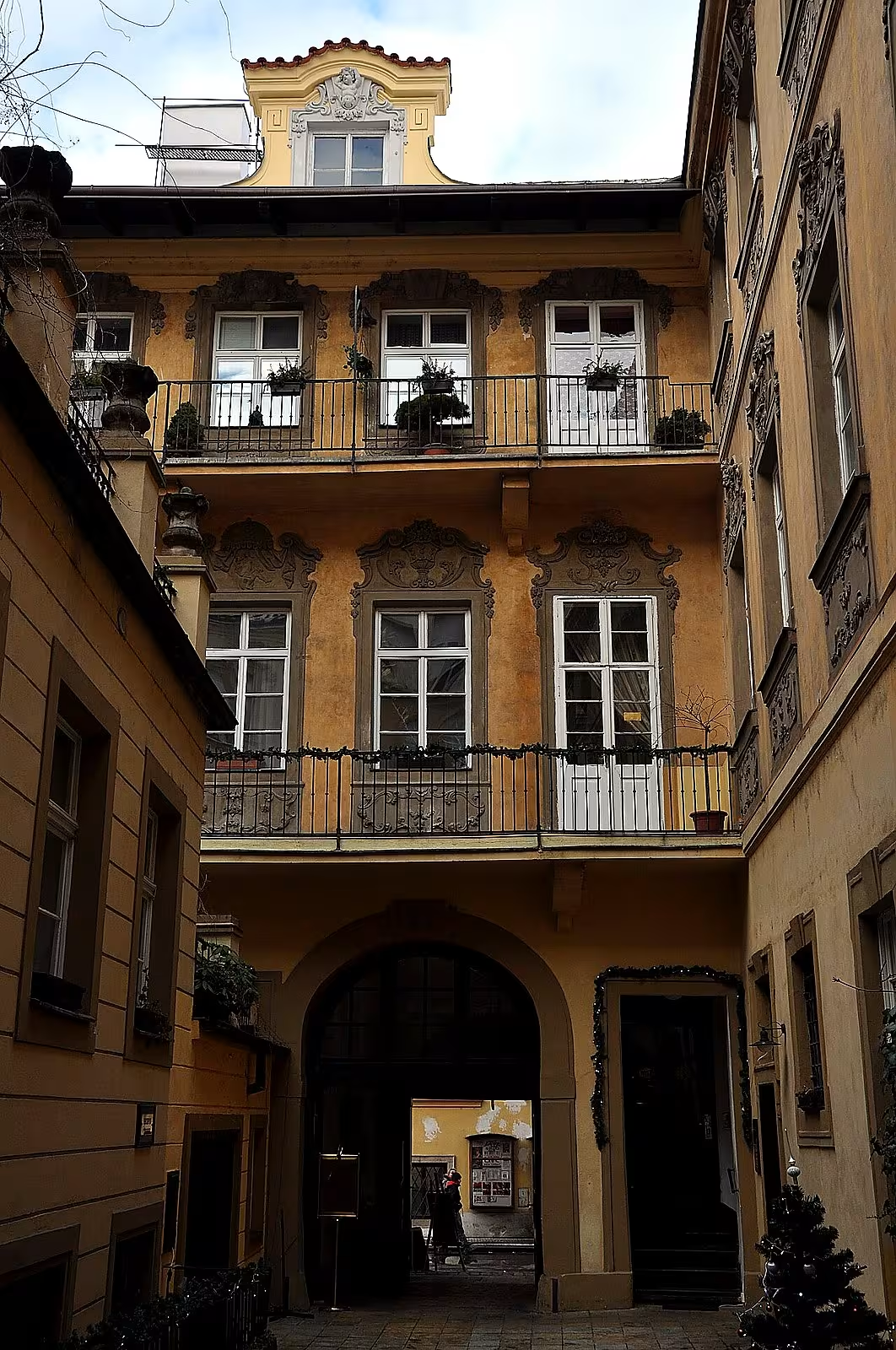
Dům U Zlatého jelena, also known as U Českého lva, is a historic building in Prague's Old Town district, located between Štupartská and Celetná streets. First documented in 1366, it has undergone significant architectural transformations over the centuries, making it notable for its rich history and cultural significance. Originally Romanesque, it was expanded in the late 13th century and underwent major renovations in the early 15th century. The house is particularly renowned for its Baroque reconstruction in the early 18th century, which significantly altered its appearance.
The origins of Dům U Zlatého jelena trace back to 1366 when Leutlin ze Železné ulice purchased it from Ruffo Jelen for 70 kop grošů. Initially Romanesque, the building was expanded in the late 13th century and underwent significant renovations between 1429 and 1433, increasing its value to 170 kop grošů. This period of reconstruction likely transformed the house into a more prestigious structure, aligning with its renaming as U Zlatého jelena in 1428.
Architecturally, Dům U Zlatého jelena began as a Romanesque building and was expanded by the late 13th century. The early 15th-century renovations gave it its current layout. A significant Baroque transformation occurred in the early 18th century, with further minor classical adjustments such as new staircases and pavilions. The façade facing Štupartská Street is particularly valued for its near-intact preservation.
Ownership of Dům U Zlatého jelena has changed hands several times throughout history. After Leutlin ze Železné ulice, the house was owned by the Páni z Mitrovic in the 17th century, with Jindřich Vratislav and Jiří Vratislav being notable owners during this period. Post-1700, it came under the ownership of the Hrabata z Bubna family. These transitions reflect the house's enduring significance and desirability.
Key events in the history of Dům U Zlatého jelena include its first documented purchase in 1366 and its renaming in 1428. The significant price increase and reconstruction between 1429 and 1433 indicate major renovations that transformed it into a more prestigious property. Additionally, a small street once existed between the house and Millessimovský Palace, which has since disappeared.
Today, Dům U Zlatého jelena stands as a protected cultural monument in Prague's Old Town. Its historical significance and architectural evolution make it a worthwhile visit for those interested in exploring Prague's rich heritage. The building offers a glimpse into the city's past, showcasing the blend of Romanesque, Baroque, and classical styles that characterize its architecture. Visitors are invited to appreciate this historic site and reflect on its enduring legacy within the vibrant tapestry of Prague's Old Town.
Historical milestones
- 1366
- First documented purchase by Leutlin ze Železné ulice.
- 1428
- House renamed U Zlatého jelena.
- 1429-1433
- Major renovations and price increase indicating significant reconstruction.
Architectural development
The house began as a Romanesque structure expanded in the late 13th century. It was significantly rebuilt around 1429-1433, gaining its current layout. The Baroque transformation occurred in the early 18th century, with further minor classical adjustments like new staircases and pavilions.
Historical events
First documented in 1366 when Leutlin ze Železné ulice purchased the property.
Renamed U Zlatého jelena in 1428.
Significant price increase and reconstruction between 1429 and 1433, indicating major renovations.
Owners
Leutlin ze Železné ulice (1366)
Páni z Mitrovic (17th century)
Hrabata z Bubna (post-1700)
Points of interest
- Dům U Zlatého jelena is first documented in 1366 when Leutlin ze Železné ulice purchased it from Ruffo Jelen for 70 kop grošů. - The house underwent significant renovations between 1429 and 1433, increasing its value to 170 kop grošů, which likely transformed it into a more prestigious structure. - It is renowned for its Baroque reconstruction in the early 18th century, significantly altering its appearance. - Ownership of Dům U Zlatého jelena has changed hands several times throughout history, including ownership by the Páni z Mitrovic and Hrabata z Bubna families. - A small street once
Guide
Show guide text
This text was created by artificial intelligence and has not been editorially reviewed. It may contain inaccuracies.
Welcome to the heart of Prague’s Old Town. Take a deep breath and let the atmosphere of this historic square settle around you. You are standing directly in front of a building that has witnessed nearly seven centuries of history, a structure that has changed its name, its owners, and its very appearance many times over. This is the house known as U Zlatého jelena, which translates to The Golden Deer, though it has also been known as U Českého lva, or The Czech Lion. As you look up at the facade, you are looking at a testament to resilience and transformation. It is a building that has evolved from its Romanesque roots through Gothic expansions and into the grandeur of the Baroque era. Please take a moment to simply stand here, feel the weight of the centuries behind this stone, and let the quiet dignity of the Old Town surround you before we begin our journey into its past.
To understand what you are seeing today, we must travel back to the mid-fourteenth century. The first documented record of this specific property dates back to 1366. At that time, a man named Leutlin ze Železné ulice purchased the house from a seller named Ruffo Jelen. The price paid was seventy kop grošů, a sum that reflects the value of urban real estate in medieval Prague. This initial transaction marks the beginning of the house’s recorded history, anchoring it firmly in the economic and social fabric of the Old Town. It was not merely a dwelling but a significant asset, a piece of property that would change hands and undergo substantial modifications over the following decades. The fact that it was first mentioned in 1366 tells us that this location was already established and important in the medieval city, a place where commerce, residence, and history intersected.
As you observe the building now, consider that the structure you see is the result of several major architectural phases. The house originally began as a Romanesque structure, a style characterized by its solidity and simple, robust forms. However, by the late thirteenth century, it was expanded, adapting to the changing needs of the growing city. The most significant transformations, however, occurred in the early fifteenth century. Between 1429 and 1433, the house underwent major renovations. This period of intense reconstruction was not just about maintenance; it was a complete upgrade in status. The value of the property increased dramatically during these years, rising from the original purchase price to one hundred and seventy kop grošů. This jump in value indicates that the building was transformed into a much more prestigious structure, likely featuring more elaborate interiors and a more imposing exterior presence. Later, in the early eighteenth century, the house was subjected to a major Baroque reconstruction. This final major stylistic change gave the building its current character, blending the historical depth of its earlier foundations with the ornate and dramatic aesthetic of the Baroque period.
Now, please direct your attention to the facade in front of you. While the specific architectural details of the current Baroque reconstruction define its modern look, it is important to remember that this skin of stone covers layers of earlier history. Look at the proportions of the building, the way it rises from the street level. The Baroque era, which dominated the early eighteenth century, favored grandeur, movement, and emotional impact. Although the architects responsible for these specific changes are not recorded in the surviving documents, their work has left a lasting mark on the skyline of the Old Town. The transition from the simpler Romanesque and Gothic forms to this Baroque expression represents a shift in how Prague perceived itself and its architecture. The building stands as a physical record of that cultural evolution. As you look at the windows and the overall silhouette, you are seeing the culmination of centuries of adaptation, where each generation left its own imprint on the stone.
The history of this house is also deeply intertwined with the lives of prominent noble families. Beyond the initial owner, Leutlin ze Železné ulice, the property was associated with the influential Vratislav z Mitrovic family. Specifically, Jindřich Vratislav z Mitrovic and his son Jiří Vratislav z Mitrovic are linked to this location. The Vratislav z Mitrovic were a powerful noble house in Bohemia, and their connection to this house adds a layer of aristocratic significance to its history. When such families owned or managed properties in the Old Town, it often meant that the building served not just as a residence but as a symbol of their status and influence. The major renovations that took place in the early fifteenth century, which we discussed earlier, likely coincided with the period when these nobles were involved with the property. Their ownership would have necessitated the kind of significant investment that raised the house’s value, turning it into a more distinguished edifice worthy of their name.
There is a fascinating aspect of this building’s identity that adds a touch of mystery to its story. The house is known by two primary names: U Zlatého jelena, The Golden Deer, and U Českého lva, The Czech Lion. The name change to U Zlatého jelena is documented in 1428, just before the major renovations began. This shift in naming suggests a change in the building’s function or its symbolic association. In medieval Prague, houses were often named after their coats of arms, their owners, or their specific trades. The transition from one symbolic name to another hints at a change in ownership or a new purpose for the building. It invites us to wonder about the stories behind these symbols. Was there a merchant dealing in precious metals? Was it a guild hall? Or did it simply reflect the heraldry of a new owner? These questions remain open, adding an element of intrigue to the solid, factual history we have outlined. The dual naming serves as a reminder that buildings in Prague are not just static objects; they are living entities that carry multiple identities, each reflecting a different chapter in the city’s complex narrative.
As we conclude our brief exploration of U Zlatého jelena, I invite you to take one last look at the building. Consider the journey it has taken, from its Romanesque origins in the fourteenth century, through its Gothic expansions, its prestigious fifteenth-century renovations under the influence of the Vratislav z Mitrovic family, and finally its Baroque transformation in the eighteenth century. Each of these phases contributed to the unique character of the structure you see today. The Old Town is a place where history is not just read in books but is visible in every stone and every facade. This house is a perfect example of that living history. It stands as a silent witness to the changes in Prague’s social, economic, and architectural landscape.
I encourage you to continue your walk through the Old Town. As you move forward, keep an eye out for other buildings that tell similar stories of transformation and resilience. The streets here are filled with such hidden narratives, waiting to be discovered. Thank you for joining me in front of U Zlatého jelena. I hope this audio guide has added depth to your experience and helped you appreciate the rich history embedded in the walls of this remarkable building. Enjoy the rest of your time in Prague, and may your visit be filled with discovery and wonder.
Tips for visitors
To fully appreciate the architectural details of U zlatého jelena without the heavy crowds of Staré Město, the best time to visit is during the early morning. This ensures a quieter atmosphere and allows for a more peaceful observation of the building's historic facade.
The location is accessible by both public transport and car. Because it is situated in a historic district with specific traffic regulations, it is recommended to verify current transport connections and available parking zones through a search engine or a local navigation app.
Visitors should prioritize wearing comfortable walking shoes, as the streets surrounding the monument in Staré Město consist primarily of traditional cobblestones. No special equipment is required, though a camera is highly recommended to capture the medieval urban landscape.
For the best photography, focus on the building's exterior during the 'golden hour' of sunrise or sunset. The soft, angled light emphasizes the architectural transformations the house has undergone since the 14th century, making the facade particularly photogenic.
Families visiting with children should be aware that the cobblestone terrain can be challenging for strollers. Within a 30-minute walk, you can visit the nearby Millessimovský Palace, which adds to the cultural richness of the immediate area.
Businesses nearby
Events nearby

Zdroj akcí: otevřená data měst a obcí ČR (Národní katalog otevřených dat) a kalendář akcí Národního památkového ústavu.
Nearby
Located in Prague's Old Town, the area features historic architecture including the nearby Millessimovský Palace. The region is rich with cultural heritage sites and offers a picturesque medieval urban landscape.
Accommodation nearby
Trips and activities nearby
Guided tours, tickets and activities nearby from GetYourGuide
Affiliate link: if you buy from the partner, we may receive a commission. The price for you does not change.
Search tours and activities →Themed route
Thematic Tour Itinerary: Prague's Old Town
1. U zlatého jelena (dům) - *Type:* Historic House - *Why Visit:* Begin your journey at U zlatého jelena, a charming historic house that offers a glimpse into the architectural beauty of Prague’s Old Town. This site serves as an excellent starting point for exploring the rich cultural tapestry of the area.
2. Millessimovský Palace - *Type:* Historic Building - *Why Visit:* A short walk from U zlatého jelena, Millessimovský Palace is a stunning example of Baroque architecture. Its intricate design and historical significance make it an essential stop for anyone interested in the architectural evolution of Prague.
3. Old Town Square - *Type:* Historic Square - *Why Visit:* Located near both U zlatého jelena and Millessimovský Palace, Old Town Square is a vibrant hub brimming with history. It's famous for its medieval buildings, the iconic Astronomical Clock, and lively atmosphere, providing an immersive experience into Prague’s past.
4. Church of Our Lady before Týn - *Type:* Gothic Church - *Why Visit:* Just a short distance from Old Town Square, this majestic church is renowned for its impressive twin towers and stunning stained glass windows. It offers breathtaking views of the city and is an architectural marvel worth exploring.
5. Jewish Quarter (Josefov) - *Type:* Historic District - *Why Visit:* Conclude your tour in the Jewish Quarter, a poignant reminder of Prague's diverse cultural heritage. The area’s synagogues, museums, and cobbled streets offer deep insights into the history and resilience of the Jewish community in Prague.
This itinerary provides a comprehensive exploration of Prague's Old Town, highlighting its historic architecture and rich cultural sites.
Seasonal recommendations
Spring: Visiting "U zlatého jelena" during spring offers a delightful experience as the city of Staré Město awakens with vibrant colors and fresh blooms. The natural beauty is enhanced by longer daylight hours, creating an enchanting atmosphere perfect for leisurely strolls around this historic site. Visitors should anticipate mild temperatures but be prepared for occasional showers; therefore, wearing layers and carrying a light raincoat or umbrella is advisable. This season sees moderate tourist activity, making it ideal to explore the area without excessive crowds.
Summer: Summer at "U zlatého jelena" in Staré Město is characterized by warm weather and bustling city life. The historic site basks in extended daylight, providing ample time for exploration. During this peak tourist season, arriving early can help avoid larger groups of visitors. Comfortable walking shoes and light clothing are recommended to stay cool under the sun. Additionally, carrying water and sunscreen will ensure a pleasant visit as you immerse yourself in the lively summer atmosphere.
Autumn: Autumn brings a picturesque transformation to "U zlatého jelena" with its rich tapestry of golden hues and crisp air. The cooler temperatures make for comfortable walking tours around Staré Město, while the shorter days mean planning your visit during daylight hours is essential. Layers are recommended due to fluctuating weather conditions, including potential rain or chilly winds. This season often sees fewer tourists compared to summer, offering a more serene experience of the historic site amidst nature's autumnal display.
Winter: Winter at "U zlatého jelena" offers a magical setting with Staré Město adorned in festive lights and snow-covered streets. The shorter days mean planning your visit during daylight hours is crucial, as many sites may have reduced operating times. Warm clothing, including coats, hats, gloves, and scarves, is essential to stay comfortable in the cold weather. While winter can bring larger crowds, especially during holiday markets, visiting on weekdays or early mornings might help avoid peak tourist activity, allowing for a more peaceful exploration of this historic landmark.
Visualizations and artistic views


The visualisations are generated by artificial intelligence and serve as inspiration.
Photos from the area
Real photos taken near the monument

Zdroj a licence jsou uvedeny u každého snímku.
Tips from visitors
No tips yet. Be the first!
Log in and add your tip.
Sources and literature
Fotografie: Ben Skála / CC BY-SA 3.0 — Wikimedia Commons. The author and licence also appear when you hover over the image.
Faktickým podkladem tohoto textu byl článek na Wikipedii, jehož autory jsou přispěvatelé Wikipedie. Článek je dostupný pod licencí CC BY-SA 4.0.
Location on the map

Příběhy a pověsti
Legendy, pověsti a příběhy spjaté s touto památkou
Fotografie návštěvníků
Zatím žádné fotografie. Buďte první, kdo přidá fotografii z návštěvy!
Přihlaste se a přidejte svou fotografii nebo hodnoťte.
Za ověřenou návštěvu v aplikaci získáte víc bodů — poznáme podle GPS, že jste na místě.
Reviews and comments