






Usedlost Malvazinka Homestead
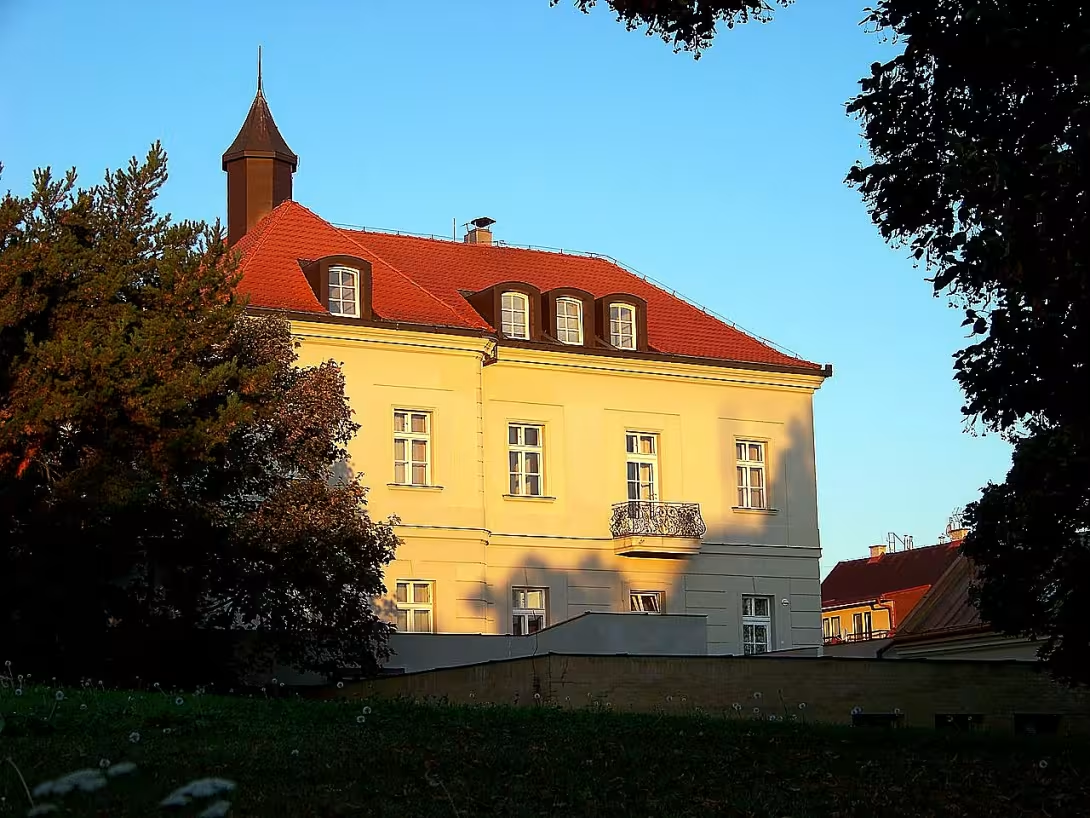
Usedlost Malvazinka, a classical villa on Prague's Smíchov at U Malvazinky Street, is protected as a cultural monument of the Czech Republic. This historical object attracts its rich history and architectural changes that reflect the events of Czech countries.
The estate was established in 1628 when it was purchased by a small town man Tomáš Malvazy. The vineyard named after him was later extended to the neighbouring land of the Provka, which since 1706 was named the Old Town scribe Antonín Hynek Protiva. The original Baroque area was rebuilt into a classical style around 1800. In the 19th century, the building was re-edited and its facades gained unarable elements.
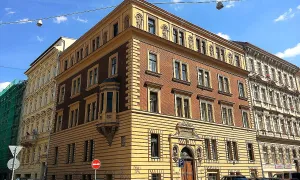
The architecture of the estate resembles the letter "L" with attached narrow wing. The facade of the main building breaks down the mould frame and the shackling on the ground floor. On the south wing there are three balconies with decorative, non-Baroque railing. The building has a valb roof and over the south wing there is a small tower which gives it a unique character.
The fate of the estate was accompanied by a number of changes in ownership. After John Green, who owned it in 1840, she went into state hands after 1945. In the years 1950-1952 the area served as a jaundice department of the Motol Hospital. Since 1955, there has been a clinic at the State Sanatorium designed to treat major state and party officials. After 1989 the estate was taken over by the Malvazinky Rehabilitation Clinic (since 1993 Mediterra s.r.o.), which is located in the building today.
Important events include the purchase of land by the municipality of Smíchov in 1875 for the construction of a new cemetery. This resulted in only one separate house remaining from the originally large area. Another fundamental change was the reconstruction of the building for medical purposes in the 20th century, which corresponded to the needs at the time.
Today Malvasinka is not only an architectural monument, but also a place with a rich history, which consists of alternating owners and functions. The current use as a seat of the rehabilitation clinic proves the ability of the building to adapt to the different aero of Czech history.
Usedlost Malvazinka is worth visiting not only because of its historical value, but also as a symbol of Prague's transformation. It is a testimony of the past and the present, which will impress every interested person in the history of Czech countries.
Historical milestones
- 1628
- Tomáš Malvazy bought a vineyard.
- 1800
- Classicist rebuilding of the estate to its present form.
- 1840
- The property of John Green.
- 1875
- Smíchov municipality bought some land for a new cemetery.
- 1955
- The building started serving as a clinic for the State Sanatorium.
Architectural development
The original Baroque vineyard estate was rebuilt into a classical form around 1800. In the 19th century, the facades were supplemented with non-Baroque elements and after 1929 there were significant modifications of the interior. The current building has the shape of an L with decorative railing and a tower.
Historical events
1628: purchase of vineyards by Tomas Malzazy; around 1800: classical rebuilding of the estate; 1875: purchase of land for the new cemetery by the municipality of Smíchov; 1955: use of the building as a clinic for state officials.
Owners
Tomáš Malvazy; 1706: Antonín Hynek Protiva (neighbouring vineyards); 1840: Jan Grein; after 1945: state; after 1989: Malvazinka Rehabilitation Clinic (since 1993 Mediterranean s.r.o.).
Points of interest
- The estate was established in 1628 when it was purchased by the small-town townsman Tomáš Malvazy, and the vineyard named after it was later extended by the neighboring land, which since 1706 was named the Old Town scribe Antonín Hynek Protiva. - Originally the Baroque area was rebuilt in the Classicist style around 1800 and in the 19th century the facades gained non-Baroque elements. - The architecture of the estate resembles the letter "L" with an attached narrow wing and above the south wing is a small tower which provides a unique character. - In 1950-1952, the premises served as a jaundice department of the Motol Hospital and since 1955, the Políclinic of the State Sanatorium has operated here for the treatment of major state and party officials. - The purchase of land by the municipality of Smíchov in 1875 for the construction of a new cemetery caused only one separate house to remain from the originally extensive area.
Guide
Show guide text
This text was created by artificial intelligence and has not been editorially reviewed. It may contain inaccuracies.
Welcome to Prague's Smíchov, a place where history intersects with the rhythm of the modern city. Stop for a moment, take a deep breath and look in front of you. You're standing right outside the Malvazinka estate. The first thing that's likely to impress your eyes is the very shape of the building. Notice how the object forms the characteristic letter L, which gives it a sense of closure and privacy as if the building wanted to protect its inner secrets from the noise of the surrounding streets. Look up now, on the roof. You will see a typical valb roof and dominant turret, which stands out above the house line and gives the whole complex an elegant, up to fairy tale silhouette. Feel the atmosphere of this place, which is in contrast to the surrounding urbanism. It is a place that tells a story about the changes in Prague, the transition from agricultural peace to urban hustle and bustle.
To understand why we are standing here today, we have to go back deep into the past in our minds until 1628. Imagine Smíchov at the time. There were no factories, no asphalt roads, no dense buildings. There was greenery, hills and, above all, vineyards. It was this year that the then small-town local Tomáš Malvazy purchased the land on which the estate was established. At that time it was a typical Baroque area, which was mainly used to grow grapes and produce wine. The vineyard, which was named Malvazinka after its founder, was gradually expanding. It was a place of prosperity and peace where the rhythm of the day was determined by the cycle of vine growth.
Interestingly, the history of this place isn't just connected to one person. Let's move a few decades forward to 1706. At that time, an old town scribe Antonín Hynek Protiva joined the fate of the vineyards. It was he who named the neighboring lands that joined the original area and so Malvazinka became an even more important point on the map of the then Smíchova. Imagine the endless rows of wine bushes that once surrounded the building you see before you. The scent of the mature threatens and silence interrupted only the sounds of work in the gardens. This was the real face of this place for over a century.
Now please refocus on the architecture of the building itself. What you see today is not exactly what Tomáš Malvazy saw in the seventeenth century. The building has undergone a fascinating transformation. Around 1800, at a time when the desire for order, symmetry and return to ancient patterns ruled Europe, the settlement was converted into a classical style. It is this reconstruction that has determined the current form of the object. Classicism has brought cleaner lines and more sparse decorations. If you look at the facade, feel this effort for balance and harmony. But history has not stopped. During the nineteenth century, the appearance of the building began to be filled with unarable elements. It's a fascinating layering of styles, as if the building was a diary into which every new generation would write its own chapter. The Baroque foundation, the Classicist Order and the Neo-Baroque Ornaments form a whole which is a unique testament to the aesthetic preferences of various epoch.
If we move forward in time, we'll find other names. In 1840 the estate was owned by Jan Green. By then, Smíchov had already begun to change. The agricultural character slowly gave way to industrial development. But Usedlost Malvazinka remained an island of stability. However, there was a fundamental change in 1875. The Smíchov municipality purchased part of the land previously forming vineyards for a very specific purpose. A new cemetery was set up on these grounds. It is a somewhat melancholy twist that the place where the life-giving power of wine had been celebrated had become the final resting place. This change around the estate has deeply affected its perception and privacy.
The 20th century brought a whole new role to the building, which was far from vineyards and cemeteries. In 1955, Usedlost Malvazinka began to serve as a clinic at the State Sanatorium. Imagine the contrast. The place created as a private seat of the winemaker became a medical facility where care was provided to state officials. A building that once radiated baroque well-being and classical elegance became part of a state administration machine. In corridors where wine may once have smelled, doctors and patients have now moved. While this era erased the original agricultural character of the site, it also ensured that the building remained in use and was not neglected.
Maybe now you can wonder what's left of all this. If you look at the building now, try to see all these layers in it. You see it in 1628 and Thomas Malvazy? Do you see the year 1800 and the strict lines of classicism? Or is it the atmosphere of the 1950s and the sterile environment of the clinic? That's the secret of the Malvazinka estate. It's not just one building, it's a collection of many lives and fates. It is a place where urban ambitions, administrative order and nature meet, once ruled in the form of vineyards.
The interesting thing that can go into your head is the transformation of the landscape. Smíchov, which we now know as densely built urban space, was once essentially one great vineyard. Malvazinka is one of the last tangible evidence of this forgotten identity of Prague. It's like a window into a world that no longer exists, but its tracks are still here, in this shape of the letter L, and in that little tower that's still watching over the surroundings.
Now that you know the story of this house, I suggest you go around it again slowly. Observe the details, perceive the silence that seeks to pass between traffic noise here, and think about how many people have passed through it over the centuries. From the vineyards to the scribes, owners like Jan Grein, to doctors and patients from the middle of the last century. Each of them left a trail in this wall.
Thank you for accompanying me on this short journey through time. Usedlost Malvazinka is ready to continue to inspire you with its silent narrative. Now you can continue to explore the beauty of Smíchova and search for other hidden pearls of Prague history. I wish you a pleasant walk and many new discoveries. Goodbye.
Tips for visitors
The best time to visit is late spring or summer when the gardens are in full bloom and the space acts most cosy.
We recommend to take comfortable shoes for walking around the premises and camera to capture details.
For the best photos, look for morning or late afternoon lights that highlight the details of the unafraid facade and greenery of the surrounding park.
In the area within 30 minutes walk visit Smíchov cemetery, Hospital Na Homolce or explore Smíchov. We recommend to families with children a walk through the garden where children can know the history of winery in the heart of the city.
Frequently asked questions
Can the monument be visited?
This is a residential or farm building, not a museum with opening hours. Please view it from public space and respect the owners' privacy. We have no information about access to the interior.
Where is the monument?
Location: Smíchov, Hlavní město Praha. The map on this page shows the exact spot.
Why is the monument protected?
It is listed in the Central List of Cultural Monuments of the Czech Republic as a cultural monument (register no. 1000153234).
Businesses nearby
Do you run a restaurant, accommodation, shop, museum, rental, wellness or other visitor service near this monument? Show yourself directly to the people heading to it — this is how they will see you in the app and on the web:
Events nearby

Zdroj akcí: otevřená data měst a obcí ČR (Národní katalog otevřených dat) a kalendář akcí Národního památkového ústavu.
Nearby
Hospital Na Homolka, Smíchov cemetery, Smíchov.
Accommodation nearby
Trips and activities nearby
Guided tours, tickets and activities nearby from GetYourGuide
Affiliate link: if you buy from the partner, we may receive a commission. The price for you does not change.
Search tours and activities →Themed route
1. Smíchov (City) - Start your walk in this historic area. It's a great starting point for exploring the neighborhood. 2. Smíchov cemetery (Memorial) - Visit this quiet place full of history. It offers a peaceful atmosphere and a view of ancient monuments. 3. Hospital Na Homolce (Complex) - Walk around this important area. It represents modern architecture in this location. 4.Usedlost Malvazinka (Villa) - The main objective of your tour will impress you with its beauty. This historic villa is the most important point of the trip.
Seasonal recommendations
In the spring Usedlost Malvazinka shines a new life. Flowers in the garden and fresh greenery create an optimistic atmosphere accompanied by fine spring light. We recommend visiting a monument in the morning when it is quieter in the area. Due to the changing weather, it is best to choose layered clothes.
The summer season offers shelter from the heat in the deep shadow of old trees. The intense sun highlights the details of the facade and the air is full of sounds of nature. To avoid the biggest crowds in the season, come right at the opening. Remember light, breathable clothes and plenty of fluids.
Autumn comes with a palette of gold and brown colors that turn the garden into a melancholy place. A misty blow gives the villa a mysterious touch, while the afternoon sun creates a warm light. Suitable are waterproof shoes and a warm sweater. The ideal time for a walk is late afternoon.
In winter, the estate is peaceful and hardy, especially if snow covers it. The bare branches of trees reveal the architecture of the villa in its pure form. Visiting in advent time offers a pleasant escape from the urban rush.
Visualizations and artistic views


The visualisations are generated by artificial intelligence and serve as inspiration.
Photos from the area
Real photos taken near the monument


Zdroj a licence jsou uvedeny u každého snímku.
Tips from visitors
No tips yet. Be the first!
Log in and add your tip.
Sources and literature
Photos: ŠJů (cs:ŠJů) / CC BY-SA 3.0 — Wikimedia Commons. The author and licence also appear when you hover over the image.
Faktickým podkladem tohoto textu byl článek na Wikipedii, jehož autory jsou přispěvatelé Wikipedie. Článek je dostupný pod licencí CC BY-SA 4.0.
Location on the map
Příběhy a pověsti
Legendy, pověsti a příběhy spjaté s touto památkou
Fotografie návštěvníků
Zatím žádné fotografie. Buďte první, kdo přidá fotografii z návštěvy!
Log in a přidejte svou fotografii nebo hodnoťte.
Za ověřenou návštěvu v aplikaci získáte víc bodů — poznáme podle GPS, že jste na místě.
Reviews and comments