






Vila čp. 22 Villa
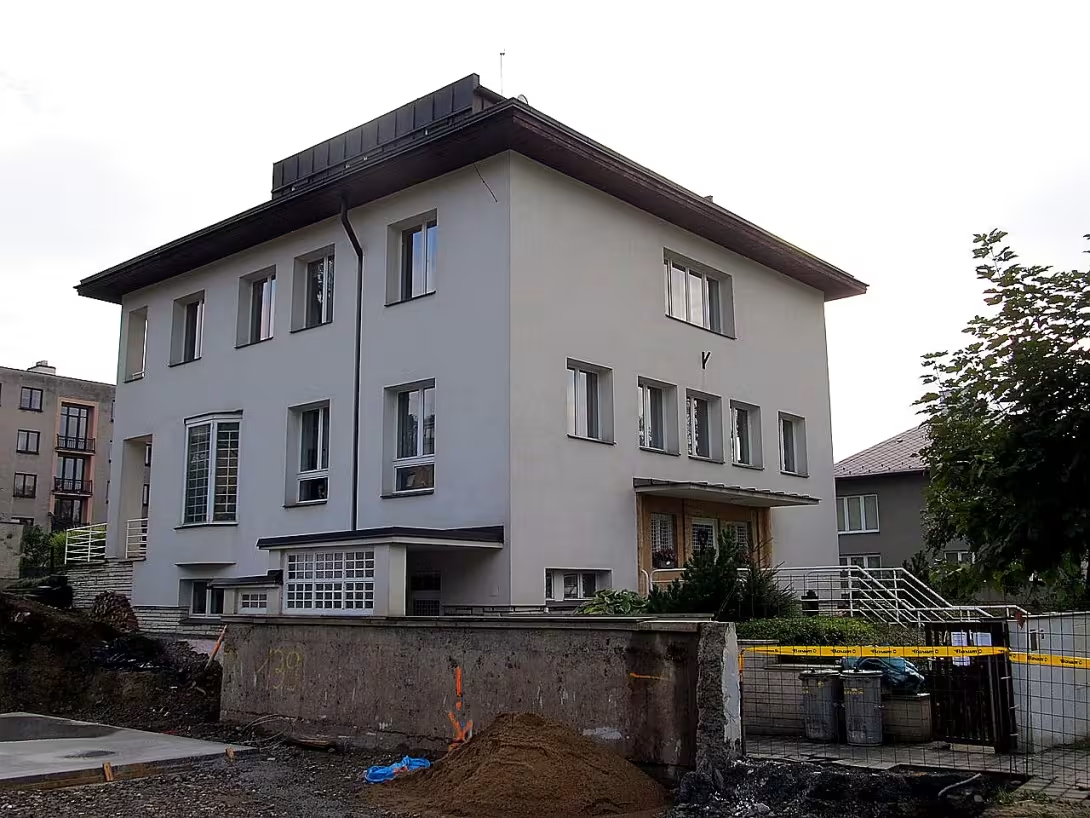
Holznerova Vila, located at Jiřího z Poděbrad Street in Hronov, is an exemplary piece of interwar avant-garde architecture. Designed by architect Jindřich Kulka for entrepreneur Rudolf Holzner and his wife Ilza, it reflects the innovative spirit of late 1920s and early 1930s Czechoslovakia. Despite its completion in 1939, just before the occupation of Czechoslovakia, the Jewish couple never lived there due to their forced departure.
Commissioned by Rudolf Holzner, owner of a local textile factory, the villa embodies flourishing avant-garde styles across Europe during the interwar period. Jindřich Kulka, a student and collaborator of Adolf Loos, crafted its architectural vision. The construction was executed by Jana Eckert's firm from Hronov.
Architecturally, Holznerova Vila features a single-story layout with a nearly square floor plan. Its shorter northern side faces the street, featuring three axes and a centrally located main entrance. A living terrace in the garden area is accessible both externally and from elevated social rooms within the ground floor. This terrace connects to the dining room through large windows and sliding four-part doors. The roof has a low slope with a flat central section housing an attic space.
The villa includes spacious living and adjoining dining areas, both featuring large garden-facing windows. Glass passageways connect various rooms, enhancing light flow and spatial continuity. Interior elements were crafted from expensive metals and wood, with some original built-in furniture still preserved. The design incorporates two staircases: a central one through the living spaces and a wooden operational staircase.
After its completion in 1939, Rudolf and Ilza Holzner left Czechoslovakia due to their Jewish heritage, never returning after World War II began. Ilza's last known trace was in Tel Aviv in 1990. Post-war ownership details remain unknown until it became the property of FALTA, a non-state health facility providing rehabilitation services.
Today, Holznerova Vila serves as more than just a historical monument; it is an active site offering insights into architectural and cultural shifts of its era. Visitors can appreciate the unique blend of avant-garde and functionalist elements that define this remarkable structure. Its preservation allows for a deeper understanding of interwar architecture in Czechoslovakia, making it a worthwhile destination for those interested in history and design. The villa stands as a silent witness to both personal stories and broader historical narratives, inviting exploration and reflection on its enduring legacy.
Then and now
Drag the slider to compare how the landmark may have looked when it was built with the view today.
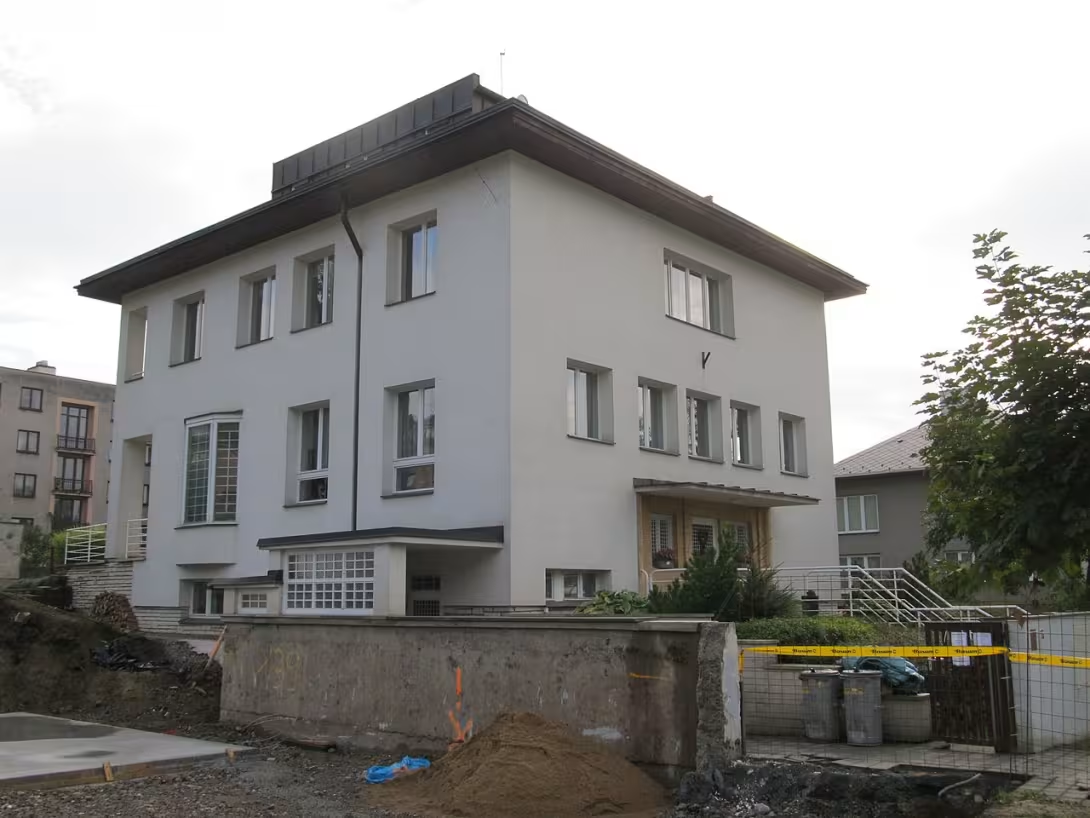
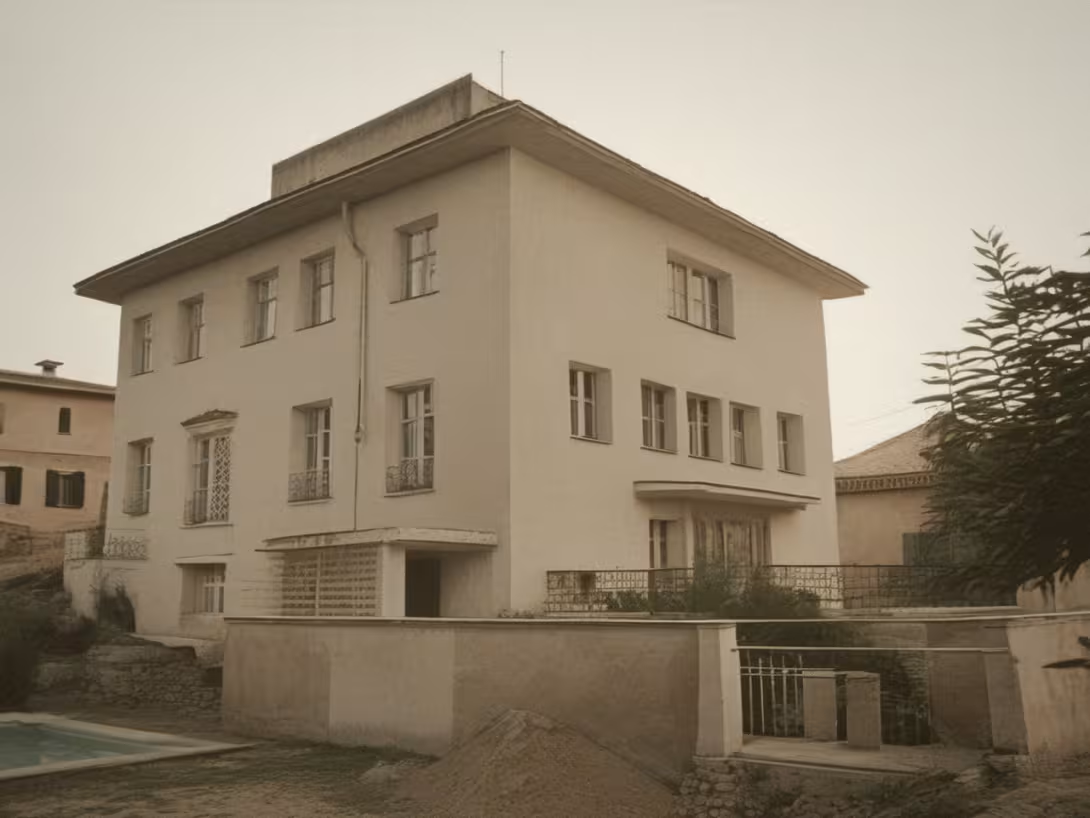
The historical appearance on the left is an AI-generated visualisation and serves as inspiration only.
Historical milestones
- 1930
- The beginning of the design for Holzner's Villa in interwar avant-garde style.
- 1939
- Completion and handover of Holzner's Villa to Rudolf and Ilza Holzner.
- 1939
- Forced departure of Rudolf and Ilza Holzner from Czechoslovakia before the Nazi occupation.
- 1945
- The end of World War II, after which the ownership of the Villa became unknown.
- after 1945
- The villa was transferred to FALTY for rehabilitation services.
Architectural development
The villa, designed by Jindřich Kulka, features a single-story layout with a nearly square floor plan. It includes a living room and dining area with large windows facing the garden, as well as glass passageways connecting rooms. The interior boasts original built-in furniture and decorative elements made from expensive metals and wood.
Historical events
1939: Completion of the villa just before the occupation of Czechoslovakia.
1990: Last known trace of Ilza Holzner in Tel Aviv.
Owners
Rudolf Holzner (commissioned), Ilza Holzner; post-World War II ownership unknown; currently owned by FALTA, a non-state health facility providing rehabilitation services.
Points of interest
- Despite its completion just before World War II, Holznerova Vila remained uninhabited by its original owners due to the forced departure of Rudolf and Ilza Holzner because of their Jewish heritage, highlighting a poignant intersection between architectural achievement and historical tragedy.
- Jindřich Kulka, who designed Holznerova Vila, was not only influenced by his mentor Adolf Loos but also integrated avant-garde elements that reflected the broader European architectural trends during the interwar period, showcasing an innovative blend of local and international styles.
- The villa's design includes a unique feature where large windows and sliding four-part doors connect the living terrace to the dining room, demonstrating Kulka’s emphasis on spatial continuity and natural light—a hallmark of avant-garde architecture that was ahead of its time in Czechoslovakia.
- After World War II, the ownership history of Holznerova Vila became obscure until it eventually came under the management of FALTA, a non-state health facility. This transition from private residence to public service underscores the villa's adaptability and continued relevance through changing societal needs.
- The preservation of some original built-in furniture in Holznerova Vila provides visitors with an authentic glimpse into the lifestyle and aesthetic preferences of its era, making it not only an architectural landmark but also a cultural artifact that offers insights into interwar domestic life.
Guide
This guide is narrated by a synthetic voice generated by artificial intelligence.
Show guide text
This text was created by artificial intelligence and has not been editorially reviewed. It may contain inaccuracies.
Welcome to Hronov, where before you stands the remarkable Holznerova Vila, a testament to interwar avant-garde architecture and the rich history it embodies. As you stand here, take in the elegant lines of its facade, designed by architect Jindřich (Heinrich) Kulka. This villa is not just an architectural marvel; it's a story woven into the fabric of time.
Let's delve into its origins and historical context. In 1930, the idea for this unique structure was conceived to reflect the innovative spirit of the interwar period. Commissioned by Rudolf Holzner, an entrepreneur with roots in local industry through his textile factory ownership, the villa was intended as a home for him and his wife Ilza. Despite its completion in 1939, fate had other plans; the couple never lived here due to their forced departure from Czechoslovakia before the Nazi occupation.
As you explore the architecture, notice how it embodies avant-garde principles with its distinctive style that was ahead of its time. The design elements visible today speak volumes about the era's architectural ambition and creativity. Though specific details are not described in our source material, take a moment to appreciate the overall aesthetic and imagine the innovative features that might have been present.
This villa is intertwined with poignant stories and significant historical figures. Rudolf and Ilza Holzner were central to its history; their forced exile due to their Jewish heritage adds a layer of tragedy to this architectural achievement. It's a stark reminder of how personal histories are often deeply entangled with the places they inhabit.
One intriguing aspect of Holznerova Vila is its transition post-World War II. After the war ended in 1945, the villa's ownership became unknown until it was eventually transferred to FALTY for rehabilitation services. This shift highlights not only changes over time but also the resilience and adaptive reuse of historical structures.
As we conclude this brief journey through Holznerova Vila’s past, I invite you to continue exploring its surroundings and perhaps reflect on the layers of history that buildings like these carry with them. Thank you for joining me in uncovering the stories behind this remarkable place. May your visit inspire a deeper appreciation for both architecture and history.
Frequently asked questions
Can the monument be visited?
This is a residential or farm building, not a museum with opening hours. Please view it from public space and respect the owners' privacy. We have no information about access to the interior.
Where is the monument?
Location: Hronov, Královéhradecký kraj. The map on this page shows the exact spot.
Why is the monument protected?
It is listed in the Central List of Cultural Monuments of the Czech Republic as a cultural monument (register no. 1999994000).
Businesses nearby
Do you run a restaurant, accommodation, shop, museum, rental, wellness or other visitor service near this monument? Show yourself directly to the people heading to it — this is how they will see you in the app and on the web:
Events nearby
Zdroj akcí: otevřená data měst a obcí ČR (Národní katalog otevřených dat) a kalendář akcí Národního památkového ústavu.
Accommodation nearby
Themed route
Thematic Vltour around Villa čp. 22, Hronov
1. Vila čp. 22 (Villa) - Type: Architectural Landmark - Why Visit: This villa stands as a testament to the architectural elegance of its era. Visitors can explore its unique design and historical significance, providing insights into local heritage.
2. Historical Town Center of Hronov - Type: Urban Area - Why Visit: Just a short walk from Villa čp. 22, this area offers a glimpse into the traditional urban planning of Hronov. Explore charming streets and buildings that reflect the town's rich history.
3. Church in Hronov (Presumed nearby) - Type: Religious Site - Why Visit: This church is an important cultural site offering architectural beauty and spiritual significance. It provides a serene environment for reflection and appreciation of local religious artistry.
4. Local Park near Villa čp. 22 - Type: Green Space - Why Visit: Located close to the villa, this park offers a peaceful retreat with lush greenery and walking paths, perfect for relaxation and enjoying nature's tranquility amidst historical exploration.
This thematic tour provides a well-rounded experience of Hronov’s cultural and natural offerings, starting from the architectural marvel of Villa čp. 22 and extending into its historic urban landscape and serene green spaces.
Seasonal recommendations
Spring: Visiting Vila čp. 22 during spring offers a vibrant display of blooming flowers and lush greenery that frames the historic architecture beautifully, creating an enchanting atmosphere. The mild weather makes it ideal for leisurely strolls around the property, allowing visitors to fully appreciate the natural beauty surrounding the villa. This season often brings moderate crowds as people enjoy the outdoors after winter; arriving early in the day can help avoid larger groups and ensure a more tranquil experience. Light layers are recommended, as temperatures can vary between warm days and cooler evenings.
Summer: Summer at Vila čp. 22 is characterized by long daylight hours that enhance the villa's architectural details, while the surrounding nature thrives with vibrant colors and activity. This is the peak tourist season, so expect larger crowds; planning your visit for early morning or late afternoon can help avoid the busiest times. Comfortable walking shoes and breathable clothing are essential to stay comfortable during warmer days, and don't forget sunscreen to protect against strong sunlight.
Autumn: Autumn brings a picturesque transformation as the foliage around Vila čp. 22 turns into warm hues of red, orange, and yellow, offering stunning photo opportunities. The cooler temperatures make it an ideal time for exploring without the summer heat. Visitor numbers tend to decrease compared to summer, allowing for a more relaxed visit. Layered clothing is advisable, as mornings can be brisk while afternoons remain mild.
Winter: Winter at Vila čp. 22 offers a serene and quiet experience with snow-covered landscapes that enhance its historic charm. The shorter days mean the villa's features are illuminated by softer light, creating a cozy atmosphere perfect for those who appreciate quieter visits. During this season, the villa may have reduced hours of operation, so checking in advance is advisable. Warm clothing, including coats, hats, and gloves, is essential to stay comfortable during your visit.
Visualizations and artistic views


The visualisations are generated by artificial intelligence and serve as inspiration.
Photos from the area
Real photos taken near the monument


Zdroj a licence jsou uvedeny u každého snímku.
View from the area
This animation was generated by artificial intelligence from a real photograph of the surroundings. The motion and details are not real footage of the location.
Tips from visitors
No tips yet. Be the first!
Log in and add your tip.
Sources and literature
Photos: Ewwwa / CC BY-SA 3.0 — Wikimedia Commons. The author and licence also appear when you hover over the image.
Faktickým podkladem tohoto textu byl článek na Wikipedii, jehož autory jsou přispěvatelé Wikipedie. Článek je dostupný pod licencí CC BY-SA 4.0.
Location on the map
Příběhy a pověsti
Legendy, pověsti a příběhy spjaté s touto památkou
Fotografie návštěvníků
Zatím žádné fotografie. Buďte první, kdo přidá fotografii z návštěvy!
Log in a přidejte svou fotografii nebo hodnoťte.
Za ověřenou návštěvu v aplikaci získáte víc bodů — poznáme podle GPS, že jste na místě.
Reviews and comments