



Vila čp. 477 Villa
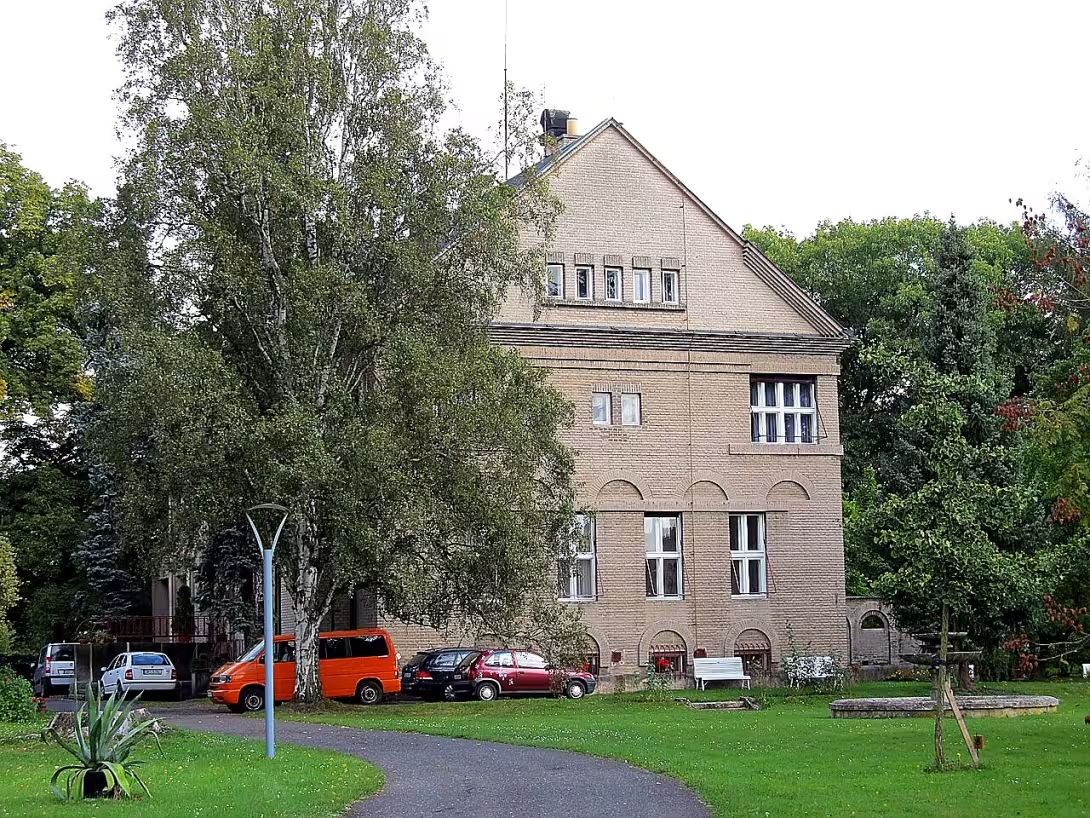
Villa Čerych, situated in the valley of the river Úpa in the village Česká Skalice, is a modernist residential building built in the years 1924-1925. This monument stands out for architecture and history, which range from the first republic to the present. The building was originally a gift from the entrepreneur Ladislav Bartona of Dobenin to his niece Maria Bartona-Cherych for their wedding. It represents an important example of then-emerging functionalism.
The creation of the building is related to the period of the first republic when new architecture prospered in Czechoslovakia. The project was prepared by the architect Otakar Novotný, while the garden architect Josef Kumpán designed an area that was completed in 1925. The house served the Cherich family until 1948 when the state confiscated it. Subsequently, there were various institutions, such as a political school or a local health district.
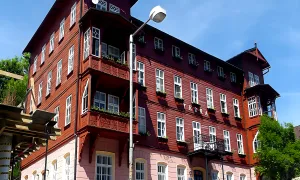
The architecture of the object is typical of modernism. This two-story building has a five-axis main facade with a triangular shield. The rear part facing the water surface is eight-axis and decorated with a massive stone balcony. The facade is made up of solid grey bricks, which was characteristic of Otakar Novotný's style. The monument protected area also includes the original garden with pool, fountain, gazebo and pergola.
The fate of the property was accompanied by several changes in ownership. After the state confiscation in 1948, the villa was returned to the Cherych family thanks to the restitutions in 1990. Since 2001, the building belongs to the Civil Society Development Foundation, which subsequently transferred it to the educational centre. In 2010, the building was also used as a set for "Leaving.".
Although Vila Čerych is offered for sale today, its historical and architectural importance remains fully valid. It represents a rare example of modernist architecture of the first republic and is a testament to the changing destinies of Czech families and state. Visiting this place offers not only a view of beautiful construction, but also a way to a time when modernism and functionalism have become dominant architectural directions.
Then and now
Drag the slider to compare how the landmark may have looked when it was built with the view today.
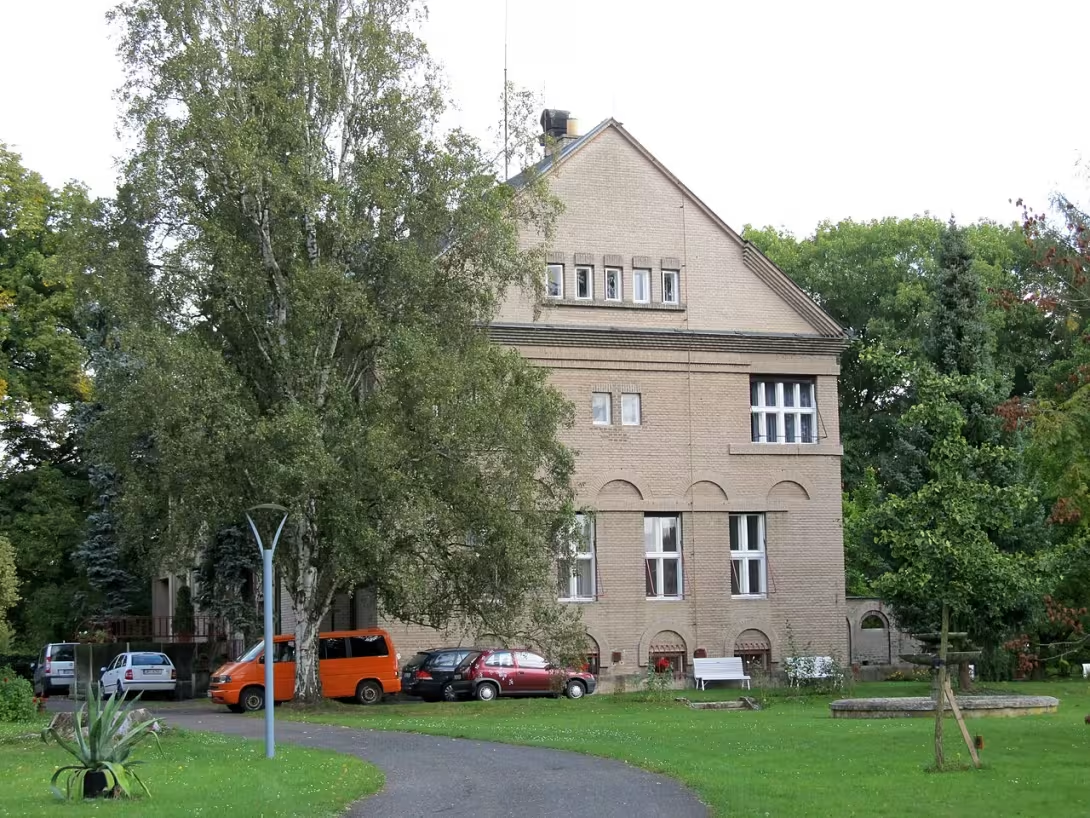
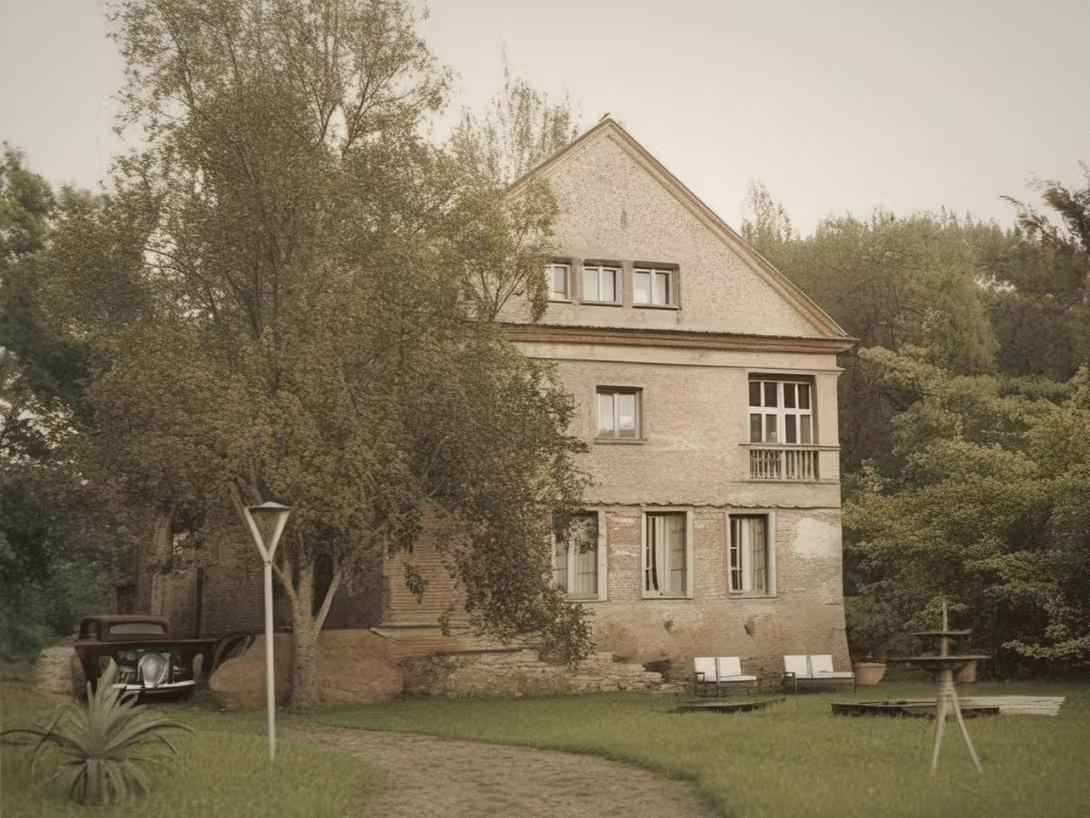
The historical appearance on the left is an AI-generated visualisation and serves as inspiration only.
Historical milestones
- 1924
- construction of the villa
- 1925
- completion of garden construction and foundation
- 1958
- became a protected cultural monument
- 2010
- shooting movie Leaving
Architectural development
Two-story building in modernist style with facade made of grey brick. The main facade is five-axis with triangular shield, the rear facade is eight-axis with massive stone balcony. The monument protected area includes a garden with pool, fountain, gazebo and pergola.
Historical events
1948: confiscation of the house by the state; 1958: a declaration protected by a cultural monument; 1990: restitution of the Čerych family villa.
Owners
The Cherich family (1925-1948), the State (1948-1990), the Cherich family (1990- 2001), the Civil Society Development Foundation (2001- 2020).
Points of interest
- Villa Čerych was built in the years 1924-1925 as a modernist residential building.
- It was originally donated by the businessman Ladislav Bartona of Dobenin for the wedding of his niece Maria Bartona-Cherych.
- The project was prepared by architect Otakar Novotný and garden architect Josef Kumpán designed the surroundings, completed in 1925.
- After the state confiscation in 1948, the villa was returned to the Cherych family in 1990, and since 2001 it belonged to the Civil Society Development Foundation.
- In 2010, the building served as a set for the film "Leaving.".
Guide
Show guide text
This text was created by artificial intelligence and has not been editorially reviewed. It may contain inaccuracies.
Welcome to Czech Rock. You are standing in one of the most beautiful valleys of our country, in a place where the quiet river Úpa forms a natural framework for architecture, which is absolutely natural and harmonious. Before your eyes is Villa Cherych, a building that is not just an ordinary house, but a living witness to one of the most exciting epoch of our history. Feel this atmosphere, feel the feeling of peace that brings you the surrounding greenery and the original garden that gently surrounds the building and creates a protective circle around it. It's a place where history meets everyday life and where every line of the building tells its own story.
Let us now return together to the time this house was born. Imagine 1924. It is a period of optimism, the era of the first republic, when the new identity of our state was formed, including its aesthetic language of expression. It was at that time that construction started, but it had a much deeper meaning than simply building a living space. This villa was created as a symbol of love and family ties. It was a wedding present, a gift from the entrepreneur Ladislav Bartona of Dobenin for his niece Maria Bartona-Cherych. Imagine the joy and effort that both the creator and the donor must have put into this gift. The whole process lasted less than a year and in 1925 the construction was completed along with the foundation of the garden that you now perceive around you. This whole act of establishing a home was basically a celebration of a new life and a new family.
Now pay attention to the architecture itself, which now surrounds you. Look at the shapes of the building and how its lines intertwine with the surrounding landscape. The project was prepared by architect Otakar Novotný, who decided on a very modern concept at the time. Modernism in this presentation is not about cold or grit, but about purity, about balance and about finding new beauty in simplicity. Notice how the building looks stable and yet very elegant. And let us not forget that the architecture of this place was not just about the walls and roofs themselves. For the whole to be perfect, it had to be in harmony with nature. The garden architect Josef Kumpán contributed to this, which designed the surroundings so that the garden was not just an accessory but an integral part of the whole space. The harmony between the human work and the valley of the Upa River is precisely what makes this villa such an exceptional example of the architecture of its time. Feel how the building sticks in the field, how it respects the environment, and how it makes it seem like it's been here since time immemorial.
But the history of this villa is much richer and more dynamic than it might seem at first sight. After serving as a family estate, the building went through various stages that reflected the transformation of our entire bigotry. At some point there was a political school, a place where thought was formed and questions were discussed at the time. Later, the building became the seat of the District Institute of National Health. Each of these functions brought a different energy to the villa, a different rhythm of life. Although its purpose changed, its essence as a cultural treasure remained unquestionable. That is why it was recognised as a protected cultural monument in 1958. It is proof that its value is not only in the material from which it is built, but in what it has experienced during its duration.
You might find one interesting thing that links this historic building to modern culture. Even though the villa of Cherych is deeply rooted in the past of the first republic, it has been able to capture the creator of the present. In 2010, there were pictures of the film Leaving. This only confirms how strong and authentic this architecture still gives rise. It's like time stopped for a while and allowed movie creators to find the right atmosphere in this space for their story. This villa has this incredible ability to tell stories, even though the people who built it have long since left.
Thank you for spending this moment with us and for choosing to pay attention to this special place. Villa Cherych is more than just a 1925 house; It's a living witness to history, a symbol of family happiness and evidence of architecture that can last centuries. Continue to walk, feel the surrounding nature, feel the movement of water in the river Zapa and be inspired by what has been built here in this valley. Look at the facade, see the atmosphere of the garden, and we hope that this view of the past has brought you new ideas. We wish you a beautiful rest of the day and enjoy another part of our beautiful landscape.
Tips for visitors
Public transport to České Skalice is well connected, check current connections in timetables.\ n\ nCo take with you: comfortable shoes to walk around the garden and valley of the river Upa, water, umbrella or raincoat and a smaller map of the area you can get at the information stand.\ n\ n Photography - the best places are the front facade of the villa, narrow terraces overlooking the valley and an old garden with flowering bushes. The light is the most favorable early morning or late afternoon when the sun hits the facade at an angle.\ n\ n What to visit in the surroundings (within 30 minutes): a walk through the valley of the river Úpa, where you can admire natural scenery and historic bridges, and a short trip to the centre of České Skalice, where there are other architectural attractions. For families with children it is convenient to walk around the garden with the possibility of free running and exploring natural corners.
Frequently asked questions
Can the monument be visited?
This is a residential or farm building, not a museum with opening hours. Please view it from public space and respect the owners' privacy. We have no information about access to the interior.
Where is the monument?
Location: Česká Skalice, Královéhradecký kraj. The map on this page shows the exact spot.
Why is the monument protected?
It is listed in the Central List of Cultural Monuments of the Czech Republic as a cultural monument (register no. 1999993971).
Businesses nearby
Do you run a restaurant, accommodation, shop, museum, rental, wellness or other visitor service near this monument? Show yourself directly to the people heading to it — this is how they will see you in the app and on the web:
Events nearby
Zdroj akcí: otevřená data měst a obcí ČR (Národní katalog otevřených dat) a kalendář akcí Národního památkového ústavu.
Nearby
The Valley of the Valley.
Accommodation nearby
Themed route
1. Villa No. 477 - historical villa Why is it worth a visit: The main destination of the trip, an architectural gem with a rich history, offers a tour of the interiors and views of the surrounding countryside.
2. Tanks and garden Villas - outdoor area Why is it worth a visit: a quiet place to relax, preserved historical modifications and views of the river Úpa. Distance from the main entrance Preparation 200 m.
3. Tower view Villas - view tower Why is worth a visit: Provides a panoramic view of the valley of the river Úpa and surrounding landscape, ideal for photography. Distance from the patio of 100 m.
4. Valley of the river Hops - natural area Why is it worth a visit: A picturesque trail along the river, the possibility to observe local flora and fauna, great for a light walk. Distance from the tower Closing 300 m.
Seasonal recommendations
In the spring, the villa of September accompanied by awakening nature and flourishing gardens. The soft spring light highlights the facade details and creates a fresh atmosphere. We recommend you dress in layered clothes so you don't get caught in the weather. The visit in the morning will allow you to observe the surroundings in front of the main wave of visitors in peace.
The summer season brings full flowering green and intense sunlight that gives the building a dynamic look. The atmosphere is playful and full of energy. Due to the high season, we recommend you come first thing in the morning to avoid the biggest crowds and noon heat. Don't forget light, breathable clothes and plenty of fluids.
Autumn wraps the memory in golden and red colours, which in combination with morning fog creates a melancholy and calm mood. It's the perfect time to observe architecture in fine evening light. The practical recommendation is to wear moisture resistant shoes and a warm sweater. The number of visitors is falling during this period, allowing for a deeper experience of the place.
In winter, the villa has a pristine and monumental effect, especially if it is covered by a layer of snow. The atmosphere is quiet and stopped in time, which is illustrated by the contrast of the white landscape and the tones of the building. It is necessary to choose warm and waterproof clothes. The opening times are often shorter in advent time, so we recommend checking the actual time of operation in advance.
Visualizations and artistic views


The visualisations are generated by artificial intelligence and serve as inspiration.
Photos from the area
Real photos taken near the monument


Zdroj a licence jsou uvedeny u každého snímku.
Tips from visitors
No tips yet. Be the first!
Log in and add your tip.
Sources and literature
Photos: Ewwwa / CC BY-SA 3.0 — Wikimedia Commons. The author and licence also appear when you hover over the image.
Faktickým podkladem tohoto textu byl článek na Wikipedii, jehož autory jsou přispěvatelé Wikipedie. Článek je dostupný pod licencí CC BY-SA 4.0.
Location on the map

Příběhy a pověsti
Legendy, pověsti a příběhy spjaté s touto památkou
Fotografie návštěvníků
Zatím žádné fotografie. Buďte první, kdo přidá fotografii z návštěvy!
Log in a přidejte svou fotografii nebo hodnoťte.
Za ověřenou návštěvu v aplikaci získáte víc bodů — poznáme podle GPS, že jste na místě.
Reviews and comments