






Vila Starokolínská čp. 59 Villa
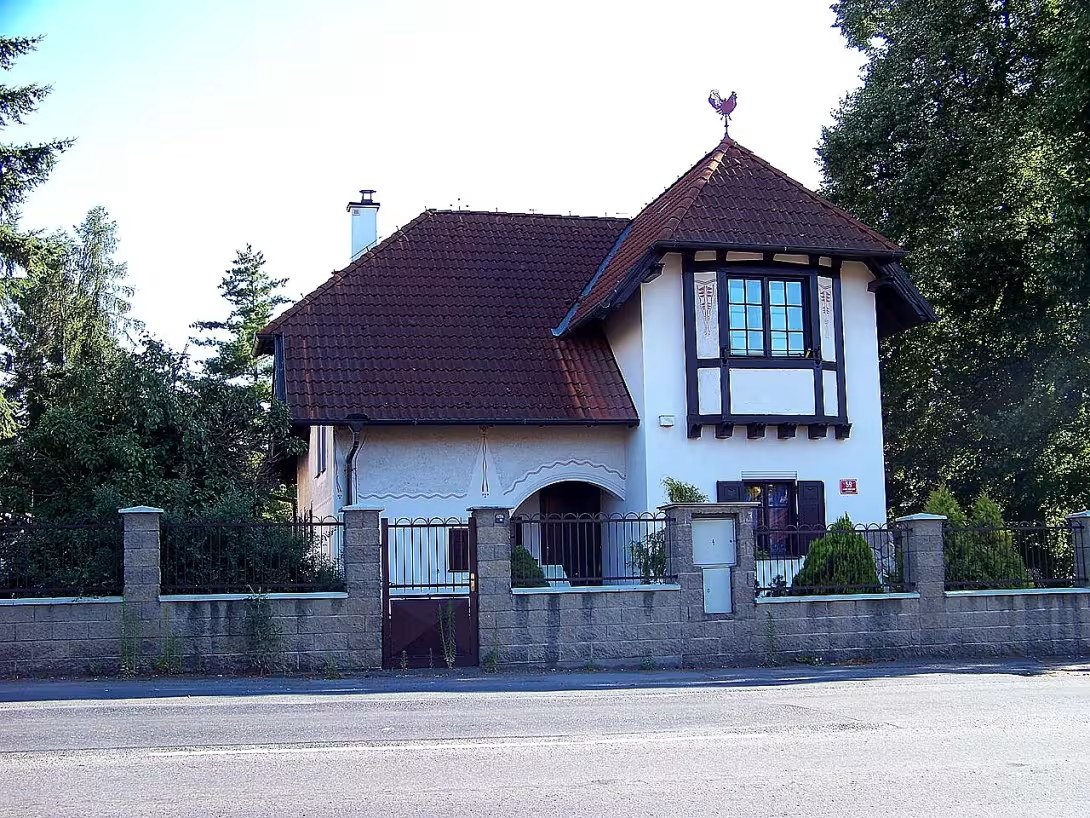
Vila Starokolínská čp. 59 is a single‑storey family villa with an attic on Starokolínská street in Újezd nad Lesy, Prague 9. Designed in 1904 by architect Otakar Novotný for dentist Dr Jan Žižka, it was finished in 1906 and has been a protected immovable cultural monument of the Czech Republic since 2 April 1992. The house is noted for its English‑villa influence, retained wooden interiors, and sgrafitto façade.
Dr Jan Žižka commissioned the villa during a period of rapid architectural and cultural transformation in Prague. Architect Otakar Novotný adopted the English country‑house style, popular among the city’s prosperous middle class in the early twentieth century. Built from 1904 to 1906, the residence merges a modest single‑storey layout with an attic for extra rooms.
Architecturally, the villa features a fine‑ and coarse‑grain plaster façade adorned with sgrafitto, a shallow‑relief technique. Wooden elements, initially painted and later recoloured, appear on both exterior and interior. Inside, a wooden staircase and built‑in cabinet showcase period craftsmanship. The plan consists of a single level plus a functional attic, echoing the English‑villa model that emphasized horizontal spread with modest height.
Dr Jan Žižka was the first owner; later proprietors are undocumented. As a cultural monument, the villa falls under the Czech heritage administration, which has supervised its protection since the early 1990s.
Key recent events are its 1906 completion and a major renovation in 1997. That work altered part of the interior layout, replaced the roof covering, and swapped floors, several doors, and windows. The original painted wooden colour scheme was overlaid with dark brown paint, altering the appearance of both interior and exterior surfaces.
Today the villa remains a protected monument visible from the street in Újezd nad Lesy. Although the interior is closed to the public, the conserved exterior—sgrafitto façade, original wooden detailing, and the English‑villa silhouette—clearly illustrates early twentieth‑century residential architecture in Prague. Its listing on the heritage register highlights its architectural importance and guarantees continued conservation.
The villa serves as a tangible example of Prague’s turn‑of‑the‑century residential design, reflecting the era’s aesthetic tastes and construction methods. Visitors interested in architectural history will appreciate its preserved features and its role in the city’s cultural heritage.
Historical milestones
- 1904
- Design of the villa by architect Otakar Novotný
- 1906
- Completion of the villa's construction
- 1992
- Villa becomes a protected immovable cultural monument of the Czech Republic
- 1997
- Major renovation of the villa
Architectural development
The original building features wooden elements, including a staircase and built-in cabinet, with sgrafitto decorations on the façade.
Historical events
The villa was completed in 1906
A reconstruction took place in 1997
Owners
Dr. Jan Žižka (owner), subsequent owners unknown
Points of interest
– The villa was designed in 1904 by architect Otakar Novotný and finished in 1906.
– It has been a protected immovable cultural monument of the Czech Republic since April 2, 1992.
– The house features an English-villa influence, retained wooden interiors, and sgrafitto façade.
– The villa was built from 1904 to 1906 and merges a modest single-storey layout with an attic for extra rooms.
– It has undergone a major renovation in 1997 that altered part of the interior layout, replaced the roof covering, and swapped floors, several doors, and windows.
Guide
Show guide text
This text was created by artificial intelligence and has not been editorially reviewed. It may contain inaccuracies.
Welcome to Újezd nad Lesy. Please, take a moment to settle in, adjust your headphones, and simply look ahead. You are standing before Vila Starokolínská čp. 59, a place that embodies the quiet elegance and residential charm of a bygone era. As you gaze at the building, you might feel a sense of tranquility that separates this spot from the faster pace of the city. This is not just a house, but a carefully preserved piece of history, a family home that has witnessed the changing tides of the twentieth century while maintaining its dignified presence in the landscape of Prague 9.
To truly understand the building before you, we have to travel back in time to the very beginning of the twentieth century. The year was 1904, a period of great optimism and architectural experimentation. It was during this time that the villa was conceived. The man behind the vision was the architect Otakar Novotný, who was commissioned to design a private sanctuary for Dr. Jan Žižka. Imagine the conversations between the architect and the doctor at that time, discussing how a modern family home should look and feel. They weren't looking for something ostentatious or overwhelming, but rather something that reflected stability, professional success, and a deep connection to a comfortable, domestic life.
The construction began shortly after the designs were finalized, and by 1906, the villa was completed and ready for its first inhabitants. For Dr. Jan Žižka, this house represented more than just shelter; it was a statement of taste and a retreat from the demands of his medical practice. When you look at the villa now, try to imagine it in 1906, surrounded by the greenery of Újezd nad Lesy, standing as a fresh and modern addition to the neighborhood.
Now, let us turn our attention to the architecture. As you observe the facade and the overall silhouette of the building, I invite you to notice the specific influence that Otakar Novotný brought to this project. The villa was designed with a clear inspiration drawn from English country houses. During the early 1900s, the English style was highly regarded for its emphasis on harmony, comfort, and a seamless integration with the surrounding environment.
Take a look at the layout. You will notice that the villa is primarily a single-story building, topped with an attic. This horizontal emphasis is a key characteristic of that English influence, avoiding the towering heights of urban apartments in favor of a more grounded, organic feel. As you scan the exterior, notice how the building sits on its plot. The choice of a single-story design with an attic allowed the home to feel spacious yet intimate, providing the residents with a sense of openness while keeping the living quarters cozy and manageable. While we are observing the exterior, take a moment to appreciate the balance of the proportions. There is a certain rhythm to the way the house is structured, a quiet sophistication that doesn't need to shout to be noticed.
The story of Vila Starokolínská is inextricably linked to the people who shaped it. On one hand, we have Otakar Novotný, the architect whose skill allowed him to translate the desires of a client into a physical form. On the other, we have Dr. Jan Žižka, the man for whom this space was created. In the early twentieth century, the professional class in Prague often sought to establish homes that mirrored their social standing and intellectual interests. By choosing an English-inspired design, Dr. Jan Žižka was aligning himself with a European trend of understated luxury and intellectual refinement. The villa served as a backdrop for the private life of a respected professional, a place where family life and intellectual pursuit could coexist in peace.
As the decades passed, the villa remained a silent witness to history. However, the true value of such buildings is often only fully recognized long after they are built. For many years, this house was simply a beautiful residence, but by the end of the century, its historical and architectural significance became officially recognized. On April 2, 1992, the villa reached a major milestone when it was designated as a protected immovable cultural monument of the Czech Republic. This status is not merely a title; it is a promise of preservation. It means that the state recognizes the work of Otakar Novotný and the legacy of Dr. Jan Žižka as something essential to the cultural fabric of the nation.
But preservation is an active process, not a passive one. A building cannot survive on a title alone; it requires care, investment, and a deep respect for the original materials and design. This brings us to the year 1997, when the villa underwent a major renovation. This was a critical moment in the building's life. The goal of the renovation was to breathe new life into the structure while ensuring that the original spirit of 1904 remained intact. When you look at the villa today, you are seeing the result of that careful restoration—a blend of the original early-century vision and the modern commitment to heritage conservation.
One of the most interesting aspects of this site is how it represents a specific moment in the evolution of Prague's outskirts. Újezd nad Lesy has always had a unique character, and villas like this one helped define the area as a place of prestige and quietude. The fact that this home has survived and been restored allows us to glimpse a lifestyle that has largely disappeared—a time when the transition from the city to the countryside was marked by these elegant, English-style retreats. There is a certain mystery in wondering about the daily routines of the people who lived here over a century ago, the guests who were welcomed into the foyer, and the quiet evenings spent in the attic rooms overlooking the neighborhood.
As you prepare to move on from this spot, I encourage you to take one last look at the villa. Notice the way the light hits the facade and the way the building seems to settle comfortably into its surroundings. It is a reminder that architecture is not just about walls and roofs, but about the aspirations of the people who build them and the care of the people who preserve them. Vila Starokolínská čp. 59 stands as a testament to the timeless appeal of balance, simplicity, and the enduring quality of good design.
Thank you for joining me for this brief journey into the history of Újezd nad Lesy. I invite you now to wander a bit further, perhaps exploring the surrounding streets to see how this villa fits into the wider character of the district. Take your time, enjoy the atmosphere, and let the history of the place speak to you. Goodbye for now, and enjoy the rest of your exploration.
Tips for visitors
Best Time to Visit: The Starokolínská čp. 59 villa is a year-round attraction, but the best time to visit is during spring and autumn when the weather is mild and sunny. This allows you to fully appreciate the villa's architecture and surroundings.
Parking and Transport: There are limited parking options available near the villa. Visitors can also use public transportation, such as buses or trams, which stop nearby. For up-to-date information on bus and tram schedules, please check a search engine.
What to Bring: Comfortable walking shoes are recommended for exploring the surrounding area. A camera is also a must-have to capture the villa's stunning architecture and picturesque surroundings.
Photography: The best spots for photography are around the villa itself, where you can capture its unique architecture and beautiful gardens. As for light, the morning and late afternoon sun provide the most flattering lighting conditions.
What to See Nearby (30 minutes away): Visitors can explore other nearby attractions such as [insert nearby places mentioned in V OKOLÍ].
Businesses nearby
Do you run a restaurant, accommodation, shop, museum, rental, wellness or other visitor service near this monument? Show yourself directly to the people heading to it — this is how they will see you in the app and on the web:
Events nearby
Zdroj akcí: otevřená data měst a obcí ČR (Národní katalog otevřených dat) a kalendář akcí Národního památkového ústavu.
Accommodation nearby
Trips and activities nearby
Guided tours, tickets and activities nearby from GetYourGuide
Affiliate link: if you buy from the partner, we may receive a commission. The price for you does not change.
Search tours and activities →Themed route
Thematic Tour Route
Main Goal: Starokolínská Villa, No. 59 (villa)
Location: Újezd nad Lesy
Route Highlights:
1. Újezd nad Lesy Village Center: A charming starting point with a rich history, featuring traditional architecture and local culture. 2. Starokolínská Villa: The main attraction, this beautiful villa is a must-visit to admire its stunning architecture and learn about its significance. 3. Wooded Area Surrounding the Villa: Take a leisurely stroll through the picturesque woods, offering a serene atmosphere and opportunities for nature observation.
Route Description:
Begin your tour in the heart of Újezd nad Lesy Village Center, where you can soak up the local atmosphere and get a glimpse into the region's history. From there, head to Starokolínská Villa, the main attraction, and explore its beautiful architecture and surroundings. After visiting the villa, take a short walk through the nearby wooded area, which offers a peaceful escape from the hustle and bustle of daily life.
Total Distance: Approximately 1-2 kilometers
This route provides a unique blend of culture, history, and nature, making it an ideal choice for those interested in exploring the charms of Újezd nad Lesy.
Seasonal recommendations
Spring
As you visit Vila Starokolínská čp. 59, spring brings a fresh atmosphere with blooming flowers and lush greenery. The villa's surroundings are particularly beautiful during this season, making it an ideal time to take a leisurely stroll around the property. Be prepared for moderate crowds, especially on weekends, so consider arriving early to avoid the rush.
Summer
Summer is peak tourist season at Vila Starokolínská čp. 59. The warm weather and long days make it perfect for outdoor activities like picnics or exploring the nearby woods. However, be prepared for larger crowds and longer lines, especially during the main summer months. Plan your visit accordingly to avoid the chaos.
Autumn
As autumn sets in, Vila Starokolínská čp. 59 takes on a cozy atmosphere with the changing foliage creating a picturesque backdrop. The cooler weather makes it an excellent time for a relaxing visit, and you can enjoy the villa's interior without feeling overwhelmed by the heat. Take advantage of the smaller crowds to explore the property at your own pace.
Winter
Winters are cold and quiet at Vila Starokolínská čp. 59, making it an ideal time to visit if you prefer a more peaceful experience. The shorter opening hours mean you can plan a more leisurely visit without feeling rushed. Don't forget to bundle up warmly as the temperatures can drop significantly.
Visualizations and artistic views

The visualisations are generated by artificial intelligence and serve as inspiration.
Photos from the area
Real photos taken near the monument


Zdroj a licence jsou uvedeny u každého snímku.
Tips from visitors
No tips yet. Be the first!
Log in and add your tip.
Sources and literature
Fotografie: ŠJů (cs:ŠJů) / CC BY-SA 3.0 — Wikimedia Commons. The author and licence also appear when you hover over the image.
Faktickým podkladem tohoto textu byl článek na Wikipedii, jehož autory jsou přispěvatelé Wikipedie. Článek je dostupný pod licencí CC BY-SA 4.0.
Location on the map

Příběhy a pověsti
Legendy, pověsti a příběhy spjaté s touto památkou
Fotografie návštěvníků
Zatím žádné fotografie. Buďte první, kdo přidá fotografii z návštěvy!
Přihlaste se a přidejte svou fotografii nebo hodnoťte.
Za ověřenou návštěvu v aplikaci získáte víc bodů — poznáme podle GPS, že jste na místě.
Reviews and comments