



Vila Tereza Villa
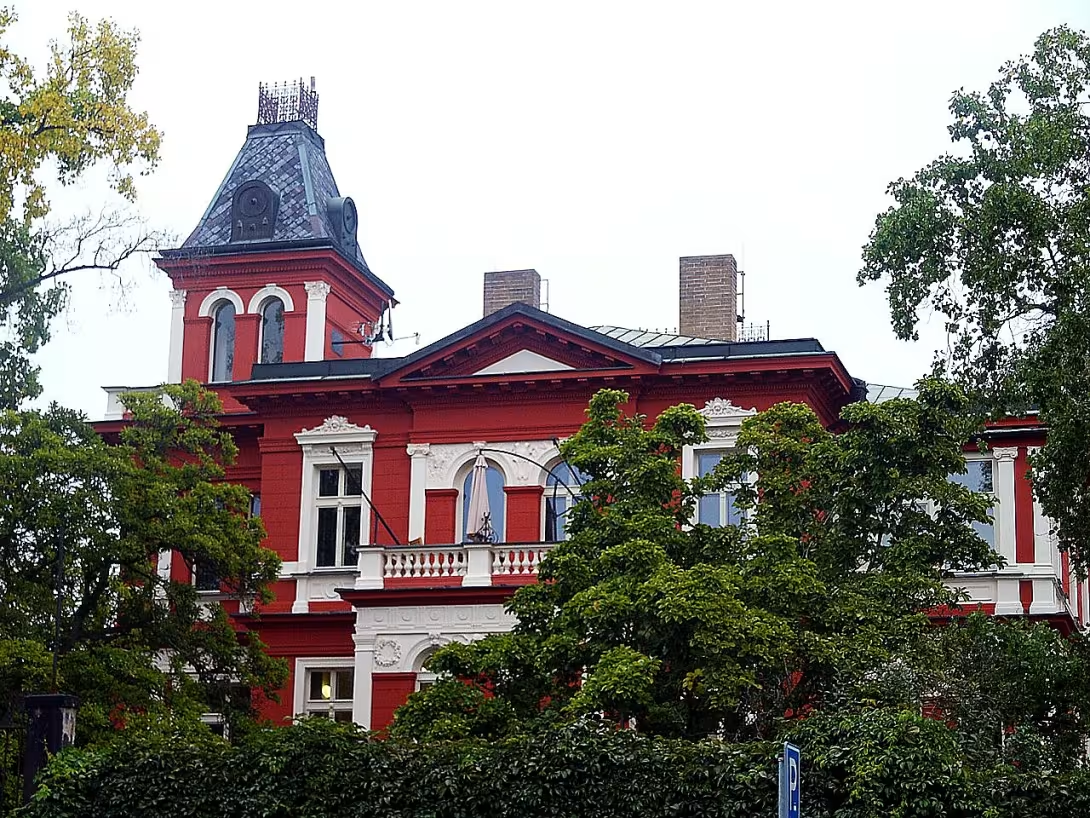
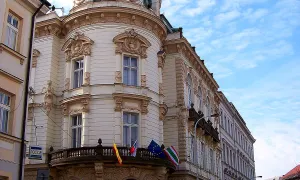
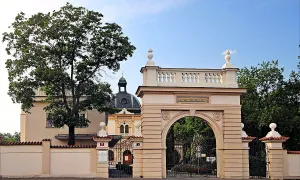
Vila Tereza stands as a notable neo-Renaissance architectural gem located at the intersection of Italská and Vozová streets in Žižkov, Prague. Constructed initially in the 1870s by civil engineer Jan Holejšovský, it later underwent significant transformation under Ing. Daniel Märky's ownership into its current style. The villa holds historical significance as it housed the first official Soviet representation in Czechoslovakia from 1922 to 1945 and has been a site of cultural importance for avant-garde artists and political figures.
The origins of Vila Tereza trace back to the late 19th century, during a period marked by industrial growth and cultural flourishing within the Austro-Hungarian Empire. Civil engineer Jan Holejšovský commissioned its construction in 1873 as a single-story building with a corner tower, designed by Josef Vevera. Initially situated in what was then part of the separate municipality of Králové Vinohrady, it later became an integral part of Prague's urban landscape.
Architecturally, Vila Tereza underwent significant changes in the late 19th century. Originally constructed as a single-story building with a corner tower by Josef Vevera, it was transformed into its current pseudorenaissance style under Ing. Daniel Märky's direction. Architect Troníček led these renovations, which included additions such as a caretaker’s cottage and an extension of the economic building to include a greenhouse and laundry room. The villa also featured a fountain with a copper allegorical sculpture (Bohyně Tyché) in its garden, although this particular element did not survive.
Ownership of Vila Tereza changed hands several times after its initial construction. Jan Holejšovský sold the property just a year after its completion in 1874. In 1885, Ing. Daniel Märky acquired the villa and renamed it after his second wife, Therese Appolonia. Under Märky's ownership, significant architectural modifications were made, culminating in 1886. Following Märky’s death in 1903, he transferred the property to his children. The villa later served as a diplomatic site when Švýcarsko established its consulate nearby, with Märky serving as the first Swiss consul until his passing.
Vila Tereza's historical significance is further underscored by its role as the first official Soviet representation in Czechoslovakia starting in 1922. This period saw notable figures such as diplomat Vladimir Alexandrovič Antonov Ovsejenko, who worked at the Soviet trade mission and was later executed on Stalin’s orders in 1938, associated with the villa. During the First Republic, it became a hub for avant-garde artists and political figures sympathetic to the Soviet regime, including Vítězslav Nezval, Marie Pujmanová, František Kubka, Jiří Weil, Julius Fučík, and Vladislav Vančura.
Today, Vila Tereza is recognized as a cultural monument of the Czech Republic. It was declared a national cultural heritage site before 1988, with its protection status updated in 1991 to include not only the villa but also associated structures like the caretaker's cottage, boundary wall, and sculptures. Currently owned by the Diplomatic Service of the Czech Republic, it is leased primarily for diplomatic purposes, serving as a venue for international representation and significant events.
Vila Tereza remains an important historical site that offers insight into both architectural evolution and pivotal political history in Czechoslovakia. Its rich past and ongoing role in diplomacy make it a compelling destination for visitors interested in exploring the intersection of art, architecture, and history.
Then and now
Drag the slider to compare how the landmark may have looked when it was built with the view today.
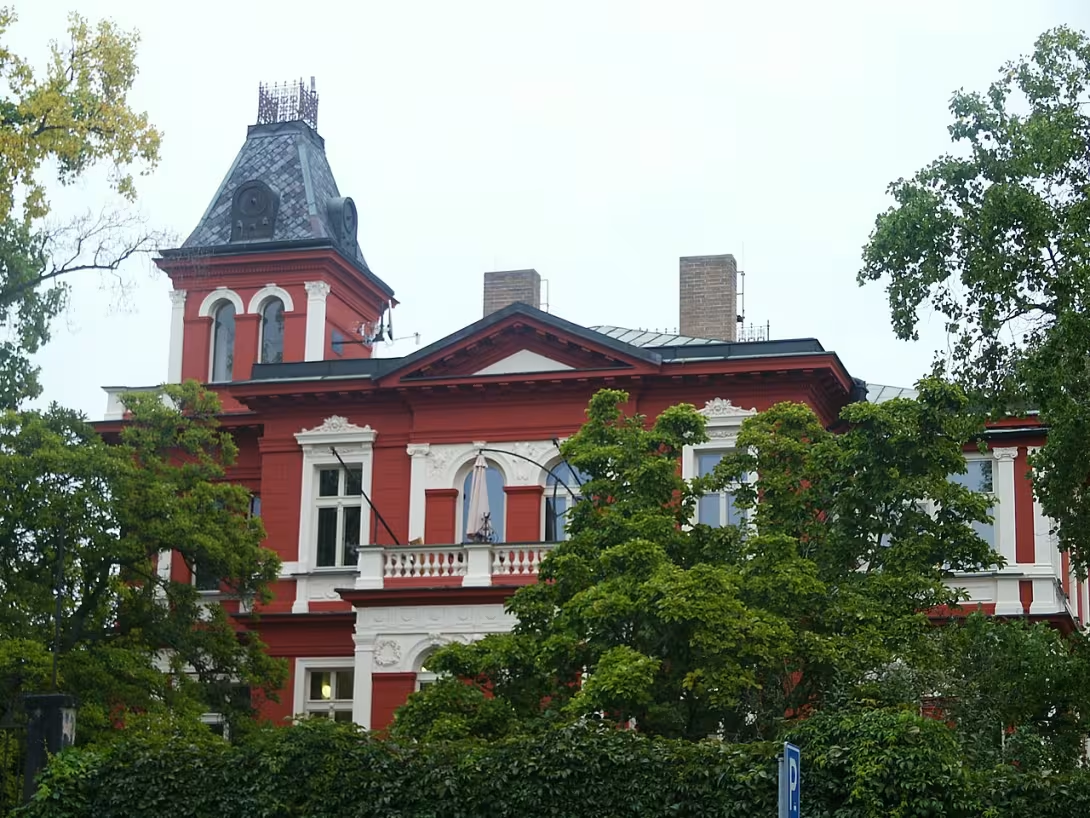
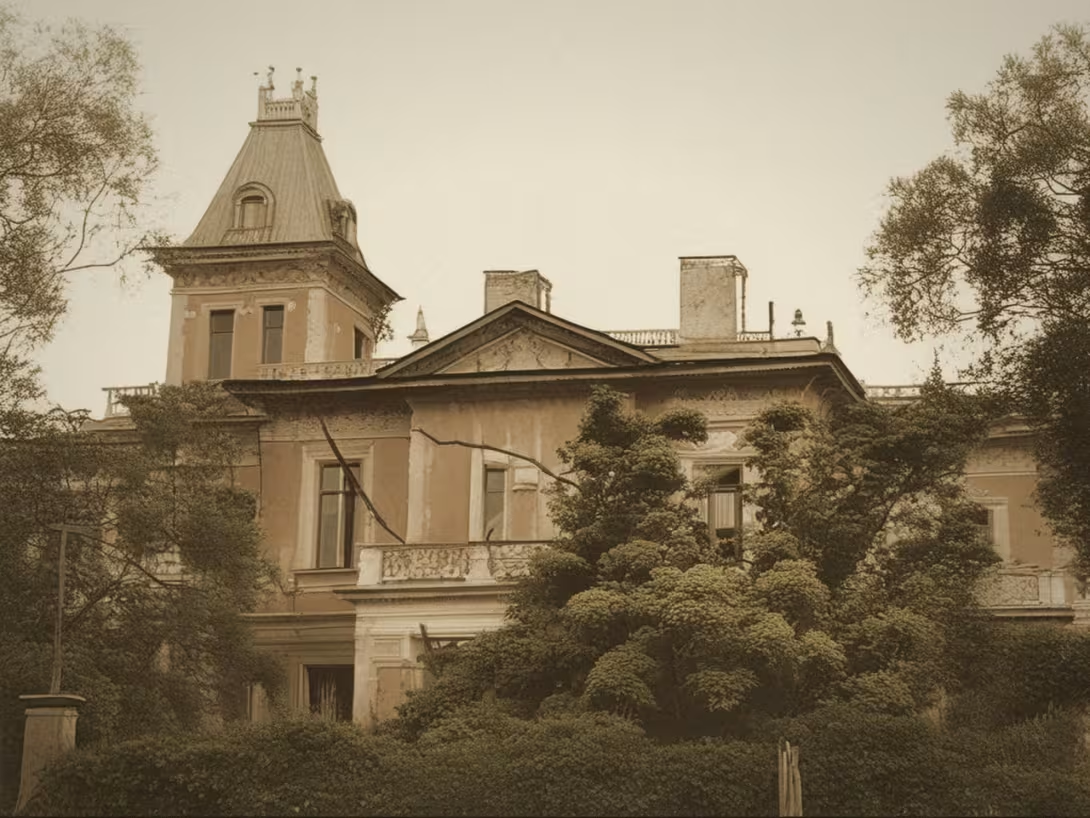
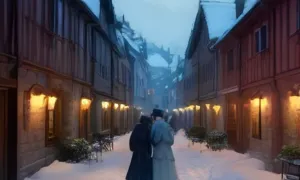
The historical appearance on the left is an AI-generated visualisation and serves as inspiration only.
Historical milestones
- 1873
- Construction completed by Josef Vevera.
- 1886
- Renovation into pseudorenaissance style completed.
Architectural development
Vila Tereza underwent significant architectural changes in the late 19th century. Initially constructed as a single-story building with a corner tower by Josef Vevera, it was later expanded and renovated into a pseudorenaissance style by architect Troníček under Daniel Märky's direction. The renovations included additions such as a caretaker's cottage and an extension of the economic building.
Historical events
- 1922
- The villa became the first official Soviet representation in Czechoslovakia.
- 1938
- Diplomat Vladimir Alexandrovič Antonov Ovsejenko, who worked at the Soviet trade mission, was executed on Stalin's orders.
Owners
Jan Holejšovský (1873-1874)
Ing. Daniel Märky (1885-1903)
Märky's children (post-1903)
Points of interest
- Vila Tereza was initially built as a single-story building with a corner tower in 1873, reflecting the architectural style of its time before being transformed into its current pseudorenaissance form under Ing. Daniel Märky.
- The villa features an intriguing historical footnote: it housed the first official Soviet representation in Czechoslovakia from 1922 to 1945, making it a significant site during pivotal moments in European history.
- One notable figure associated with Vila Tereza is diplomat Vladimir Alexandrovič Antonov Ovsejenko, who worked at the Soviet trade mission before being executed on Stalin’s orders in 1938, highlighting its connection to Cold War-era politics.
- The garden of Vila Tereza once contained a fountain adorned with a copper allegorical sculpture named Bohyně Tyché, which has since disappeared, adding an element of mystery and loss to the villa's history.
- During the First Republic era, the villa became a cultural hub for avant-garde artists and political figures sympathetic to the Soviet regime, including prominent names like Vítězslav Nezval and Julius Fučík, showcasing its role as a center of artistic and political activity.
Guide
This guide is narrated by a synthetic voice generated by artificial intelligence.
Show guide text
This text was created by artificial intelligence and has not been editorially reviewed. It may contain inaccuracies.
Villa Tereza is a neo-Renaissance building at the corner of Italská and Vozová streets in Prague's Žižkov district. It stands on the site of the former Paradise Garden and is among the valuable records of the historical construction in this area.
The single-story building with a corner tower in the middle of the garden was commissioned by civil surveyor Jan Holejšovský in 1873. The plot then still belonged to the independent municipality of Královské Vinohrady. The construction was carried out by Prague builder Josef Vevera. Holejšovský sold the villa just a year later and the house subsequently changed hands frequently.
In 1885, engineer Daniel Märky bought the villa. He was a co-owner of the firm Märky, Bromovský and Schulz. He named it after his second wife Therese Appolonii. According to the plans of the previous owner, builder Troníček, he had it rebuilt in pseudo-Renaissance style. A gatekeeper's cottage was added and the older utility building received a greenhouse and laundry. He also built a garden house, though that did not survive. In the garden he placed a fountain with a metal allegorical sculpture of the goddess Tyché and had another fountain installed at the main entrance. The renovation was completed in August 1886.
When Switzerland opened a consulate in Prague in 1897, Märky became its first consul. He conducted official business in the villa until his death in 1903. During his lifetime he transferred the house to his two children. His successor Emanuel Hess moved the consulate in 1904 to Královské Vinohrady on Škrétova street.
From 1922 onwards, the Soviet trade mission was based in the villa. It was at that time the highest official representation of Soviet Russia in Czechoslovakia. Among those who served as trade attaché was diplomat Vladimir Alexandrovič Antonov-Ovsejenko, whom Stalin had executed in 1938. The villa was visited during that era mainly by left-leaning avant-garde artists and supporters of the Soviet regime, such as Vítězslav Nezval, Marie Pujmanová, František Kubka, Jiří Weil, Julius Fučík, and Vladislav Vančura. Poet Laco Novomeský dedicated a collection of poems to the villa. A bilingual commemorative plaque on the building commemorates this era.
The villa was declared a national cultural monument before 1988. In 1991 the protection changed and today it is protected as a cultural monument together with the gatekeeper's cottage, boundary wall, and sculpture. It belongs to the Diplomatic Service of the Czech Republic. The service leases it mainly to embassies and representations of international organizations. The villa serves for the representation of individual states and for hosting significant international visits.
Tips for visitors
The best time to visit Vila Tereza is during the late spring or early fall when the weather is pleasant, allowing for a comfortable exploration of its neo-Renaissance architecture. During these seasons, you can enjoy the cityscape views without the summer crowds or winter chill. Additionally, visiting in the morning offers softer light for photography and quieter surroundings before the area becomes busier.
Transportation to Vila Tereza is convenient via public transport or by car. Public transport options are generally reliable and provide easy access to the area.
When visiting Vila Tereza, bring comfortable walking shoes as you'll likely explore the surrounding urban landscape. A camera or smartphone is recommended to capture the architectural details and city views. Additionally, carrying a light jacket can be helpful due to variable weather conditions in Prague, especially during transitional seasons.
For photography enthusiasts, the best spots around Vila Tereza are along Italská street where you can frame the building against the backdrop of the cityscape. Early morning or late afternoon provides the most flattering natural light for capturing its architectural details. The area's urban setting offers unique perspectives and contrasts that highlight the villa’s neo-Renaissance style.
Nearby attractions within a 30-minute walk include the Eden Garden, which was once part of the same estate as Vila Tereza, offering a green space to relax and enjoy nature amidst the city. For those interested in history and architecture, exploring other historical buildings in Žižkov can provide further insights into Prague's rich cultural heritage.
Families with children will find Vila Tereza an interesting stop on their itinerary due to its architectural beauty and proximity to urban attractions. The area around the villa is safe for walking, making it suitable for family outings. Nearby parks like Eden Garden offer space for children to play and explore nature, providing a balanced day of cultural exploration and outdoor activities.
Frequently asked questions
Can the monument be visited?
This is a residential or farm building, not a museum with opening hours. Please view it from public space and respect the owners' privacy. We have no information about access to the interior.
Where is the monument?
Location: Vozová 438/1, Žižkov, Praha, Hlavní město Praha. The map on this page shows the exact spot.
Why is the monument protected?
It is listed in the Central List of Cultural Monuments of the Czech Republic as a national cultural monument (register no. 40964/1-1795).
Businesses nearby
Do you run a restaurant, accommodation, shop, museum, rental, wellness or other visitor service near this monument? Show yourself directly to the people heading to it — this is how they will see you in the app and on the web:
Events nearby

Zdroj akcí: otevřená data měst a obcí ČR (Národní katalog otevřených dat) a kalendář akcí Národního památkového ústavu.
Nearby
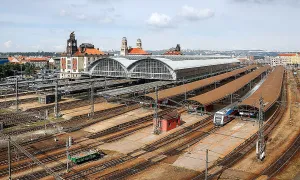
Located in Žižkov, Prague, Vila Tereza is surrounded by urban development. The area was once part of the former Eden Garden and offers views of the cityscape.
Accommodation nearby
Trips and activities nearby
Guided tours, tickets and activities nearby from GetYourGuide
Affiliate link: if you buy from the partner, we may receive a commission. The price for you does not change.
Search tours and activities →Themed route
Thematic Walking Tour: Vila Tereza and Surroundings
1. **Vila Tereza (Villa) Start your tour at the heart of Žižkov, Prague, with a visit to Vila Tereza. This villa is an architectural gem nestled in what was once part of Eden Garden. It offers visitors a glimpse into historical urban development and provides stunning views of the cityscape.
2. **Eden Garden Ruins (Historical Site) A short walk from Vila Tereza, explore the remnants of the former Eden Garden. This site is significant for its connection to the villa's history and offers a unique perspective on how urban development has transformed this area over time.
3. **Klášterní Náměstí (Plaza) Continue your journey to Klášterní Náměstí, an inviting plaza that lies within walking distance of Vila Tereza. This area is known for its vibrant atmosphere and serves as a cultural hub in Žižkov, making it perfect for experiencing local life.
4. **Žižkov Television Tower (Observation Tower) Conclude your tour with a visit to the iconic Žižkov Television Tower. Although slightly beyond the immediate vicinity of Vila Tereza, this landmark offers panoramic views of Prague and is an essential stop for anyone exploring the city's skyline.
This thematic tour provides a comprehensive exploration of Vila Tereza and its surrounding urban landscape, offering insights into both historical and modern elements of Žižkov.
Seasonal recommendations
Spring: Visiting Vila Tereza during spring offers a unique experience as the surrounding nature begins to bloom, with vibrant colors and fresh scents filling the air. The mild weather provides an ideal backdrop for exploring the villa's gardens, which are lush and inviting after winter dormancy. Spring light is soft and warm, enhancing the architectural details of Vila Tereza beautifully. Visitors should consider wearing layers as temperatures can fluctuate, and early morning visits might help avoid larger crowds that gather later in the day.
Summer: The summer season at Vila Tereza is characterized by long daylight hours and pleasant weather, making it perfect for leisurely strolls around the property. The villa's gardens are particularly enchanting during this time, with full blooms and lush greenery creating a picturesque setting. However, due to its popularity in the warmer months, visitors should plan their visit early in the day or later in the afternoon to avoid peak tourist times. Lightweight clothing is advisable for comfort, along with sunscreen and hats to protect against the sun.
Autumn: Autumn brings a magical atmosphere to Vila Tereza, as the foliage changes into rich hues of red, orange, and yellow. The cooler temperatures make it a comfortable time for exploring both indoors and outdoors without the summer heat. This season is ideal for photography enthusiasts looking to capture the villa against a stunning autumnal backdrop. Visitors should dress in layers to accommodate varying weather conditions throughout the day and consider bringing an umbrella or raincoat, as late autumn can bring unpredictable showers.
Winter: Winter at Vila Tereza offers a serene and tranquil experience, with snow often blanketing the landscape, creating a picturesque scene that contrasts beautifully with the villa's architecture. The shorter days mean that visiting in the morning is recommended to make the most of the daylight hours. During this season, the atmosphere is quieter, providing an intimate setting for those looking to escape the hustle and bustle. Visitors should dress warmly in layers, including hats, gloves, and scarves, as temperatures can be quite cold. Additionally, it's wise to check opening times, as they may vary due to winter conditions.
Visualizations and artistic views


The visualisations are generated by artificial intelligence and serve as inspiration.
Photos from the area
Real photos taken near the monument

Zdroj a licence jsou uvedeny u každého snímku.
Tips from visitors
No tips yet. Be the first!
Log in and add your tip.
Sources and literature
Photos: JiriMatejicek / CC BY-SA 3.0 — Wikimedia Commons. The author and licence also appear when you hover over the image.
Faktickým podkladem tohoto textu byl článek na Wikipedii, jehož autory jsou přispěvatelé Wikipedie. Článek je dostupný pod licencí CC BY-SA 4.0.
Location on the map
Příběhy a pověsti
Legendy, pověsti a příběhy spjaté s touto památkou
Fotografie návštěvníků
Zatím žádné fotografie. Buďte první, kdo přidá fotografii z návštěvy!
Log in a přidejte svou fotografii nebo hodnoťte.
Za ověřenou návštěvu v aplikaci získáte víc bodů — poznáme podle GPS, že jste na místě.
Reviews and comments