






vodní mlýn čp. 57 ve Vranově nad Dyjí Water mill
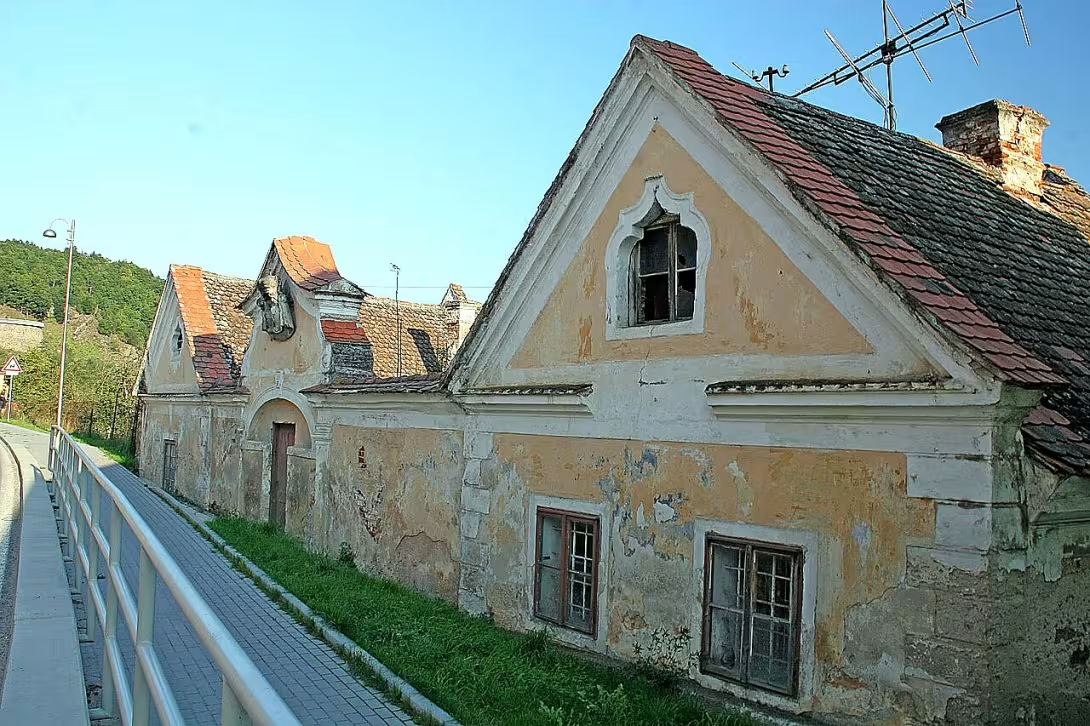
Water Mill No. 57 in Vranov nad Dyjí, also known as the Pansky, Municipal or Grund Mill, is a monument protected Baroque area. It consists of a residential building, a mill and an economic background. It is located on the left side of the I / 38 driveway in a direction from Znojmo near Vranov Square. The building occupies an important place in the history of the local economy and industry thanks to its 18th-century construction change and later involvement in the development of urban electrification.
The first written mention of mills, breweries and malts on the Vranov estate dates back to 1552. In 1703, he built the water mill with drive and soukenic furniture on the grounds called Mittergarten Michal Heřman, the Reich Earl of Althann. The city walls, including the gate to the river Dyja, had to retreat. In 1722 Michal Jan IV acquired the estate from Althann and for his minor son, the mother of Mary Anna, born Pignatelli, managed the estate. The extensive construction of the mill from 1745 resembles a three-facade with the coats of arms of the Pignatelli and Althannes. In 1757 Vranov suffered a great fire, which also damaged part of the Front Hamra with a mill. Due to the debts of Michal Josef Althann, the mill was sold to Michael Gottfried in 1782. During the 19th century, the Polish aristocratic family of the Munich family and since 1786 Stadnicki influenced Vranov's life. After 1900 the town of Vranov bought the mill to build a local power plant. Later, in 1924, it was acquired by a joint stock company of the West Moravian plant. In 1930, Alois Grund purchased a mill estate with a woman named Cecilia. After World War II, their son Jaromir took over the mill in 1948.
The complex of the mill consists of one-storey brick residential buildings and mills from the peak Baroque period. These buildings are located under one roof. An architecturally valuable element is the three-facade with the alliance coat of arms of the Althanas and Princes Pignatelli, which reflects the construction modifications of 1745. Part of the wall is a gate and the living area is decorated in the courtyard with the coloured fresco of St. Florian. The original mill technology has not been preserved. The whole area of the mill is listed on the list of state real estate monuments. The residential building no. 57 has enjoyed conservation since 1958.
The owners and managers of the premises were members of the aristocratic families of Althannes and Pignatelli. The tenant Michal Gottfried and owner of Andreas Hauswirth, who offered the mill for sale in 1895. Since 1900, the mill belonged to the town of Vranov led by Mayor Ernest Czeloth. An important chapter was the era of the grund mill family, which has been economically active since the 1930s. During the second war, forced laborers were accommodated at the mill and the Lazaret Wehrmacht worked briefly at the end of the war.
The key moment in the modern history of the mill was 1900. The city then bought it and entrusted Siemens & Halske with the construction of a local power plant. Due to the damage to the mill by fire in 1905 and subsequent plans for the construction of the dam, the building served in the interwar period for living and renting. The miller Alois Grund definitely switched to electric power after the ice calamity in 1931.
Today the Water Mill No. 57 presents a valuable example of Baroque architecture on Vranov Manor. The area documents the transition from traditional milling industry to the beginnings of modern energy. Visiting this place offers a unique view of the construction and economic history of the region and brings the fate of the people associated with this important place on the Dyji River.
Then and now
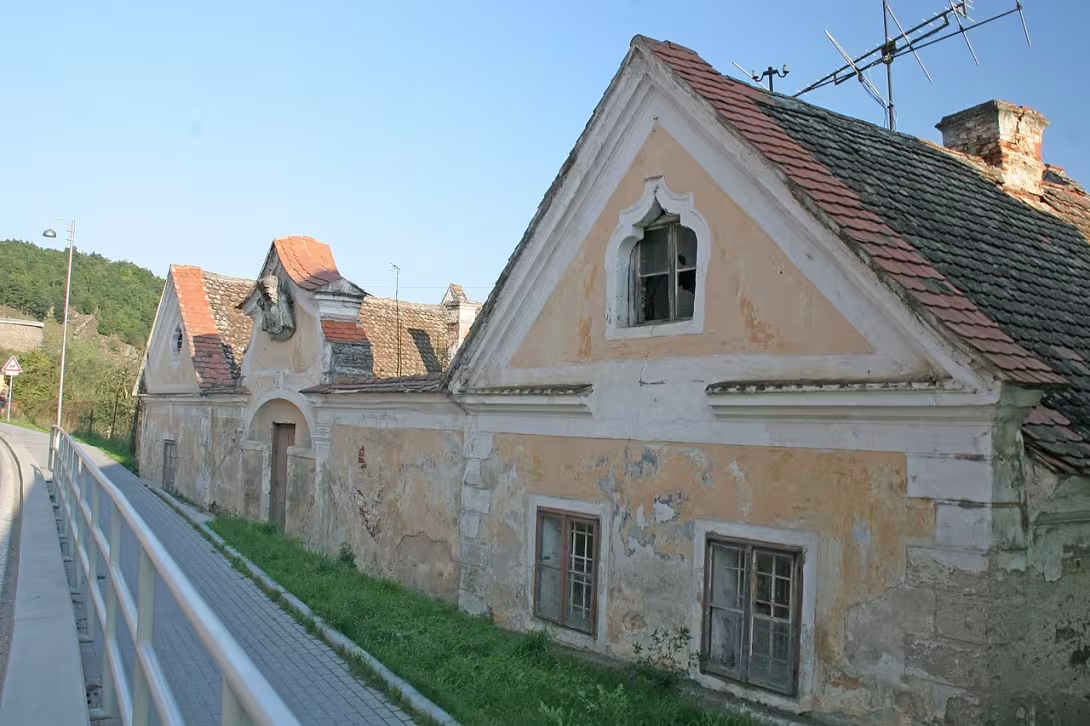
Drag the slider to compare how the landmark may have looked when it was built with the view today.
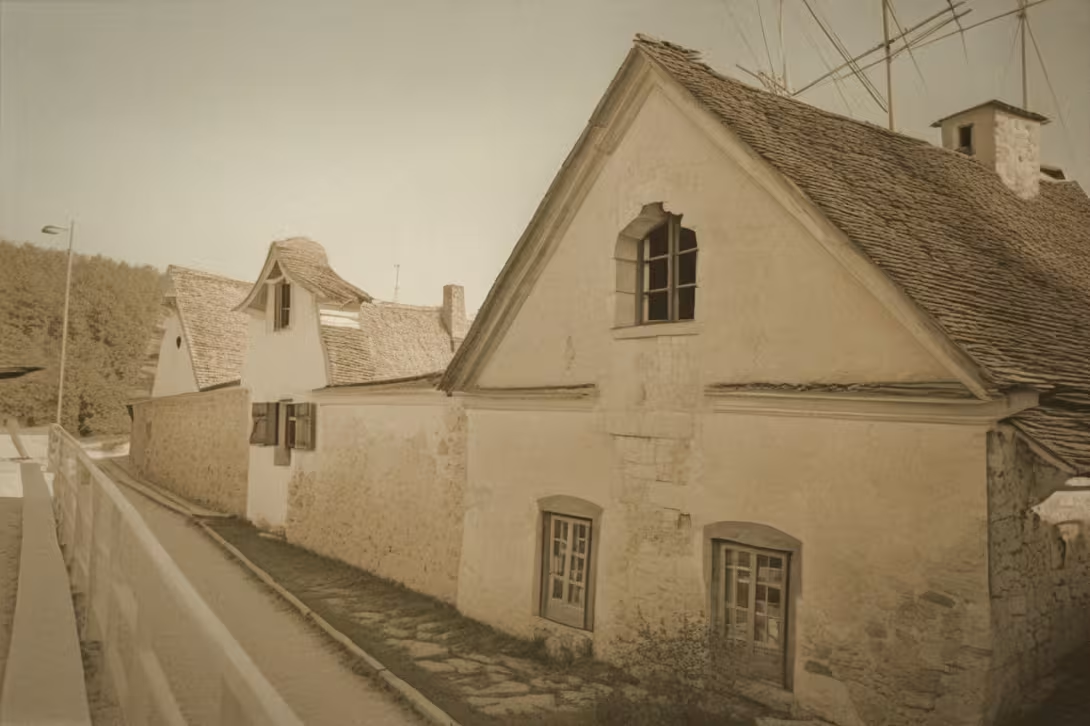
The historical appearance on the left is an AI-generated visualisation and serves as inspiration only.
Historical milestones
- 1552
- First written mention of mills and management at Vranov Manor.
- 1703
- Construction of a water mill with a drive and a soukenic workshop.
- 1745
- Extensive construction of the mill with the creation of three fronts.
- 1900
- The purchase of the mill by the city for the needs of the new power plant.
Architectural development
The original mill was built in 1703, later it underwent extensive reconstruction in 1745 into a three-way Baroque building. The current complex consists of one-storey wall buildings from the period of the top Baroque under one roof. There is a color fresco of St. Florian in the area.
Historical events
1703: construction of a water mill with drive on the grounds of Mittergarten, 1745: extensive construction work of the residential building, 1757: damage to the mill by big fire, 1900: purchase of the mill by the city for the purpose of building the power plant.
Owners
Michal Heřman z Althannu (after 1703), Marie Anna z Pignatelli (ruled for a minor son), Michal Gottfried (from 1782 rent), the Munich family (19th century), the Stadnicki family (from 1876), the town of Vranov (after 1900).
Points of interest
- Water Mill No. 57 in Vranov nad Dyjí is a monument protected Baroque area consisting of a residential building, mill and economic background. - The first written mention of mills, breweries and malts on the Vranov estate dates back to 1552 and the water mill itself with the drive and the soukenic furniture was built in 1703 by Michal Heřman, the Reich count of Althann. - The extensive construction of the mill from 1745 resembles a three-facade with an alliance coat of arms of Althanas and princes of Pignatelli. - In 1757, Vranov suffered a great fire, which also damaged part of the Front Hamra with a mill. - During World War II, forced laborers were accommodated at the mill and the Lazaret Wehrmacht worked briefly at the end of the war.
Guide
Show guide text
This text was created by artificial intelligence and has not been editorially reviewed. It may contain inaccuracies.
Welcome to Vranov over Dyja. You are standing in front of the historic water mill with the descriptive number 57, which is also known as the Pansky or Grund mill. When you look around you, you will see an important Baroque economic complex that breathes history and tells stories of centuries past. Take a moment of this first impression, listen to the noise of the surrounding nature and let the atmosphere of the place where it has lived and worked for generations.
Let's look deeper into the history of this remarkable site. The first written mention of mills and management at Vranov estate dates back to 15 hundred and fifty-two. At that time, for the first time, there are references to mills as well as breweries and malts. The water mill itself, with the drive and the soukenic workshop, then built Michal Heřman z Althannu at the beginning of the eighth century, namely in seventeen hundred and three. This nobleman and his family breathed new life into the estate and encouraged its development. A significant milestone in the life of the mill was the year seventeen hundred forty-five, when there was extensive construction work, which created a characteristic three-facade, which still determines the face of the whole building. Over the centuries, a number of personalities have been replaced, among whom Marie Anna z Pignatelli stands out, whose legacy is linked to the baroque form of the estate, as well as builders or administrators such as Andreas Hauswirth or Ernest Czeloth, who have attached their hand to the work in shaping this building.
Now pay attention to the architecture itself, which is right in front of you. Look at this Baroque building and see its proportions and layout. The area consists of a residential building, a mill and a wall with a gate which defines a closed and harmonious whole. When you look at the decorative Baroque architecture, your attention will surely be drawn to the alliance coat of arms of the Althannes and Pignatelli families, which is proudly placed on the facade. This coat of arms is a reminder of the noble power and construction activity that took place in this area. Note the structure of the building, the craftsmanship of the then builders and how the mill naturally fits into the surrounding landscape of the river Dyji.
This place is associated with many interesting stories and transformations. While the mill wheels were clasping here in earlier times, the purpose of the construction changed significantly with the advent of modern times. In a thousand and nine hundred years the mill bought the city in a completely practical way for the needs of a new power plant. The mill thus exchanged traditional milling of grain for electricity production, which shows how historical objects could respond to technical progress and serve the new needs of the population of Vranov.
When you're standing in front of this monument-protected Baroque area, imagine the excitement that existed here hundreds of years ago. The water in the drive was driven by heavy wheels, the workers worked in a soukenic workshop and the economy lived its own rhythm. Every part of this complex, from the residential building to the mill to the economic background, has its fixed place in the mosaic of Vranov's history over Dyja.
We believe this stop was an enrichment for you and that you will look at the Vranov mill with different eyes. Thank you for listening to our audio guide, we wish you a wonderful rest of your stay in Vranov nad Dyja and we look forward to seeing you when exploring other sights.
Tips for visitors
The best time to visit the baroque water mill in Vranov nad Dyjí is in the morning, when sunlight ideally illuminates the historical facade and the fenced wall with the gate. You avoid the afternoon crowds and enjoy the quiet atmosphere by the river.
You can use the car or bus for transport. Parking is possible in reserved places in the village, from where it is close to the mill area by foot. We recommend checking the current bus connection in the respective search engine before the trip.
With you pack comfortable shoes for walking on historical paving and surrounding terrain, bottle with drinking and during the summer months also a headgear and repellent due to the vicinity of the river.
For photography, the best pictures offer a view of the overall complex of residential buildings and mills from the banks of the river Dyje, especially in the morning, when light is soft and underlines the details of Baroque architecture.
In the immediate vicinity within 30 minutes walk you can visit the picturesque square in Vranov nad Dyjí, historical city walls or technical attractions in the form of Vranov 3 hydropower plant. Families with children will appreciate a modest walk along the Dyje River flow connecting natural beauty with the discovery of local history.
Businesses nearby
Do you run a restaurant, accommodation, shop, museum, rental, wellness or other visitor service near this monument? Show yourself directly to the people heading to it — this is how they will see you in the app and on the web:
Events nearby
Zdroj akcí: otevřená data měst a obcí ČR (Národní katalog otevřených dat) a kalendář akcí Národního památkového ústavu.
Nearby
River Dyje, square in Vranov nad Dyjí, hydropower plant Vranov 3, historical city walls.
Accommodation nearby
Themed route
1. Square in Vranov nad Dyje Type: City Centre Why is it worth a visit: The trip begins in the very heart of the village, which offers a pleasant atmosphere and space for relaxation. It is an ideal starting point for exploring local sites.
2. Historical city walls Type: Historical fortification Why is it worth a visit: The remains of the ancient fortifications resemble the rich history of the village and its former defensive significance. Visitors can see preserved elements of historical architecture.
3. Water Mill No. 57 in Vranov nad Dyjí Type: Technical monument Why is it worth a visit: The main destination of the route is a traditional miller craft and preserved building linked to life by water. This historical object will charm with its original impact and construction design.
4. River Dyje Type: Water flow Why is it worth a visit: The river is a natural axis of the entire area and has been providing power to local facilities for centuries. A pleasant walk along its flow connects individual stops of the route.
5. Water Power Plant Vranov 3 Type: Technical work Why is it worth a visit: This construction represents a more modern way of using the power of river current to produce energy. The final point of the route offers a view of the water management work in practice.
Seasonal recommendations
Spring awakens the water mill in Vranov nad Dyja into a fresh green grove, when the surrounding nature along the river gains strength and the early sun creates fine shadows on the historic facade. The atmosphere is calm and ideal for the perception of the murmur of water. During this period you will not meet large crowds of visitors, so you will enjoy the tour in complete silence. Wear firm shoes in wet terrain and a warmer layer of clothing, because the valley is colder. The best time to visit is in the morning when the morning herpes leaves the river banks and the landscape is slowly warming up.
Summer brings full tourist season with warm sunshine to the Vranov Mill, which lights up a thick crown of trees and reflects the water level of the drive. The atmosphere is alive and scented by summer vegetation. Count on bigger crowds of tourists heading here on holiday trips. The practical advice is to arrive right after the opening time to avoid the heat of the afternoon and the greatest burden of the interested. Choose light breathable clothes, headgear and don't forget enough fluids, as the water temperatures may be quite high despite the cold flow.
Autumn turns the surroundings of the monument into a colorful palette of shades of yellow, orange and red, while the low sun creates a magical game of lights and shadows on old mill stones. The air is fresh, and the misty blow gives the place melancholy. Visiting in this period is falling significantly, which will be appreciated by peace lovers. Put on a waterproof windbreaker and tight shoes, because falling leaves on the road can slide. The best time to arrive is around noon, when the sun's rays break through the autumn herpes for a while and heat the old masonry.
Winter covers the water mill into silence and often into a snow blanket, while freezing river and ice crystals on building elements create a unique scenery without interference. The atmosphere is completely peaceful, underlined by smoke rising from chimneys and the minimal movement of people. In Advent time and winter months it is necessary to count on the limited opening time and the need to check the input in advance. Winter, warm and waterproof clothing, hats, gloves and solid footwear are essential. The best time to visit is early in the afternoon, before it closes quickly and temperatures fall again sharply below freezing.
Visualizations and artistic views


The visualisations are generated by artificial intelligence and serve as inspiration.
Photos from the area
Real photos taken near the monument


Zdroj a licence jsou uvedeny u každého snímku.
Tips from visitors
No tips yet. Be the first!
Log in and add your tip.
Sources and literature
Fotografie: Petr1888 / CC BY-SA 4.0 — Wikimedia Commons. The author and licence also appear when you hover over the image.
Faktickým podkladem tohoto textu byl článek na Wikipedii, jehož autory jsou přispěvatelé Wikipedie. Článek je dostupný pod licencí CC BY-SA 4.0.
Location on the map
Příběhy a pověsti
Legendy, pověsti a příběhy spjaté s touto památkou

Fotografie návštěvníků
Zatím žádné fotografie. Buďte první, kdo přidá fotografii z návštěvy!
Přihlaste se a přidejte svou fotografii nebo hodnoťte.
Za ověřenou návštěvu v aplikaci získáte víc bodů — poznáme podle GPS, že jste na místě.
Reviews and comments