



zámek Vranov nad Dyjí Chateau
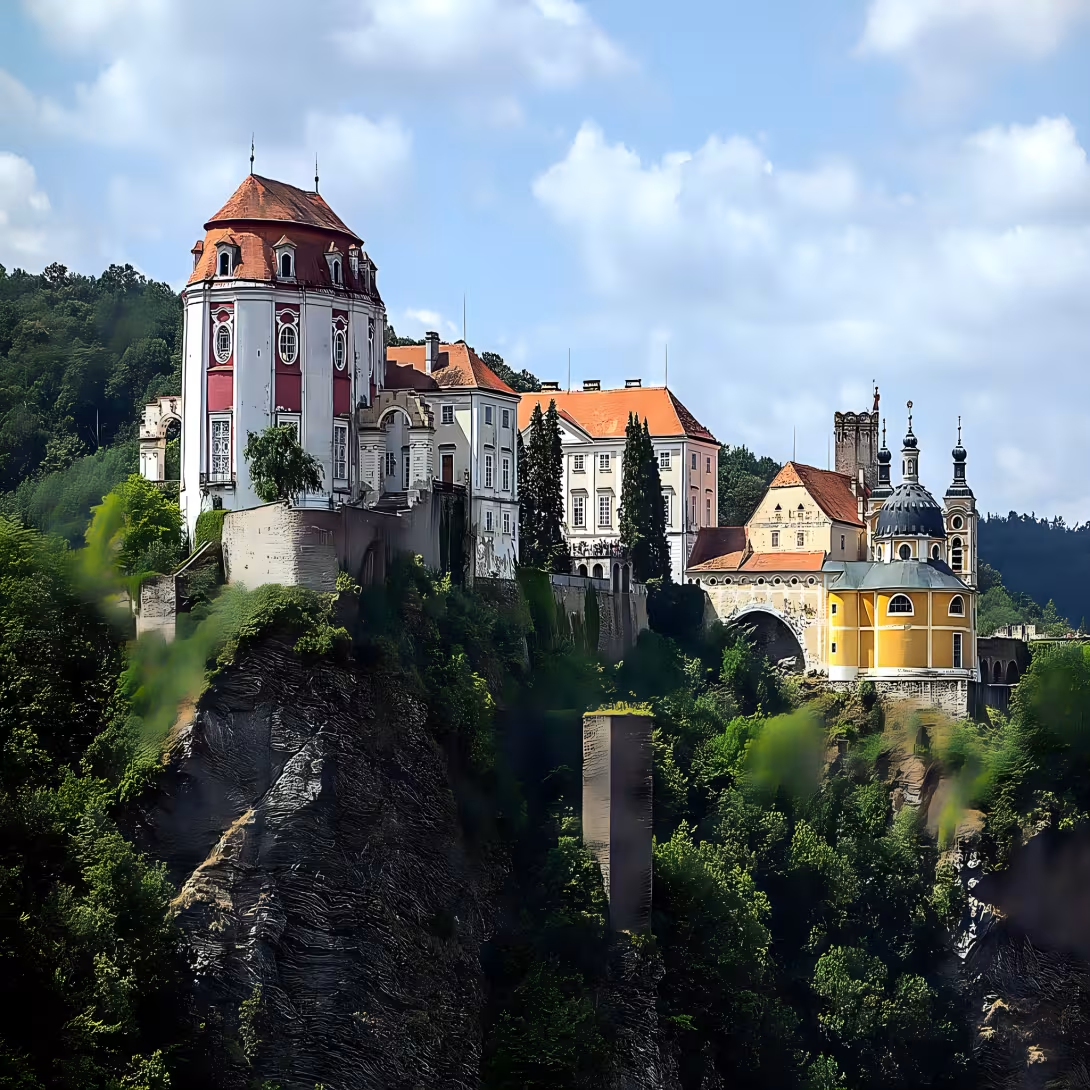
Vranov Chateau is located in Vranov nad Dyja and represents an interesting story of transformation. Originally formed as one of the elements of the Podyya defence system at the southern border of the country. The first mention of him comes from the Kosmo Chronicle, which was in 1100. It belonged to the Czech kings for a long time, until in 1323 Jan Lucemburský exchanged it with the surrounding villages for Tachov and Jindřech from Lipé.
In the fifteenth century, the chateau was seized by the mighty House of Lichtenburg. In the following century, different owners - Ditrichstein, Štrejnové from Švarcenava, Čertoríšský from Čertoroj or gentlemen from Mezíří from Lomnice - took turns. During the Thirty Years' War, the chateau had a heavy fate: the Swedes besieged and severely damaged it, the harsh days culminated in a catastrophic fire in 1665.
It is this disaster that has become a turning point. The then owners of Althannové decided to make a radical reconstruction. According to the plans of top architect Johann Bernhard Fischer from Erlach, a beautiful Baroque chateau was created. His crown became the Hall of Ancestors with impressive dimensions of twenty-four metres in length, fifteen in width and height. The walls decorated the statues of the ancestors of the Vranov masters and the dome decorated the fresco from Master Johann Michael Rottmajre. Another essential part was the Baroque Chapel of the Holy Trinity, built at the turn of the seventeenth and eighteenth centuries. From the original medieval chateau there were only walls and three towers.
The modifications continued. After 1724 the architect Anton Erhard Martinelli participated in the reconstruction. In the eighteenth century the chateau surroundings grew up a natural park with a number of small buildings. In the nineteenth century, two related Polish-born families of Mniszkové and Stadničtí became owners, who worked for the completion of landscape modifications started by previous owners.
During World War II, he became the owner of the German Baron Gebbard von der Wense-Mörse, the chateau was bought as an empire confiscate. After the end of the war, it belonged to a state whose property remains so far.
Today the chateau is managed by the National Heritage Institute and opened to the public. Visitors can enjoy the original Baroque interiors of the Hall of Ancestors and Chapel, browsing more than twenty rooms that document the way of living and culture at the end of the eighteenth and throughout the nineteenth century. _ Special attention should be paid to a collection of evidence of the famous Vranov stone factory, which influenced ceramic production in Czech countries and far beyond their borders.
Vranov Chateau has also become a very popular place for filmmakers. The films made in his premises include the comedy of Immortal Aunt, the shooting tale of the Emperor's new dress, the drama of Angel Face and the American action series XXx. Czech TV served as a set for several popular shows.
Historical milestones
- 1100
- First written proof of existence in the Kosmo Chronicle
- 1323
- Jan Lucemburský swapped Vranov for Tachov
- 1665
- Extensive chateau fire
Architectural development
The Baroque chateau was built from the original medieval chateau according to the plans of Johann Bernhard Fischer from Erlach. In the 18th century, there were other modifications involving Anton Erhard Martinelli. The Baroque Chapel of the Holy Trinity is also included.
Historical events
1323 Jan Lucemburský exchanged Vranov for Tachov, 1665 extensive fire of the chateau, after 1665 the start of the reconstruction into a Baroque chateau.
Owners
1323 Jan Lucemburský, 15th century Lichtenburg, 16th century various owners (Ditrichstejn, Strejnové, Certorovsky, Interrojský), after 1665 Althannové, 19th century Mniszkové and Stadničtí, after World War II state property.
Points of interest
- Vranov Chateau was originally part of a defense system on the southern border. - The first mention of him comes from the Kosmo Chronicle, covering the year 1100. In the 15th century, the Lichtenburg family took possession of the chateau. - During the Thirty Years' War, the chateau was besieged by the Swedes and damaged, resulting in a catastrophic fire in 1665. - After the fire, the chateau was rebuilt in Baroque style according to the plans of architect Johann Bernhard Fischer of Erlach.
Guide
This guide is narrated by a synthetic voice generated by artificial intelligence.
Show guide text
This text was created by artificial intelligence and has not been editorially reviewed. It may contain inaccuracies.
Vranov Castle over the Dyje River was created by transforming a medieval castle that was one of the elements of the defensive system along the Dyje River at the southern border of the country. The first written mention of it comes from Cosmas's Chronicle, dating to the year one thousand one hundred.
Initially it was royal property. In thirteen twenty-three, John of Luxembourg exchanged Vranov and the surrounding villages with Henry of Lipá for Tachov. In the fifteenth century, the wealthy and powerful Lichtenburg family acquired the estate. In the sixteenth century, various owners succeeded each other in rapid succession here, including the Dietrichsteins, the Štrejnové from Švarcenava, the Čertorejské from Čertoraje, or the Meziříčtí from Lomnice. During the Thirty Years War, the Swedes besieged and damaged the castle. Extensive destruction was completed by a great fire in sixteen sixty-five.
After the fire, the then-owners, the Althans, began reconstruction into a Baroque castle according to the plans of Johann Bernhard Fischer von Erlach. The architectural center became the Hall of Ancestors, measuring twenty-five by fifteen by fifteen meters. It is decorated with statues of the ancestors of the Althan lords and a fresco in the dome by Johann Michael Rottmayr. The castle also includes a Baroque chapel of the Holy Trinity from the turn of the seventeenth and eighteenth centuries. From the oldest period, only the castle walls and three towers have been preserved. After seventeen twenty-four, further building modifications followed, in which Anton Erhard Martinelli participated. In the eighteenth century, the area around the castle was also transformed into a natural park with a number of small structures.
In the nineteenth century, the Vranov estate, along with the castle, belonged to two related families of Polish origin, the Mniszeks and the Stadnickis. They, among other things, completed modifications to the landscape park, which the Althans had begun to develop. During the Second World War, the castle was purchased by German baron Gebhard von der Wense-Mörse as imperial confiscated property. After the war, the castle became state property. Today it is a national cultural monument under the management of the National Heritage Institute.
Besides the Baroque interiors of the Hall of Ancestors and the chapel, the exhibition includes over twenty rooms that illustrate life at Vranov at the end of the eighteenth century and throughout the nineteenth century. An important place in them is held by the famous Vranov pottery factory. For a long time, it influenced ceramic production both artistically and technologically in the Czech lands and beyond their borders.
Filmmakers also became fond of the castle. The fairy tales Immortal Auntie from nineteen ninety-three, The Emperor's New Clothes from nineteen ninety-four, and Angel Face from two thousand and two were filmed here. Scenes were also created here for the American film XXX and for Czech Television programs, for example Where the Princesses Lived or In Search of Anežka of Bohemia's Treasure.
Tips for visitors
The best time to visit the chateau Vranov nad Dyjí is in the spring or autumn season when the weather is pleasant and vegetation in the surroundings offers a beautiful view. In these months, Baroque architecture is particularly marked against the background of living green or revived leaf colours.
Parking can be found near the chateau, but we recommend the use of public transport. Local buses and trains can bring you to Vranov over Dyja. The current connection should be verified online or at a local tourist establishment.
When visiting the chateau, take with you clothes suitable for walking, because the terrain around the chateau is a little steep and in case of discomfort you should be well paralyzed. Also remember the sunglasses and enough drinking hazelnut.
Photography of the chateau offers several views, especially at dawn in the morning or evening, when the lighting is less powerful and the roof and window of the chateau emit a beautiful atmosphere. The best places for photos can be found at the top of the rock island or in the park along the creek.
In the vicinity of the chateau you can visit the rock island Podýjí, which offers a beautiful opportunity for walking and exploring local flora and fauna. For families with children, the park is an ideal place to explore, play in open spaces and enjoy the peace of nature.
Frequently asked questions
Can the monument be visited?
Yes. We verified the opening hours or admission on the official website (5. 9. 2026); you will find them in the visitor information on this page. Please double-check with the operator before you travel.
What are the opening hours and admission?
Details verified on the official website (5. 9. 2026) are listed in the visitor information on this page. Official website: http://www.zamek-vranov.cz/
Where is the monument?
Location: Zámecká 93, Vranov nad Dyjí, Jihomoravský kraj. The map on this page shows the exact spot.
Why is the monument protected?
It is listed in the Central List of Cultural Monuments of the Czech Republic as a national cultural monument (register no. 284).
For kids
Businesses nearby
Do you run a restaurant, accommodation, shop, museum, rental, wellness or other visitor service near this monument? Show yourself directly to the people heading to it — this is how they will see you in the app and on the web:
Natáčelo se zde
- Nesmrtelná teta (1993) film
Zdroj: Wikidata (vlastnost „místo natáčení“) · Všechna filmová místa
Events nearby
Zdroj akcí: otevřená data měst a obcí ČR (Národní katalog otevřených dat) a kalendář akcí Národního památkového ústavu.
Nearby
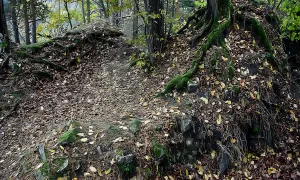
Podýjí, skalní ostrožna a upravený přírodní park.
Accommodation nearby
Themed route
1. Modified natural park - park. Ideal place for a quiet walk before visiting the main object. 2. Lock Vranov nad Dyjí - lock. Dominant area with amazing architecture and history. 3. Rock bay - rock formation. It offers dramatic views and fascinating natural shapes. 4. The environment - natural area. Beautiful landscape along the river, which is suitable for ending the trip.
Visualizations and artistic views


The visualisations are generated by artificial intelligence and serve as inspiration.
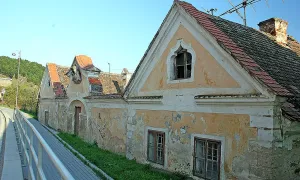
Photos from the area
Real photos taken near the monument


Zdroj a licence jsou uvedeny u každého snímku.
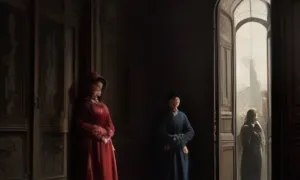
Atmosphere of the place
This atmospheric visualisation of the place and period was generated by artificial intelligence. It is not real footage of the location.
Tips from visitors
No tips yet. Be the first!
Log in and add your tip.
Sources and literature
Photos: Jerzy Strzelecki / CC BY-SA 3.0, rozlišení zvýšeno umělou inteligencí — Wikimedia Commons. The author and licence also appear when you hover over the image.
Faktickým podkladem tohoto textu byl článek na Wikipedii, jehož autory jsou přispěvatelé Wikipedie. Článek je dostupný pod licencí CC BY-SA 4.0.
Location on the map


Příběhy a pověsti
Legendy, pověsti a příběhy spjaté s touto památkou
Fotografie návštěvníků
Zatím žádné fotografie. Buďte první, kdo přidá fotografii z návštěvy!
Log in a přidejte svou fotografii nebo hodnoťte.
Za ověřenou návštěvu v aplikaci získáte víc bodů — poznáme podle GPS, že jste na místě.
Reviews and comments