



Vodní mlýn ve Stráži nad Ohří Water mill
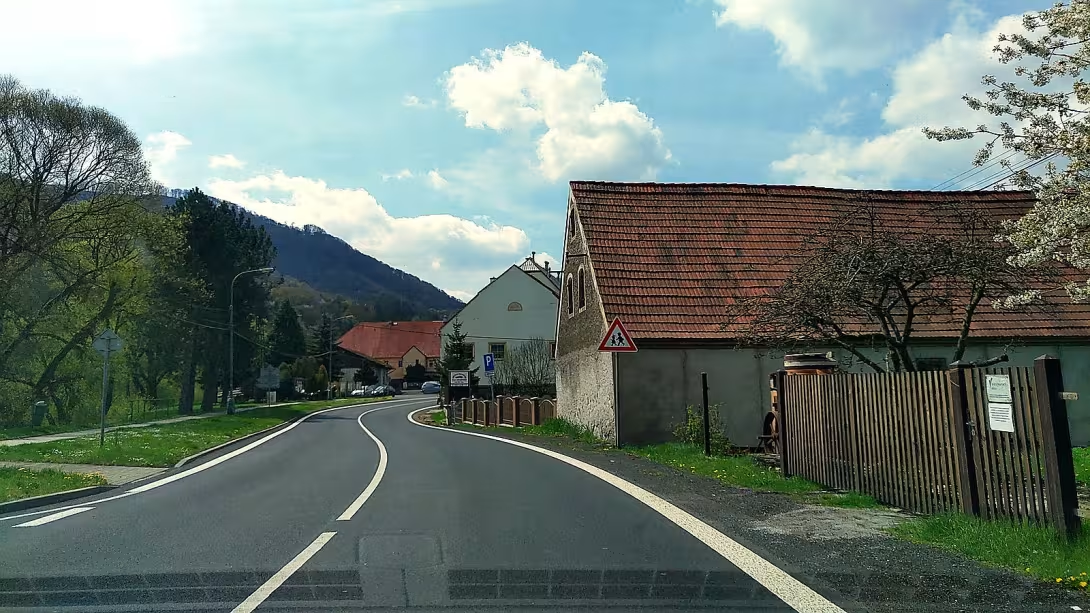
The Vodní mlýn ve Stráži nad Ohří, standing on the Rivers of Hell at its mouth in the Ohre, is one of the rare preserved technical monuments of the Karlovy Vary Region. Originally used to grind grain, later turned into a complex with power plant, bakery and modern turbine. As a result, it maintains the industrial revolution in Czech countries and represents a rare example of technological progress of the 19th and 20th centuries. Since 2019, it has been protected as a cultural monument, including economic objects, which illustrates its importance for regional history.
The first mention of the mill comes from a grunt book from 1858, where Václav and Klár Grundo are the first owners. At the time, there was already a brick building with an attachment above the drive, which confirms its functionality. The industrialization of the 19th century led to modernization of water mills, which was reflected here too. In 1877 the map record was confirmed by a large walled object supplemented by wooden buildings, typical of the mill complexes of that time.
Architecturally, the mill consists of a main brick building with a counter roof and economic ports such as a warehouse or a hoarder. From the preserved equipment it is worth mentioning the grinding equipment from the year 1930 by the companies Macháň (Pardubice) and Breifeld Daněk (Blansko). At that time the mill was equipped with a spiral Francis turbine which replaced the original water wheels. The output of the turbine, designed by Moravian-Silesian plant for machines Martinek & Calábek, has increased from the original 3.5 to 14 HP. In addition to the mill operation there was also a power plant and a bakery with new furnace, which shows the variety of use of the building.
The ownership fate of the mill changed significantly in the 20th century. In 1928 Emil Günther bought it, which began modernization in 1930. After World War II, in 1946, he switched to the National Administration and in 1951 he was nationalized. In 2018, it was purchased from the descendants of the original owner by a new private owner, who started the reconstruction and provided monument protection.
The installation of the Francis turbine in 1930 represents key technological progress. The mill thus served not only to grind grain, but also as a source of electricity and a local bakery. The water from the Rivers of Hell was effectively used to drive the turbine. Today the mill is a unique technical monument, which documents the development of Czech water mills from classical wheels to modern turbine systems.
The reconstruction is currently under way, which should return the mill to its original functionality and aesthetics. After completion it would become an interesting location for visitors interested in technical history and regional culture. The mill thus offers a unique opportunity to see how technological innovation has translated into everyday life. For lovers of history and technology, the visit to this building is not only educational, but also inspiring.
Historical milestones
- 1858
- First mention of the mill in the grunt book, owners of Václav and Klár Grundo.
- 1877
- A map record of a large brick object with an attachment above the drive and two wooden buildings.
- 1930
- Project and installation of Francis turbine (14 HP) and modernization of mill (power plant, bakery).
- 2019
- Opening of the monument protection mill and economic buildings.
Architectural development
The original mill was walled with the port above the drive, later extended with modern technical equipment. A torso of artistic composition was preserved, including a grinding machine from 1930. The building has a walled construction with a counter roof and economic objects (warehouses, shouchar).
Historical events
- 1858
- First written mention of the mill in the grunt book, owners of Václav and Klár Grundo.
- 1930
- Installation of spiral Francis turbine and modernization of equipment (power plant, bakery).
- 2019
- Opening of the monument protection and beginning of reconstruction.
Owners
- 1858
- 1928-1930
- 1946-1951
- 2018- yet
Points of interest
- The mill is one of the few preserved technical monuments in the Karlovy Vary Region, which preserve the track of the industrial revolution in Czech countries.
- The first written mention of the mill dates back to 1858, when Václav and Klár Grundo owned it.
- In 1877 the mill was already a large brick building with wooden harbours, typical of the 19th century mill complexes.
- In 1930 the mill was equipped with a spiral Francis turbine which replaced the original water wheels and increased power from 3.5 to 14 horsepower.
- Since 2019 the mill has been protected as a cultural monument, including all economic buildings.
Guide
Show guide text
This text was created by artificial intelligence and has not been editorially reviewed. It may contain inaccuracies.
Welcome to a unique historical monument. Right now, you're standing in front of an old water mill in the Guard over Ohří, located on the banks of the Rivers of Hell, where this water artery flows into the Ohře River. If you look in front of you, you see a large brick object with an attachment above the drive. Feel the strange atmosphere of a place where the murmur of flowing water is mixed with the history of human labour. The mill is today undergoing a thorough reconstruction and is strictly protected as a valuable cultural monument that reminds us of the old times and important technical development of our region.
Let's go back many decades in time and look at how this remarkable area was created. The first written mention of this mill appears in the so-called grunt book and dates back to eighteen hundred fifty-eight. At that time, the first documented owners, Václav and Klár Grund, operated here. Their names are linked to the beginnings of the documented history of this place, where people used the power of falling water to transform grain into flour. The mill served its original purpose of grinding grain, but with the advancing time and the advent of new technologies the whole operation changed significantly.
Now pay attention to the construction itself and the details you have right in front of you. According to historical map records from the year eighteen hundred seventy seven, the mill was already a large brick object. The main building included an annex above the drive as well as two wooden buildings which together formed a large economic unit. When you look at today's construction design, you see a witness to many building modifications. Stop for a moment and look at the solid walls and layout of the entire building near the creek, which has driven the mill wheels for centuries.
If we move a little bit further into the past, we'll encounter the greatest technological boom in this place. The year of the thousand nine hundred thirty brought to the mill a huge modernization. The installation of modern machines was then planned and successfully carried out. Among them was a spiral Francis turbine with 14 horsepower. Thanks to this modern technology the local operation was not limited to traditional grinding of grain. There was also a small power plant and bakery. The mill thus became a small industrial centre at the time, which used the power of flowing water to the maximum.
The interesting thing is that this water mill is an absolute exception. It is one of the few preserved technical monuments in the whole Karlovy Vary region, which, to date, maintain a tangible trace of the industrial revolution in Czech countries. Ask yourself how many places like this are left at our streams and rivers. Most of them took their place in modernising the landscape, but this mill resisted the tooth of time and lasted until today. The turning point for the new history became twenty-nine, when the official monument protection of the mill and associated economic objects began. This ensured the rescue of this unique species for future generations.
Thank you for spending your time at the water mill in the Guard of Fire. We hope you enjoyed our talk and that you are taking away the powerful experience of this fascinating encounter with the history of technology and human creativity. You can go around in peace for a while, see the flow of water in Hell's River and imagine how people worked here many years ago. We wish you a beautiful rest of the day and a happy journey to other discoveries.
Tips for visitors
The best time to visit the water mill in the Guard over Ohří is in spring or autumn. At these times nature is the most beautiful around, temperatures are pleasant and the place is not as crowded as in the summer months. You can thus enjoy a peaceful walk along the creek of Hell and observe how the water drives the historic mill mechanisms. In winter the visit is interesting thanks to the picturesque landscape covered with snow, but some parts of the area can be inaccessible due to snow or ice.
In these times the combination of nature and historical environment is the most impressive and pleasant to visit.
You can get to the monument by car or public transport. The location is well marked, but it is recommended to have a map or navigation with you, because some roads lead along the field paths.
The village is small, but the traffic connection is not always clear, so it is better to inform yourself in advance.
When visiting, wear comfortable shoes because the surroundings of the mill are usually uneven and lead along the pavements or paths through the fields. It is also appropriate to take an umbrella because it can be wet near the water. If you are planning to take pictures, take a battery with sufficient charge because some parts of the mill and surrounding area are in the shade and require longer exposure. Also bring sunscreen in spring or summer, because the sun can be strong.
Preparing for a visit will improve your stay and allow you to make better use of time on site.
The best places to take pictures are around Hell's creek, where the water flows to the Ohre, and the mill itself in the sunshine. It is recommended to take pictures in the morning or in the evening when the light is softer and the place looks the most beautiful. If you want to catch water movement, try to stand at the point where the stream flows into the river and use longer exposure. In the interior of the mill the light is often limited, so prepare in advance that you will have to set the cameras to lower ISO sensitivity.
The correct lighting and composition will improve the quality of your photos.
There are several interesting places in the vicinity of the Guard nad Ohří that are worth a visit to within 30 minutes' drive. You can visit other historical technical monuments in the village, which are often associated with water or agriculture. If you are interested in nature, go along the Ohre where you will find picturesque forests and meadows.
These places will complete your visit and provide more information about the region.
For families with children the visit to the mill is interesting thanks to the possibility of seeing how the historic water-powered mechanism works. Children can see how the grain was grinding and how the water drives the wheels. It is recommended to take some activity with you, such as drawing or painting, so that children can remain active during the visit. There is also plenty of room for games around the mill if you manage to find a suitable place out of the way. If you have young children, take some refreshments with you as there are not always enough options to buy food.
This activity will ensure that children enjoy their visit and learn something new.
Frequently asked questions
Can the monument be visited?
This is a technical monument. Some are open as exhibitions, others are out of use or on private land. We have not verified whether this one is accessible. According to the heritage register restoration is under way, so access may be restricted.
What are the opening hours and admission?
We have not verified the opening hours or admission. Current information is published by the operator.
Where is the monument?
Location: Stráž nad Ohří, Karlovarský kraj. The map on this page shows the exact spot.
Why is the monument protected?
It is listed in the Central List of Cultural Monuments of the Czech Republic as a cultural monument (register no. 1999997114).
Businesses nearby
Do you run a restaurant, accommodation, shop, museum, rental, wellness or other visitor service near this monument? Show yourself directly to the people heading to it — this is how they will see you in the app and on the web:
Nearby
- Přirozený tok vody, který napájí mlýn a vlévá se do Ohře. V okolí se nachází přírodní krajina s lesy a polními úhorami.
- Reka protékající v blízkosti mlýna, významná pro region Karlovy Vary.
- Obec s historickým jádrem, kde se nachází i další technické památky a rodinné domy z 19. století.
Accommodation nearby
Trips and activities nearby
Guided tours, tickets and activities nearby from GetYourGuide
Affiliate link: if you buy from the partner, we may receive a commission. The price for you does not change.
Search tours and activities →Themed route
Thematic cruise route from the Guard of Fire
1. Vodní mlýn ve Stráži nad Ohří (mill) Start your trip at the historic water mill, which is not only a technical monument, but also points to the heritage of the industrial era. The mill was powered by the natural flow of the Greek creek and served to grind the grain for the local population.
2. Hell stream (natural flow) Shortly after the visit to the mill, you can go to the Rivers of Hell, which is not only a source of energy for the mill, but also a natural element of the area. Enjoy a quiet moment along this stream and look at the wild flora and fauna around.
3. Bend (river) The following path leads to the Fire that flows near the Guard of the Fire. This river is not only an important natural element of the region of Karlovy Vary, but also a place for relaxation and baths in the summer months.
4. Historical Centre of the Guard of Ohří (urban area) After visiting the river, return to the historical core of the village where you can explore other technical monuments and family houses from the 19th century. This section of the Watch over Ohří offers a view of the architectural development of the region and its history.
5. Forest area around the Rivers of Hell (natural landscape) The roadblock takes place in forest areas around the Rivers of Hell. These places offer an opportunity for a short walk or picnic, where you can enjoy the quiet surroundings and views of the field eels.
This route offers a combination of historical and natural experiences in the area of the Guard of Ohří, which is ideal for those who want to know both technical monuments and beautiful landscapes.
Seasonal recommendations
Spring: In the spring season, the water on the Ohře is often the most and this can mean that the mill works with full force, which adds to the atmosphere. The flowers around the surrounding fields are beginning to bloom, which gives the impression alive and fresh green. We recommend visiting the mill in early afternoons, when the temperate temperature is and natural lighting is the most beautiful. Clothes should be comfortable and suitable for mild cooling - a short coat or sweater on the back can be easily added to the backpack.
Summer: In the summer, the area is full of tourists and locals enjoying rural beauty. The sun lights everything around and gives the natural colors a wonderful shine. The best time to visit is early in the morning or later in the evening, when the crowd decreases and the temperature is milder. Clothes should be light and light - ties with long sleeves and the umbrella are the basic equipment for pleasant walking around the monument.
Autumn: In autumn, leaves in trees change colour, giving the surroundings of the mill an unforgettable gold and red nuances. The cooling of the air brings a calm atmosphere that is ideal for relaxation and silence in beautiful nature. We recommend visiting the monument during the afternoon hours, when the temperature becomes warmer. Clothes should be warm - clips and long gloves are useful for protection against cold air.
Winter: In the winter months, the surroundings of the mill are covered with snow, giving the area a unique and quiet character. The mill can be closed at this time due to reconstruction or limited operation, so it is good to inform in advance. If a visit is possible, we recommend visiting the mill in the early afternoon when the sun is on the side and illuminates the snow landscape. Clothes should be warm - toasty denim, long-sleeved shirts and protective shoes are necessary for comfortable walking in cold weather.
Visualizations and artistic views


The visualisations are generated by artificial intelligence and serve as inspiration.
Photos from the area
Real photos taken near the monument


Zdroj a licence jsou uvedeny u každého snímku.
Tips from visitors
No tips yet. Be the first!
Log in and add your tip.
Sources and literature
Faktickým podkladem tohoto textu byl článek na Wikipedii, jehož autory jsou přispěvatelé Wikipedie. Článek je dostupný pod licencí CC BY-SA 4.0.
Location on the map
More monuments – Stráž nad Ohří
Show all in the municipality
Příběhy a pověsti
Legendy, pověsti a příběhy spjaté s touto památkou

Fotografie návštěvníků
Zatím žádné fotografie. Buďte první, kdo přidá fotografii z návštěvy!
Log in a přidejte svou fotografii nebo hodnoťte.
Za ověřenou návštěvu v aplikaci získáte víc bodů — poznáme podle GPS, že jste na místě.
Reviews and comments