






Volfštejn Ruin
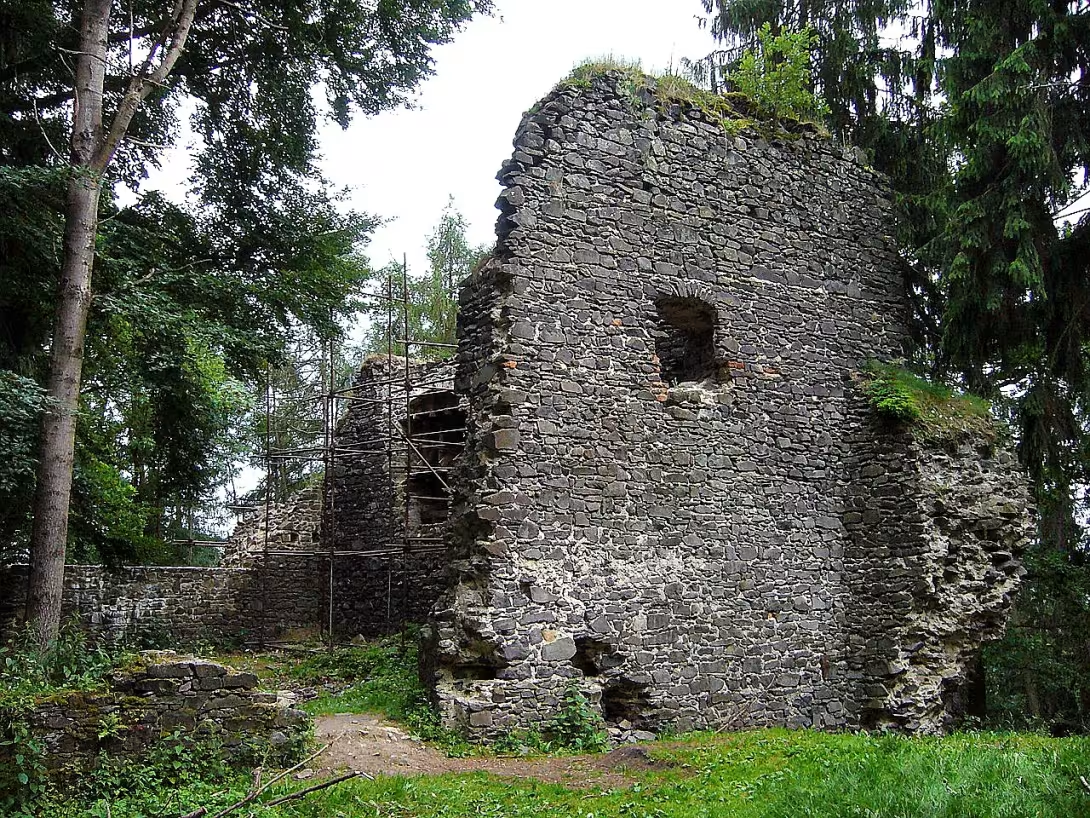
Volfštejn is a medieval castle ruin near Černošín in the Plzeňský kraj region of the Czech Republic. Dating back to the early 13th century, it features an iconic round bergfrit with a late Romanesque portal, highlighting its architectural significance from that era. It served as the seat for the Lords of Wolfsstein until their relocation in 1460 and is now recognized as a cultural monument protected since 1964.
The origins of Volfštejn trace back to the early 13th century during a period of consolidation under the Přemyslid dynasty. The castle's earliest documented mention dates to 1316, when Beneda z Volfštejna brought a case to court concerning his father Ctibor’s murder. Throughout its history, it remained in the possession of the Lords of Wolfsstein, who were related to other noble families such as those from Svojšína and Třebele. The castle's architectural style is characterized by its bergfrit-type design with minimal significant alterations over time. Its main structure includes a round bergfrit, a two-story palace ruin, and smaller buildings. Dendrological research indicates that the timber used in constructing the large tower was felled between 1260-1262.
Ownership of Volfštejn changed hands within the family lineage, with notable figures including Beneda z Volfštejna (1316), Oldřich z Volfštejna (1396), and Jan z Volfštejna, who later became known as Jan z Třebele after 1460. During the Hussite Wars in the early 15th century, Vilém z Volfštejna supported the Catholic side and received estates as collateral from Emperor Sigismund.
Key events at Volfštejn include Beneda's court case in 1316 and its strategic role during the Hussite Wars. Despite being described as abandoned by 1527, it was involved in an unspecified meeting between brothers Jiří and Šebestián z Banbachu that year.
Today, Volfštejn stands as a testament to medieval architecture and history, accessible via a yellow-marked tourist trail from Černošín to Třebele. Its preservation offers visitors a glimpse into the past, showcasing the enduring legacy of its noble inhabitants and their architectural endeavors. The site's historical significance and picturesque ruins make it a worthwhile destination for those interested in exploring Czech heritage.
Then and now
Drag the slider to compare how the landmark may have looked when it was built with the view today.
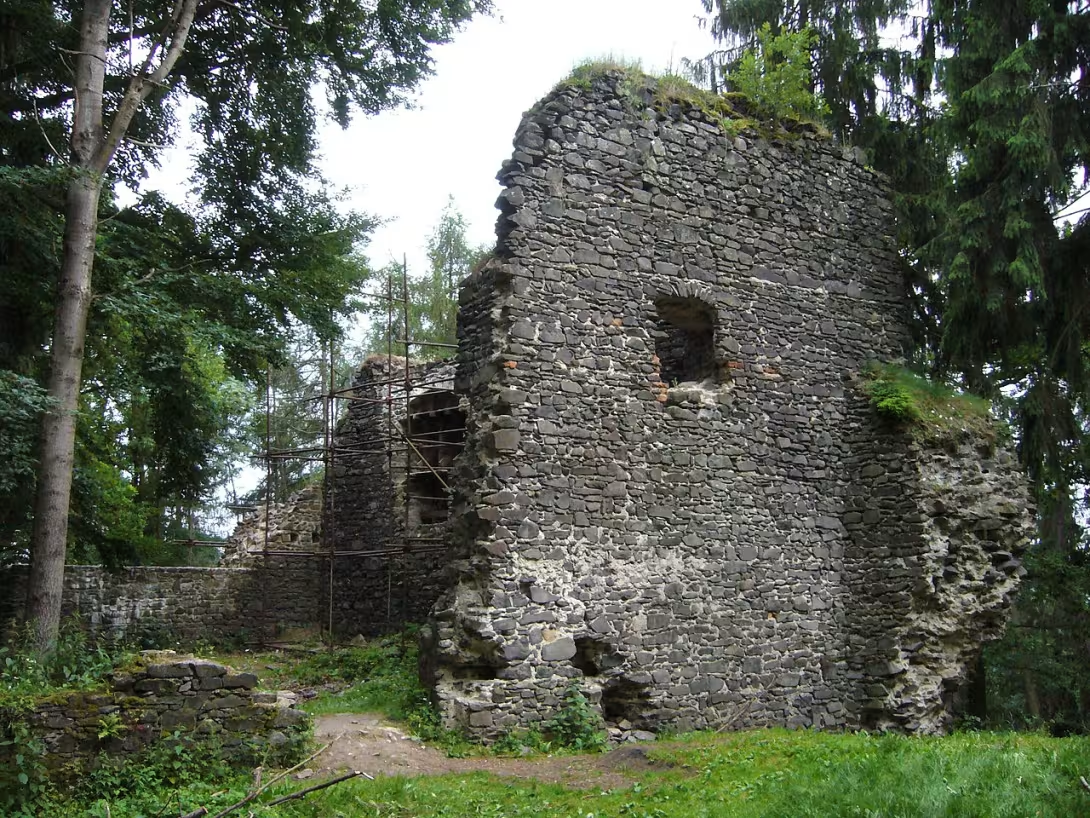

The historical appearance on the left is an AI-generated visualisation and serves as inspiration only.
Historical milestones
- 1316
- Beneda z Volfštejna brought a case to court for his father's murder.
- 1396
- Oldřich z Volfštejna became the owner and exercised patronage rights over Černošínský church.
Architectural development
Wolfsstein Castle is characterized by its bergfrit-type design with minimal significant alterations over time. The main structure includes a round bergfrit, a two-story palace ruin, and other smaller buildings. Dendrological research suggests that the timber used in the construction of the large tower was felled between 1260-1262.
Historical events
In 1316, Beneda z Volfštejna brought a case to the regional court against Dluhomil and Bedřich z Brodu for the murder of his father Ctibor z Volfštejna.
During the Hussite Wars in the early 15th century, Vilém z Volfštejna supported the Catholic side and received estates as collateral from Emperor Sigismund.
Owners
The castle was initially owned by the Lords of Wolfsstein, with notable owners including Beneda z Volfštejna (1316), Oldřich z Volfštejna (1396), and Jan z Volfštejna who later became known as Jan z Třebele after 1460.
Points of interest
– Despite its early mention in 1316 due to a murder case, the castle's timber construction dates back even earlier between 1260-1262, indicating it was already significant before being formally recorded.
– The bergfrit of Volfštejn is unique for its round shape and late Romanesque portal, showcasing an architectural style that remained largely unchanged over centuries, reflecting both defensive needs and aesthetic preferences of the era.
– During the Hussite Wars, Vilém z Volfštejna aligned with the Catholic side, a decision rewarded by Emperor Sigismund with estates as collateral, highlighting the castle's strategic importance in religious conflicts of the time.
– The transition from being known as Lords of Wolfsstein to Lords of Třebele after 1460 signifies not only a change in name but also reflects shifting power dynamics and territorial control within noble families of the region.
– In 1527, Volfštejn was described as abandoned yet still hosted a significant meeting between brothers Jiří and Šebestián z Banbachu, suggesting its enduring symbolic importance even after losing active occupation.
Guide
This guide is narrated by a synthetic voice generated by artificial intelligence.
Show guide text
This text was created by artificial intelligence and has not been editorially reviewed. It may contain inaccuracies.
The ruins of Volfštejn Castle lie less than two kilometers southwest of Černošín in the Tachov region. You can find them on the southeastern spur of Vlčí hora, in the easternmost part of the cadastral area of the Třebel municipality. Since 1964, it has been protected as a cultural monument.
The castle was most likely founded in the first half of the thirteenth century. From that time, only the round main tower, the so-called bergfried, can be reliably documented. Its late Romanesque architecture is evidenced by a small entrance portal. Research on wood from scaffolding found during repairs to the tower showed that the ash trees used for construction were felled between 1260 and 1262.
Throughout its existence, Volfštejn was the seat of the lords of Volfštejn. They were relatives of the lords of Svojšín and Třebel. Their coat of arms featured horizontal stripes and their emblem was a wolf's head, or sometimes an entire wolf. The first written mention of the castle dates from 1316. At that time, the owner Beneda of Volfštejn sued at the territorial court Dluhomil and Bedřich of Brody for murdering his father Ctibor.
In the second half of the fourteenth century, the brothers Beneda and Ctibor divided the castle between them. At the beginning of the fifteenth century, it belonged to the brothers Vilém and Beneda. In 1406, they concluded peace with the Bavarian dukes. Later they divided their property, Beneda acquired Prostiboř and Vilém kept Volfštejn. During the Hussite Wars, Vilém sided with the Catholics and received a number of estates in pledge from Emperor Sigismund.
A turning point came with Vilém's son Jan. In 1460, he acquired the nearby Třebel Castle in pledge. This was never redeemed, so it remained with the lords of Volfštejn. The family moved to Třebel and from 1461 Jan began using the surname of Třebel. Volfštejn became part of the Třebel domain. According to historian Tomáš Durdík, the castle was destroyed at the end of 1470 during battles between the Zelenohora league and King Jiří of Poděbrady. By 1527, it was already listed as abandoned.
Volfštejn was never significantly rebuilt, so its remains still reflect its medieval form. It has an almost oval floor plan. At the front stands a round tower with a flat ceiling, and one of its floors was heated by a fireplace. Opposite stood a palace, whose ruins reach the height of two stories. The masonry of the palace contains stone blocks that were reused, so the palace may date from a later period. Beneath the tower by the eastern wall, a two-room building survives in fragmentary form, and opposite it stood a square tower-like structure.
Tips for visitors
The best time to visit Wolfsstein Castle is during late spring or early autumn when the weather is mild, and the surrounding landscape of Třebel is lush with greenery. These seasons offer pleasant temperatures for exploring the ruins without the summer crowds or winter chill. Morning visits are ideal as they provide softer light that enhances the texture of the castle's stonework, making it perfect for photography enthusiasts.
Public transportation options may include buses from nearby towns such as Černošín; however, specific routes and schedules should be checked in advance using a travel planner or the official website of the Plzeňský kraj region. Walking trails are available for those who prefer to explore on foot.
When visiting Wolfsstein Castle, it's recommended to bring comfortable walking shoes as there may be uneven terrain around the ruins. A hat and sunscreen are advisable due to potential exposure to the sun, especially in peak seasons. Don't forget a water bottle to stay hydrated during your exploration. For those interested in photography, a camera with a zoom lens can help capture detailed shots of the castle's features.
Photography at Wolfsstein Castle is best from the southeastern spur where you can get panoramic views of the ruins and surrounding hills. The golden hour—shortly after sunrise or before sunset—offers warm lighting that highlights the textures and shapes of the medieval structure. Be mindful of other visitors to ensure everyone has a chance to enjoy the scenery.
For families with children, Wolfsstein Castle offers an adventurous experience as they can explore the ruins at their own pace. The natural surroundings of Třebel also offer opportunities for picnics and outdoor activities.
Frequently asked questions
Can the monument be visited?
This is a ruin. Such sites are often freely accessible, but some can only be visited with a guide or are closed for safety reasons. We have not verified the current situation – take care and respect any restrictions.
Where is the monument?
Location: Třebel, Plzeňský kraj. The map on this page shows the exact spot.
Why is the monument protected?
It is listed in the Central List of Cultural Monuments of the Czech Republic as a cultural monument (register no. 24474/4-1730).
Businesses nearby
Do you run a restaurant, accommodation, shop, museum, rental, wellness or other visitor service near this monument? Show yourself directly to the people heading to it — this is how they will see you in the app and on the web:
Events nearby
Zdroj akcí: otevřená data měst a obcí ČR (Národní katalog otevřených dat) a kalendář akcí Národního památkového ústavu.
Nearby
The ruins are situated on the southeastern spur of Vlčí hora within the Třebel cadastral area. The landscape is characterized by its proximity to Černošín and other natural features in the region.
Accommodation nearby
Themed route
Tematická výletní trasa kolem zříceniny Volfštejn
1. Zřícenina Volfštejn - Typ: Historická památka, zřícenina hradu - Proč stojí za návštěvu: Zajímavým místem pro milovníky historie je zřícenina Volfštejn, umístěná na jihozápadním úbočí Vlčí hory. Navzdory svému rozsáhlému stavu zachovala stopy minulosti a nabízí pohledy do kraje, který byl kdysi důležitou strategickou pozicí.
2. Vlčí hora - Typ: Horský vrchol - Proč stojí za návštěvu: Vlčí hora je nejvyšší významnou topografickou výškou v okolí, která poskytuje úžasné pohledy na okolní krajinu. Je ideálním místem pro krátké procházky a zastavení se k oddechu při návštěvě zříceniny.
3. Okolí obce Třebel - Typ: Krajina, vesnice - Proč stojí za návštěvu: Obec Třebel nabízí klidnou a přirozenou atmosféru s malebnými venkovskými pohledy. Je to ideální místo pro relaxaci a prozkoumání místního života, což dodává cestě autentičtější charakter.
4. Černošín - Typ: Městské centrum - Proč stojí za návštěvu: Černošín je blízkým městem, které lze navštívit po prohlídce zříceniny. Nabízí historickou architekturu a příležitost k odpočinku v klidném prostředí, což je ideální kontrast ke starobylým ruinám.
Tato trasa nabízí kombinaci historie, přírody a místního života, což ji činí ideální pro celodenní výlet.
Seasonal recommendations
Spring: Visiting Volfštejn during spring offers a magical experience as the ruins are bathed in soft, natural light that enhances their historical charm. The surrounding landscape is vibrant with blooming flowers and fresh greenery, creating an enchanting atmosphere perfect for photography or leisurely exploration. However, be prepared for occasional rain showers typical of this season, so bringing waterproof footwear and a jacket is advisable. Spring often sees fewer visitors compared to summer, making it an ideal time for those seeking a quieter experience.
Summer: Summer at Volfštejn is characterized by long daylight hours that illuminate the ruins beautifully, providing excellent conditions for exploration and photography. The warm weather invites nature lovers to enjoy hiking trails around the area, surrounded by lush greenery and vibrant wildflowers. However, summer also brings larger crowds due to its popularity as a tourist destination, so it's wise to arrive early in the day to avoid the midday heat and congestion. Light clothing and sun protection are essential for comfort during your visit.
Autumn: Autumn transforms Volfštejn into a picturesque scene with warm hues of red, orange, and gold enveloping the ruins. The cooler temperatures make it an ideal time for walking tours without the summer crowds, offering a serene experience amidst nature's beauty. As days shorten, planning your visit during daylight hours is crucial to fully appreciate the site. Layered clothing will help you stay comfortable as temperatures can vary throughout the day.
Winter: Winter at Volfštejn presents a unique and atmospheric setting with snow-covered ruins that create a hauntingly beautiful landscape. The shorter days mean visits should be planned around available daylight, often making early morning tours most rewarding. While fewer visitors flock to the site during this season, it's important to dress warmly in insulated clothing and sturdy boots for navigating potentially icy paths. Despite its charm, be mindful of limited access or closures due to weather conditions.
Visualizations and artistic views


The visualisations are generated by artificial intelligence and serve as inspiration.
Photos from the area
Real photos taken near the monument


Zdroj a licence jsou uvedeny u každého snímku.
Tips from visitors
No tips yet. Be the first!
Log in and add your tip.
Sources and literature
Photos: Petr Kinšt / CC BY-SA 4.0 — Wikimedia Commons. The author and licence also appear when you hover over the image.
Faktickým podkladem tohoto textu byl článek na Wikipedii, jehož autory jsou přispěvatelé Wikipedie. Článek je dostupný pod licencí CC BY-SA 4.0.
Location on the map

Příběhy a pověsti
Legendy, pověsti a příběhy spjaté s touto památkou
Fotografie návštěvníků
Zatím žádné fotografie. Buďte první, kdo přidá fotografii z návštěvy!
Log in a přidejte svou fotografii nebo hodnoťte.
Za ověřenou návštěvu v aplikaci získáte víc bodů — poznáme podle GPS, že jste na místě.
Reviews and comments