



Vysoká pec v Šindelové Other
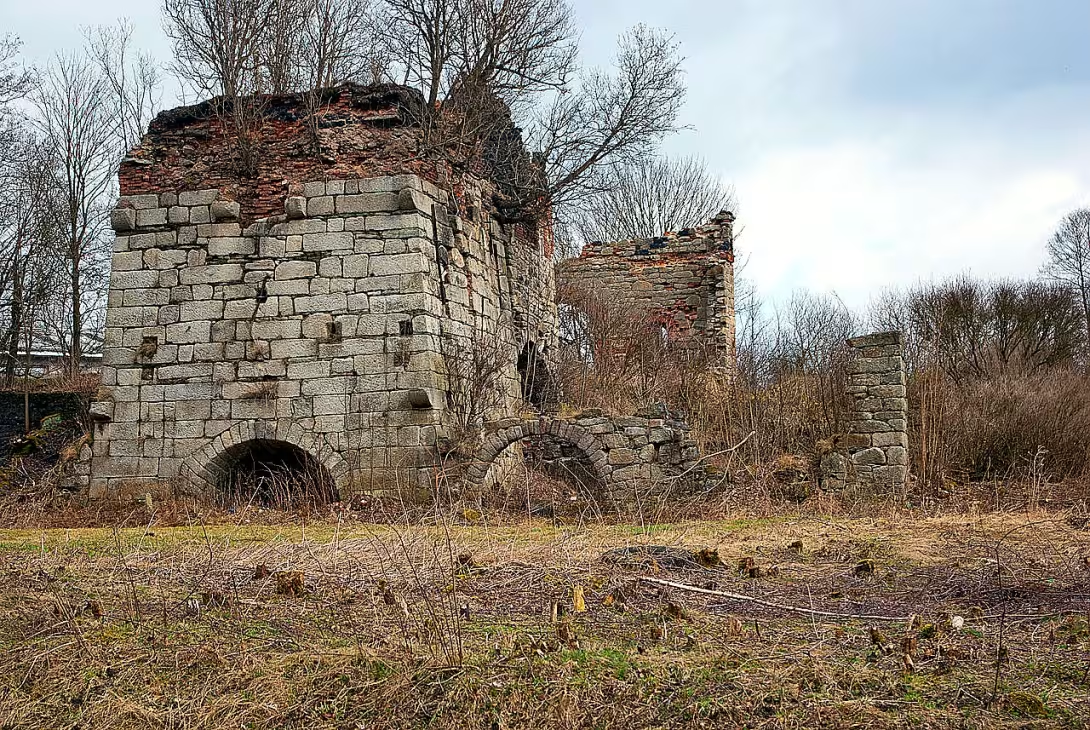
The wooden high furnace in Šindelová is a technical monument located in the Krušné Mountains near the western edge of the village Šindelová in the district of Sokolov in the Karlovy Vary Region. Its history dates back to the 14th century, when iron ores began to be extracted and processed in the region. Iron ore has benefited from the extinct settlements at the present-day Rotava, Shindel, Vysoké Pec and Tis near Nedek.
Iron ore has proven to have benefited and processed since the beginning of agricultural and mining colonization in the 13th century for the reign of King Václav I. The monuments to the beginnings of this industry have disappeared as new technologies have been promoted over time. The evidence of older technological facilities either disappeared completely or underwent major reconstructions. One of the few standing technical monuments associated with the metallurgical production is the wood-fired blast furnace in Shindelová.
The monument is comparable, for example, with an extremely well-preserved wood-burning furnace in Jins, Brdy, or with a torsion of the old smelter at Adam's in Blanensk. The first mention of the iron hams in Shindelová is from the middle of the 14th century and is related to the acquisition of the right to read-out by Plk of Plkištejn, then owner of the Jindrichovik estate. However, the expansion of iron production occurred only after the downturn in non-ferrous metal ore mining in the late 16th century. This was probably related to the high consumption of wood for metallurgical purposes, the supply of which was previously primarily directed towards the extraction and processing of precious metal ores, especially silver.
In Šindelová, the expansion of the iron production is linked to the arrival of Nostice, into whose hands the estate was transferred in 1627. Nestice's railway plants, which included operations in Shindelová and Rotava, were in operation until 1909 when the connection with Petzold's ironworks in Nedek took place. In 1839 a metal mill was built in the furnaces. Another modernization of the huti complex took place in the years 1858-1859, when the tall furnace with adjacent buildings acquired a new architectural character.
The economic crisis in the 1970s also reached Shindel. The wood-based blast furnace for the production of pig iron was stopped in 1873 for unprofitability, but other plants remained there, e.g. the mill of fine sheet metal and foundry. The production of sheet metal in particular proved to be viable and thus the rolling mills were modernised at the end of the 19th century. During the First World War, they produced shell shells, tin cans and other war materials. During the First World War, the company was the only one in the monarchy who produced a tin tin from which all Austrian cans were made.
The crisis in the 1930s ended production of most products, only the metal mill continued. In Shindelová there was also a metal-metal-plate hamr and in the first half of the 18th century it was started with tin-tin. The beginnings of this technology are associated with Krušnohoří. Further expansion of operation took place in the 2nd half of the 18th century, when the operation of the wooden blast furnace, probably the second one, was documented by 1757, and the subsequent construction of another hamrus on sheet metal.
The main important events in the history of the blast furnace in Šindelová are linked to the year 1818 when a new blast furnace was built, whose torso was preserved. The newly built blast furnace contained 120 centrires (approximately 7,400 kg) of melting. The furnace produced 40 centimeters (approximately 2,450 kg) of pig iron daily. The nearby second kiln was replaced by tin and accompanying plants. The oven itself had an outer shell made of granite blocks, drawn by steel bolts. Its height was approximately 11 m In the building of the high kiln was built a blower, a freight elevator and a hill, all powered by a water wheel.
This wheel was also driven by a standing step on the slag. The water was brought in by the drive. The building of the foundry was connected to the body of the furnace, where there were casting bagels of pig iron and finished products such as cast iron stove. The massive stone crackers in the outer wall of the kiln carried a wooden cross of the foundry. At the construction sites in the surrounding area, we can often meet cast slag bricks.
The blast furnace is 11 metres high in the chamber, embossed from stone blocks and on top of bricks and slag blocks. In the front, there is a niche in the oven, which was originally followed by the extension of the foundry. There's a second niche on the right side with an exhaust with air blower. Behind the kiln is a torso of the building preparation of the bet, built using the same material as the own kiln. Between the two constructions there was a drive with a water wheel to drive the machine parts of the rod, over the drive there is a bridge for weighing the furnace.
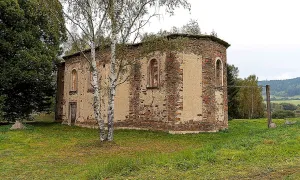
The monument has been protected as a real-estate cultural monument of the Czech Republic since 1963. Since 1939, the operation was restored for war purposes, production stopped until 16 June 1945. After World War II, production was no longer restored and production facilities were dismantled, which meant the end of the local hardware tradition. By the time the whole area was declared a cultural monument, it was used by the National Enterprise State Farm, the Lower Niva plant. The facility served as a hay and warehouse. After the collapse of the part of the building was carried out a construction focus, which captures the last phase of technical but also architectural condition. During the completion of the measuring work, the owner was compared to the ground by a large part of the complex. It only preserved the torso-exposed high kilns from granite blocks. Almost nothing remains of the adjacent ports. Only the remains of the machinery room and the building where the water wheel was originally located and a short section of the drive are preserved on the sides of the furnace. Only circumferential masonry to the crown level was preserved from the building.
Today, the wood-burning furnace in Šindelová is an important technical monument, which reminds of the difficult work of the former inhabitants of the Krušné hora. Its history is linked to the expansion of iron production in the region, which began in the middle of the 14th century. The monument is protected as a real cultural monument of the Czech Republic and is worth visiting for its unique architectural solution and historical importance.
Historical milestones
- 13th century
- the start of mining and processing of iron ore in the region for the reign of Václav I.
- 1627
- the arrival of the Nostic and the subsequent expansion of the iron production
- 1818
- construction of a new high furnace whose torso is preserved
- 1873
- stopping the production of pig iron in the blast furnace
- 1963
- announcement of the building by a cultural monument
Architectural development
The outer casing of the furnace was built from granite blocks drawn by steel bolts. In 1858-1859 the huti complex underwent modernization, which gave it a new architectural character. The furnace was approximately 11 metres high and was equipped with a blower, a freight lift and a climb.
Historical events
1818: construction of a new high furnace, 1873: halting the operation of a high furnace for non-entry, 1909: connection with Petzold's iron plants
Owners
Plik z Plikenštejnu (14th century), Nosticové (from 1627), Petzold (after 1909)
Points of interest
- Wooden high furnace in Šindelová is a technical monument located in the Krušné Mountains near the western edge of the village Šindelová in the district of Sokolov in the Karlovy Vary Region. - Its history dates back to the 14th century, when iron ore was being extracted and processed in the region. - Iron ore was mining the extinct mansions of today's Rotava, Shindel, High Pice and Tis. - The monument is comparable, for example, to the extremely well-preserved wood-carbon blast furnace in Jins in Brdy or to the torsion of the old smelter at Adam's in Blanensk. - The first mention of the iron hams in Shindelová are from the mid-14th century and are related to the acquisition of the right to read-out by Plk of Plkištejn, then owner of the Jindrichovik estate. - However, the expansion of the iron production occurred after the downturn in the mining of non-ferrous metals ore in the late 16th century. - It was probably related to the high consumption of wood for metallurgical purposes, the supply of which was previously primarily directed towards mining and processing the ore of precious metals, especially silver. - In Shindel, the expansion of the iron production is linked to the arrival of the Nostic, into whose hands the estate was transferred in 1627. - Nestice railway plants which included operations in Shindel and Rotava were in operation until 1909 when the connection to Petzold's ironworks in Nedek took place. In 1839, a metal mill was built in the furnaces. - Another modernization of the huti complex took place in the years 1858-1859, when the high furnace with adjacent buildings gained new architectural character. The economic crisis in the 1970s also reached Shindel. - The wood-fired high iron furnace was stopped in 1873 because of unavailability, but other plants remained there, e.g. fine sheet metal mill and foundry. - In particular, the production of sheet metal proved viable, so the rolling mills were modernised at the end of the 19th century. - During the First World War, they produced shell shells, tin cans and other war materials. - In the First World War, the company was the only one in the monarchy who produced a tin tin from which all the Austrian cans were made. - The crisis in the 1930s ended production of most products, only the metal mill continued. - In Shindelová there was also a metal-plate hamr and in the first half of the 18th century it was started with tin tin. - The beginnings of this technology are linked to Krušnohoří. - Another expansion of operation occurred in the 2nd half of the 18th century, when
Guide
Show guide text
This text was created by artificial intelligence and has not been editorially reviewed. It may contain inaccuracies.
Welcome to the site with rich history and technical importance - the wood-fired blast furnace in Shindel! You're standing in front of an amount that boasts its granite blocks and a water wheel that once fueled its operation. This object is the embodiment of the industrial spirit of the Ernest Mountains and tells the story of the conquest of iron.
Let's look at the origin of this monument. The history of iron ore mining in this region dates back to the 13th century, when the reign of Václav I. began to develop industrial activities. But the real boom came with the arrival of the Nostic family in 1627, who founded extensive ironworks here. In 1818 a new tall furnace was built, whose torso was preserved until today.
Look up at these impressive granite blocks that form the kiln structure. These materials not only provide strength, but also testify to the artistic and technical skills of the then builders. Note also the water wheel - this device was a key element for driving the furnace and ensuring its operation.
The Nostic family is an important historical figure associated with this location. Their decision to expand the ferrous activities in the region had a major impact on the industrial development of the region.
The interesting thing about this monument is its long history, which dates back to the 14th century. Although the production of pig iron in the blast furnace was stopped in 1873, the building has retained its original character and is today protected as a real cultural monument of the Czech Republic.
I recommend that you look around and explore other parts of this historic site to be aware of the extent of the former hardware activity. And now, with a hint of past times in our heads, we can say goodbye and hope that this visit has enriched your knowledge of the history of our region.
Frequently asked questions
Can the monument be visited?
This is a ruin. Such sites are often freely accessible, but some can only be visited with a guide or are closed for safety reasons. We have not verified the current situation – take care and respect any restrictions.
Where is the monument?
Location: Šindelová, Karlovarský kraj. The map on this page shows the exact spot.
Why is the monument protected?
It is listed in the Central List of Cultural Monuments of the Czech Republic as a cultural monument (register no. 1000130960).
Businesses nearby
Do you run a restaurant, accommodation, shop, museum, rental, wellness or other visitor service near this monument? Show yourself directly to the people heading to it — this is how they will see you in the app and on the web:
Nearby
Krušné hory, obec Šindelová, okolí Rotavy a Nejdku.
Accommodation nearby
Trips and activities nearby
Guided tours, tickets and activities nearby from GetYourGuide
Affiliate link: if you buy from the partner, we may receive a commission. The price for you does not change.
Search tours and activities →Seasonal recommendations
In spring, there is a rising nature and a fresh green that slowly covers stone walls. The atmosphere is full of hope and fine light. We recommend moisture-resistant shoes because the roads can be muddy after melting snow. The best place to visit is in the morning when the air is the cleanest.
The summer season brings thick shade of trees and intense colors of surrounding countryside. Ruina works in bright sun monumentally and mysteriously at the same time. Due to the increased attendance in the high season, you better come early in the morning. Don't forget the light clothes and enough drinking water to keep you warm.
Autumn is a time of colorful leaves and fog that gives the ruin a melancholy touch. Lighting is soft and golden in this period, which is ideal for photography. Due to the variable weather, choose layered clothes and visit the memory rather in the afternoon.
In winter, the monument turns into a quiet and snowy place, where the grey stone sharply contrasts with the white landscape. There is peace and a freezing purity. It's essential to have warm shoes and clothes so you don't freeze. Count on a shorter day and tread carefully on possible frosts.
Visualizations and artistic views


The visualisations are generated by artificial intelligence and serve as inspiration.
Photos from the area
Real photos taken near the monument

Zdroj a licence jsou uvedeny u každého snímku.
Tips from visitors
No tips yet. Be the first!
Log in and add your tip.
Sources and literature
Photos: Lubor Ferenc / CC BY-SA 3.0 — Wikimedia Commons. The author and licence also appear when you hover over the image.
Faktickým podkladem tohoto textu byl článek na Wikipedii, jehož autory jsou přispěvatelé Wikipedie. Článek je dostupný pod licencí CC BY-SA 4.0.
Location on the map
More monuments – Šindelová
Show all in the municipality
Příběhy a pověsti
Legendy, pověsti a příběhy spjaté s touto památkou

Fotografie návštěvníků
Zatím žádné fotografie. Buďte první, kdo přidá fotografii z návštěvy!
Log in a přidejte svou fotografii nebo hodnoťte.
Za ověřenou návštěvu v aplikaci získáte víc bodů — poznáme podle GPS, že jste na místě.
Reviews and comments