






Zámek Čekanice Chateau
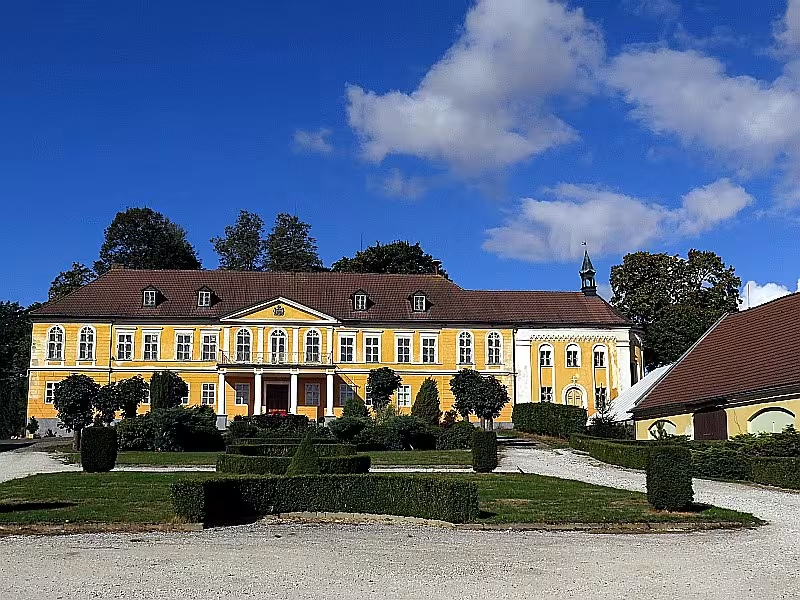
Zámek Čekanice is a cultural monument in the village of Čekanice, near Blatná, within Jihočeský kraj. Built at the end of the eighteenth century on the site of an older fortress, this classical-style chateau exemplifies architectural evolution and historical transitions in Bohemia. Its significance lies in its elegant design and storied past, reflecting centuries of noble ownership and cultural shifts.
The origins of Čekanice date back to 1274 when the village was first documented. Over time, it became part of various estates owned by different nobles. By the late eighteenth century, Jan Jiří z Helversenu commissioned a new classical-style chateau on this site, replacing an earlier Renaissance fortress. This period marked significant architectural and cultural developments across Europe, influenced by Enlightenment ideals within the Habsburg Monarchy.
Architecturally, Zámek Čekanice features a single-story oblong layout with Doric-style columns leading to a triangular pediment adorned with Lobkovic family crests. The design reflects classical elements typical of its era. In 1910, the estate expanded with the addition of a new Renaissance or Neo-Gothic chapel dedicated to Our Lady of Lourdes, enhancing its architectural diversity.
Ownership of Čekanice has changed dramatically over the centuries. Initially owned by Jan Jiří z Helversenu from 1781 until his death in 1785, it later passed through various noble hands, including Karel z Helversenu and Kněžna Marie Sidonie Lobkovicová. In 1891, Vlasta Stránecká and her son Miloslav acquired the estate, only for it to be nationalized post-1945 as a social care institution. Eventually, in the late twentieth century, the chateau was restituted and now serves various private functions.
Key events at Čekanice include its transformation from a Renaissance fortress to a classical-style chateau in 1785 under Jan Jiří z Helversenu's direction. The addition of the chapel in 1910 further enriched its historical narrative. These developments highlight the estate's adaptability and enduring significance through changing times.
Today, Zámek Čekanice is not only an architectural marvel but also a cultural treasure. It includes a landscape park from the early nineteenth century, a monument to Jan Hus, and a historic distillery with a chimney located east of the chateau. While some buildings on the estate are non-protected, the chateau itself remains a well-preserved site open for visits. Its rich history and architectural beauty make it an intriguing destination for those interested in exploring Bohemia's noble past.
Zámek Čekanice offers visitors a unique glimpse into the historical tapestry of the region. Its blend of classical architecture, storied ownership, and cultural significance invites exploration and appreciation. Whether drawn to its elegant design or intrigued by its historical narratives, a visit to this remarkable site promises an enriching experience.
Then and now
Drag the slider to compare how the landmark may have looked when it was built with the view today.
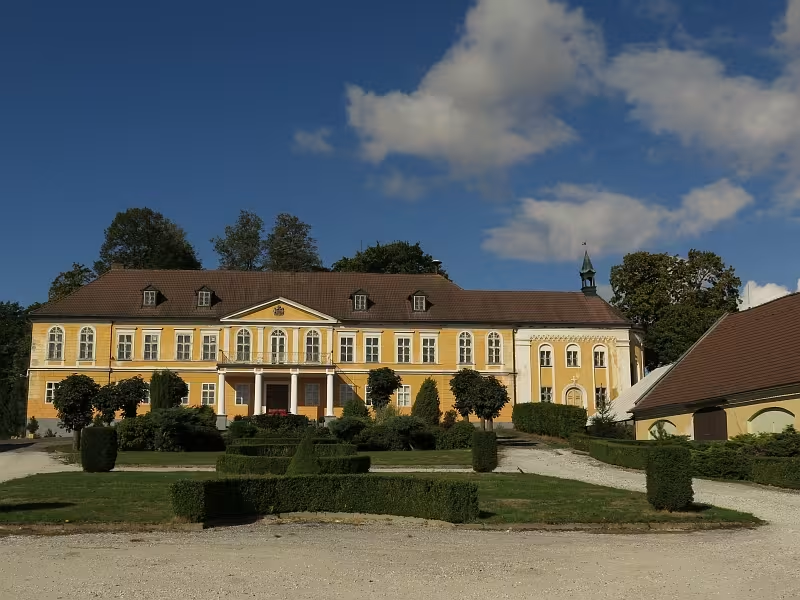
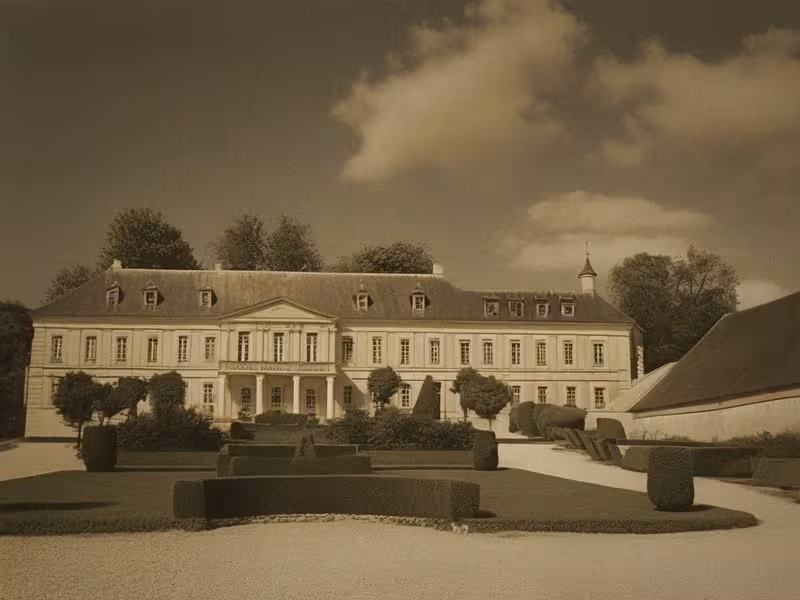
The historical appearance on the left is an AI-generated visualisation and serves as inspiration only.
Historical milestones
- 1274
- First documentation of the village Čekanice.
- 1781
- Jan Jiří z Helversenu becomes the owner of Čekanice.
- 1785
- Construction of a new classical chateau on the site of an older Renaissance chateau.
- 1910
- Addition of a chapel in Renaissance or neo-Gothic style.
- 1891
- Vlasta Stránecká and her son Miloslav acquired the Čekanice estate.
- after 1945
- Nationalization of the chateau as a social care institution.
Architectural development
The current structure, built in 1785 by Jan Jiří z Helversenu, replaced an earlier Renaissance fortress. The design features classical elements such as Doric columns and a triangular pediment with Lobkovic family crests. In 1910, the estate was expanded with a new Renaissance or Neo-Gothic chapel dedicated to Our Lady of Lourdes.
Historical events
1785: Jan Jiří z Helversenu commissioned the construction of a classical-style chateau.
1616: The estate was sold to Jan Jiří Horčic ze Prostého.
1945: Nationalization and use as a social care institution.
Owners
Jan Jiří z Helversenu (1781-1785)
Karel z Helversenu (until 1868)
Kněžna Marie Sidonie Lobkovicová (from 1868)
Vlasta Stránecká and Miloslav (1891-1945)
Post-war nationalization until restitution
Points of interest
- The chateau's Doric-style columns leading to a triangular pediment are adorned with the Lobkovic family crests, which is unusual as most chateaux feature only their own family symbols or none at all.
- Despite its classical style, Zámek Čekanice underwent an architectural addition in 1910 with a chapel dedicated to Our Lady of Lourdes. This Neo-Gothic or Renaissance chapel contrasts with the chateau's original design, reflecting changing tastes and devotional practices over time.
- Originally part of various noble estates, the chateau was nationalized post-1945 as a social care institution—a transformation that illustrates how historical sites can adapt to meet societal needs beyond their initial aristocratic purposes.
- The estate includes a monument to Jan Hus, an important figure in Czech history and religious reform. This highlights Čekanice's connection to broader historical narratives of religious change and cultural identity in the region.
- A historic distillery with a chimney located east of the chateau adds another layer to its history, indicating that Čekanice was not only a noble residence but also involved in local industry and production.
Guide
This guide is narrated by a synthetic voice generated by artificial intelligence.
Show guide text
This text was created by artificial intelligence and has not been editorially reviewed. It may contain inaccuracies.
Welcome to the historic Zámek Čekanice, nestled in the charming village of Čekanice near Blatná. As you stand before this cultural monument, take a moment to absorb its serene presence and the stories it holds within its walls. Originally constructed at the end of the eighteenth century on the site of an older fortress, Zámek Čekanice is a testament to classical architecture that has withstood the test of time.
The history of this enchanting place begins in 1274 when the village of Čekanice was first documented. Fast forward to 1781, and you'll find Jan Jiří z Helversenu becoming the owner of Čekanice. It was under his ownership that a new classical chateau rose from the remnants of an older Renaissance fortress in 1785, marking a significant transformation in its architectural journey.
As we explore Zámek Čekanice's architecture, notice the single-story oblong layout and the elegant Doric-style columns leading to a triangular pediment. What catches your eye are the Lobkovic family crests adorning this pediment—a unique feature that sets it apart from most chateaux which typically showcase only their own family symbols or none at all.
This chateau has been home to various noble families, each leaving its mark on its history. Figures like Karel Švarcpart ze Švarcpachu and Kateřina Enisová, rozená Vitanovská z Vlčkovic, are woven into the fabric of this place's storied past.
In 1910, an intriguing addition was made to the chateau—a chapel in Renaissance or neo-Gothic style—further enriching its architectural narrative. By 1891, Vlasta Stránecká and her son Miloslav had acquired Čekanice, continuing the lineage of distinguished ownership.
A captivating aspect of Zámek Čekanice is its blend of classical design with historical layers that tell tales of nobility and transformation. After World War II, in 1945, it underwent nationalization to serve as a social care institution, adding yet another chapter to its rich history.
As you continue your exploration of this remarkable site, let the whispers of the past guide you through its corridors and grounds. Each step is an opportunity to connect with the stories that have unfolded here over centuries.
Thank you for joining us on this journey through time at Zámek Čekanice. We invite you to wander further and discover more hidden gems within this historic treasure. Until next time, may your curiosity continue to lead you to new adventures.
Frequently asked questions
Can the monument be visited?
Some buildings of this kind are open for guided tours, others serve another purpose or are privately owned. We have not verified whether and when this monument is open – please ask the operator.
What are the opening hours and admission?
We have not verified the opening hours or admission. Current information is published by the operator. Official website: https://www.zamekcekanice.cz/
Where is the monument?
Location: Čekanice č.p. 1, Blatná, Jihočeský kraj. The map on this page shows the exact spot.
Why is the monument protected?
It is listed in the Central List of Cultural Monuments of the Czech Republic as a cultural monument (register no. 10042/3-4061).
Businesses nearby
Do you run a restaurant, accommodation, shop, museum, rental, wellness or other visitor service near this monument? Show yourself directly to the people heading to it — this is how they will see you in the app and on the web:
Nearby
Zámek Čekanice is surrounded by a landscape park, a monument to Jan Hus, and a historic distillery. The area also features several non-protected agricultural buildings.
Accommodation nearby
Themed route
Tematická výletní trasa zámek Čekanice
1. Zámek Čekanice (Chateau)
Proč stojí za návštěvu: Zámek Čekanice je historickou památkou s bohatou minulostí, která nabízí pohled na architektonické prvky z různých období. Jeho krásné nádvoří a interiéry jsou ideálním místem pro pochopení historie regionu.
2. Landschaftspark (Landscape Park)
Proč stojí za návštěvu: Okolní zahradní park je krásným přírodním prostředím, které nabízí klidné procházky a výhledy na zámek. Je to perfektní místo k relaxaci a poznání místní flóry.
3. Pomník Jana Husa (Monument of Jan Hus)
Proč stojí za návštěvu: Tento pomník je významnou historickou památkou, která oslavuje život a dílo mistra Jana Husa. Je to ideální místo pro pochopení kulturního a historického významu regionu.
4. Historická destilérie (Historic Distillery)
Proč stojí za návštěvu: Destilérie je fascinujícím místem pro ty, kdo mají zájem o historii průmyslu a výroby alkoholických nápojů. Nabízí zajímavé informace o tradicích a technikách destilace.
5. Nechráněné hospodářské stavby (Non-protected Agricultural Buildings)
Proč stojí za návštěvu: Tyto budovy poskytují vhled do tradičního zemědělského života v regionu. Jsou to skvělý příklad historických stavb, které byly používány pro různé hospodářské účely.
Tato trasa nabízí komplexní pohled na kulturní a historické aspekty obce Čekanice, s důrazem na její nejvýznamnější památky.
Seasonal recommendations
Spring: Visiting Čekanice Chateau during spring offers a unique experience as the landscape bursts into life with vibrant wildflowers and lush greenery, creating a picturesque backdrop for exploring the historical site. The soft, diffused light of the season enhances the beauty of the chateau's architecture, making it an ideal time for photography enthusiasts. As nature awakens, you might encounter mild weather, but be prepared for occasional showers that can add to the charm with glistening foliage and dew-covered paths. This is a great opportunity to enjoy the site without large crowds, as spring isn't typically peak tourist season. Wearing comfortable walking shoes and layers will allow you to adapt to changing temperatures throughout the day.
Summer: Summer at Čekanice Chateau provides an energetic atmosphere with longer daylight hours perfect for exploring every nook of this historical gem. The chateau grounds are particularly inviting, offering lush gardens and open spaces ideal for picnics or leisurely strolls. However, summer also brings larger crowds, especially during the main tourist season, so arriving early in the day can help you avoid the busiest times. Dressing in light, breathable clothing is advisable to stay comfortable in the warm weather, and don't forget a hat and sunscreen to protect against the sun's rays. The vibrant atmosphere of summer makes it an excellent time for families and groups looking to enjoy outdoor activities.
Autumn: Autumn at Čekanice Chateau offers a stunning display of fall colors, with the surrounding landscape transforming into a tapestry of reds, oranges, and yellows. This season provides a magical setting that complements the chateau's historic charm, making it an ideal time for photography or simply enjoying nature's beauty. The cooler temperatures are pleasant for walking around the expansive grounds, and you can expect fewer visitors compared to summer, allowing for a more relaxed visit. It’s wise to wear layers as the weather can vary greatly throughout the day, and carrying a light jacket might be necessary if temperatures drop in the evening.
Winter: Winter at Čekanice Chateau presents a serene, almost mystical atmosphere with snow-covered grounds that add an enchanting touch to its historic architecture. The shorter days mean visiting early is advisable to make the most of daylight hours for exploring and photography. While the chateau's opeining hours may be reduced during this season, winter offers a quiet escape from the busier times of year, providing a peaceful experience with fewer visitors. Dress warmly in layers, including thermal wear and waterproof boots, to stay comfortable while enjoying the crisp air and unique winter landscape. A hot drink or snack at a nearby café can make your visit even more enjoyable after exploring the chateau grounds.
Visualizations and artistic views


The visualisations are generated by artificial intelligence and serve as inspiration.
Photos from the area
Real photos taken near the monument


Zdroj a licence jsou uvedeny u každého snímku.
Tips from visitors
No tips yet. Be the first!
Log in and add your tip.
Sources and literature
Photos: Sovicka169 / CC BY-SA 4.0 — Wikimedia Commons. The author and licence also appear when you hover over the image.
Faktickým podkladem tohoto textu byl článek na Wikipedii, jehož autory jsou přispěvatelé Wikipedie. Článek je dostupný pod licencí CC BY-SA 4.0.
Location on the map

Příběhy a pověsti
Legendy, pověsti a příběhy spjaté s touto památkou

Fotografie návštěvníků
Zatím žádné fotografie. Buďte první, kdo přidá fotografii z návštěvy!
Log in a přidejte svou fotografii nebo hodnoťte.
Za ověřenou návštěvu v aplikaci získáte víc bodů — poznáme podle GPS, že jste na místě.
Reviews and comments