






zámek Rybník Chateau
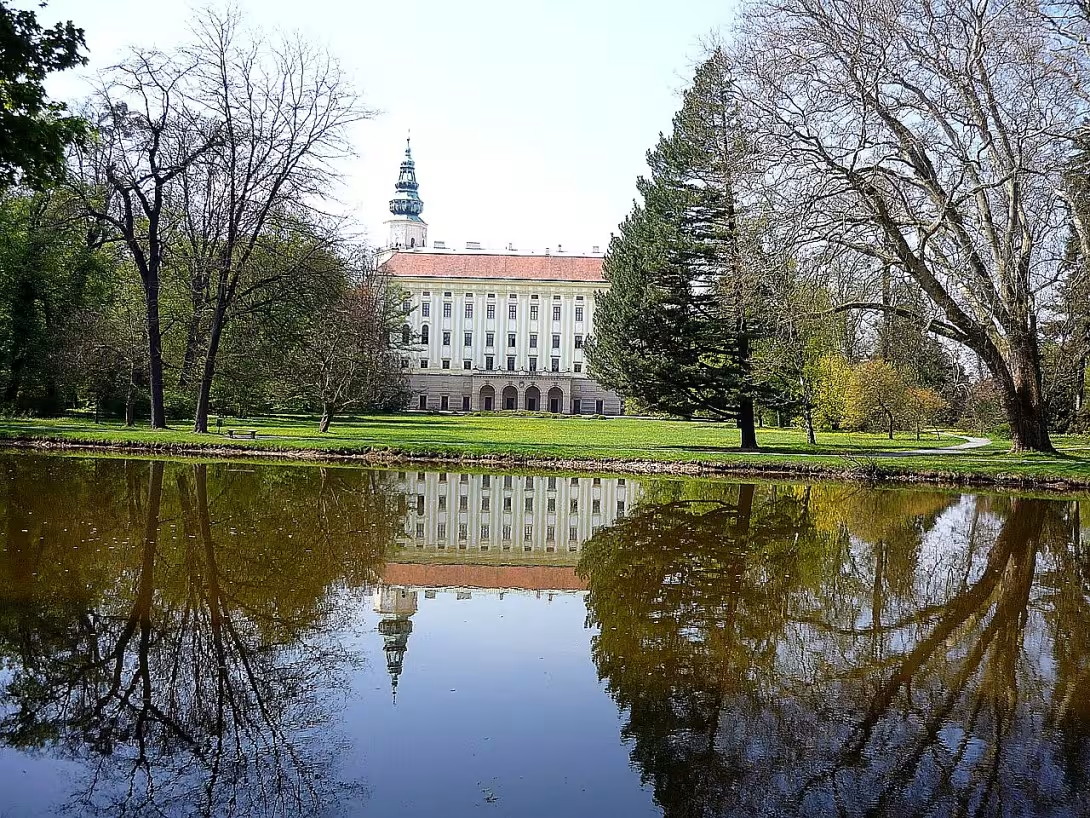
Objekt se nedochoval — na místě dnes nestojí. Následující text popisuje jeho historii, ne současnou návštěvu.
Zámek Rybník was a small chateau located in the village of Rybník within the Český Krumlov district, part of the picturesque South Bohemian Region. Acquired by Jan Sudek from the Rožmberk family in 1473, it remained under their control until mid-17th century political upheavals led to a change in ownership. The chateau was eventually demolished in 1979 after falling into disrepair. This site is notable for its historical transitions through various noble families and reflects broader socio-political changes in Bohemia over several centuries.
The origins of Zámek Rybník trace back to 1473 when Jan Sudek acquired it from the Rožmberks, a prominent family during the Jagiellonian dynasty's rule. This period was marked by relative stability but also religious tensions that foreshadowed the Hussite Wars. The chateau initially served as a fortress and remained under the Rožmberk family until significant political shifts occurred in the mid-17th century. These changes were catalyzed by the Thirty Years' War and the Battle of White Mountain, leading to Habsburg consolidation in Bohemia. As a result, ownership transferred to the Muckenberks.
The most notable architectural development at Zámek Rybník occurred in 1745 when Hrabě Buquoy purchased the estate and commissioned the construction of a small chateau. This structure represented the last significant phase of development before its eventual decline. Over time, the building fell into disrepair, reflecting broader historical shifts as it transitioned from noble ownership to state control.
Ownership of Zámek Rybník changed hands several times throughout its history. Initially held by the Rožmberks until mid-17th century upheavals, it passed to the Muckenbergs following the Battle of White Mountain. In 1745, Hrabě Buquoy acquired the estate and built a small chateau, marking a new chapter in its history. By 1945, the Czechoslovak state took control of the property, which was then managed by a pasturing cooperative before becoming a state-owned farm. Despite these efforts, the structure deteriorated over time.
Throughout its existence, Zámek Rybník witnessed several key events that mirrored broader historical currents. The transition from Rožmberk to Muckenberg ownership reflected the tumultuous mid-17th century, while Hrabě Buquoy's acquisition and subsequent construction in 1745 marked a period of personal investment by nobility into their estates. Ultimately, its demolition in 1979 closed a chapter on this historical site.
Today, Zámek Rybník no longer stands as it once did; the chateau was demolished in 1979 after years of neglect. While visitors cannot explore the physical structure, the location remains significant for those interested in Bohemian history and architecture. The village of Rybník itself offers a glimpse into traditional Czech life, set against the backdrop of rolling hills and historical sites that characterize the South Bohemian Region.
Zámek Rybník serves as a testament to the dynamic history of Bohemia, reflecting shifts in power, ownership, and architectural styles over centuries. Its story is woven into the broader tapestry of regional history, offering insights into the lives and legacies of those who once inhabited it. While the physical structure no longer exists, its historical significance continues to invite exploration and reflection for those interested in the rich past of this region.
Historical milestones
- 1473
- Jan Sudek acquired the estate from the Rožmberks.
- mid-17th century
- Ownership transferred to the Muckenberks after the Battle of White Mountain.
- 1745
- Hrabě Buquoy purchased the estate and built a small chateau.
- 1979
- The chateau was demolished.
Architectural development
Initially, the site saw the construction of a fortress by Jan Sudek after acquiring it from the Rožmberks. In the mid-17th century, following political upheavals, ownership shifted to the Muckenberks. The most significant architectural development occurred in 1745 when Hrabě Buquoy commissioned the building of a small chateau. Over time, the structure fell into disrepair and was eventually demolished in 1979.
Historical events
Jan Sudek acquired the estate from the Rožmberks in 1473.
Ownership transferred to the Muckenberks after the Battle of White Mountain in the mid-17th century.
Hrabě Buquoy purchased the estate and built a small chateau in 1745.
The chateau was demolished in 1979.
Owners
Rodina Rožmberků (until mid-17th century)
Rod Muckenberků (mid-17th century to 1745)
Hrabě Buquoy (from 1745)
Československý stát (from 1945)
Guide
This guide is narrated by a synthetic voice generated by artificial intelligence.
Show guide text
This text was created by artificial intelligence and has not been editorially reviewed. It may contain inaccuracies.
The castle in the village of Rybník in the Českokrumlov region no longer stands. It bore the house number 5 and was demolished in the year 1979.
The village, which was formerly called Certlov or Cártle, was purchased in the year 1473 from the Rožmberks by Jan Sudek z Dlúhé. His family then built a fortified house in the nearby settlement of Trojanov, today's Trojany. The property remained in his possession until the seventeenth century. At that time, following the post-White Mountain changes, it passed to the Muckenberg family.
In the year 1745, the village was sold to Count Buquoy, who had a small castle built there.
In the year 1945, the castle became the property of the Czechoslovak state. Initially it was managed by a pasture cooperative, later by a state farm. The building gradually fell into disrepair until it was demolished in the year 1979.
Businesses nearby
Do you run a restaurant, accommodation, shop, museum, rental, wellness or other visitor service near this monument? Show yourself directly to the people heading to it — this is how they will see you in the app and on the web:
Events nearby
Zdroj akcí: otevřená data měst a obcí ČR (Národní katalog otevřených dat) a kalendář akcí Národního památkového ústavu.
Nearby
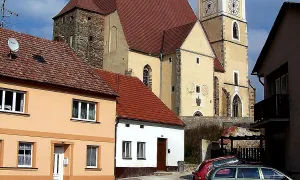
Zámek Rybník was situated in the village of Rybník, near Trojanov (now Trojany), within a region known for its picturesque landscapes and historical sites. The area is part of the South Bohemian Region, which features rolling hills and traditional Czech architecture.
Visualizations and artistic views


The visualisations are generated by artificial intelligence and serve as inspiration.
Photos from the area
Real photos taken near the monument


Zdroj a licence jsou uvedeny u každého snímku.
Tips from visitors
No tips yet. Be the first!
Log in and add your tip.
Location on the map

Příběhy a pověsti
Legendy, pověsti a příběhy spjaté s touto památkou

Fotografie návštěvníků
Zatím žádné fotografie. Buďte první, kdo přidá fotografii z návštěvy!
Log in a přidejte svou fotografii nebo hodnoťte.
Za ověřenou návštěvu v aplikaci získáte víc bodů — poznáme podle GPS, že jste na místě.
Reviews and comments