






železný most v Týně nad Vltavou Bridge
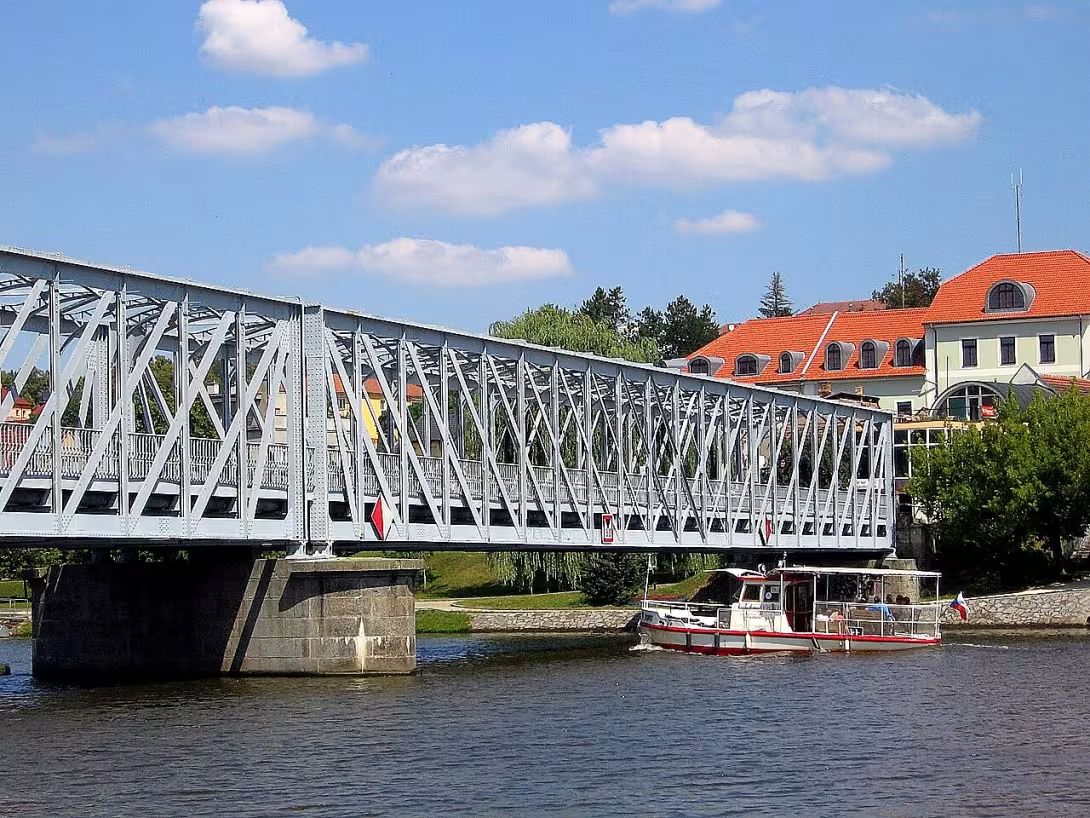
The Železný most in Týn nad Vltavou is a notable iron bridge spanning the Vltava River, connecting Horní Brašov and Malá Strana. Constructed between 1892 and 1893 by Josef Maýr and built by Pražská českomoravská mostárna, it was declared a cultural monument in 1992. In 1996, the bridge underwent reconstruction to accommodate only pedestrians and cyclists. Its historical significance is underscored by its role in connecting local areas and providing scenic views of the South Bohemian landscape.
The origins of Železný most trace back to the late 19th century when a devastating flood destroyed an earlier wooden bridge across the Vltava River in March 1891. This event necessitated the construction of a new, more resilient iron bridge. Designed by Josef Maýr and constructed by Pražská českomoravská mostárna, its foundation stone was laid on May 2, 1892, with an official inauguration on November 4, 1892.
Architecturally, Železný most features a steel truss design supported by two sixty-meter spans. The bridge's structure includes stone abutments and an iron truss system, reflecting the engineering advancements of the period. Its construction involved intricate craftsmanship, with the steel riveted framework produced by Pražská českomoravská mostárna and the stone pier constructed by Jana Kruliše from Prague.
Throughout its history, Železný most has undergone significant changes. In 1996, it was reconfigured to serve only pedestrians and cyclists, reflecting evolving transportation needs. Additionally, in 1987, a heating pipeline was installed across the bridge. A proposal in 2009 suggested raising one of its spans to facilitate larger boat traffic beneath, although this plan has not been realized.
Today, Železný most stands as a testament to late 19th-century engineering and modern adaptation. Its current state allows visitors to enjoy a pedestrian-friendly experience while appreciating the bridge's historical significance and architectural beauty. The surrounding South Bohemian landscape adds to its allure, making it a worthwhile destination for those interested in history and architecture.
Železný most offers more than just a crossing over the Vltava River; it provides insight into the industrial growth and modernization of the Czech lands during the Austro-Hungarian Empire. Its transformation from a vehicular bridge to a pedestrian pathway highlights its adaptability and enduring relevance. Visitors are invited to explore this cultural monument, where history and engineering converge in a picturesque setting.
Then and now
Drag the slider to compare how the landmark may have looked when it was built with the view today.
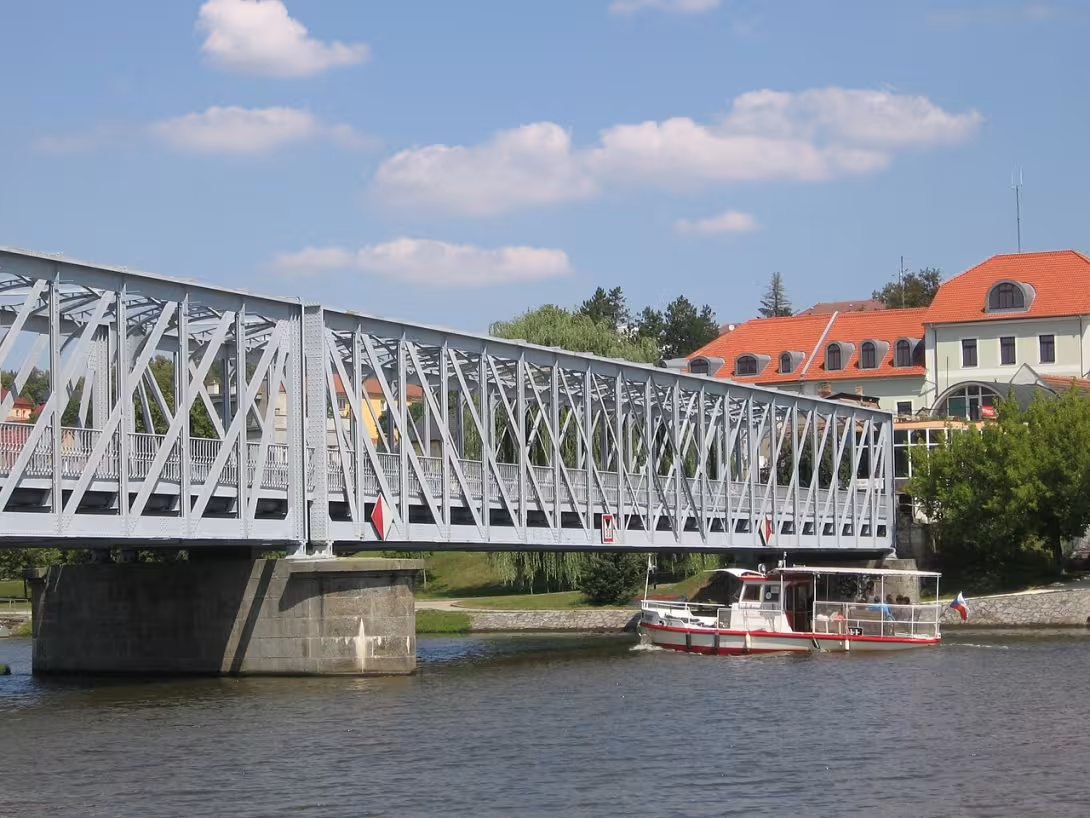

The historical appearance on the left is an AI-generated visualisation and serves as inspiration only.
Historical milestones
- 1892
- The foundation stone of the bridge was laid on May 2nd.
- 1892
- 1892
- The official inauguration and opening to traffic occurred on November 4th.
Architectural development
Originally built as a vehicular bridge with steel truss construction, it underwent significant changes over time. In 1996, it was reconstructed to serve only pedestrians and cyclists. The bridge's design includes stone abutments and an iron truss structure.
Historical events
In 1891, a flood destroyed an earlier wooden bridge, leading to the construction of this new iron bridge in 1892.
The bridge was declared a cultural monument by the Ministry of Culture of the Czech Republic in 1992.
Points of interest
- The foundation stone of the Železný most was laid on May 2, 1892, just over a year after a devastating flood destroyed an earlier wooden bridge across the Vltava River in March 1891. This rapid response highlights the urgency and importance placed on rebuilding infrastructure at that time.
- In 1987, a heating pipeline was installed across Železný most, showcasing how historical structures can be adapted for modern utility needs while preserving their original architecture.
Guide
This guide is narrated by a synthetic voice generated by artificial intelligence.
Show guide text
This text was created by artificial intelligence and has not been editorially reviewed. It may contain inaccuracies.
Welcome to the Železný most in Týn nad Vltavou, an engineering marvel that gracefully spans the Vltava River, connecting Horní Brašov with Malá Strana. As you stand here, take a moment to appreciate the elegant lines of this iron bridge, its steel truss design capturing both the strength and beauty inherent in its construction.
The story of the Železný most begins in the late 19th century. In March 1891, a devastating flood swept away an earlier wooden bridge across the Vltava River, leaving a crucial gap in the town’s infrastructure. The need for reconstruction was urgent, and just over a year later, on May 2, 1892, the foundation stone of this new iron bridge was laid. Designed by Josef Maýr and constructed by Pražská českomoravskka mostárna, the project was completed swiftly, with the bridge officially opening to traffic on November 4, 1892.
As you look around, notice the two sixty-meter spans that define the bridge's structure. These are supported by solid abutments and a central pier, elements that contribute to its stability and longevity. The steel truss design is not only functional but also aesthetically pleasing, showcasing the architectural ingenuity of its time.
While there may be no widely known historical figures directly tied to this site today, the bridge itself stands as a testament to the resilience and determination of those who rebuilt it after the flood. It’s a reminder of how communities come together in response to adversity, ensuring that vital connections are restored.
An interesting tidbit about the Železný most is its reconstruction in 1996. This renovation was undertaken to accommodate modern needs while preserving its historical integrity, ensuring that this bridge continues to serve and inspire future generations.
As you continue your exploration of Týn nad Vltavou, let the Železný most be a starting point for discovering more about the rich history and culture of this enchanting region. We invite you to delve deeper into its stories and perhaps uncover new perspectives on the past that shaped it. Thank you for joining us on this journey through time. Safe travels as you continue your adventure!
Tips for visitors
The best time to visit Železný most in Týn nad Vltavou is during late spring or early autumn when the weather is mild and the surrounding landscape is particularly picturesque. During these months, you can enjoy vibrant foliage along the Vltava River and avoid the crowds that typically gather in summer. The lighting conditions are also ideal for photography, especially during sunrise and sunset, offering warm hues that beautifully complement the historic iron structure of the bridge.
Parking near Týn nad Vltavou is generally available, but it's advisable to check local resources or maps before your visit to find specific locations. For those preferring public transport, the area can be accessed via regional bus services from nearby towns and cities. It’s recommended to verify current routes and schedules through a transportation search tool prior to departure to ensure a smooth journey.
When planning your visit, consider bringing comfortable walking shoes as you may want to explore the surrounding areas on foot. A camera or smartphone for capturing the scenic views is also suggested, especially if you're interested in photography. Additionally, bring along water and snacks, particularly if you plan to spend several hours enjoying the landscape and nearby attractions.
For photography enthusiasts, some of the best spots include the bridge itself during golden hour when the light casts a warm glow on the iron structure. The riverbanks offer excellent vantage points for capturing both the bridge and the Vltava River in one frame. Exploring different angles from either side of the river can provide unique perspectives.
In terms of nearby attractions within a 30-minute drive, visitors can explore the charming town center of Týn nad Vltavou, which features historical architecture and quaint shops. Additionally, the natural beauty of the surrounding South Bohemian region offers opportunities for hiking or leisurely walks along river trails. These activities are suitable for families with children, providing both educational experiences and fun outdoor time.
Businesses nearby
Do you run a restaurant, accommodation, shop, museum, rental, wellness or other visitor service near this monument? Show yourself directly to the people heading to it — this is how they will see you in the app and on the web:
Nearby
The bridge is situated over the Vltava River near Týn nad Vltavou, offering scenic views and connecting local areas. The surrounding landscape includes natural features typical of the South Bohemian region.
Accommodation nearby
Trips and activities nearby
Guided tours, tickets and activities nearby from GetYourGuide
Affiliate link: if you buy from the partner, we may receive a commission. The price for you does not change.
Search tours and activities →Themed route
Thematic Walking Tour: Týn nad Vltavou and the Iron Bridge
1. Iron Bridge (Železný most) - *Type:* Historical Landmark - *Why Visit:* The Iron Bridge is a remarkable example of 19th-century engineering, offering stunning views over the Vltava River. Its unique design connects Týn nad Vltavou with surrounding areas and serves as an iconic symbol of the town.
2. Vltava Riverbanks - *Type:* Natural Scenery - *Why Visit:* Stroll along the picturesque riverbanks to enjoy the serene beauty of the South Bohemian landscape. The area provides a peaceful setting for relaxation, with opportunities to observe local flora and fauna while taking in the scenic views.
3. Local Walking Paths - *Type:* Scenic Trails - *Why Visit:* Explore the walking paths that meander through Týn nad Vltavou's outskirts. These trails offer a chance to experience the natural beauty of the region, with gentle walks suitable for all ages and fitness levels.
4. Village Center of Týn nad Vltavou - *Type:* Cultural Exploration - *Why Visit:* Discover the charming village center, where traditional architecture and local culture come alive. The area is ideal for experiencing the town's history and community spirit, with opportunities to interact with locals and learn about their way of life.
5. Nearby Countryside - *Type:* Rural Exploration - *Why Visit:* Venture into the surrounding countryside to appreciate the rural charm typical of South Bohemia. This area provides a tranquil escape from urban life, offering scenic views and a chance to connect with nature.
This tour offers a blend of historical, cultural, and natural experiences, showcasing the unique features of Týn nad Vltavou and its surroundings.
Seasonal recommendations
Spring: Visiting the Iron Bridge in Týn nad Vltavou during spring offers a charming experience as nature awakens with vibrant colors and fresh blooms along the riverbanks. The mild weather makes it an ideal time to explore the surrounding landscapes, which are adorned with blossoming flowers and lush greenery. Spring light enhances the picturesque views of the bridge, casting gentle shadows that add depth to its historic architecture. Visitors should consider wearing layers as temperatures can vary throughout the day. Early mornings or late afternoons might be best to avoid larger crowds, allowing for a more serene experience.
Summer: Summer is the peak season for exploring the Iron Bridge due to the pleasant weather and extended daylight hours, making it perfect for leisurely strolls along the Vltava River. The bridge becomes a lively hub with increased foot traffic, especially during weekends or holidays when locals and tourists alike gather to enjoy outdoor activities. It's advisable to wear comfortable clothing and bring sunscreen to protect against the sun’s rays. Arriving early in the morning can help avoid the midday crowds, providing a more tranquil atmosphere for appreciating the bridge’s historical significance.
Autumn: Autumn brings a unique charm to Týn nad Vltavou as the foliage transforms into a kaleidoscope of reds, oranges, and yellows. The cooler temperatures are ideal for walking along the river and capturing stunning photographs of the Iron Bridge set against the vibrant autumnal backdrop. This season offers a quieter experience compared to summer, with fewer visitors enjoying the scenic beauty. Layered clothing is recommended to accommodate varying weather conditions, and visiting during weekdays can provide an even more peaceful setting.
Winter: Winter transforms Týn nad Vltavou into a serene winter wonderland, with snow-covered landscapes offering a magical atmosphere around the Iron Bridge. The crisp air and shorter days create a cozy ambiance perfect for enjoying hot beverages while taking in the historic site’s beauty. Visitors should dress warmly in layers to handle the cold temperatures and potential icy conditions. Winter mornings are ideal for visiting when the bridge is less crowded, allowing for peaceful reflection on its storied past amidst the quiet of the season.
Visualizations and artistic views


The visualisations are generated by artificial intelligence and serve as inspiration.
Photos from the area
Real photos taken near the monument


Zdroj a licence jsou uvedeny u každého snímku.
Tips from visitors
No tips yet. Be the first!
Log in and add your tip.
Sources and literature
Fotografie: PetrS. / CC BY-SA 4.0 — Wikimedia Commons. The author and licence also appear when you hover over the image.
Faktickým podkladem tohoto textu byl článek na Wikipedii, jehož autory jsou přispěvatelé Wikipedie. Článek je dostupný pod licencí CC BY-SA 4.0.
Location on the map

Příběhy a pověsti
Legendy, pověsti a příběhy spjaté s touto památkou

Fotografie návštěvníků
Zatím žádné fotografie. Buďte první, kdo přidá fotografii z návštěvy!
Přihlaste se a přidejte svou fotografii nebo hodnoťte.
Za ověřenou návštěvu v aplikaci získáte víc bodů — poznáme podle GPS, že jste na místě.
Reviews and comments