






Žíkovec Hillfort
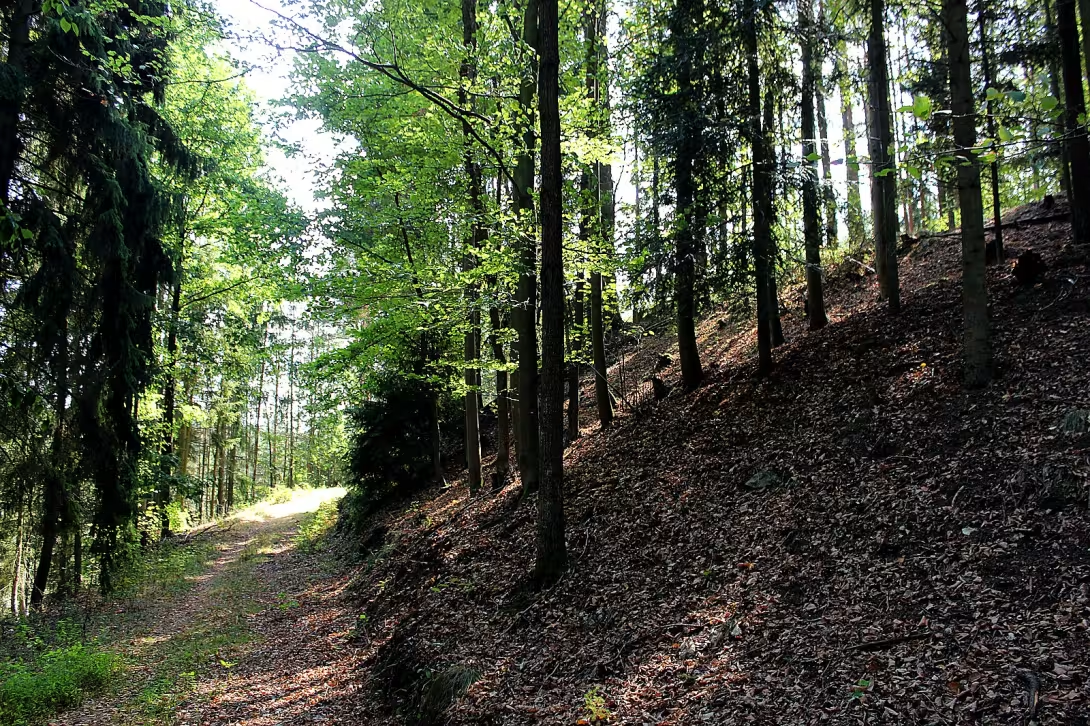
Žíkovec is an archaeological site on the island over the right bank of Vltava in the Pribram district of Central Bohemia. This site comes from the late Bronze Age and represents an important former centre of the Štětar culture.
The fort was fortified for the first time in the 10th century BC. That was when the settlement of the Šttar culture, which dominated Central Europe and demonstrated the development of fortified centres. The settlement continued in later stages, namely in the period of the Hallatians and the Hradiste. In the early Middle Ages, the acropolis was mainly used as a refuge, hunting camp or guard point. It is assumed that this place was in some relation to a nearby castle near Kozarovice.
The location is located on an island with an altitude of approximately 380 metres near the confluence of the Vltava and Voltířovský creek. The fort consisted of an acropolis with an area of about 1.4 hectares and a connecting foothold occupying about 1.5 hectares. The sides of the building protected steep slopes which did not tolerate the construction of the fortifications. However, there is a consideration for the existence of a palisade and a gate to which a way from the valley may have led. The main protection was provided by a massive wall in the northeast part where the entrance gate was located. This 80-metre wall reached an altitude of over eight metres against the outside.
Archaeological research showed two construction phases of the wall. The first, dated by radiocarbon measurements to the 10th century B.C., had a front wall made of large stones and an internal wood-clay structure. The building was destroyed by a fire, in which both the front wall and the inner clay body fell apart. The second wall was built right on the ruins of the elder. This newer structure had stone-painted walls on both the outside and the inside, with the space between them filled with clay and stones. The total width of the wall was 240 to 270 centimetres. There was also an external line of defence with a slight palisade on the crown. Research in the lower part of the slope also revealed a gutter which could have been used to anchor another palisade.
The location has been known since the late 19th century. The first survey was conducted by Bedřich Dubský in the 1940s, while in the 1980s detailed research was carried out on fortifications under the leadership of Lubomír Sýtka. Today the remains of the site are protected as a cultural monument. Originally steep and in the west up to perpendicular slopes of the Isle Bay are now partly hidden below the water tank surface of the Eagle.
This monument represents an important point for understanding the development of prehistoric fortified settlements. Her visit offers insight into the history of bronze and iron times in this area.
Then and now
Drag the slider to compare how the landmark may have looked when it was built with the view today.
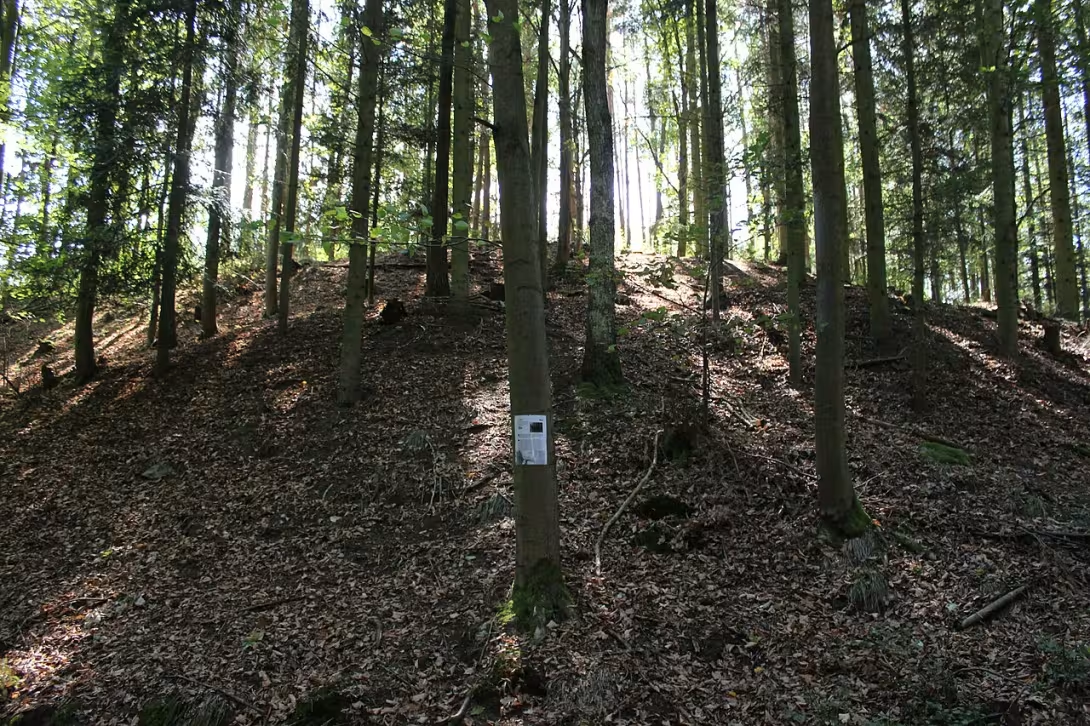
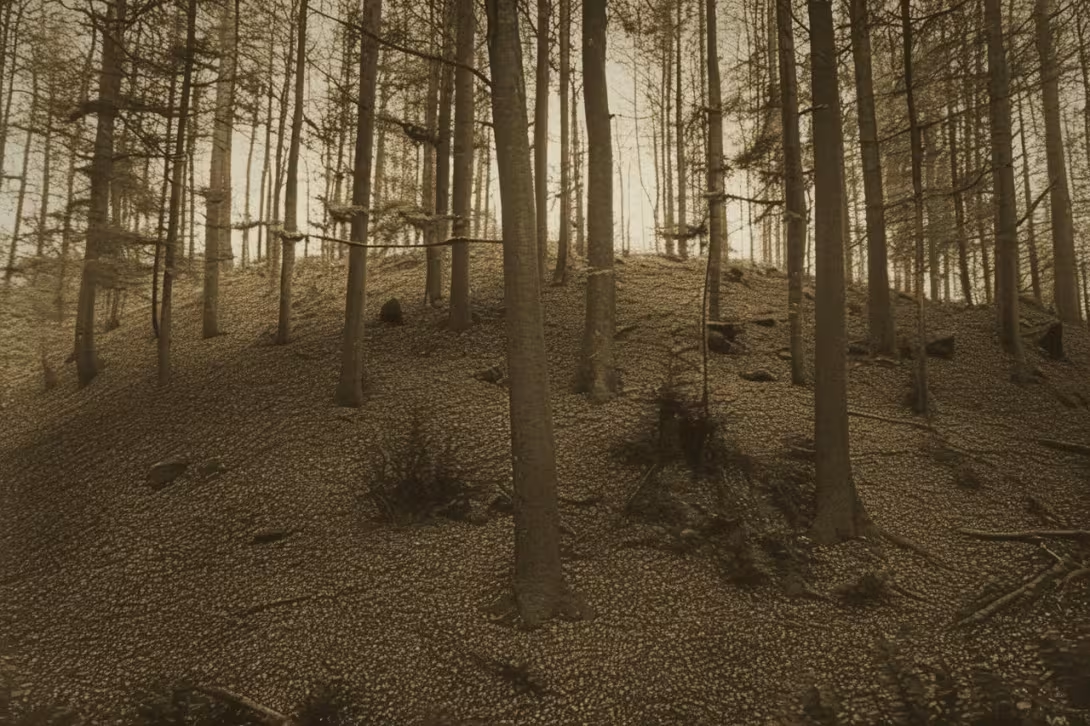
The historical appearance on the left is an AI-generated visualisation and serves as inspiration only.
Historical milestones
- 10th Century B.C.
- The construction of the first phase of the wall and the creation of a local centre of Štětar culture.
- 1940. flight
- The first archaeological survey by Bedřich Dubský.
- 1980. flight
- Detailed archaeological research of fortifications under the leadership of Lubomír Sýtka.
Architectural development
The fortification went through two construction phases. The first wall from the 10th century B.C. had a front wall of stones and an inner wood-clay structure that was destroyed by a fire. The second phase consisted of the stonework of both sides of the wall with a filling of clay and stones and the addition of an external defensive line with a possible palisade.
Points of interest
- The locality dates back to the late Bronze Age and represents an important centre of the Shield culture. - The fort was first fortified in the 10th century B.C. In the early Middle Ages it could serve as a refuge, hunting camp or guard point. The main protection was provided by a massive wall in the northeast. This 80-metre wall was over eight metres high. - The first building phase of the wall was destroyed by fire. In which both the front wall and the inner clay body fell apart. - Originally steep slopes of the island are now partially hidden beneath the water tank Orlík.
Guide
Show guide text
This text was created by artificial intelligence and has not been editorially reviewed. It may contain inaccuracies.
Welcome to Castle Žíkovec. Stop for a moment and just feel the space around you. You're standing in a place that holds the secrets of several millennia. Look around you at this distinctive island you are on and perceive its strategic position over the right bank of the Vltava. Even though this place is dominated by the calm water tank Orlík, in ancient times this landscape was completely different, wilder and absolutely crucial for the people who lived here. You see before you the remains of one of the most important prehistoric settlements in this area, which served as a fortress, home and center of power.
Let us now return together in time, very far away, until the tenth century BC. Imagine we're in the late Bronze. It was at this time that the first phase of the walls arose and Žíkovec became the local centre of the so-called shield culture. Why did people choose this place? The answer lies in the geography itself. This high rocky island provided natural protection from several sides, while allowing a perfect overview of the surrounding terrain and river Vltava trough, which was the region's most important transport and commercial artery at that time. Whoever controlled the Žíkovec also controlled the surrounding landscape and the movement in the valley.
Now pay attention to the terrain under your feet and surrounding space. Although you may not see walls erected today that resemble medieval castles, the architecture of this castle was impressive in its time. Note in particular the northeast part where a massive wall was built. This is the part that was most threatened by the inland attack, and that is why the defense was the strongest here. Try to reconstruct in your mind what these walls looked like when they were new, how people worked in them, and how the walls separated safe inner space from the dangerous world outside. The acropolis, the highest and most fortified part of the castle, is a key element of the complex. This is probably where the most important buildings were located and probably where the local elite was based.
Life on Znikovec was not a one-time event but a long trial. After the Bronze Age, the settlement continued here in the period of the Hallatians and the Hradiste. It means that generations have taken turns here, and each of them has brought something of its own to this place. Although cultures and technologies were changing, the strategic importance of the island was the same. The interesting thing is, the fort didn't completely disappear, but it was reused in the early Middle Ages. At the time, however, it was probably not a large centre with many inhabitants, but rather a specific strategic point. At this time, the acropolis could serve as a refuge for the surrounding population in the event of danger, as a hunting camp for the nobles, or as an important guard point that guarded access to the river.
When you go through this terrain today, it's good to think of the people who helped us rediscover this place. The history of Žíkovka would have remained hidden in the country if Bedřich Dubský had not been alerted to it in the 1940s. It was he who carried out the first archaeological surveys that revealed that under the layers of soil a fascinating primordial settlement sleeps. Later, in the 1980s, Lubomir Smetek, who, under his leadership, carried out detailed archaeological research on fortifications. Thanks to their strenuous work and their scientific approach, we now know about the shield culture and how powerful the walls once stood here. Imagine the hours of precise digging, the nets of strings and the meticulous documentation of each shard found or the rest of the wooden elements of the wall.
And now to invite you to one small consideration that is linked to Zíčíkovka. Because there is a certain mystery that follows every castle this old. Why did people at some point decide to leave the place? What led to the decline of this once powerful centre of Shitara culture? Was it the pressure of enemies, climate change, or perhaps the shift in trade routes that lost its value? This question remains open and that is the magic of archeology. Each stone and every layer of sediment can be the key to the answer. If you look at today's peaceful landscape, it's hard to imagine that there once was blood boiling here, there were challenges from the guards and bronze tools and weapons melting in the fires.
Imagine Žíkovec as a layered book. The first chapter was written in the tenth century BC, when the center of power was created here. Other chapters were written by the Hallatians and later the early Middle Ages. And the last chapter is written by archaeologists and visitors like you today. This site is not just a pile of stones and soil, it is a monument to human efforts for safety, organization and dominance over the landscape.
Now that you know the basic story of this place, I suggest you continue to explore the area. Take a slow walk around the edge of the island, see the wind from the Vltava and try to imagine how the world saw itself from this point 3,000 years ago. Follow the lines of terrain that indicate where the walls once stood, and think about how short human life is compared to the age of this place.
Thank you for joining me on this short journey in time. I hope you are interested in the atmosphere of Žíkovka and that you are leaving with a sense of respect for the people who once built their homes and their forts here. I wish you a pleasant further journey and many other fascinating discoveries in our beautiful landscapes. Goodbye.
Tips for visitors
Best time to visit Žíkovice is in the early months of the year, especially in April to May, when the regions around Vltava are the most beautiful. Sunshine days provide ideal conditions for exploring ruins and surrounding natural beauties.
Parking is possible to find near the Water Tank Eagle where you can stop your vehicle. For those who prefer public transport, it is advisable to use bus connections to the nearest station or station from which you can get further by foot or by bike.
When planning a visit it is good to bring sun protection clothes, guide shoes and sprinklers. Also remember the handkerchief or umbrella if the weather predicts a sudden rain.
Photography here is great especially in the semi-logistic light, when the sun illuminates the landscape and ruins. The best places for photos can be found on higher terraces with a view of Vltava and surrounding forests.
In the vicinity of Žíkovice you can visit the nearby castle near Kozarovice, which offers an interesting historical overview of the area. For families with children, the water tank Orlík is ideal for picnics and various activities in the open air.
Businesses nearby
Do you run a restaurant, accommodation, shop, museum, rental, wellness or other visitor service near this monument? Show yourself directly to the people heading to it — this is how they will see you in the app and on the web:
Events nearby
Zdroj akcí: otevřená data měst a obcí ČR (Národní katalog otevřených dat) a kalendář akcí Národního památkového ústavu.
Nearby
The water tank Orlík, Vltava, Voltiřovský stream and near the castle near Kozarovice.
Accommodation nearby
Themed route
1. Žíkovec - archaeological site. The main destination of the trip, which reveals the secrets of the ancient inhabitants of this region. 2. The castle near Kozarovice - fortified settlement. Another important historical point that complements the view of the ancient landscape. 3. Voltiřovský stream - water flow. A natural path for relaxation and a walk between archaeological monuments. 4. Vltava - river. The majestic water road that forms the dominant of the surrounding terrain. 5. Water tank Eagle - dam. Large water area ideal for relaxing and finishing the entire circuit.
Seasonal recommendations
Spring: Visiting Žíkovce in the spring season offers a unique experience where nature begins to come to life and ruins turn into a living color. Sun rays illuminate old walls, making them the perfect place for photography. Flowers and leaves beginning to grow give the atmosphere a mild temperature and freshness. For a visit in this period we recommend wearing light clothes with the possibility of adding top clothing because the weather can be variable. The best time to visit is in the morning or evening to avoid mid-winter temperatures and possible crowds.
Summer: The Žíkovec summer offers the full power of nature with dense green leaves and flowering shrubs that create cosy shadows. Sunshine joins archaeological structures, highlighting their historical significance. In the main summer season there is an expected higher number of visitors, so we recommend arriving early in the morning or later in the evening. Hot clothes and sun protection are key - wear ties, hat and plenty of drinking water.
Autumn: In the autumn period Žíkovec offers a melancholy atmosphere with darker leaf colours and lighter sunlight. This season is ideal for quiet walks when nature begins to fall and ruins turn into less visiting places, which increases the sense of peace. The recommended clothes should be warmer because the weather is gradually cooling; Also bring an umbrella for sudden wood tremors. The best times to visit are a convenient afternoon when the sun illuminates the structures and the atmosphere is most comfortable.
Winter: The winter visit to Žíkovce offers a calm and quiet atmosphere where the freezing air gives the historic place a mystical character. Sunshine lights up the ruins more gently and alternately in the winter, providing unforgettable views. This season is less demanding on the crowd, but the opening times of the sights can be shortened due to lower temperatures. We recommend wearing warm clothes, including a hat and blanket, to enjoy a visit without nausea. The best time to walk is noon, when the sun illuminates the memory best.
Visualizations and artistic views


The visualisations are generated by artificial intelligence and serve as inspiration.
Photos from the area
Real photos taken near the monument


Zdroj a licence jsou uvedeny u každého snímku.
Tips from visitors
No tips yet. Be the first!
Log in and add your tip.
Sources and literature
Fotografie: Richenza / CC BY-SA 3.0 — Wikimedia Commons. The author and licence also appear when you hover over the image.
Faktickým podkladem tohoto textu byl článek na Wikipedii, jehož autory jsou přispěvatelé Wikipedie. Článek je dostupný pod licencí CC BY-SA 4.0.
Location on the map
Příběhy a pověsti
Legendy, pověsti a příběhy spjaté s touto památkou
Fotografie návštěvníků
Zatím žádné fotografie. Buďte první, kdo přidá fotografii z návštěvy!
Přihlaste se a přidejte svou fotografii nebo hodnoťte.
Za ověřenou návštěvu v aplikaci získáte víc bodů — poznáme podle GPS, že jste na místě.
Reviews and comments