



Živnostenská banka Building
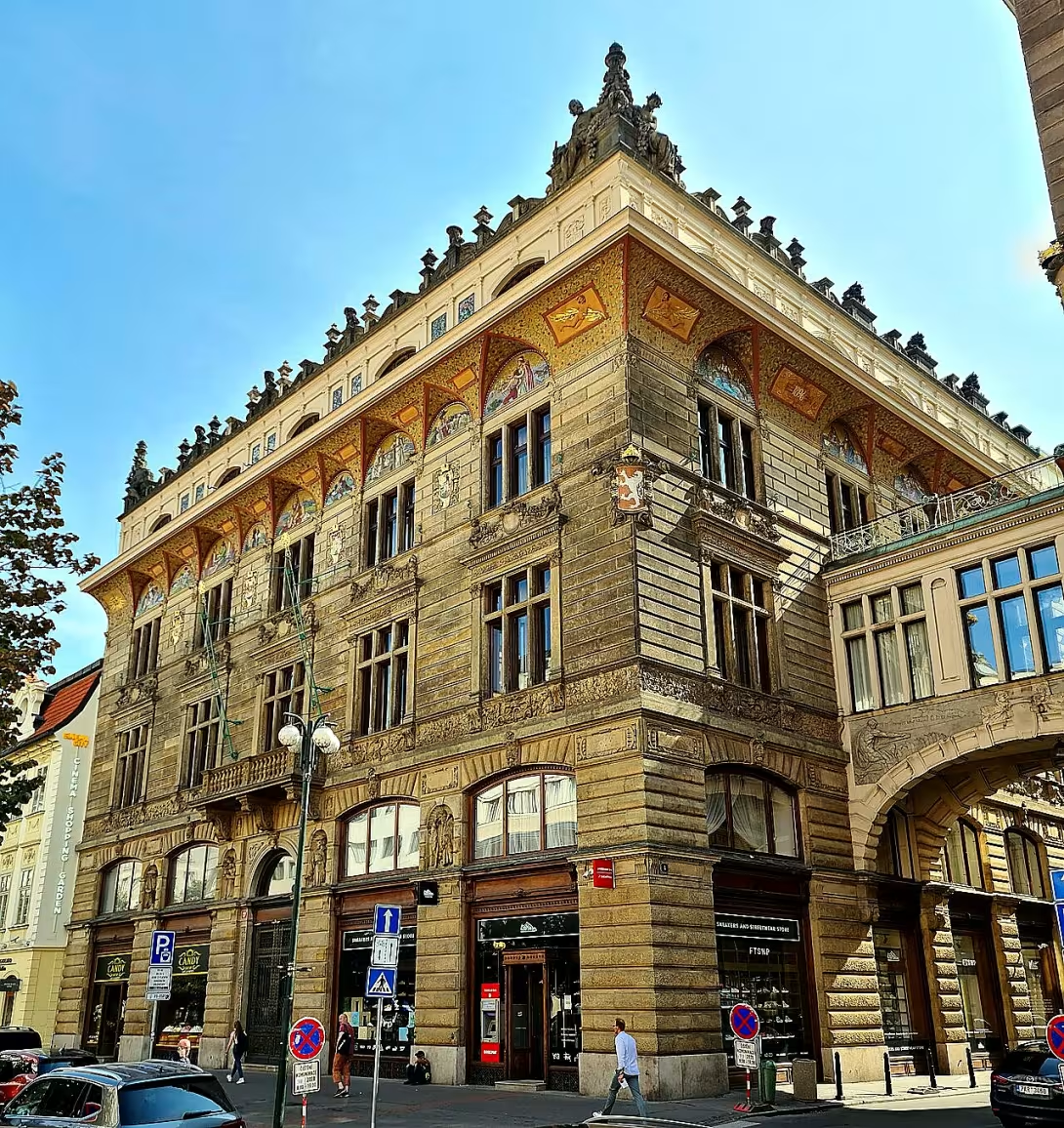
The Palace of Živnostenská banka at the address Na Příkopě 20 in Prague 1 is a significant Neo-Renaissance building from 1894- 1896. It represents one of the last works of this composition in our country. The building was famous for its rich sculpture and painting decoration, in which the leading figures of the Czech art scene of the 19th century participated. Since 1958, the building has been registered in the Central List of Cultural Monuments.
The history of the place dates back to 1621, when the building of the original palace started on the corner of the streets of Na Příkopě and Nekázanka, since 1833 known as the Nostic Palace. After many reconstruction, the building became the seat of the Patriot Museum in 1845. In 1868 Živnostenská banka was created for Bohemia and Moravia. It was the first bank in the Austrian-Hungarian monarchy, financed exclusively by Czech capital, which supported the development of the national economy. The old Nose Palace was demolished in 1893 to make room for a new building.
The project of the building was developed by architect Osvald Polívka, the company Josef Sakar ensured implementation. The five-storey corner house has a rectangular plan. The facade on the first floor is decorated with statues of Science, Agriculture, Industry and Business by Stanislav Suchard. On the third floor there are signs of Czech cities from Celda Klouček, which is also the author of Art Nouveau ornaments. The original Baroque portal from the Nostic Palace, supplemented with statues of eagles and vases from Matthias Bernard Braun, was placed in the side facade in Nekádance. In 1909, connecting bridges were built across the street of Nekádeanka and the fourth floor of the rear building was added in the years 1927-1928 according to the Jan Žák project.
The interior of the palace stands out with a representative concept. There are wall paintings of Max Švabinský in the entrance hall. The monumental staircase is dekrosed by the bronze sculptures of whitelighter by Bohuslav Schnirch and the lunettes of Karl Vítěslav Maška. The main courtyard with glazed ceiling is lined with allegorical sculptures of Czech regions, on which Stanislav Sucharda, František Hergesel, Bohuslav Schnirch and Antonín Procházka worked. The decoration is supplemented by the medallions Karl IV and Rudolf II by Alois Folkmann or by paintings on the glass ceiling by Rudolf Říhovský.
Property history reflects changes of Czech society. The building was owned by Unicredit Bank, then billionaire Radovan Vítek and the Chinese investment group CEFC, after the Trade and Earth Bank. Since 2024, the company Art Palace Prague has been the owner, which uses the premises as a gallery of contemporary art. In the past, the house also served as the headquarters of the Prague Information Service Information Centre or as a movie set.
This palace is a unique document of Czech national emancipation and of the highest historical history, where architecture is connected to the pieces of the most important artists of its time. Visiting these premises offers the possibility to see one of the best preserved representative buildings in the late 19th century in Prague.
Historical milestones
- 1894
- Opening of the building of the Neo-Renaissance Palace according to the Osvalda Polívka project.
- 1909
- Construction of interconnecting bridges across Nekadukanka Street.
- 1958
- The building is declared a cultural monument.
- 2024
- Opening a gallery of contemporary art in the palace premises.
Architectural development
The building was built as a Neo-Renaissance bank palace using elements from the original Nose Palace, including the Baroque portal. In 1909, connecting bridges were built across Nekadukanka Street. In 1927-1928, the fourth floor was added to the rear building according to the Jan Žák project.
Historical events
1868: Establishing a Trade Bank for Bohemia and Moravia. 1893: Demolition of the original Nose Palace. 1958: The building is listed in the list of cultural monuments. 2024: Contemporary art gallery building conversion.
Owners
Živnostenská banka, Regional Bank, Unicredit Bank, Radovan Vitek (CPI Property Group), CEFC, Art Palace Prague
Points of interest
- Živnostenská banka for Bohemia and Moravia was the first bank in the Austrian-Hungarian monarchy, which was financed exclusively by Czech capital. - The building is a significant new Renaissance building from 1894 to 1896 and represents one of the last works of this style in Czech countries. - An original Baroque portal from the Old Nostic Palace was installed in the side facade of Nekázanka Street, which was supplemented by statues of eagles and vases from Matyas Bernard Braun. - In the interior of the palace there is a main courtyard with a glazed ceiling, lined with allegorical sculptures of Czech regions. - Since 2024, Art Palace Prague has been the owner of the building, which uses the premises as a gallery of contemporary art.
Guide
Show guide text
This text was created by artificial intelligence and has not been editorially reviewed. It may contain inaccuracies.
Welcome to the heart of our metropolis. You are standing in front of one of the most important and beautiful building units in this part of Prague. Take a look at this monumental palace, which affects you with its immense size, nobility and peace, even if it is located in the busy center of the city. Feel the atmosphere where history meets art and where every line of building tells the story of strength, ambition and national pride. This object is not just an ordinary building, it is a symbol of a certain era that shaped our identity. Let us now return to the time this palace was born. Imagine the end of the nineteenth century, a period of great changes and the rise of the Czech nation. It was during these important years, namely from 1894 to 1896, that this construction was to be an expression of new economic power. A new face of the city grew up in the place where the older Nose Palace was used to be. The whole project was led by a visionary, architect Osvald Polívka, who collaborated with Jan Žák. Their aim was to create a work that, with its splendor and significance, would correspond to the prestige of the institution it was intended to serve. This palace has become one of the last great examples of the Neo-Renaissance style in our countries, which gives it special value as the conclusion of one important chapter in the history of our architecture. Now pay attention to the construction itself and to what you see right in front of you. When you look at the facade, feel the richness that surrounds you. It is the ultimate work of the Neo-Renaissance, which means that in architecture you seek harmony, order and references to the golden age of classical art. Notice how richly decorated the building is. It's not just the stone walls, it's the overall decoration that involves rich sculpture and painting work. If you look at the side part of the building on Nakazanka Street, remember how this space is connected to the surrounding area. In 1909, the connecting bridges across the Nekdazanka street were included in this architecture, which provided additional dimensions and dynamics to the building. This whole object is perceived as a harmonious whole, where architecture and art form one integral mass. But this palace is much more than just rock and mortar. It's a huge gallery that hosted the greatest creator of its time. The most important personalities of the then Czech art scene participated in the decoration of this place. Imagine the hands and minds of the people who put all their skill and vision into these decorative elements. Stanislav Sucharda or Celda Klouček have been involved in the creation of this space. In every detail of the decoration you can feel the presence of masters like Mikoláš Aleš or Max Švabinský. They put their souls into this work also Bohuslav Schnirch, Karel Vítězslav Mašek and Matyáš Bernard Braun. CZECH NOTE: Now when you look at the rich shapes and painting elements, remember that in every cut into the stone and in every turn of the line there is the work of these great artists who tried to capture the spirit of their time. And now I'm going to tell you something that gives this whole place a deeper and maybe a little mysterious meaning. Maybe someone will ask you why this building was so incredibly important to the company back then. The answer is not only in its beauty, but in its foundation. This building was the seat of the Trade Bank, which was absolutely exceptional. It was the very first bank in the entire Austrian-Hungarian monarchy, which was financed exclusively by Czech capital. At a time when power and money were often in the hands of other forces, this palace was a symbol of the independence and economic rise of Czech countries. So every stone and every statue here carried the weight of national pride and self-determination. Today, this historic space is changing again and opening up to new generations. Even though the building has been declared a cultural monument since 1958, its life continues. In 2024, a new gallery of contemporary art opened in its premises. It creates a fascinating connection between the history that you are admiring right now and the art that is being created right now. This palace remains a living place that constantly links the past to the present. I hope this short journey in the history of this important place has inspired you and helped you better understand what's in his facades. Continue to discover the beauty of Prague and do not get tired of what every other street offers and every other monument. Goodbye.
Tips for visitors
The best time to visit is in the morning on working days, where you can avoid the greatest burden of tourists and you can admire the details of the Neo-Renaissance architecture and the rich decoration of the facade.
The location is located in the heart of the metropolis, therefore we recommend to use public transport.
For photography we recommend to use the morning light, which beautifully paints plastic elements on the front of the building. The best shots will be taken from the opposite side of the street, from where the palace's total monumentality stands out.
Within 30 minutes walk you can visit the Powder Gate, Municipal House, Old Town Square or Wenceslas Square. For families with children the route between these points is easy and offers plenty of space to walk in the historic environment.
Bring comfortable shoes for walking on historic tiles and a camera. The entrance to the building and any tours are governed by the current rules of the building administrator, so check the possibilities of entering the official website in advance.
Frequently asked questions
Can the monument be visited?
Some buildings of this kind are open for guided tours, others serve another purpose or are privately owned. We have not verified whether and when this monument is open – please ask the operator.
What are the opening hours and admission?
We have not verified the opening hours or admission. Current information is published by the operator.
Where is the monument?
Location: Praha 1, Hlavní město Praha. The map on this page shows the exact spot.
Why is the monument protected?
It is listed in the Central List of Cultural Monuments of the Czech Republic as a cultural monument (register no. 1000152036).
Businesses nearby
Do you run a restaurant, accommodation, shop, museum, rental, wellness or other visitor service near this monument? Show yourself directly to the people heading to it — this is how they will see you in the app and on the web:
Events nearby

Zdroj akcí: otevřená data měst a obcí ČR (Národní katalog otevřených dat) a kalendář akcí Národního památkového ústavu.
Nearby
Prašná brána, Obecní dům, Staroměstské náměstí, Václavské náměstí.
Accommodation nearby
Trips and activities nearby
Guided tours, tickets and activities nearby from GetYourGuide
Affiliate link: if you buy from the partner, we may receive a commission. The price for you does not change.
Search tours and activities →Themed route
Thematic cruise route: Historical center of Prague
1. Živnostenská banka (Palace)
Type: Architectural monument
Why is it worth a visit: This elegant palace, located in Wenceslas Square, is originally from 1906 and stands out for its historical architecture. It is one of the most beautiful buildings in Prague and today hosts various cultural events.
2. Dust gate
Type: Historical castle passage
Why is it worth visiting: This gate is one of the oldest preserved castle entrances to Prague. Its Gothic elements and history resemble the earlier times of the city when it was part of the defense system.
3. Municipal House
Type: Historical building
Why is worth a visit: Located in the Old Town Square and is known for its important history. It was built in the 16th century as the seat of the Magistrate and today hosts various cultural events, including concerts.
4. Old Town Square
Type: Historical town square
Why is worth a visit: This beautiful and historically rich square is the center of Old Town. It is known for its Gothic city hall, ancient architecture and atmosphere, which attracts many tourists.
5. Wenceslas Square
Type: Historical town square
Why is it worth visiting: This is the largest and most important public area in Prague. It is known for its history, which includes important events of Czech history, and hosts various cultural events and protests.
This route offers a view of the most significant historical and architectural monuments in the centre of Prague.
Seasonal recommendations
In spring the building shines in fine light and the surrounding greenery in the city centre begins to bloom. The atmosphere is fresh and full of energy, which underlines the purity of architecture. We recommend visiting the palace in the morning when there are fewer people. Clothes should be layered, because morning cold can still smell.
The summer sun highlights the details of the facade and there is a moving rush in the streets. In the main summer season, expect large crowds of visitors. The best time for arrival is early morning to avoid the greatest heat and queues. Choose light and airy clothes.
Autumn brings golden colors of leaves and a slightly melancholy mood. The light is softer, which creates a pleasant atmosphere for admiring the details of the building. Due to unstable weather, don't forget the waterproof coat or umbrella. An ideal visit in the afternoon.
In the winter, the palace acts nobly in contrast to the grey sky and the freezing air. In Advent time, there's a holiday mood in the neighborhood. It is necessary to have warm clothes and fixed shoes. Follow the shortened opening times that are common in this period.
Visualizations and artistic views


The visualisations are generated by artificial intelligence and serve as inspiration.
Photos from the area
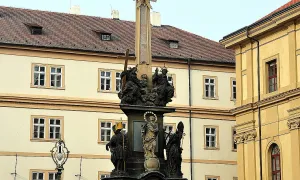
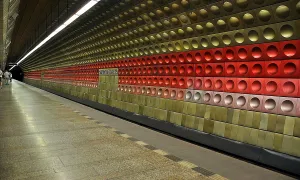
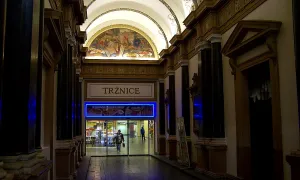
Real photos taken near the monument

Zdroj a licence jsou uvedeny u každého snímku.
Tips from visitors
No tips yet. Be the first!
Log in and add your tip.
Sources and literature
Photos: Ricardalovesmonuments / CC BY-SA 4.0 — Wikimedia Commons. The author and licence also appear when you hover over the image.
Faktickým podkladem tohoto textu byl článek na Wikipedii, jehož autory jsou přispěvatelé Wikipedie. Článek je dostupný pod licencí CC BY-SA 4.0.
Location on the map
Příběhy a pověsti
Legendy, pověsti a příběhy spjaté s touto památkou
Fotografie návštěvníků
Zatím žádné fotografie. Buďte první, kdo přidá fotografii z návštěvy!
Log in a přidejte svou fotografii nebo hodnoťte.
Za ověřenou návštěvu v aplikaci získáte víc bodů — poznáme podle GPS, že jste na místě.
Reviews and comments