






Zlatnice Homestead
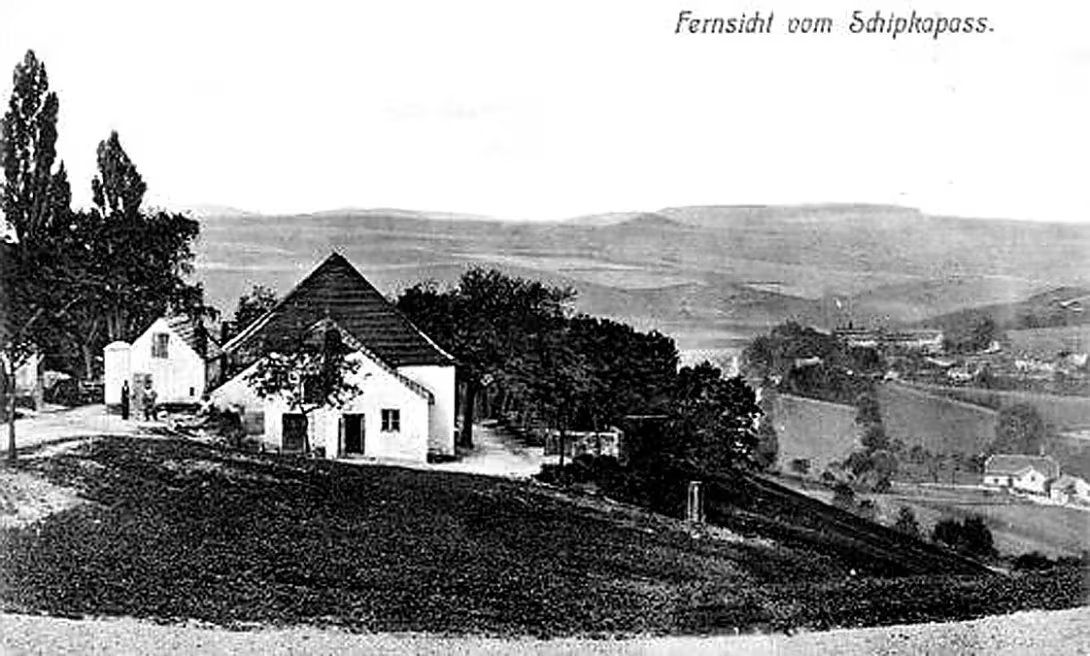
The former Baroque economic estate and the former cruise inn Zlatnice are located in Prague's city area Dejvice at the end of the same-name street above the valley of Silvé Šárka. The building was created in the 17th century at the site of the vineyard press. At the turn of the 19th and 20th centuries it became a famous trip place for Prague's German-speaking students. Today it is a monument-protected, but very decrepit building with a rich cultural and literary history.
The establishment of the estate is connected with the wine tradition in the Šárecký valley. From 1660 to 1690, the land was owned by a small-scale goldsmith master Gabriel Geldenhauer. He has distinguished the imperial privilege of free enterprise and has merged three smaller vineyards here. After his death, two sons, also goldsmiths, were managing his estate. It is the craft of this family that gave place to its original and current Czech name Zlatnice. In 1708 the chapel of the Holy Trinity was built on the grounds, which formed a significant element of the complex until the second half of the 20th century.
The fundamental change in the use of the building was brought by the 1970s, when the estate was acquired by Morice and Anna Mild, from Litoměřická. Due to the barren nature of the land, the original farming has become a secondary activity and the owners in the building have established a inn. In the last quarter of the 19th century it became the declared goal of the German students in Prague. Visitors came here on foot from the centre of Prague via the Charles Bridge, Hradčany and Bruska Gate, around Hadovka and over the edge of the Šárecký Valley.
In 1876 or 1877 the inn received the nickname Schipkapaß from medical students according to the Arrow Pass in Bulgaria, where the Russian-Turkish war fought. The German bourgeois expressed their sympathy for the Turkish army with this name. The innkeeper Moritz Milde himself wore red fez and got the nickname Osman Pasha, his wife called Suleika and the cook Zoraid. The rooms of the inn were given recessive names: for example, the Eagle Hall according to the tobacco concessions with c and k eagles, the Mirror Hall according to the ordinary mirror or the Laboratory as the designation of the pantry. The innkeeper Milde, a graduate of the Libverda School of Economics, also chose from the guests a recessive spa tax of five tailors for watching the sunset.
The inn became an inspiration for literary works. Karl Hans Strobl placed in Schipkapaß the plot of his student novel Der Schipkapaß from 1908, published later under the name Die Flamänder von Prag. He also mentioned it in the autobiography novel Die Vaclavbou from 1902. In it is a character called Siegmund Pick, known as Abraham, who was known as the factor of German college. In his Diaries, the writer Franz Kafka also remembers the journey to this inn, who came here after his final breakup with Felice Bauer at Max Brod's company.
After the death of the innkeeper in 1910 and after his son fell in the First World War, the inn began to fall. In 1920, the estate faced criticism in the local Dívik press as a German island which does not hand over the crop and does not follow the police hour. In 1921 the heirs were sold to Czech builders and the name Zlatnice was again used. The innkeeper's activity here probably worked until World War II, after which the estate became the property of the village.
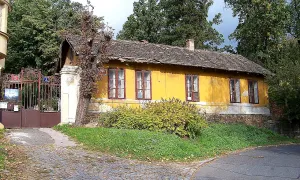
From the original building site only a simple ground-floor building in a desolate state has been preserved. The Baroque Chapel of the Holy Trinity was demolished in 1961 and there is now a garage in place of former economic buildings. Since 1964, the rest of the building has been protected in a landmark way, but it continues to deteriorate. The preserved ruins have old massive chestnuts.
The residence Zlatnice is a valuable proof of the transformations of Prague's suburban life and of the specific student subculture from the period of national tension at the turn of the 19th and 20th centuries. Although the construction is in critical condition, its historical trail in the literature and memory of the site remains significant. A walk to the ruins of the estate on the edge of Silent Šarka offers an authentic meeting with a less well-known chapter in Prague's history.
Historical milestones
- 1708
- Building the chapel of the Holy Trinity.
- 1879
- The property of the Milde family and the development of the estate as a student inn.
- 1908
- Publishing the novel Der Schipkapaß in which the inn plays a major role.
- 1961
- The destruction of the Holy Trinity Chapel.
Architectural development
The estate was established in Baroque style in the place of the vineyard press. In 1708 the chapel of the Holy Trinity was built on the grounds, which was demolished in 1961.
Historical events
1708 building the chapel of the Holy Trinity, 1877 naming the inn Schipkapaß, 1961 breaking down the chapel.
Owners
1660-1690 Gabriel Geldenhauer and his sons, since 1879 (probably 1876) Moritz Milde and Anna Mildová.
Points of interest
- The name Zlatnice comes from the craft of the miniature goldsmith Gabriel Geldenhauer and his sons, who owned the land in the 17th century. - The inn received the nickname Schipkapaß from the students according to the Bulgarian Pass of the Russian-Turkish War. The innkeeper Moritz Milde wore red fez and was nicknamed Osman Pasha. - The inn rooms had recessive names, for example, the pantry was called the Laboratory. In addition, the innkeeper chose from the guests a recessive spa tax of five tailors for watching the sunset. - The inn has become an inspiration for Karl Hans Stroll's literary works. In his Diaries, the writer Franz Kafka also remembers his trip to this inn.
Guide
Show guide text
This text was created by artificial intelligence and has not been editorially reviewed. It may contain inaccuracies.
Welcome to Prague's Dejvice. You're standing in a place that carries an incredible depth of time and a layer of stories that have been pouring around for centuries. You may find this surrounding architecture peaceful and ordinary, but try to close your eyes for a moment and soak up the atmosphere of this space. Imagine that you are constantly moving around in a time when the Baroque estate was slowly turning into a living center of social life. What you see around you is a reflection of history that is constantly being rewritten.
Let's go back deep into the past together to understand why this place is called Zlatnice. The name you're hearing today is not random. In the seventeenth century, it was not what we see today, but a place that was firmly linked to the craft. Originally there was a vineyard press, a place where wine was processed, which suggests that this area was once much greener and more agricultural than it is today. But the key figure for this name was a man named Gabriel Geldenhauer. He was a major Prague goldsmith who owned the land. His presence and work with precious metals have left a permanent mark in the memory of the site, which we have kept for centuries through this name. Imagine the goldsmiths' workshops, the precise work and wealth that brought this name to the site.
Now pay attention to how this place has changed over the years. The Baroque estate has become a place with a deep spiritual dimension over time. In 1708 the Chapel of the Greatest Trinity was built here. Even though this chapel no longer exists in 1961 and its shadow is no longer visible today, its existence has shaped the character of the whole area for more than 200 years. It was an anchor for the locals and for those who were just passing by. Even if you don't see her physically today, her spirit is still part of the history of this place.
Let us now move on to the period when Zlatnice became a place that was known far beyond the borders of Dejvic. The second half of the nineteenth century brought a major break. The estate stopped being just an agricultural and family residence and started living a new, social life. In 1879, the inn became a real center for popular people. But it wasn't any inn. It has become a well-known place for students, especially those who spoke German. Imagine those nights full of loud debates, laughter and discussions about science, art and politics. Zlatnice became a point where young minds met and the views of the next generation formed.
During this period, the site began to connect with Europe's great history. The atmosphere of the inn was strongly influenced by the then political storms, namely the Russian-Turkish conflict. This political tension has been written into every conversation at the table and every view of the guests. It was this era and the connection to the war that gave rise to something very special. The inn got the nickname Schipkapaß among the students. This name was not chosen by chance, but it referred to the Bulgarian Pass, which played a key role in the Russian-Turkish conflict. This symbolism gave the place a sense of importance and associated its peaceful homestead with great world events.
If you look around now, try to perceive the atmosphere of this place through its history. Even if you no longer see the original Baroque details in their full splendour, you still feel the nobility of the former estate. Pay attention to how history intertwines with human destiny. One of the most striking stories connected to this place is the story of an innkeeper named Moritz Milde. He was a character no one dared to forget. Milde wasn't just a simple provocation of the inn, he was his soul.
And here comes the truly fascinating part that may surprise you. Moritz Milde was not like the other innkeeper. In order to stand out and maintain his unique personality, he wore red fez. Imagine the scene: in Prague's Dejvice, in the middle of students and intellectuals, an innkeeper in a bright red headgear, serving guests and becoming the center of attention. This colorful personality and the inn itself have become such a powerful motive that they were later written about in literature. In 1908 the novel Der Schipkapaß was published, in which this inn and its atmosphere played a major role. The author, Karl Hans Strobl, was able to capture the elusive spell Zlatnice had at that time. Thanks to him, the story of students, red fez and Bulgarian passes became part of the cultural heritage.
Now I want to invite you to think a little bit about how much one place can change. From the goldsmiths' trade, to wine, to religious devotion, to student debates and literary legends. Zlatnice is not just a building or a plot. It's a palimpsest, a pedestal of events that left a trail. Although some elements, like the chapel, have already died, their significance remains in the memory of the place.
In front of you, there are still other possibilities for exploring. Dejvice is full of other hidden treasures and historical clues that await your discovery. Before you go any further, please stop for a moment, see this space and remember the goldsmith, the students and the innkeeper in red fez. Thank you for sharing this story with us. We wish you a beautiful and inspiring walk in history.
Tips for visitors
To visit the former Baroque estate Zlatnice in Dejvice, Prague, it is best to choose the morning hours when you are welcomed by a quiet atmosphere and pleasant light ideal for exploring the history of this place. Transport to the area is possible by car and public transport, with specific connections and parking options best checked in advance in the current search engine. Take with you comfortable shoes for walking in the field and possibly a small snack, because it is a historic place without commercial facilities right on the premises. Photography of the estate and its details will excel best in the morning side light, which will nicely draw the Baroque architectural elements and create an authentic atmosphere of old Dejvice. As a destination for further discovery in the surroundings within 30 minutes walk you can choose the picturesque valley of Silent Sárky, which offers beautiful nature for a quiet walk of the whole family.
Businesses nearby
Do you run a restaurant, accommodation, shop, museum, rental, wellness or other visitor service near this monument? Show yourself directly to the people heading to it — this is how they will see you in the app and on the web:
Events nearby

Zdroj akcí: otevřená data měst a obcí ČR (Národní katalog otevřených dat) a kalendář akcí Národního památkového ústavu.
Nearby
Silent Scarf Valley.
Accommodation nearby
Trips and activities nearby
Guided tours, tickets and activities nearby from GetYourGuide
Affiliate link: if you buy from the partner, we may receive a commission. The price for you does not change.
Search tours and activities →Themed route
Thematic cruise route from the village Dejvice
1.Zlatnice - Type: Historical building - Why is it worth visiting: Zlatnice is one of the oldest buildings in Prague, originally serving as a brewery. Today they host a restaurant and a cafe offering an opportunity to explore the history of a place with a modern experience.
2. Park at Zlatnice - Type: City park - Why it is worth a visit: Park at Zlatnice is ideal for short walks and relaxation in peace, with pleasant greenery and comfortable seating. It's a place to relax after visiting Zlatnice.
3. Valley of Silent Scarf - Type: Natural area - Why is it worth a visit: The valley of Silent Scarka offers beautiful landscapes and a peaceful atmosphere, ideal for its walk or picnic. It's a place where you can enjoy nature near the capital.
4. Vývov Dejvice - Type: City square - Why is it worth a visit: Naves Dejvice is the heart of the village where various cultural and commercial objects are located. It's a place full of life where you can explore local shops or enjoy cultural events.
5. City Library Dejvice - Type: Cultural institutions - Why it is worth a visit: The City Library Dejvice offers an extensive collection of books and various educational events. It's a place for those who want to read or look at interesting exhibitions.
This route offers a combination of history, nature and urban experiences in the Dejvice area.
Seasonal recommendations
Spring brings awakening nature, when the surrounding green zone and adjacent slopes turn their colour into fresh shades and the sun's rays begin to warm up after cold months. The lighting is very bright and clean in this period, which ideally highlights the architectural details of this historic building. Given the gradual warming and the elongating days, it is ideal to visit in the morning when so many people are not moving. From the point of view of clothing, layering is worth it because spring weather is usually variable and morning cold can quickly turn into pleasant heat.
Summer offers a completely different atmosphere associated with lush vegetation and fully blooming surroundings, which creates a pleasant contrast to historical walls. The sun shines long into the evening and the late afternoon provides a golden light which is best suited for the acquisition of quality photos. The main tourist season brings with it a larger number of visitors, which is why the best time is early morning, when there is the most calm. The practical board includes the need for headgear, sunglasses and adequate supply of drinking water, as temperatures can reach high levels.
Autumn turns the whole scenery into a colorful palette of warm colors from yellow to brown, which gives the place melancholy and romantic character. The low autumn sun creates long shadows and a specific foggy atmosphere, especially in the morning. The crowds of people from the summer months have already dropped, so the visit during the afternoon is very quiet. In view of the colder wind weather and possible morning dew, it is necessary to wear fixed shoes, a warm sweater and a waterproof jacket, because the weather is often dry.
Winter covers the memory of silence and, in the case of snowfall, into a pure white veil that dampens the surrounding bustle of the city. Early dimming and early morning shadow give the place a mysterious character that underlines the winter atmosphere without tourism. The best time for a tour is around noon, when daylight is the strongest. Due to freezing temperatures and slippery surface, it is necessary to choose high-quality winter clothes, hat, gloves and fixed shoes with anti-slip soles.
Visualizations and artistic views

The visualisations are generated by artificial intelligence and serve as inspiration.
Photos from the area
Real photos taken near the monument


Zdroj a licence jsou uvedeny u každého snímku.
Tips from visitors
No tips yet. Be the first!
Log in and add your tip.
Sources and literature
Photos: Unknown authorUnknown author / Public domain — Wikimedia Commons. The author and licence also appear when you hover over the image.
Faktickým podkladem tohoto textu byl článek na Wikipedii, jehož autory jsou přispěvatelé Wikipedie. Článek je dostupný pod licencí CC BY-SA 4.0.
Location on the map



Příběhy a pověsti
Legendy, pověsti a příběhy spjaté s touto památkou
Fotografie návštěvníků
Zatím žádné fotografie. Buďte první, kdo přidá fotografii z návštěvy!
Přihlaste se a přidejte svou fotografii nebo hodnoťte.
Za ověřenou návštěvu v aplikaci získáte víc bodů — poznáme podle GPS, že jste na místě.
Reviews and comments