



Bartovice Settlement
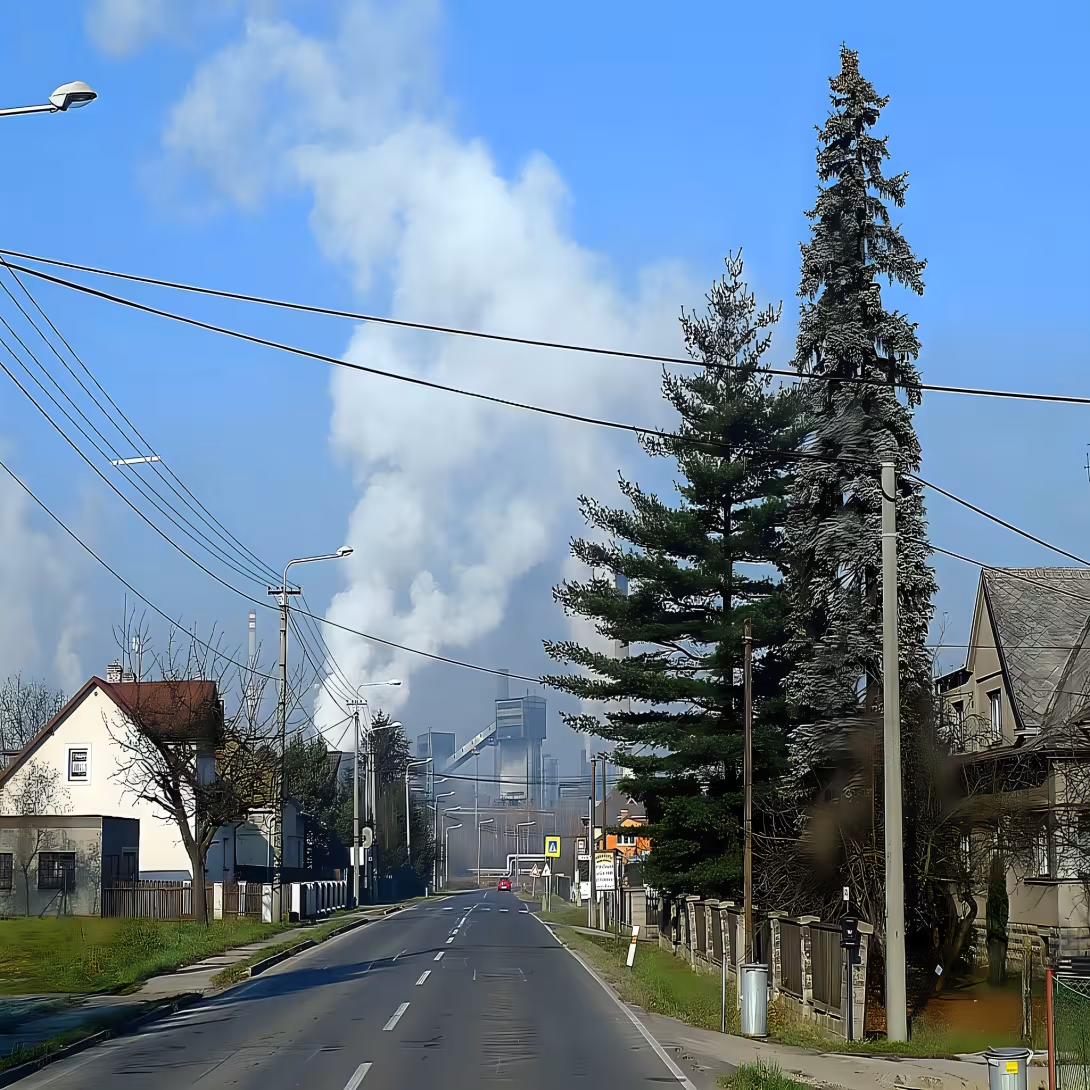
Bartovice are the former municipality and the current local part of Ostrava's town district Radvanice and Bartovice. They are located in Ostrava, the Ostrava-město district in the Moravian-Silesian region. This site is listed as an object of medieval origin, whose history is evidenced primarily by written sources. The oldest record dates back to 1305, when the tithes of the Wroclaw bishopric were listed as Bertoltowitz. Here you can find the beginnings of their documented history, even if the type of object is given as "others." The location lies in the surrounding area, which in the past affected the estate, agriculture and later industrial production.
The creation and historical context of Bartovic are quite recognizable in the background. The oldest written mention from 1305 is part of the tithes of the Vratislav Bishop. In 1411 he sold Ješek Kornic Bartovice, registered as Bartelsdorf, Ondřej z Tvorkov. They became part of the Polish Ostrava estate, which belonged to them until the mid-1970s. In 1738 Jan Maximilián Bohuslav Skrubenský from the match Bartovice and Radvanice sold František from the match. Both villages remained part of the Schev estate until 1848. At that time, the municipality was mainly of an agricultural character, which gradually began to disappear from the surrounding industry at the beginning of the twentieth century.
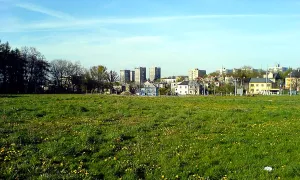
Architectural expression is not described as a specific material structure, but rather as the character of a village building with individual houses. According to the facts available, Bartovice maintained a village character, although their location was influenced by the industrial area. Most of the part is located at an altitude between 250 and 270 metres above the valley of the river Lucina. Like the neighboring Šenov, Bartovice retains the appearance of a village with separate houses. However, air quality is strongly affected by the metallurgical area in the west. In the north there is a Bartovický forest with a pond.
The owners and managers of Bartovic are listed as follows: one of the first known owners was Ješek Kornic, from which they were sold in 1411 to Ondřej z Tvorkov. Subsequently they were part of the Polish Ostrava estate until the mid-1970s. In 1738 they were sold by Jan Maximilián Bohuslav Skrubenský from the Castle František Skrubenski from the Game, after which they belonged to the Shenovský estate. Property ratios have changed in history, but written records of them are fairly brief.
Key events and attractions are listed chronologically in the background. In 1305, the first written mention appeared. In 1411 the sale took place from Ješka Kornice and in 1738 the sale of Bartovic and Radvanic. The territory was liberated on May 2, 1945 by the Red Army. In 1895 he died in the pub of Bardoň, Bardoň's family, which became an inspiration for Peter Bezruč's poem. In 1960 Bartovice was connected to Ostrava. In 2019, a club was established for the smallest children of Bartek and a library, both as part of the Ostrava City Library.
Today, the Bartovice is a local part of Ostrava and the supporting documents appear as a village building in the background of the industrial area. In the village there is an indoor swimming pool and several cycling trails. The western edge of the cadastral area is Bartovice in the area of Nové huti in Kunčice. The village intersects highway type 11 communication. The main urban road is road II / 479 (Těšnícská street) with suburban buses and urban transport, namely lines 38 and 28 on tram loop Hranezník. The southwest part of the cadastral near the railway passes through the road II / 478 (Shenovská street). The railway station Ostrava-Bartovice is significant as the freight station, which was used to drive coal and iron-ore wagons into the rail. Passenger trains provide connections west to Opava via the Háj in Silesia and Svinov, east via Havířov to Český Těšín. The dual-track line is electrified by 3000 volts DC.
Czech physicist and scientist Armin Delong were among the important figures of the region. The documentation also includes Petr Bezruč, whose poems were related to the event at the Yachurce pub. Bartovice also became famous for the video game Vrba. This information shows that even in a small village, roads to culture, science and technology can be nicked in history.
In the historical context, it is interesting that in 1305, when the first written mention was made, church administration and feudal relations were consolidated in Europe, which was reflected in the tithes lists. In this sense, Bartovice can be considered as part of a medieval territory whose history is evidenced by administrative records rather than monumental history. Chronological registration from 1305, subsequent sales in 1411 and 1738 and later connection of the village to Ostrava in 1960 is crucial.
The answer to whether Bartovice is a historical monument is not simple. It is a former village that became part of Ostrava after 1960 and has undergone a change over the years from an agricultural village to an industrial site. Her fate is linked to purchases, estates, transport relations and building developments. Today, not only history, but also transport and culture are at the heart of the agenda. When visiting, it is advisable to consider that Bartovice lies at an altitude of 250 to 270 metres above the valley of the Lučina river and its surroundings form a forest, pond and industrial area. Since this is the local part of Ostrava, their perception is specific.
In conclusion, Bartovice is documented as a historical community with the beginning of written tracks in 1305. Their history bears elements of medieval manor, agriculture, industry and modern connection to the city. For a curious tourist, this monument is particularly interesting by a change from medieval record to today's. The visit to Bartovic can thus be linked to historical exploration and recognition of regional heritage. Those who stop by should remember that this is part of Ostrava, which, even in the industrial area, has kept something from the village past. The invitation to visit is natural because the historical Bartovice are described with a clear support in written records and their importance can be read in the context of the entire region.
Then and now
Drag the slider to compare how the landmark may have looked when it was built with the view today.
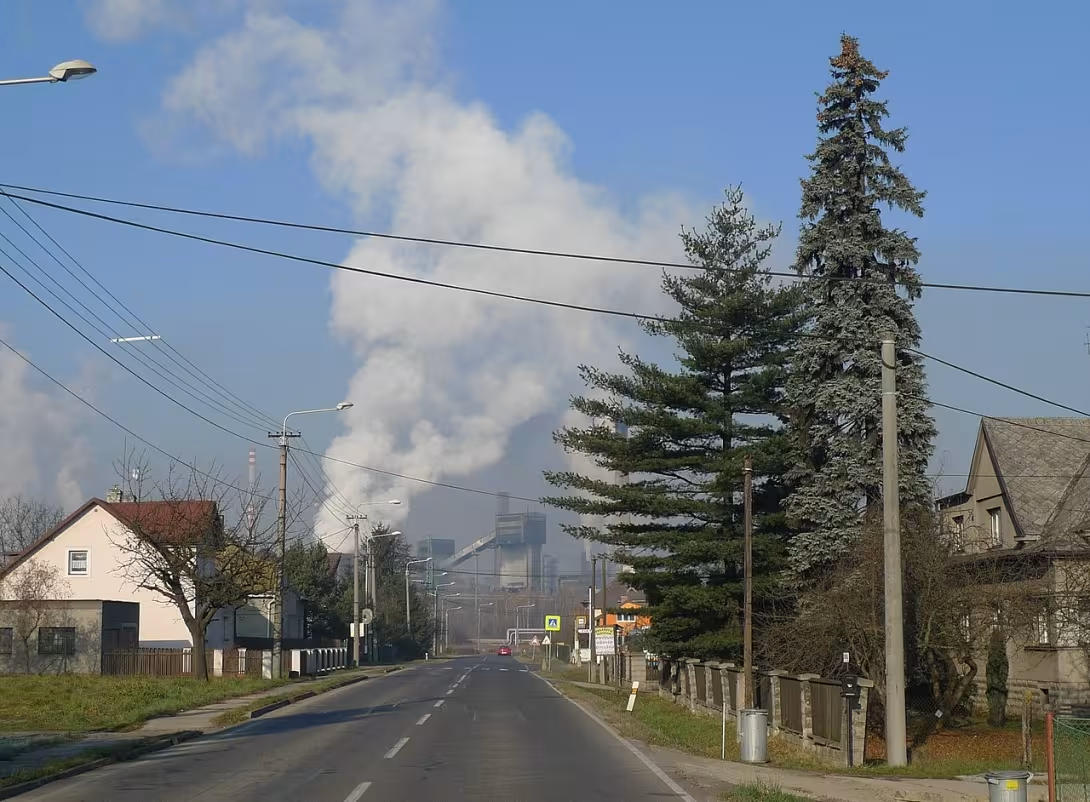
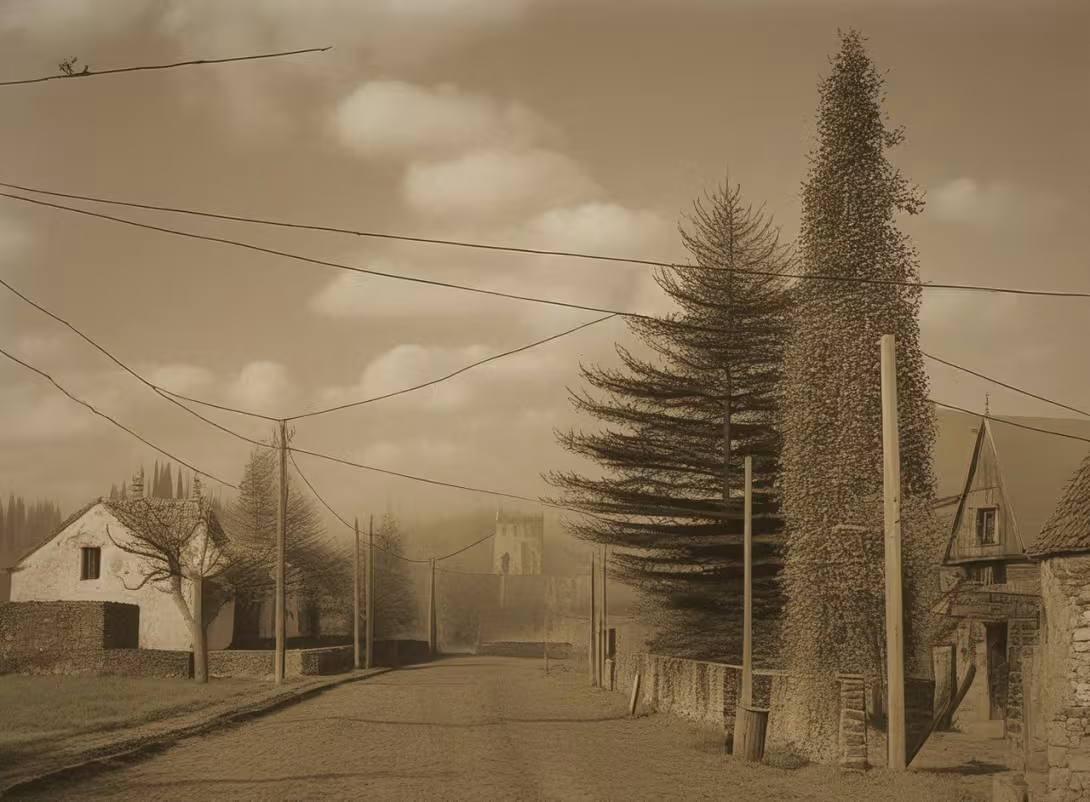
The historical appearance on the left is an AI-generated visualisation and serves as inspiration only.
Historical milestones
- 1305
- The first written mention in the schedule of tithes of the Wroclaw Bishop under the name Bertoltowitz.
- 1411
- The sale of Bartovic by Ješek Kornice Ondřej from Tvorkov.
- 1738
- Sale of Bartovic and Radvanice František Skrubenski from the match.
- 1960
- Connection of Bartovic to Ostrava on 1st January.
Architectural development
The village maintained the character of a village building with individual houses. The look and air quality are currently strongly influenced by the metallurgical area in the west.
Historical events
1305: the first written mention in the schedule of tithes of the Wroclaw Bishop; 1960: connection of the village to Ostrava; 1945: Liberation by the Red Army May 2
Owners
Ješek Kornic (until 1411), Ondřej z Tvorkov (from 1411), Polish Ostrava Manor (until the middle of the 17th century), Jan Maximilián Bohuslav Skrubenský from the Game (until 1738), František Skrubenský from the Game (from 1738), Shenovský Manor (until 1848)
Points of interest
- The oldest written record from 1305 lists the place under the name Bertoltowitz. - In 1411, Ješek Kornic sold Bartovice Ondřej from Tvorkov. - In 1895 he died in the pub of Bardoň, Bardoň's family, which inspired the poem by Peter Bezruč. - The territory was liberated by the Red Army on May 2nd, 1945. - In 2019, a club for the smallest children was established in the village.
Guide
This guide is narrated by a synthetic voice generated by artificial intelligence.
Show guide text
This text was created by artificial intelligence and has not been editorially reviewed. It may contain inaccuracies.
Welcome to Bartovice. Stop for a second and look around you. You're standing in a place that's very strange these days. Even if you are in the heart of the industrial region, in Ostrava itself, you probably feel that you have moved somewhere else entirely. Notice the calm and atmosphere surrounding you. In front of you is an installation that, despite the pressure of the great city and the proximity of the factories, has maintained its original character as a village. Look at the individual houses, the locations and how naturally they fit into the landscape. It is indeed a rare phenomenon that in such industrialized surroundings survived a place with the appearance of a small village with individual houses.
Now let's look deeper into the past together to understand how this painting happened. Bartovice has a very long history that goes way beyond the emergence of a modern city. The first written mention of this place dates back to the year three hundred and five. At that time, in the roster of the tithes of the Vrocław bishop's office, the area was listed as Bertoltowitz. Imagine what this place looked like over 700 years ago. It was probably a small settlement in the bosom of nature where life rhymed the sunrise and sunset and seasons.
When we think about how Bartovice evolved, we find that agriculture dominated for centuries. People here have grown some land, kept animals and lived in harmony with the landscape. This village lies at an altitude between two hundred fifty and two hundred seventy metres, giving it a pleasant position over the valley of the local river. It is this link to land and water that has defined the identity of local people for many generations.
Over time, however, ownership of this country has changed. Historical records tell us about different people who had power here. In the year of a thousand and four hundred and eleven he sold Ješek Kornice Bartovice Ondřej z Tvorkov. Much later, in the year thousands of seven hundred thirty-eight, Bartovice and the other Radvanice came into the hands of František Skrubensky of the Game. These changes in owners are typical of the time when villages were often transferred as units between noble families or rich citizens.
Now that you see this atmosphere, pay attention to the development itself. Even if we don't find one particular monumental palace here, the whole village is a monument in its own way. Notice how the houses are located. Follow the street lines and the way the houses turn together. What you see is the result of centuries of organic growth. The agricultural character that we talked about began to slowly disappear in the early twentieth century. At that time, industry began to grow sharply in the area, which changed the face of the whole region. Bartovice, however, managed to preserve their face, which is why they are so fascinating today.
Now let's move on to the people and stories that are connected to this place. Bartovice is not only about houses and data, but especially about people. Among the personalities we associate with this place are Armin Delong or famous poet Petr Bezruč. It is not the hands that put the pain and suffering of the poor in this region into their works, and Bartovice is closely linked to these topics.
There is one very specific and sad story that may interest you. In the year of a thousand and eight hundred and ninety-five, a tragic event took place in a local pub called The Yashčurka. The Bardon family died here. This simple man, whose life was full of toil and bieda, became an inspiration for one of the poems of Peter Bezruč. When you walk the streets, try to imagine what the pub at the time looked like and what life was like for people like Bardon. It was a time of hard contrast between the wealth of industrial magnates and the total poverty of workers and families.
If we move forward in time, we run into the Second World War. Bartovice, like the rest of the neighborhood, went through dramatic events. On the second May of the year a thousand nine hundred forty-five, the territory was liberated by an army from the east. It was a turning point that marked the end of the dark days of the occupation, but at the same time it brought about new changes in state order.
An interesting break in the administrative life of the village was the year one thousand nine hundred sixty. The first January of this year, Bartovice was officially connected to Ostrava. This act made a separate village a local part of a large city. But it is fascinating that despite this connection with the metropolis, Bartovice has kept their village spirit. While concrete blocks and wide roads have emerged in other parts of the city, there are houses and a sense of community.
Stop now and let's ask ourselves why Bartovice is so special. Maybe it's the contrast. You're standing in a place where history from the year thousand and three hundred and five meets a modern industrial city. It is a place where traces of ancient agriculture meet with echoes of poems of poverty and hard work. It's a little island of peace in a sea of concrete and steel.
Look at the surrounding houses again. Feel the silence that exists here, and think about how many generations of people have lived here, worked in the fields, and later maybe went to nearby races. Each of these houses has its own story that is not written in official books, but in the memory of local families.
Bartovice reminds us that history is not only about great battles and kings, but also about small villages, people like Bardon, and how the landscape changes under the influence of time and economy. The fact that you are now offered the opportunity to see this development is a reminder of how important it is to protect the identity of your place.
Now I invite you to take your own walk. Go through the alleys, feel the rhythm of this place and try to connect everything you've just heard in your mind. Follow the details of the houses, observe the green, and look for traces of the old Barts that hide in every corner. Let your curiosity guide you and take a moment to reflect on how the small village of Bertoltowitz became today's part of Ostrava.
Thank you for your attention and I wish you a pleasant rest of the way to discover this unique corner of the Moravian-Silesian region. Enjoy your time in Bartovice and be inspired by their peace and history. Goodbye.
Tips for visitors
The best time to visit is during the summer months when the weather is pleasant and you can enjoy a walk through the village and surrounding nature. It grows green in summer, and the river Lučina and its surroundings are green and calm. In winter the condition may be worse due to snow and frost, but the site gains through dust landscape.
The sights lie in public space, so you can visit them anytime. Access is possible by foot or bike if you come from the surrounding parts of Ostrava.
It is advisable to take water, sunglasses and sun cream, especially in summer. It is good for photographers to have a polarization filter on the lens, because bright leaves and reflections can be captured in the water of the river Lucina.
For photographers, the clock is ideal around 7-9 in the morning or 16-18 in the afternoon, when light hits soft and highlights colors and shadows. The best places for the pictures are the surrounding forest and pond in Bartovický forest, where nature and the quiet rural environment can be captured.
In the area (within 30 minutes drive) you will find the valley of the river Lučina, the Bartovická forest with a pond and the New Huti area in Kunčice. These places offer beautiful natural entertainment, walks and the possibility of watching waterbirds at the pond.
Frequently asked questions
Can the monument be visited?
This is a structure in a public space that can usually be seen from outside free of charge. We have not verified that this particular one is freely accessible.
Where is the monument?
Location: Ostrava, Moravskoslezský kraj. The map on this page shows the exact spot.
For kids
Imagine going back to when Bartovice was a huge castle. They were good defenders, and they all knew how to defend themselves. At the time, there were gentlemen from the Bartovics who had power and wealth.
It was like a big house with walls around it. There were many people in the castle - knights, servants, women and children. They all worked together to make the castle strong and safe.
Businesses nearby
Do you run a restaurant, accommodation, shop, museum, rental, wellness or other visitor service near this monument? Show yourself directly to the people heading to it — this is how they will see you in the app and on the web:
Events nearby
Zdroj akcí: otevřená data měst a obcí ČR (Národní katalog otevřených dat) a kalendář akcí Národního památkového ústavu.
Nearby
Údolí říčky Lučiny, Bartovický lesík s rybníkem a areál Nové huti v Kunčicích.
Accommodation nearby
Themed route
Here is the design of the thematic route:
1. Nové huti resort in Kunčice (industrial complex) - The trip begins with massive construction of heavy industry, which is a symbol of the region. 2.Bartovice (municipality) - It follows the transition to the very destination of the road where local architecture and the atmosphere of the village can be observed. 3. Bartovice forest with pond (natural area) - A short walk into the nearby forest offers peace by the water and rest in nature. 4. The valley of the river Lucina (natural landscape) - The route ends with a walk along the river flow which provides a pleasant environment for ending the trip.
Seasonal recommendations
In spring, the surrounding green begins to awaken and young tree leaves create a fresh frame around the building. The light is fine in the morning, which is ideal for observing details from outside. We recommend shoes suitable for wet grass and a light jacket for cooler spring winds.
In the summer months, intense sun and rich green nature dominate. The atmosphere is hot and bright, while the shadows are short and sharp. It is best to visit the place in the early morning or late evening to avoid heat. Don't forget the cap and plenty of water.
Autumn brings golden and brown colors to the landscape that match the historical character of the object. The air is usually fresh and visibility is very good due to lower humidity. Layer clothes and solid shoes are suitable, which can handle falling leaves and possible mud on the road.
Zimą is a monument in silence and saving, possibly under a layer of snow, which gives it a melancholy touch. The lighting is gray and the days are short, so you must leave first thing in the morning. Hot gloves, a fat sweater and waterproof shoes are essential.
Visualizations and artistic views


The visualisations are generated by artificial intelligence and serve as inspiration.
Photos from the area
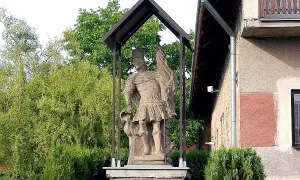
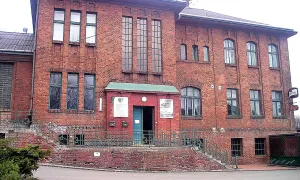
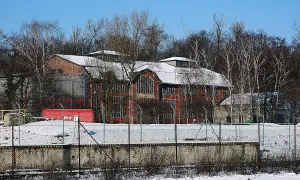
Real photos taken near the monument

Zdroj a licence jsou uvedeny u každého snímku.
Atmosphere of the place
This atmospheric visualisation of the place and period was generated by artificial intelligence. It is not real footage of the location.
Tips from visitors
No tips yet. Be the first!
Log in and add your tip.
Sources and literature
Photos: Ladin / CC BY-SA 3.0, rozlišení zvýšeno umělou inteligencí — Wikimedia Commons. The author and licence also appear when you hover over the image.
Faktickým podkladem tohoto textu byl článek na Wikipedii, jehož autory jsou přispěvatelé Wikipedie. Článek je dostupný pod licencí CC BY-SA 4.0.
Location on the map


Příběhy a pověsti
Legendy, pověsti a příběhy spjaté s touto památkou
Fotografie návštěvníků
Zatím žádné fotografie. Buďte první, kdo přidá fotografii z návštěvy!
Log in a přidejte svou fotografii nebo hodnoťte.
Za ověřenou návštěvu v aplikaci získáte víc bodů — poznáme podle GPS, že jste na místě.
Reviews and comments