



Důl Jeremenko Mill
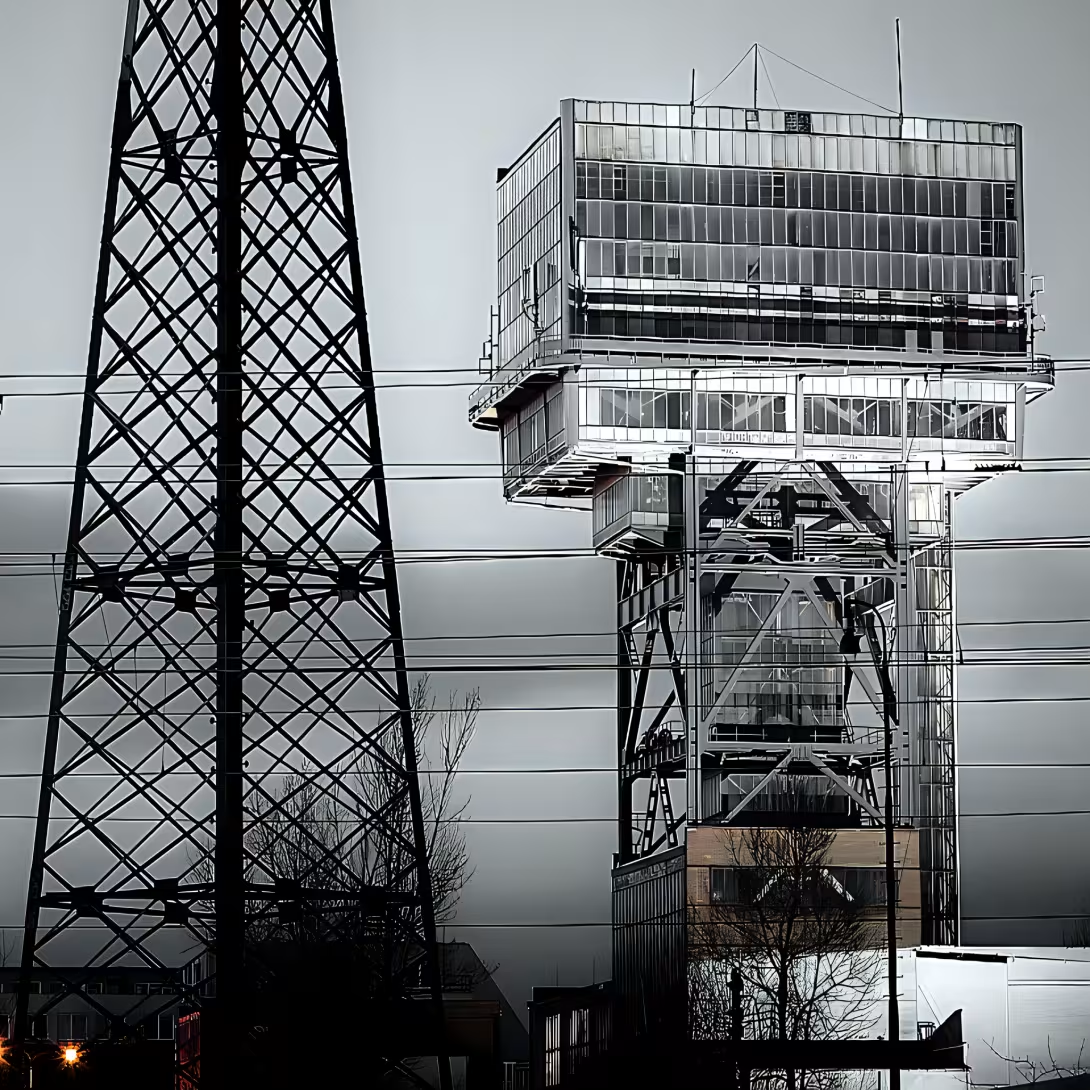
Marshal Jeremy's mine is one of the important remains of Ostrava's upper tradition. In 1891, the coal mine in Vítkovice was founded by a rental company Vítkovice stone coal mines as the New Pit. The decision to build the mining site here was based on knowledge gained from previous mining in the pits of Antonín, Solomon, Carolina and Deep. It has been shown that coal compounds continue from Moravia Ostrava towards Vítkovice south.
The building of the complex was created according to local customs, like the surrounding Nové Vítkovice. Objects built from a solid wall are a spatial medium
The mine was built gradually. The wind pit was started in 1891 and dug into 1896 when it reached 312,5 metres. The mining pit was established in 1892 and it was also dug up to 1896, reaching 386 metres. After confirming the coal findings, the mine received the first mining measure on 30 June 1895. Between 1914 and 1919 the mining pit was further deepened to 699.6 metres. The extensive reconstruction took place in 1920 and 1929, when they reached final depth: the mine pit 819 meters and wind pit 2 reached 590.4 meters. The third pit started in 1943 and was dug until 1966 when the depth of 1062 meters was reached. Above the pit is a piping tower with a machine room in her head.
The mine carries its history in the title. In 1895 after the end of the lease with stал part of Vítkovsky's mining and metallurgical mining and was renamed Louis, according to the owner of the company. During World War II his name was Steinböck and he belonged to the Nazi group Hermann Göring Werke. After the war he returned to the name Louis, but in 1946 he was nationalized and renamed Mine General Jeremenko. In 1970 the name was modified to the Mine by Marshal Yeremenko, under which we know him today.
The mining in the mine, Marshal Jeremy, ended January 1, 1993. Today, the mine is a protected cultural monument of the Czech Republic, which includes a historic blacksmith's shop, an original lifting tower and a new hammer tower with a pit building. Since 1997, it has been supplying mining water from the Ostrava and Petřvald pelvis. Since 2002, it has been managed by the State firm Diamo. The area is therefore not a museum of the past, but a living part of the infrastructure providing drainage of deep-sea mining.
Then and now
Drag the slider to compare how the landmark may have looked when it was built with the view today.
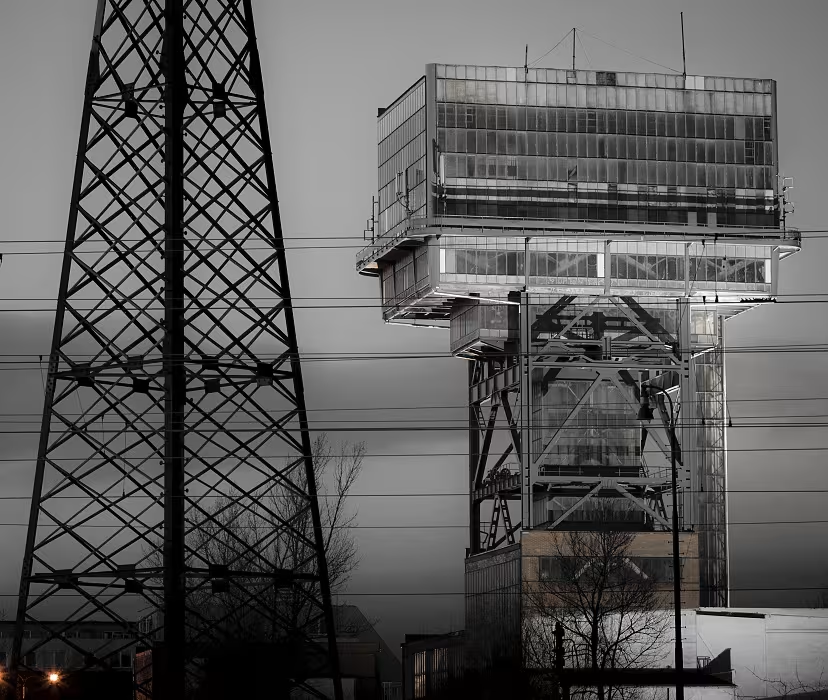

The historical appearance on the left is an AI-generated visualisation and serves as inspiration only.
Historical milestones
- 1891
- Setting up a mine as a New Pit
- 1895
- Change of name to Mine Louis
- 1942
- Change of name to Steinböck Mine
- 1946
- Nationalization and title of the Mine General Jeremenko
- 1970
- Change of name to the Mine Marshal Yeremenko
- 1993
- Closure of coal mining
Architectural development
The buildings are designed around the central courtyard and built from a concrete wall. In 1966, a new piano mining tower was built with a machinery room in the head of the tower. The area includes the Yemenko 1 and Yemenko 3 wind pit.
Historical events
1891 founding of the mine, 1946 nationalization and renaming to the mine General Jeremenko, 1993 ending coal mining.
Owners
1891 Vítkovické stonecoal mines, from 1895 Vítkovické upper and metallurgical mining, from 1946 Ostrava-Karvinské mines, from 1987 Mine Ostrava s.p., from 2002 Diamo (fissile plant Odra).
Points of interest
- The mine was founded in 1891 as a new pit. The third pit was dug until 1966 when it reached a depth of 1062 meters. - Throughout history, the mine was called Louis, Steinböck, General Yeremenko and Marshal Yeremenko. - As a protected cultural monument, it includes a historical forge, an original lifting tower and a new hammer tower. - Since 1997, it has been pumping mining water from the Ostrava and Pethwald pelvis.
Guide
This guide is narrated by a synthetic voice generated by artificial intelligence.
Show guide text
This text was created by artificial intelligence and has not been editorially reviewed. It may contain inaccuracies.
Jeremenko Mine is a former hard coal mine located in the southern part of Ostrava's Vítkovice district. Coal mining here has ended, but the site has been preserved and since 1997 has been used for pumping out mine water. The mine is a cultural monument of the Czech Republic.
It was founded in 1891 by the Vítkovice coal mines lease company under the name New Shaft. During mining at neighboring shafts, it became clear that coal seams continued from Moravská Ostrava further south, toward Vítkovice. In 1895, the lease ended and the mine was taken over by Vítkovice Mining and Smelting Company. At that time it was given the name Louis, after the first name of the main owner, Louis Rothschild.
The name of the mine changed several more times. From 1942 it was called Steinböck and belonged to the Nazi concern Hermann Göring Werke. After the war it returned to the name Louis and in 1946 it was nationalized. That same year it was given the name General Jeremenko Mine, which was changed in 1970 to Marshal Jeremenko Mine. From 1958 it was connected with Hlubina Mine.
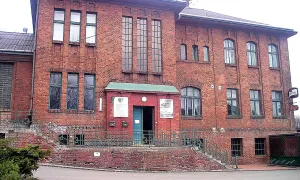
The construction of the site was influenced by its proximity to Nové Vítkovice, which is why the buildings are made of exposed masonry. They are grouped around a central courtyard, in the middle of which stands a shaft building with a steel lattice mining tower. The first shaft was for ventilation, the second for hoisting. Both were sunk by 1896 and later deepened further. The hoisting shaft eventually reached a depth of 819 meters. In 1943, a third shaft began to be sunk. It reached a depth of 1062 meters in 1966, and above it rose a hammer-head type mining tower with an engine room in the tower head.
Coal was initially raised by a steam winch. In 1897 it was replaced by a steam hoisting machine, and in 1911 a more powerful double-cylinder machine from Hradec Králové was added.
Mining ended on January 1st, 1993. Since 2002, a branch plant of the state enterprise Diamo has been based in the mine facilities. It manages the pumping of mine water from the Ostrava section of the basin and also remotely from the Žofie shaft in Orlová. The forge, the combined steel lattice mining tower, and the new hammer-head mining tower with the shaft building are protected monuments.
Tips for visitors
The best time to visit is morning or late afternoon hours, when the low sun creates dramatic shadows on industrial constructions and highlights the texture of old buildings.
Due to the nature of the former coal mine, we recommend fixed-footed shoes and clothing suitable for industrial environments, which need not be easily dusted.
For the best images, focus your lens on the contrast between rusty iron and blue sky. The most prominent places for photography are the remains of mining infrastructure and historical facades.
You and the kids appreciate the educational view of coal mining. In the immediate vicinity is the Industrial zone Vítkovice and Ostrava underground pelvis, making the visit a complex experience of industrial heritage.
Frequently asked questions
Can the monument be visited?
This is a technical monument. Some are open as exhibitions, others are out of use or on private land. We have not verified whether this one is accessible.
What are the opening hours and admission?
We have not verified the opening hours or admission. Current information is published by the operator.
Where is the monument?
Location: Ostrava, Moravskoslezský kraj. The map on this page shows the exact spot.
Why is the monument protected?
It is listed in the Central List of Cultural Monuments of the Czech Republic as a cultural monument (register no. 106685).
For kids
Imagine going back 135 years to a small village where many people lived and worked in different places. One of them was this little mill that stood by the creek and used its water to drive the water wheels.
It was like in a game where the kids were having fun and playing around the mill while their parents were working or doing chores. The mill was an important place for the village because people were getting bread flour from it. To get to him, they had to go through narrow roads and cross the creek.
Businesses nearby
Do you run a restaurant, accommodation, shop, museum, rental, wellness or other visitor service near this monument? Show yourself directly to the people heading to it — this is how they will see you in the app and on the web:
Events nearby
Zdroj akcí: otevřená data měst a obcí ČR (Národní katalog otevřených dat) a kalendář akcí Národního památkového ústavu.
Nearby
Industrial zone Vítkovice, Ostrava underground pelvis.
Accommodation nearby
Themed route
1. Industrial zone Vítkovice Type: Industrial area Why to visit: This area represents an extensive heritage of industrial development.
2. Ostrava underground pelvis Type: Geological unit Why to visit: This structure forms the basis for understanding the local mining environment.
3.Důl Jeremenko Type: Industrial monument Why to visit: The main destination of the trip, which documents the history of mining.
Seasonal recommendations
In spring, industrial architecture awakens along with the surrounding greenery, creating an interesting contrast between grey concrete and fresh nature. Soft spring light is ideal for shooting details of machines and structures. We recommend to dress in layered clothes because the area can still be cold, and plan a visit in the morning when the air is the cleanest.
The summer season brings a sharp sun that highlights the texture of metal elements and creates deep shadows. The atmosphere is full of energy and surrounding parks offer a pleasant shade. Due to the largest number of visitors in the season, it is best to come right at the opening. Don't forget light, breathable clothes and plenty of fluids.
Autumn covers the memory with fog and golden leaves, which gives the whole place a melancholy and mysterious touch. Industrial buildings in this light look more monumental and peaceful. The practical recommendation is shoes with waterproof soles for wet roads and a warm sweater for cooler afternoons.
In winter, the mine operates in a dense and quiet calm, while the freezing air and any snow layer highlight the geometry of buildings. The contrast of white snow and dark industrial background is fascinating. It is necessary to wear warm thermal linens and a fat coat.
Visualizations and artistic views


The visualisations are generated by artificial intelligence and serve as inspiration.
Photos from the area
Real photos taken near the monument


Zdroj a licence jsou uvedeny u každého snímku.
Atmosphere of the place
This atmospheric visualisation of the place and period was generated by artificial intelligence. It is not real footage of the location.
Tips from visitors
No tips yet. Be the first!
Log in and add your tip.
Sources and literature
Photos: Boris Renner / CC BY-SA 3.0, rozlišení zvýšeno umělou inteligencí — Wikimedia Commons. The author and licence also appear when you hover over the image.
Faktickým podkladem tohoto textu byl článek na Wikipedii, jehož autory jsou přispěvatelé Wikipedie. Článek je dostupný pod licencí CC BY-SA 4.0.
Location on the map


Příběhy a pověsti
Legendy, pověsti a příběhy spjaté s touto památkou

Fotografie návštěvníků
Zatím žádné fotografie. Buďte první, kdo přidá fotografii z návštěvy!
Log in a přidejte svou fotografii nebo hodnoťte.
Za ověřenou návštěvu v aplikaci získáte víc bodů — poznáme podle GPS, že jste na místě.
Reviews and comments