






Buquoyský palác (Praha 1) Palace
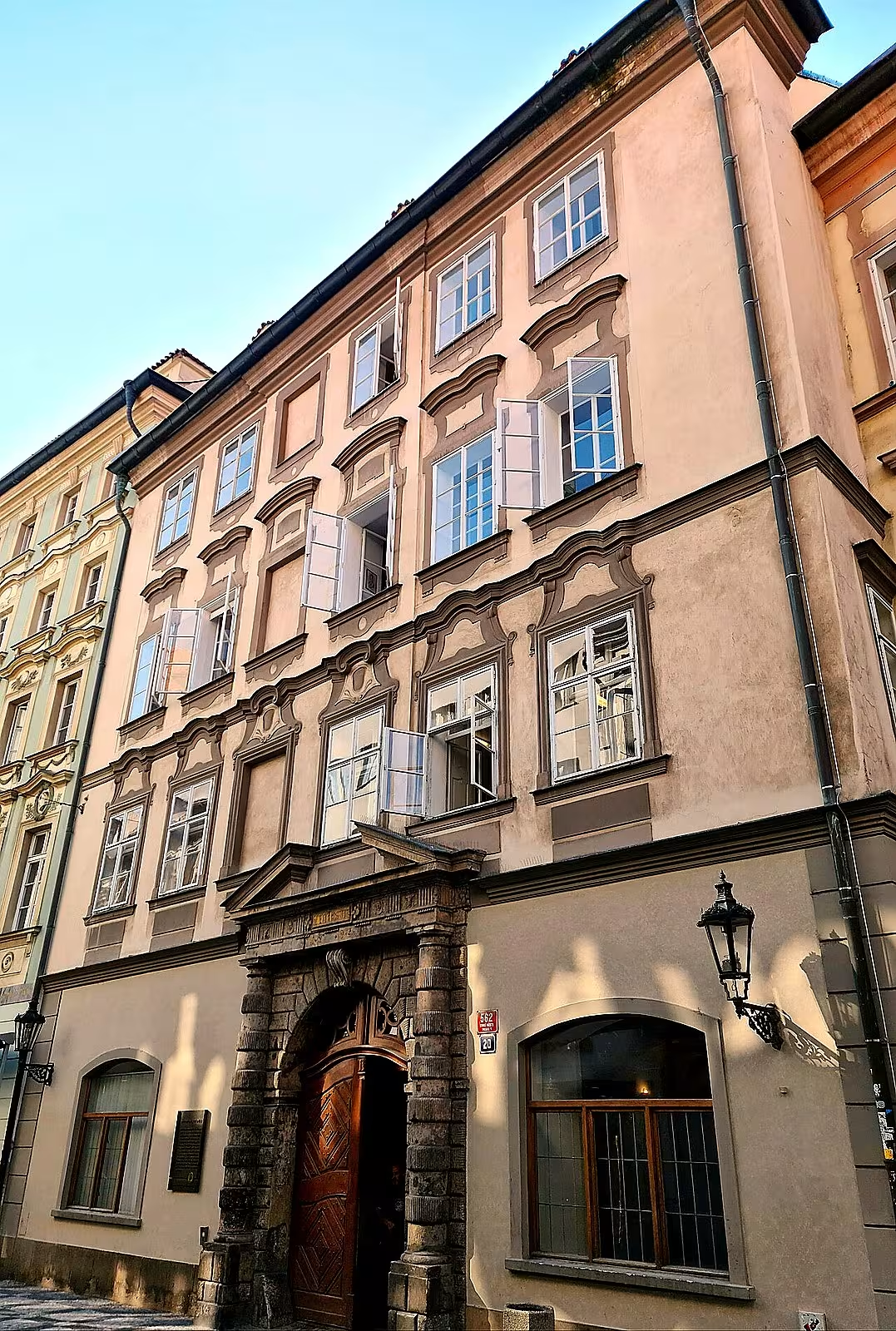
Buquoy Palace, located on Celetná 562 / 20 and Fruit Market 562 / 7, is a classic house in Old Town in Prague 1. Since 1964 it has been protected as a semi-monetary object within the Karolina complex.
The building has its roots in the Gothic epic, which was owned by Zdeněk Kostka z Postupic. The construction was rebuilt during the Renaissance period. At the beginning of the 17th century it became the property of Vorsil Benigné, wife of Bohuslav of Michalovice, one of later executed leaders of the Czech State Uprising. After the uprising was suppressed, the building was confiscated and plundered by the army. In 1627 it was sold to Countess Maria Magdalena Buquoy, widow of General Karl Buquoy. Under the possession of the Buquoys, the house acquired a Baroque character and remained in their possession until 1754.
It was owned by Charles University since 1762. In 1773 the architect Antonín Prachner made extensive modifications, including the acquisition of today's classical form of the facade. The palace was housed by law and medical professors. Since 1882, the Royal Czech Society of Teachers, the predecessor of today's Academy of Sciences, was briefly located here. Since 1960, the Faculty of Education and Journalism of Charles University has resigned from the building, which was replaced by the Faculty of Social Sciences and Publications in 1968. In 1972, the faculty was renamed the Faculty of Journalism of the Charles University and transformed in the spirit of normalisation.
Architecturally, it is a four-wing three-way object oriented around an extended inner courtyard. The original Gothic cellar is preserved and the Gothic wall reaches the third floor. The ground floor rooms and the valuable beam ceiling in one of the second floor rooms come from the Renaissance era. The entry portal in Celetná Street is late Renaissance and carries a plate with the inscription "Sibi et Posteris" (Myself and his descendants) with the year 1773, which he had completed here. The main facade to Celetná has six axes, the facade to the Fruit Market is wider with eight axes. Both facades are characterized by identical stucco decoration and window details from the adjustment period around 1773.
From 1965 to 1971, modern interior modifications were carried out according to the Jaroslav Fragner project. In recent years, namely between 2020 and 2022, a revitalisation of the Karolina complex, including the Buquoy Palace, has taken place.
Then and now
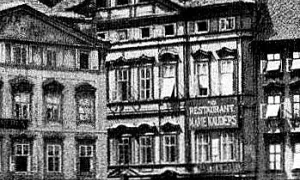
Drag the slider to compare how the landmark may have looked when it was built with the view today.
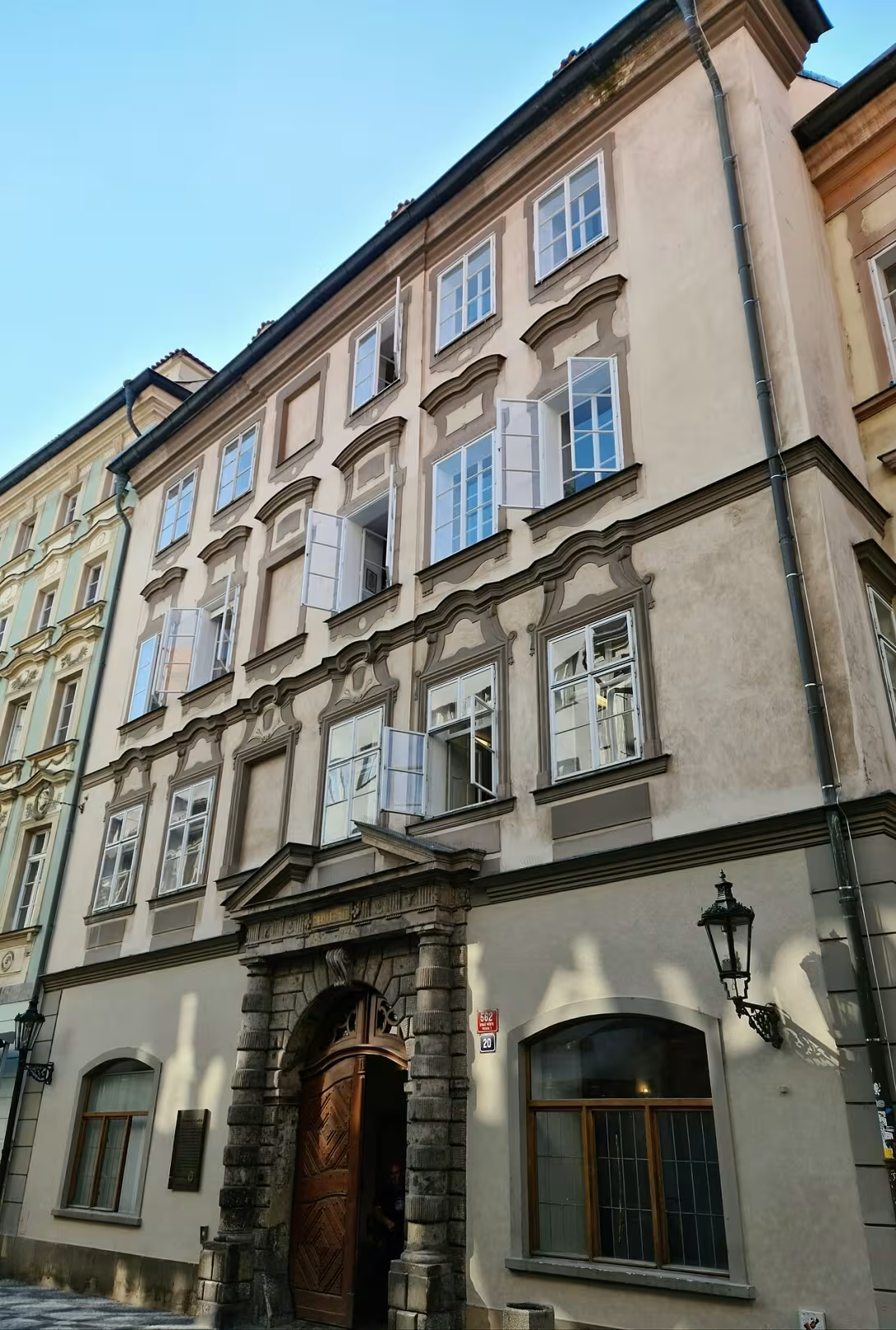

The historical appearance on the left is an AI-generated visualisation and serves as inspiration only.
Historical milestones
- 1627
- sold to Countess Maria Magdalena Buquoy
- 1762
- Charles University became the owner of the Palace
- 1773
- made by architect Antonín Prachner modifications including today's classical appearance of the front of the house
Architectural development
The palace is a four-wing three-story object around an extended inner courtyard. The original Gothic cellar of the palace was preserved and the Gothic wall is preserved up to the third floor. The rooms on the ground floor and the valuable beam ceiling in one of the rooms on the second floor are from the Renaissance period. Also the entrance portal on Celetná Street is late Renaissance.
Historical events
1627 - sold to Countess Maria Magdalena Buquoy
1762 - Charles University became the owner of the palace
1773 - architect Antonín Prachner edits including today's classical appearance of the front of the house
Owners
Zdeněk Kostka z Postupic
Voršil Benigna
Bohuslav z Michalovic
Marie Magdalena Buquoyová
Charles University
Points of interest
- The building has its roots in the Gothic epic and its Gothic masonry reaches the third floor. - After the suppression of the Czech State uprising, the building was confiscated and plundered by the army. - In 1627 the House was bought by the Buquoy family, which gave him a baroque character. - The entrance portal in Celetná Street carries a tablet that says "Sibi et Posteris," which means "To yourself and to the offspring." - In the palace was the Royal Czech Society of Science, which was the predecessor of today's Academy of Sciences.
Guide
This guide is narrated by a synthetic voice generated by artificial intelligence.
Show guide text
This text was created by artificial intelligence and has not been editorially reviewed. It may contain inaccuracies.
Welcome to Buquoy Palace, a great monument located in the heart of the Old Town of Prague. You're standing in front of a monumental facade full of history and architectural wonderful details. Buquoy Palace, whose elegant classical lines enchant you, is a testament to many layers of Czech history.
Let's dive into the past and discover how this majestic palace was created. In 1627, the house was sold to Countess Maria Magdalena Buquoy, starting a new chapter in his fate. This historical figure was a key figure at the time of the suppression of the Czech State uprising, when many assets and their subsequent transformation were confiscated. The Buquoy family left a trail in the palace, adding a baroque character that appears to be an elegant connection to its Gothic roots.
Take a look up and notice the classic appearance of the front of the house designed here by architect Antonín Prachner in 1773. This modification brought new life and elegance into the building, making it one of the iconic structures of Old Town. When you walk past the palace, notice his gothic masonry reaching the third floor, and imagine the history that took place behind these walls.
The Buquoy Palace is also associated with important personalities such as Zdeněk Kostka z Postupic and Bohuslav of Michalovice. These figures played a key role in shaping the history and culture of the time, whose stories are inextricably linked to this monument.
The interesting thing is that after the suppression of the Czech State uprising, the palace was confiscated and plundered by the army. This dramatic event affected not only his appearance, but the fate of many people associated with him.
Now that they have immersed themselves in the history of the Buquoy Palace, we invite you to continue to explore the Old Town. Every step here is like a page of a book full of stories and beauty, waiting to be discovered. Thank you for your visit and we hope this palace has reached out to you as well as to us.
Tips for visitors
{'best _ cas': 'For a visit, choose the morning hours during the working week when there is a lower concentration of tourists in the historical centre, allowing you to better perceive the architectural details of the building.', 'transport': 'Palace is located in the heart of Old Town where parking is very limited. We recommend using public transport; Find a specific connection in travel applications that offer an up-to-date overview of the lines.', 'photographers': 'The building offers an interesting combination of classical facade and historical layers. The best light to capture the exterior is in the morning when the sun illuminates the facade without creating sharp shadows.', 'about': 'In the immediate vicinity of Karolina complex, which is historically connected with the palace and offers fascinating insight into the history of Prague's higher education.', 'families': 'For families with children, the location is suitable thanks to the walking availability of many historical corners of the Old Town, but we recommend having comfortable shoes to move around the historic pavement.'}
Frequently asked questions
Is Buquoyský palác (Praha 1) open to the public?
Yes, the Buquoy Palace is usually open to the public. We recommend checking up-to-date information about access to the official site of the monument.
How do I get to the place by car / public transport?
Buquoy Palace is well accessible both by car and public transport. Parking can be limited, therefore we recommend using buses or trams with Old Town Station and the Republic Square.
How much is the entrance fee and is it paid on the spot?
Admission to the Buquoy Palace is usually paid on site. Current prices can be found on the official site of the sights.
Is the tour suitable for children and seniors?
Yes, the tour is suitable for children and seniors. The Palace offers clear exhibitions and information about history.
How long does the tour take?
A tour of the Buquoy Palace usually takes 30 minutes to an hour, depending on how much time you want to spend.
What are the opening times and booking is required?
The opening hours of the Buquoy Palace may vary during the year. We recommend checking the current opening hours on the official website and checking whether booking is required.
What's interesting in the immediate vicinity?
In the vicinity of the Buquoy Palace is located the Republic Square and Chrudim Street, where other historical monuments can be explored. These places are about 30 minutes' walk away.
For kids
Hi! Today we look at one of the most hidden and interesting historical monuments in Prague - Buquoy Palace. Imagine it's like opening an old precious box with thousands of stories inside. Now let's see them!
Businesses nearby
Events nearby

Zdroj akcí: otevřená data měst a obcí ČR (Národní katalog otevřených dat) a kalendář akcí Národního památkového ústavu.
Nearby
Praha 1, Staré Město
Accommodation nearby
Trips and activities nearby
Guided tours, tickets and activities nearby from GetYourGuide
Affiliate link: if you buy from the partner, we may receive a commission. The price for you does not change.
Search tours and activities →Themed route
1. Buquoy Palace (facade) - architectural element. Take a look at the rich Baroque decoration of the outside of the building. 2. Buquoy Palace (courtyard) - inner space. Rest in a quiet palace area separated from the streets. 3. Buquoy Palace (interiors) - exposition. Discover historical halls and rare details of the inner facility.
Seasonal recommendations
Spring season brings soft, bright light and a sense of renewal to Prague streets. The trees are beginning to bloom in the surrounding area, which gives the historical environment freshness. It is ideal in the morning when the air is still cool and the light hits the facades beautifully. We recommend layered clothing because the morning cold can be surprising, but the afternoon can be pleasant.
In the summer months in the centre of Prague is the most exciting and the palace is surrounded by the constant movement of people. The sun shines the strongest, creating sharp shadows on architectural details, but in the interior of the building you will find pleasant cool. Due to the great crowds, it is best to arrive at the very beginning of the operation to enjoy the tour in peace. Dress lightly and do not forget enough fluids during walking on Prague pavement.
Autumn moons offer the most romantic atmosphere thanks to golden light and mild fog that encapsulates historic buildings. Colors in the surroundings turn orange and brown, which perfectly matches Baroque architecture. It's time for a little pressure on visitors, so you can enjoy the tour in peace. Prepare comfortable shoes for uneven pavements and layers of clothing to protect you from sudden cooling.
Winter time in Prague has a specific, even mysterious touch, especially when the streets are lit and the air is freezing. Light is low in this period and cold colors highlight the historical seriousness of the site. In Advent time, there are more people in the area, but in the palace itself it is calmer. The necessity is warm and waterproof clothing, because staying out in narrow alleys can be unpleasant. Due to the shorter day we recommend planning a visit in clear morning hours.
Visualizations and artistic views


The visualisations are generated by artificial intelligence and serve as inspiration.
Photos from the area
Real photos taken near the monument

Zdroj a licence jsou uvedeny u každého snímku.
Atmosphere of the place
This atmospheric visualisation of the place and period was generated by artificial intelligence. It is not real footage of the location.
Tips from visitors
No tips yet. Be the first!
Log in and add your tip.
Sources and literature
Fotografie: Ricardalovesmonuments / CC BY-SA 4.0 — Wikimedia Commons. The author and licence also appear when you hover over the image.
Faktickým podkladem tohoto textu byl článek na Wikipedii, jehož autory jsou přispěvatelé Wikipedie. Článek je dostupný pod licencí CC BY-SA 4.0.
Location on the map

Příběhy a pověsti
Legendy, pověsti a příběhy spjaté s touto památkou
Fotografie návštěvníků
Zatím žádné fotografie. Buďte první, kdo přidá fotografii z návštěvy!
Přihlaste se a přidejte svou fotografii nebo hodnoťte.
Za ověřenou návštěvu v aplikaci získáte víc bodů — poznáme podle GPS, že jste na místě.
Reviews and comments