



Císařský mlýn (Pardubice) Mill
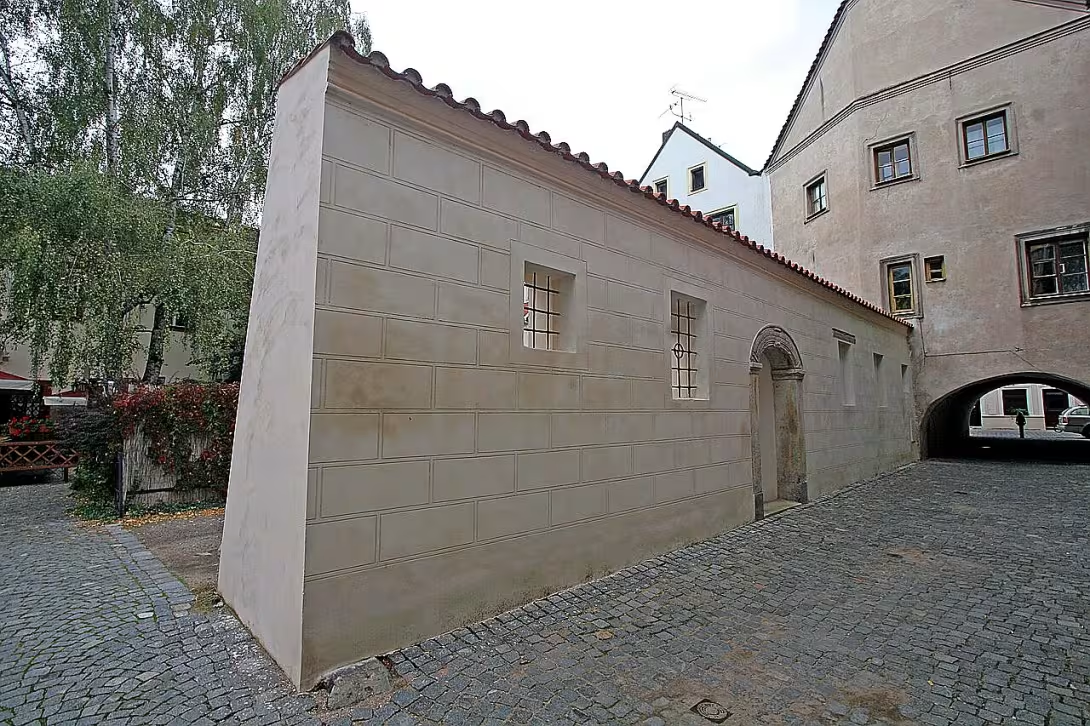
Objekt se nedochoval — na místě dnes nestojí. Následující text popisuje jeho historii, ne současnou návštěvu.
The Empress Mill, located in the centre of Pardubice on the city crest next to the Chrudimka River, is a extinct monument with a rich history. Even though today only the torso remained protected as a cultural monument of the Czech Republic, it reminds us of the time when it was a key element of local infrastructure. The miller worked here from 1515 until the beginning of the 20th century, which shows the long-term function of this building.
The mill was built in 1515 by Wilhelm of Pernštejn, when the family of Pernštejns had a significant position in Czech countries. This mill was not only a technical innovation, but also a part of a wider system of water grate adjacent to the Chrudim River. In 1531 the city of Pardubice became the new owner of the part of the mill after the sale of one malt round from Vojtěv of Pernštejn, which led to further development and modifications of the building. The city's adversaries had broken down the wall of the neighboring house and built new mill wheels with a stone and two hail steps, indicating the adaptation and extension of the original function.
The architecture of the Imperial Mill went through several phases. Originally built in 1515, it was later rebuilt as Emperor Rudolf II in 1596 and again repaired by Antonín Bubeník in 1811. These adjustments reflect not only technical needs, but also aesthetic changes over the years.
The ownership and management of the mill went through several stages. After his position as Wilhelm of Pernstejn he went under the control of the city of Pardubice, which was important for the development of local infrastructure. The mill ground was finished in 1910 with the cancellation of the city crest and the building was then demolished in 1965.
Key events include the position of the mill by Wilhelm of Pernštejn, his transfer to the city of Pardubice and subsequent reconstruction and repairs. The historical inscription on the preserved torsion highlights these events and names of persons involved in its history.
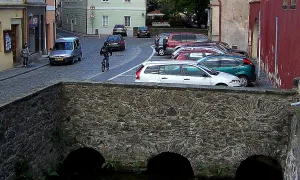
Today there was only a torso of the Imperial Mill, which is protected as a cultural monument. Although it is not possible to see the original structure, its inscription and location on the City Crouche resembles an important past of local industry and technology. Visiting this place offers a unique view of the history of Pardubice and their water infrastructure, making the Imperial Mill an interesting destination for everyone interested in local history.
Historical milestones
- 1515
- Status of the mill Wilhelm of Pernštejn
- 1531
- Transfer of the mill to the city of Pardubice
- 1596
- Reconstruction of the mill for Emperor Rudolf II
- 1811
- Repair of the mill by Antonín Drummer
- 1910
- End of grinding on cancellation of the urban grate
- 1965
- Demolition mill
Architectural development
The original mill was built in 1515. In 1596 the reconstruction was carried out as Emperor Rudolf II. The last recorded repair was carried out in 1811.
Historical events
1515: the position of the mill, 1531: the transfer of the mill to the city, 1910: the end of the mill, 1965: the demolition of the mill
Owners
Vilém z Pernštejna (1515), City of Pardubice (since 1531)
Points of interest
- The mill was built in 1515 by Wilhelm of Pernštejn. - In 1531 the town of Pardubice became owner of the part of the mill after the sale of the malt wheel from Vojtěv of Pernštejn. - The construction was rebuilt as Emperor Rudolf II in 1596 and repaired by Antonín Bubeník in 1811. - The grinding was finished in 1910 and the building was demolished in 1965. - Today there is only a torso that is protected as a cultural monument.
Guide
Show guide text
This text was created by artificial intelligence and has not been editorially reviewed. It may contain inaccuracies.
Welcome to the heart of Pardubice, the historic center of Old Town. You are standing in a place that was once one of the most important points of urban life and economy. You may now look around you and see only the present form of the city, the surrounding building or the space where life is flowing in a different rhythm today, but in my imagination and in the annals of history, the image of the building that has stood here for centuries is beginning to draw before you. It is a place where the power of water, the ambition of powerful noble generations and the everyday needs of ordinary people have joined together. Imagine going back in time, away from today's noise, to the time when the water of the City Crouch flowed here and powered the huge wheels of the mill that once stood here.
This space may be common today, but in the year one thousand and five hundred and fifteen there was a foundation for the construction which was intended to serve the entire region. The Imperial Mill was built by Vilém z Pernštejna, one of the most important families in Czech history, which Pardubice was in great shape at the time. The Pernstejns understood that water is the greatest source of energy and wealth. The city grate that powered the mill was not just a water stream, but a city artery. Vilém z Pernštejna created an object here that was not only a practical place for grinding grain, but also a symbol of power and economic expansion. At that time, the mill was a modern technological miracle that ensured food stability and brought money to the city.
Now, when you look at the atmosphere of this place, try to imagine what the mill looked like over time. Although we can no longer admire his walls today, look at the surrounding terrain and think about how the water broke on the wheels and how the smell of freshly ground grain spread through the air. The construction was never static. Over the centuries, it has undergone many changes, repairs and reconstructions that reflect the needs of every new era. It was not just an ordinary workshop, but a complex device that had to be constantly adapted to new technologies and demands.
Now let's think about the personalities that were closely connected to this place. In addition to the founder of Vilem of Pernštejn, Vojtěch z Pernštejna appeared here in the year one thousand five hundred thirty-one. It was this year that there was an important shift in property ratios, when Pardubice won part of the mill. The key element of this transfer was the so-called malt wheel, which was a machine necessary for the production of malt and therefore also for brewing beer, which was both basic drinks and commercial goods at the time. This step made the mill even more part of the urban organism and its importance for local craftsmen and traders grew.
An interesting break in history came at the end of the 16th century. In a thousand and five hundred ninety-six, the construction was rebuilt. This was done during the reign of Emperor Rudolf the second. It was this period and the connection with the imperial court that delivered the mill its noble name the Imperial Mill. Rudolf the second was known as an admirer of art, science and mysterious things, and although the mill remained primarily an economic object, his reconstruction in this era gave him a certain prestigious touch. Imagine how the appearance of the buildings was changing at the time and how the elements of the Renaissance, which probably reflected the mill, became embellished in architecture.
But time passed, and buildings, like people, age. In the year one thousand eight hundred eleven, it was time for another major repair. This task was taken care of by Antonín Bubeník. His intervention ensured that the mill could continue to serve the inhabitants of Pardubice even when the world around it began to change and the era of industrial revolution began. The drummer put his care into the building to keep the mill functional and safe, thereby extending the life of this historical monument for another decade.
But now we are getting to the part of the story that is somewhat sad. Every machine has its end and the Imperial Mill was no exception. His existence was closely linked to the water from the city gutter. However, once the grate was decided to be abolished, the mill lost its main source of energy. In the year one thousand nine hundred and ten, it finally ended in the mill. Without flowing water, the massive building became useless. There was no more noise from the wheels, no more crop dust in the space. The mill went silent and began to lose its importance in the modernising city.
The final blow came in a thousand nine hundred sixty-five. At that time, other priorities prevailed, and old buildings, which no longer served their original purpose, were often seen as barriers to urban development. The imperial mill was completely demolished this year. The walls that survived for 500 years disappeared, the ceilings that covered generations of miller men disappeared, and the memory of William of Pernstein and Emperor Rudolph disappeared. So you're not standing here today in front of the building, but in front of the memory.
You may be interested in one question that remains in space as an invisible imprint. If the mill was still standing, what would it look like these days? Would he be a museum, or would he turn into a modern center of culture? It's fascinating to think that in a place where you might be walking or seeing a normal urban surface, there were once dramatic scenes from history, deciding on the price of grain, and sweating human labor in the rhythm of the water wheel. This invisible layer of history is what makes Pardubice so special. The city is not only what we see with our eyes, but what we can trigger in our memories.
The Imperial Mill reminds us that nothing is eternal, but that the traces left by important people and important buildings remain within us even after the last stone has disappeared. Vilém z Pernštejna, Vojtěch z Pernštejna, Rudolf 2 and Antonín Bubeník, all these men left their trail right here at this particular point in the map.
Now I'm going to invite you to look around for the last time and try to rebuild those old walls in your mind. Feel the silence that today is where the water used to thunder and boil. I hope this short trip to the past helped you better understand the spirit of this place and that now you see Pardubice as a layered story where every street and every corner hides its secrets.
I wish you a pleasant continuation of your journey around our beautiful city. Explore other parts of the Old Town, look for more traces of Pernštejn and be inspired by the history that surrounds us at every turn. Thank you for your attention, and I bid you farewell.
Businesses nearby
Do you run a restaurant, accommodation, shop, museum, rental, wellness or other visitor service near this monument? Show yourself directly to the people heading to it — this is how they will see you in the app and on the web:
Events nearby
Zdroj akcí: otevřená data měst a obcí ČR (Národní katalog otevřených dat) a kalendář akcí Národního památkového ústavu.
Nearby
Městská strouha a řeka Chrudimka
Visualizations and artistic views


The visualisations are generated by artificial intelligence and serve as inspiration.
Photos from the area
Real photos taken near the monument


Zdroj a licence jsou uvedeny u každého snímku.
Tips from visitors
No tips yet. Be the first!
Log in and add your tip.
Sources and literature
Photos: Petr1888 / CC BY-SA 3.0 — Wikimedia Commons. The author and licence also appear when you hover over the image.
Faktickým podkladem tohoto textu byl článek na Wikipedii, jehož autory jsou přispěvatelé Wikipedie. Článek je dostupný pod licencí CC BY-SA 4.0.
Location on the map
More monuments – Pardubice-Staré Město
Show all in the municipality


Příběhy a pověsti
Legendy, pověsti a příběhy spjaté s touto památkou
Fotografie návštěvníků
Zatím žádné fotografie. Buďte první, kdo přidá fotografii z návštěvy!
Log in a přidejte svou fotografii nebo hodnoťte.
Za ověřenou návštěvu v aplikaci získáte víc bodů — poznáme podle GPS, že jste na místě.
Reviews and comments