






Děkanství v Teplicích Parish house
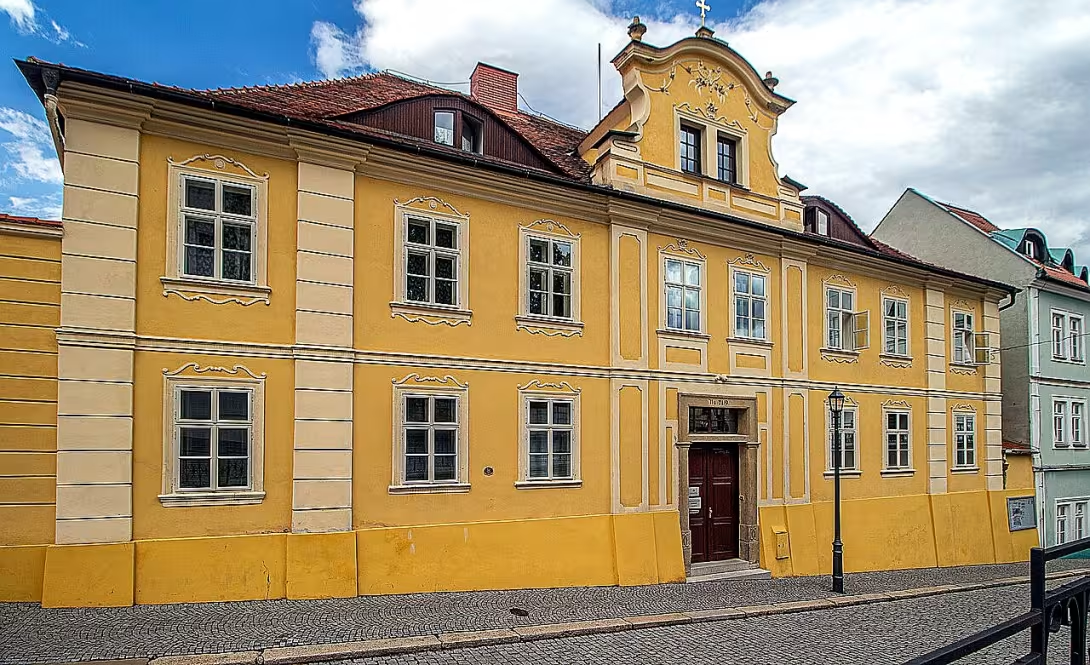
Děkanství v Teplicích is a Baroque rectory on Castle Square in Teplice, Ústí Region. It is a cultural monument protected as a cultural heritage, known for its late rococo ornament of facades. The construction was carried out by J. Legler, the father of K. Leglera, and it underwent significant reconstruction around 1774.
The dean was created as an important religious space. Its original construction is connected to J. Legler, which not only built the building but also determined its architectural character. The 1774 reconstruction brought significant changes in structure and appearance, reflecting the then practice of modernization and expansion of buildings.
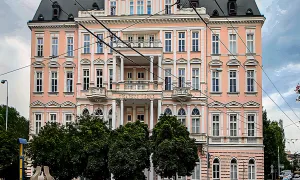
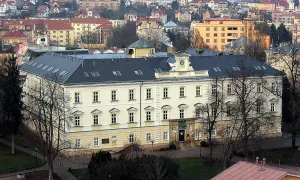
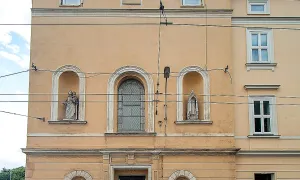
Architecturally, the dean is characterized by a single-storey design on a rectangular floor plan with a valb roof. Above the main entrance there is a skylight which contributes to the historical and aesthetic value of the building. The facades are decorated with late rococo ornament, which gives the building a unique character and reflects the artistic trends at the time.
The history of administration and ownership of the dean is closely linked to his building development. As a rectory, the building was managed by local clergymen who took care of its maintenance and operation. Although specific changes in ownership are not documented in detail, it is clear that the monument has been important for the local community for centuries.
The dean became a key religious center in Teplice. Its importance was strengthened by the reconstruction around 1774, which modernized the building and strengthened its role as a spiritual and cultural centre. The monument thus testifies to the rich historical layers of the city and its religious development.
Today, the dean's condition allows visitors to appreciate his architectural beauty and historical heritage. It is an accessible monument that is behind the visit both in terms of appearance and its role in the local community. The walk offers a unique view of the history and culture of Teplice.
Děkanství v Teplicích is not only a monument but also a witness of many generations. It's a place where the past meets the present and it can be immersed in the rich history of the city. The building represents an important cultural heritage and inspiration for those seeking the deeper importance of historical buildings in their surroundings. Visiting the dean is an educational experience that brings insight into the past and cultural development of Teplice.
Historical milestones
- 1774
- Rebuilding of the building
Points of interest
- It's a Baroque rectory at the Castle Square in Teplice, known for its late rococo ornament of facade. - The construction was carried out by J. Legler, the father of K. Leglera, and around 1774 the building underwent a significant reconstruction. - Architecturally it is characterized by a single-storey design on a rectangular floor plan with a valb roof. - Above the main entrance there is a skyline which contributes to the historical and aesthetic value of the building. - Demonstration has become a key religious center and a spiritual centre in Teplice.
Guide
Show guide text
This text was created by artificial intelligence and has not been editorially reviewed. It may contain inaccuracies.
Welcome to Teplice. Right now, when you put your headphones on, the gateway to the past is opening for you. You are standing at Castle Square, in one of the most important and prominent points of this city. In front of your eyes is the building of deanery. Feel the atmosphere that exists here right now. It's a place where history meets everyday life, where the echoes of the past century mingle with the warmth of the present city. Take a look at this structure and try to imagine how many coffers, joys and hard times these walls have experienced. This building is not just a cluster of stones and mortar, it's a living story that has been told for centuries, and you are now a part of it.
To understand what you're seeing right now, we need to go back to the time when Teplice was forming as we know it today. This building here served as a rectory. In the eighteenth century, it wasn't just an ordinary residence for a spiritual administrator. Fara was the center of the community, a place where the most important issues of human life were addressed, from birth certificates to spiritual leadership of the whole region. It's a place that carries authority, peace and security. The key moment for today's appearance of this object is 1774. It was this year that a major reconstruction took place. Imagine a society back then, a period of enlightenment, when architecture began to change and when a new balance was sought between tradition and modern demands of the time. This reconstruction was not just a repair of the old house, it was a transformation that gave the object its present, dignified character and firmly anchored it in the history of the city.
Now pay attention to the architecture itself. Although at first glance it may seem that the building simply stands, its presence is very strong and balanced. Look at her facade. Notice the rhythm that forms the individual parts of the facade. The architecture from this period, which you will find in this object, places great emphasis on harmony and balance. Although we will not focus on each small part, pay attention to how the building operates throughout the square area. Notice how it engages in the environment, how it dominates, but also respects the space around it. It is this ability of harmonious involvement in the urban environment that is a sign of a quality architectural work. Feel the stability and strength this building radiates. It's an architecture that was designed to withstand time, and as you can see, it still thrives after over 200 years of rebuilding it.
This significant transformation in 1774 resulted in specific personalities whose names are still alive in Teplice. The name J. Legler is absolutely crucial here. This architect was a man who at the time was able to interpret the needs of the village and turn them into permanent and beautiful architecture. His work, as well as the work of K. Leglera, represents a legacy that still lives in Teplice and shapes the face of the city. Now when you look at these walls, you look at the result of their vision, their efforts and their precise craft. These people weren't just builders, they were creators of space that shaped the identity of this place. Their work defined what this square would look like and what impression it would have on anyone who would come here, just as it will on you right now.
You may wonder what makes this place so special that it is protected today as a cultural monument. It's the constant connection between the past and the present. This building is not just a historical object that should be closed in a museum; She's part of a living city. Her status as a cultural monument tells us that its value is irreplaceable for us, for future generations. It is a guarantee that this piece of history will not be forgotten, that his face will be preserved for those who come after us. Is there a certain mystery - how has it managed to preserve such a level of authenticity in a city that has undergone so many changes and modernization? That is a question that may accompany you on your next survey.
I hope that this brief view of the deanery has helped you see this place deeper than just an ordinary building in the square. Teplice have many other secrets and historical treasures waiting for you in every alley. Let yourself be drifted by the atmosphere of Castle Square, observe the details around you and continue along this fascinating city. Thank you for your attention and I wish you a beautiful and inspiring walk.
Tips for visitors
For the best time of visit we recommend morning hours or late afternoon. In these times the atmosphere in Castle Square is quieter and natural light is ideal for observing the details of architecture.
You can easily reach the monument by public transport or by car. Please check the current transport connections and parking possibilities near the square within the transport search engines or city information services.
When visiting, we recommend to have change for any fees and drinks. If you want to focus on photography, you can get the best angles to capture the object from different places in Castle Square during daylight.
For families with children, a walk in this historic part of the city is pleasant thanks to interesting architecture, but within the framework of the information provided there are no other specific objectives in the immediate vicinity.
Businesses nearby
Do you run a restaurant, accommodation, shop, museum, rental, wellness or other visitor service near this monument? Show yourself directly to the people heading to it — this is how they will see you in the app and on the web:
Events nearby
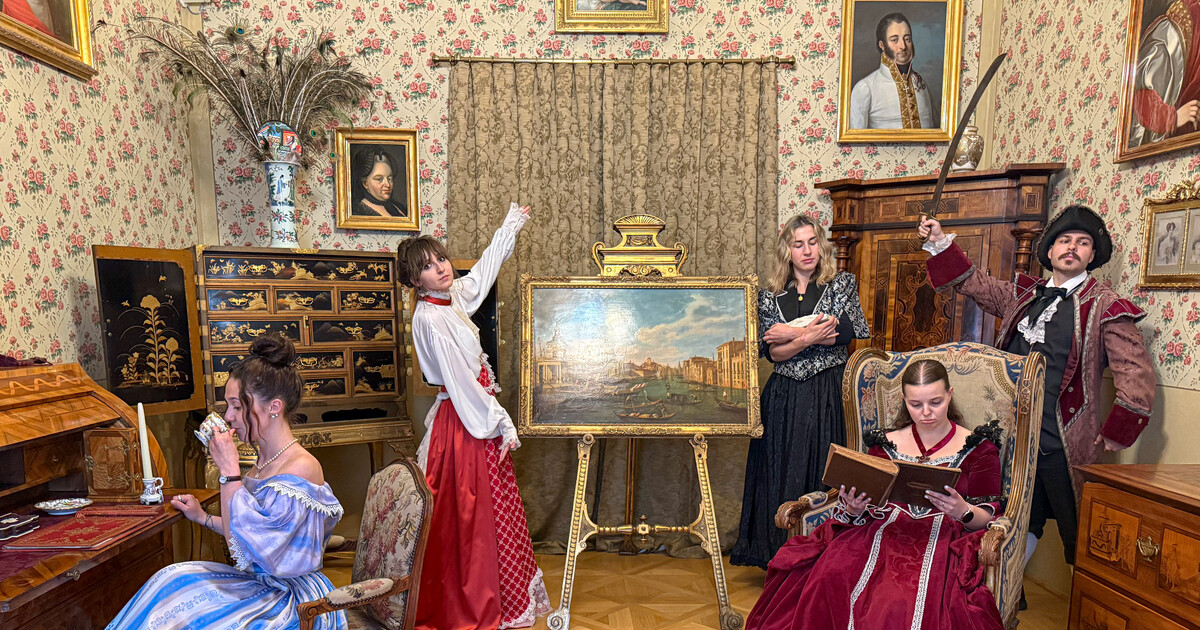
Zdroj akcí: otevřená data měst a obcí ČR (Národní katalog otevřených dat) a kalendář akcí Národního památkového ústavu.
Nearby
ITEX Show interactive overview of the surroundings - restaurants, accommodation, rentals and other places within a 15 km radius.
Data: OpenStreetMap contributors, 15 km radius.
‡ Historical monuments
- Regional Museum in Teplice (0.1 km)
- Memorial 313 to death victims (4.4 km)
- Catastrophe on Döllinger (6.4 km)
- Search bridge Old Martin (6.7 km)
- Pomník (8.8 km)
- memorial to victims of death march (9.3 km)
- Memorial on former neighbors in ČSR (9.9 km)
- Prussian memorial 1813 (12.2 km)
Restaurant and catering
- U Castle (0.1 km)
- U Tits (0.2 km - Roosevelt 262 / 11)
- Cherry - beer club (1.3 km)
- Pizzeria bar Týna (6.0 km)
- Casanova (6.9 km)
- Dubín (7.5 km)
- U Ondřije Stropník (9.5 km)
- Black Orel (9.8 km)
Accommodation
- Hotel Horal (5.8 km)
- Motel Sport (6.0 km)
- Hotel Casanova (6.5 km)
- Hotel u Lva (10.7 km)
- Ferienwohnung Kubis (11.6 km - Rosengrund 8)
- Grumbtmühle (11.6 km - Rosengrund 13)
- Bergbaude Lug ins Land (11.9 km - Neugeorgenfeld 23)
- Kemp Kyselka (11.9 km)
› Rental and sports
- Regal Bike (1.6 km)
- FITNESS shop (3.8 km)
- D-Sport (3.8 km)
- Killtec (3.8 km)
- Sportisimo (3.8 km)
- Sport Vision (3.9 km)
- Tennis courts (6.0 km)
- Flat track - moto club Chabarovice (8.6 km)
© Tourism and nature
- Sandy top (1.3 km)
- Fox top (7.7 km)
- Komaria (7.9 km)
- Pramenáč (9.5 km)
- Storm (10.0 km)
- Traugotthöhe (10.3 km)
- Miles (11.8 km)
- Kleiner Lugstein (11.8 km)
Accommodation nearby
Trips and activities nearby
Guided tours, tickets and activities nearby from GetYourGuide
Affiliate link: if you buy from the partner, we may receive a commission. The price for you does not change.
Search tours and activities →Themed route
1. Entrance hall and exhibition in the deanery (Type: Exposition) - First stop for familiarization with the history and meaning of the whole building. 2. Historical Hall of Decoration (Type: Interior) - Tour space with emphasis on architecture and original equipment. 3. Děnanční návory (Type: Outdoor space) - Walk through a quiet area in the immediate vicinity of the building.
Seasonal recommendations
Spring: During the spring season, Děkanství v Teplicích opens up to new experiences thanks to sunlight, which decorate stone architecture. Nature is awakening and green is vegetation in the surrounding area, thus significantly improving the atmosphere for the visit. For those who are planning to visit a memorial this season, we recommend wearing clothes suitable for mild temperatures and bringing a sun mask. The best time to visit is usually in the afternoon, avoiding efforts to avoid morning humidity.
Summer: Summer brings the most visitors Děkanství v Teplicích. Sunny days and warm night climate improve the atmosphere, but large crowds may also appear, especially in the main summer season. For a visit it is advisable to come earlier in the afternoon in order to avoid long queues and look forward to calmer moments later in the day. Remember to wear protective sunglasses and UV cream as well as light clothes.
Autumn: In autumn months, Děkanství v Teplicích offers a unique atmosphere with pink and orange colours of leafy trees. The sunny days are short, but warm morning and afternoon can be ideal for walking around the monument. Visiting is usually lower than summer, which means shorter waiting for the door and a more peaceful visit. We recommend wearing clothes suitable for mild temperatures and having prepared a rain guard, because autumn is a period of frequent rains.
Winter: Winter means more peaceful visits to Děkanství v Teplicích. Sunlight revives architecture, which is especially beautiful on cold days with frost. The monument remains accessible during winter, but the opening hours often shorten, so it is advisable to look at the current plans. Hot clothes and protective shoes are essential for comfort during a visit in cold months, especially if the weather is freezing. Visit the memory in the morning when the temperature is lighter and before winter afternoon decline.
Visualizations and artistic views


The visualisations are generated by artificial intelligence and serve as inspiration.
Photos from the area
Real photos taken near the monument


Zdroj a licence jsou uvedeny u každého snímku.
Tips from visitors
No tips yet. Be the first!
Log in and add your tip.
Sources and literature
Photos: VitVit / CC BY-SA 4.0 — Wikimedia Commons. The author and licence also appear when you hover over the image.
Location on the map

Příběhy a pověsti
Legendy, pověsti a příběhy spjaté s touto památkou

Fotografie návštěvníků
Zatím žádné fotografie. Buďte první, kdo přidá fotografii z návštěvy!
Log in a přidejte svou fotografii nebo hodnoťte.
Za ověřenou návštěvu v aplikaci získáte víc bodů — poznáme podle GPS, že jste na místě.
Reviews and comments