



kostel svatého Bartoloměje v Teplicích Church
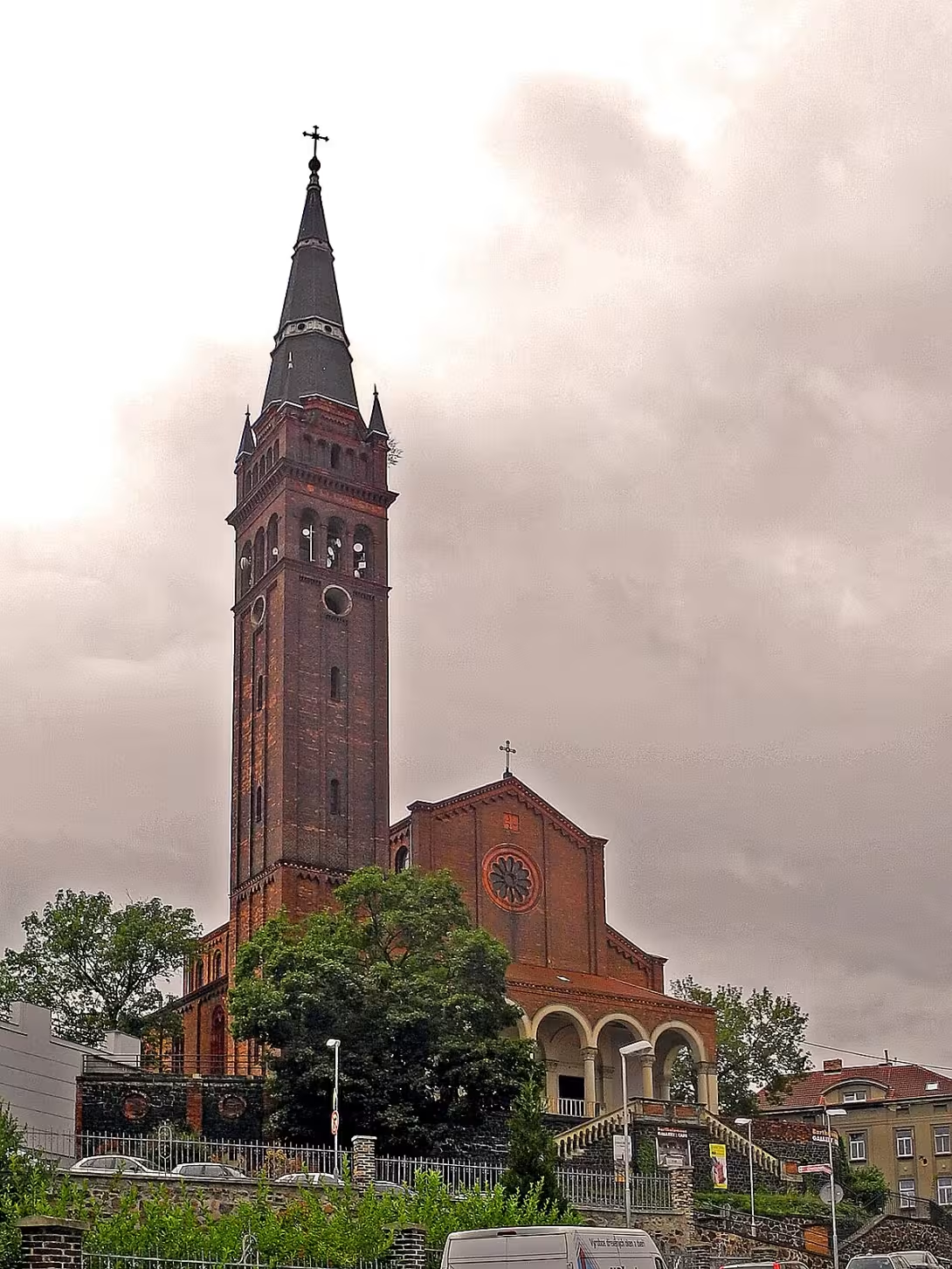
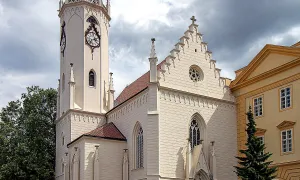
St. Bartholomew Church (in German St. Bartholomäus- Kirche) is one of the distinctive buildings of the spa city Teplice. It was built in a pseudo-Romanesque style between 1861 and 1884 on the initiative of Prussian King Bedřich Wilhelm IV. The author of the project was the famous architect Friedrich August Stüler. About twenty years after the church was built, a massive prism tower was added to the building, which made the church one of Teplice's dominant. The building is equipped with a terrace with balustrations, from which the view of the Krušné Mountains is opened extending in a wide area including the Krupka Mining Cultural Landscape.
In the beginning, the church served the Lutheran village. Between 1945 and 1965 it belonged to the Czechoslovak Church of Hussite and was called the church of Prokop Holý. After 1945, not only the owner changed, but also the purpose of the building in connection with changes in the religious situation in the country. Subsequently, the church belonged to the city which sold it to a private investor in 1990. He opened a restaurant and a disco in the building. Later, the temple was sold to the Teplice developer Jaroslav Cherry, who preserved it even though he was no longer using it.
Today the church is protected as a cultural monument. In spring 2013 he participated in the Night of Churches event where the activities of the prison chapel and the Church of Czechoslovak Hussite were presented. The area was partly open to the public and is used by VisitTeplice, which organizes exhibitions in gallery and concerts of classical music and acoustic styles using acoustic properties of space. The church is located on the hill above the intersection of Chelčický and Českosbrodská street, about 500 metres from the centre of the city. The area is fenced and locked and only limited public action is involved in its accessibility.
An interesting part of the place is the space behind the temple where the remains of the old Jewish cemetery are located. It was buried with tombstones in 1939, wiping away the memory of this community. Through its history, the church reflects the changing religious and cultural landscape not only Teplice, but also the central Europe of the 20th century.
Then and now
Drag the slider to compare how the landmark may have looked when it was built with the view today.
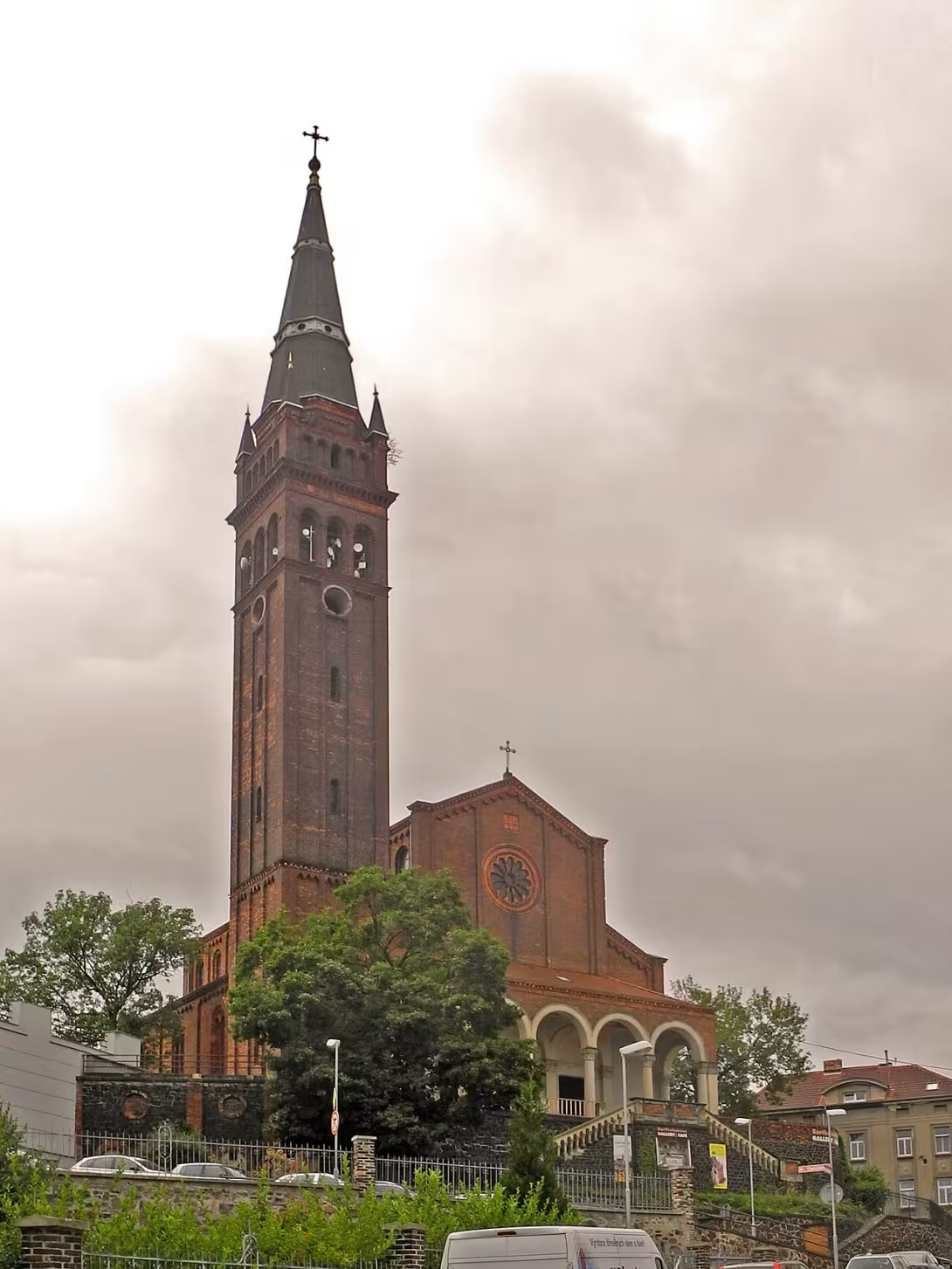

The historical appearance on the left is an AI-generated visualisation and serves as inspiration only.
Historical milestones
- 2013
- Participation in the action Night of churches with presentation of prison chapel and chaplain work.
Architectural development
The church was built according to the Friedrich Augustus Stüller project and later expanded by the prism tower. The architectural style is pseudo-Romanesque, which is consistent with history.
Historical events
- 1864
- Church consecration.
- 1882
- Complete the tower according to the design of Ludvig Persia.
Owners
Originally Lutheran Church, in the years 1945-1965 it belonged to the Czechoslovak Church of Hussite. He's been in private hands since 1990.
Points of interest
- St. Bartholomew Church is one of the distinctive buildings of the spa town Teplice. - It was built in a pseudo-Romanesque style between 1861 and 1884 on the initiative of Prussian King Bedřich Wilhelm IV. The project was created by Friedrich August Stüler. - About twenty years after the church was completed, a massive prism tower was added to the building, which made the church one of Teplice's dominant. - From 1945 to 1965 it belonged to the Czechoslovak Church of Hussite and was called the church of Prokop Holý. Today the church is protected as a cultural monument.
Guide
This guide is narrated by a synthetic voice generated by artificial intelligence.
Show guide text
This text was created by artificial intelligence and has not been editorially reviewed. It may contain inaccuracies.
The Church of Saint Bartholomew is one of the landmarks of the spa town of Teplice. It stands on a hillside above the crossroads of Chelčického and Českobratrské streets, roughly five hundred meters from the city center. It was built in the second half of the nineteenth century as a Lutheran church in the Pseudo-Romanesque style. Today it is protected as a cultural monument.
The building was created at the initiative of the Prussian King Friedrich Wilhelm the Fourth. The design was developed by architect Friedrich August Stüler, and the church was built between eighteen sixty-one and eighteen eighty-four. It was given the German name Sankt Bartholomäus-Kirche. The massive angular tower was added twenty years later, and it is precisely because of it that the church is so striking in the city skyline. The building also includes a terrace with balustrades.
After the Second World War, the fate of the church changed several times. Between nineteen forty-five and nineteen sixty-five, it belonged to the Czechoslovak Hussite Church, which renamed it the Church of Prokop Holý. It then fell to the city. The city sold it to a private individual in nineteen ninety, who opened a restaurant and disco there. In the mid-nineties, the church was purchased by Teplice developer Jaroslav Třešňák. He had the building preserved, but it has not returned to religious services.
In the spring of twenty thirteen, the church participated in the Night of Churches event. Visitors then became acquainted with the prison chapel, the work of chaplains in the prison service, and the Czechoslovak Hussite Church.
Today the church houses an exhibition gallery with several exhibitions and a rest area. It also serves as a concert hall, operated by the company VisitTeplice. The acoustics of the space are particularly suited for classical music and acoustic styles.
Behind the church, there used to be an old Jewish cemetery. In nineteen thirty-nine, it was filled in along with the tombstones. From the terrace above the balustrades, there is a wide view of the Krušné Mountains, including the Krupka Mining Cultural Landscape.
Tips for visitors
The best time to visit the church of St. Bartholomew in Teplice is autumn or spring, when the weather is pleasant and the sun illuminates the architectural beauty of the temple. These moons also offer a view of the Rough Mountains in the air without dust, which increases the aesthetic value of the visit.
For those travelling by public transport, it is advisable to verify the current connection with a search engine or mobile application.
What to take with you: When visiting the church bring protective clothing, especially in colder months. Photographers should have a mirror or mobile phone with a good camera to capture architectural details of the temple. Visitors are also advised to bring water and breakfast if you plan to spend the whole day in the area.
Photography: The best places for photography are the western facade of the church and views towards the Erzgebirge Mountains. A dazzling light, especially in the morning or late afternoon, highlights the details of pseudo-Romanesque architecture. It is also possible to take pictures from Českobrodská Street, where panoramic views of the surrounding landscape are opened.
What to visit nearby: Near the church you can explore the Mining Cultural Landscape Krupka, which is ideal for lovers of history and nature. In addition, there are several restaurants where you can enjoy traditional Czech food. For families with children it is advisable to visit nearby parks where children can play and explore nature.
Frequently asked questions
Can the monument be visited?
Religious buildings are usually open mainly during services; at other times a visit is normally arranged with the parish or the operator. We have not verified specific times. According to the heritage register the structure is in poor condition – do not enter it and take care nearby.
Where is the monument?
Location: Chelčického 447/2, Teplice, Ústecký kraj. The map on this page shows the exact spot.
Why is the monument protected?
It is listed in the Central List of Cultural Monuments of the Czech Republic as a cultural monument (register no. 43982/5-5266).
For kids
Imagine going back 225 years to the spa city of Teplice. The city was young and full of life back then. The church of St. Bartholomew stood near the city centre and was a symbol of faith and hope for the locals.
How did it look here? Who lived here? What happened here? At that time Teplice was a small village which gradually developed into a spa town. Local people lived off agriculture and shops. The church of St. Bartholomew was their largest temple.
Businesses nearby
Do you run a restaurant, accommodation, shop, museum, rental, wellness or other visitor service near this monument? Show yourself directly to the people heading to it — this is how they will see you in the app and on the web:
Nearby
The church is located on the hill above the intersection of Chelčický and Českobrodská street, overlooking the Krušné Mountains and Mining Cultural Landscape Krupka.
Accommodation nearby
Trips and activities nearby
Guided tours, tickets and activities nearby from GetYourGuide
Affiliate link: if you buy from the partner, we may receive a commission. The price for you does not change.
Search tours and activities →Themed route
Thematic cruise route in Teplice
1. Church of St. Bartholomew - * Type: * Religious monument - St. Bartholomew's Church is one of the oldest Gothic buildings in Teplice. Its location on the top offers a view of the surrounding landscape, which is unforgettable. It is an ideal place for those who want to experience the history and architecture of this area.
2. Rough Mountains - * Type: * Landscape landmark - A view of the Roundmountains from the church is one of the most spectacular views in Teplice. The mountains are known for their rich history of mining and natural beauty, which is the reason for visiting every traveler.
3. Krupka Mining Cultural Landscape - * Type: * Cultural landmark - This area is located near Teplice and offers a view of the history of mining in the region. It is an ideal place for those interested in the industrial history and cultural heritage of the Erzgebirge Mountains.
4. Crossroads of Chelsea and Czech Brotherhood Street - * Type: * Historical point - This intersection is not only an essential place for city orientation, but also symbolizes the history and development of Teplice. Walking these streets offers the possibility to discover other historical buildings and architectural pearls.
5. St Bartholomew's Church - * Type: * Architectural detail - The church reservoir is a place where you can enjoy a quiet moment and explore the surrounding architectural elements. It is an ideal place to relax and reflect after visiting the church itself.
This route offers a combination of history, culture and nature in one of the most beautiful places in the Ústí Region.
Seasonal recommendations
Spring: In the spring period kostel svatého Bartoloměje v Teplicích attracts visitors with its celebrated flower, when the surrounding green meadows and trees come to life. The sunny days provide ideal conditions for the photograph of the church with its colours in contrast to the living nature. It is advisable for visitors to equip themselves with warm closets, because morning and evening can become colder. The best time to visit is in the afternoon when the sun illuminates the church with its warm September, but before the period of significant increase in the crowd.
Summer: Summer with bright and warm weather offers the best conditions for walking around the church of St. Bartholomew. The sun rays illuminate the architectural details of the building, while the presence of the Temelsky waterfall in the surroundings gives the atmosphere a visit with its magic. This season it is recommended to visit the church early or late in the afternoon to avoid the peak of the summer crowd. Don't forget the sunflower and light clothes that allow you to relax enjoying this beautiful location.
Autumn: In the autumn, the church of St. Bartholomew offers a unique atmosphere with colorful tree leaves and mild warmth. This time of year is ideal for a relaxed walk when nature turns into a beautiful palette of shades. For the visit it is advisable to recall warmer clothes and perhaps even an umbrella as it can be more moist or rainy. The best time to visit is in the early afternoon when nature appears in its most beautiful glow.
Winter: Winter visit to St. Bartholomew's Church offers a different but equally attractive atmosphere. The church lit with ice rays and surrounded by snow cover attracts visitors with its calm and quiet. This season it is advisable to visit the church early when fewer people and the temperature is a little higher. Do not forget to wear warm clothes, including leather shoes or shoe belts for snow cover, and prepare for shorter opening times due to winter conditions.
Visualizations and artistic views


The visualisations are generated by artificial intelligence and serve as inspiration.
Photos from the area
Real photos taken near the monument


Zdroj a licence jsou uvedeny u každého snímku.
View from the area
This animation was generated by artificial intelligence from a real photograph of the surroundings. The motion and details are not real footage of the location.
Tips from visitors
No tips yet. Be the first!
Log in and add your tip.
Sources and literature
Photos: SchiDD / CC BY-SA 4.0 — Wikimedia Commons. The author and licence also appear when you hover over the image.
Faktickým podkladem tohoto textu byl článek na Wikipedii, jehož autory jsou přispěvatelé Wikipedie. Článek je dostupný pod licencí CC BY-SA 4.0.
Location on the map
Příběhy a pověsti
Legendy, pověsti a příběhy spjaté s touto památkou
Fotografie návštěvníků
Zatím žádné fotografie. Buďte první, kdo přidá fotografii z návštěvy!
Log in a přidejte svou fotografii nebo hodnoťte.
Za ověřenou návštěvu v aplikaci získáte víc bodů — poznáme podle GPS, že jste na místě.
Reviews and comments