






Vojenská lázeňská léčebna Building
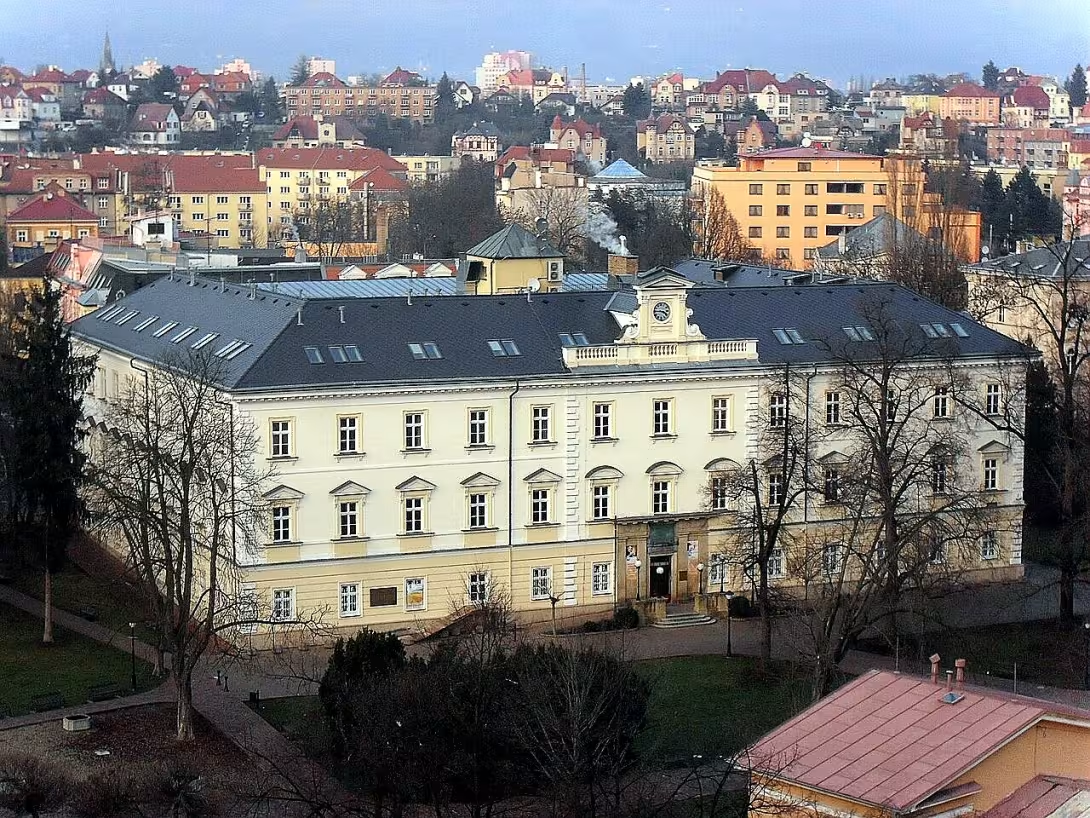
Vojenská lázeňská léčebna in Teplice, formerly known as the Spa House of Emperor František I., is an important Classicist complex built between 1804 and 1807. This cultural monument is located in the Teplice district of Shanov and ranks among the oldest facilities of its kind in Europe. He's still in the military hospital.
The building was created by Marshal John von Zopft and by other personalities. He grew up in places where a meadow with healing springs decomposed. Teplice became a neutral zone at the time of the Napoleonic wars when the construction took place. Thanks to the monarch's agreement, wounded soldiers from opposite sides of the conflict could be treated here. Shanov himself, where the hospital stands, was a separate town until 1895 when it was connected to Teplice.
The premises are designed as a classical complex of four wings surrounding the inner courtyard. The main building with the descriptive number 1170 has been entered in the list of state protected cultural monuments since 3 May 1958. The spa house of Judita and the guesthouse of Vladislav and Antonia are also included today. The complex has undergone several modifications throughout history between 1886 and 1887 and then between 1948 and 1952. The last modernization was completed in 2009.
The treatment room is located at the address of Svatopluk Czech Republic 2 and the main entrance is oriented to the Orchards of the Czechoslovak Army. For visitors, the building is accessible by public transport, namely by trolleybus lines 106 and 111 or by bus line 122. The train and bus stations are approximately 1,500 metres away.
Vojenská lázeňská léčebna is a unique document of historical care for the health of soldiers and development of spa facilities in Czech countries. Visiting this place offers the opportunity to become familiar with the classical architecture and history that goes beyond the borders of the region.
Historical milestones
- 1804
- Construction of the spa house.
- 1807
- Finishing the construction of the spa house.
- 1958
- Registration of building No. 1170 in the list of cultural monuments.
- 2009
- Last upgrade of the compound.
Architectural development
The Classicist complex was built gradually in four wings surrounding the inner courtyard. Significant building modifications took place in 1886-1887 and subsequently in the mid-20th century. The last modernization of the entire complex was completed in 2009.
Historical events
At the time of the Napoleon wars, Teplice served as a neutral zone for wounded soldiers from different sides of the conflict. In 1895 Shanov was connected to Teplice. From 1948 to 1952, extensive building modifications were carried out.
Points of interest
- Vojenská lázeňská léčebna in Teplice, formerly known as the Spa House of Emperor Franz I, belongs to the oldest facilities of its kind in Europe. - At the time of the Napoleonic wars, Teplice became a neutral zone, which allowed wounded soldiers from opposite sides of the conflicts to be treated. - The area was built between 1804 and 1807 at the initiative of Marshal John von Zopft at the place where a meadow with healing springs had previously decomposed. - Architecturally, the object is designed as a classicist complex of four wings that surround the inner courtyard. - Shanov, where the
Guide
Show guide text
This text was created by artificial intelligence and has not been editorially reviewed. It may contain inaccuracies.
Welcome to Teplice, a place where nature has met since centuries with human efforts for health and peace. Right now, you're standing in front of a building that carries deep history and tells the story of humanity in the midst of the cruelty of war conflicts. In front of you is the area of the Military Spa Hospital, which will immediately consume you with its monumental and calm. Stop for a moment, take a breath and feel the atmosphere of this place. It is a space that has been created for one purpose, and that is to help those who have lost their health in battle. When you look at the general appearance of the building, you will see a significant classical area in front of you, which reflects the spirit of the time in which it was created with its balance and moderation.
Let us now return together in time more than two galleries back to the early nineteenth century. Imagine then the landscape and small town of Shanov, where there were healing springs, which were both a mystery and a gift of nature at the time. It was here, from 1804 to 1807, that this ambitious project arose. The whole building was created by Marshal John von Zopft, a man who understood the needs of the army, but also perceived the importance of regeneration and treatment. At that time this institution was named the Spa House of Emperor Franz first, which in itself shows the high support the project gained from the highest levels of the then empire. The construction began in 1804 and after three years of intensive work was completed in 1807. It was a time of great change, political upheaval and constant conflicts in Europe, and it was in this chaos that a place was created to serve as a port for the wounded.
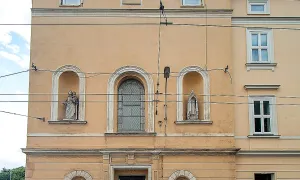
Now pay attention to the architecture itself. As you've already noticed, this is a classic area. Classicism was a style that sought inspiration in antiquity, emphasized symmetry, purity of lines and rational arrangement of space. Look at the facade of the building and perceive its harmony. Although today we do not know the names of the particular architects who designed this project, their work speaks for them. Notice how the building looks stable and dignified, which should have forced the patients in the ranks of the army to feel safe and ordered. The area has undergone the latest modernization in 2009 to serve today, but despite these changes it has retained its historical character. In 1958, the budoba with a descriptive number 1170 was officially listed in the list of cultural monuments, which confirms its irreplaceable importance for our architecture and history.
Now, if you look around you, try to imagine the people who used to walk through here. This hospital wasn't just an ordinary hospital. It was one of the first institutions of its kind throughout Europe. The key character that contributed to its creation was the said Marshal Jan von Zopft. His vision was not only to build walls, but to create a military care system that would combine modern medicine at that time with the natural strength of Teplice springs. Imagine the thousands of men who came here with battle wounds, exhaustion, and battle traumas.
Here we come to the most fascinating part of the story of this place. At the time of the Napoleon wars, when Europe was on fire, and the great troops met in bloody battles, Teplice became something special. Thanks to its reputation and status, there is a swamped neutral zone. This means that within this area the laws of war and hatred have ceased to apply. Imagine the incredible contrast where an injured Austrian soldier was lying in the same room and next to him, in the neighboring bed, a wounded soldier from an enemy army was treated. There were no enemies in this space, only people who suffered and sought relief. This humanistic idea that the right to treatment and compassion dominates political disputes and national differences makes Military Spa Hospital a place with a very strong moral charge. It is a monument that reminds us that even in the darkest times of mankind there were places where empathy and help prevailed.
You may find one interesting thing that makes this place unique. As I mentioned, this treatment facility is among the oldest facilities of its kind throughout Europe. At the time of her inception, she was basically a pioneer in an organized military spa. While elsewhere, soldiers were treated in field hospitals under unfavourable conditions, they received care in the area that was designed for their regeneration. This combination of military discipline and spa relaxation was revolutionary at the time. It is fascinating to think how many fates have intersected here and how many men have returned to their families thanks to healing springs and care in this classical house.
Now, if you look at the building again, you don't just see it as a set of stones and plaster, but as a living archive of human stories. Feel the silence that prevails on the premises today, and contradict it with the noise of the cars, the Martian troops and the painful stacks of wounded people that were here two centuries ago. This construction has survived the fall of empires, changes in regimes and modernization of the world, so that it can tell us today about values that are timeless.
Now that you know the history of this special place, I suggest you go through the area at a slow pace. Observe the details, perceive the proportions of the building, and let yourself be carried away by the thoughts of all those here looking for hope of recovery. Take a look around, maybe in one of the corners of the compound you'll feel the strange calm that still radiates from the neutral zone of the Naples Wars.
Thank you for accompanying me on this short journey through the history of the Teplice Military Spa Hospital. I hope you're interested in this story about humanity and architecture. You can now continue to explore the beauty of this city and discover other hidden treasures waiting for you. I wish you a pleasant rest of the day and an inspiring continuation of your journey. Goodbye.
Tips for visitors
{'when to visit': 'The best time to visit is late spring or early autumn when the weather is ideal for walking in adjacent orchards. In these months you will enjoy the classicist architecture of the building in combination with the flowering or colorful greenery of the Šanov spa district.', 'transport _ parks': 'The treatment room is well accessible by car and public transport. Parking is possible in the adjacent streets of the spa district, but we recommend using the marked parking lot in the wider centre. Check the specific transport connections and parking possibilities in the current search engines for connections and map materials.', 'equipped _ photographers': 'For a visit, take comfortable shoes for walks around the spa area. If you plan to photograph, the best light for capturing the classical facade of the building is in the morning. Focus on detailed architectural features and overall view from adjacent Czechoslovak Army Orchards.', 'of all _ and _ families': 'In the immediate vicinity is the Teplice Spa Centre, which offers a pleasant environment for family walks. The Czechoslovak Army sets are ideal for families with children, which provide plenty of space to relax and move in green directly at the historical hospital.'}
Businesses nearby
Do you run a restaurant, accommodation, shop, museum, rental, wellness or other visitor service near this monument? Show yourself directly to the people heading to it — this is how they will see you in the app and on the web:
Nearby
The treatment facility is located in the Teplice district of Šanov, close to the Czechoslovak Army Orchards. The spa centre of Teplice with rich history and architecture is located nearby.
Accommodation nearby
Trips and activities nearby
Guided tours, tickets and activities nearby from GetYourGuide
Affiliate link: if you buy from the partner, we may receive a commission. The price for you does not change.
Search tours and activities →Themed route
1. Vojenská lázeňská léčebna - historical treatment facility. The unique architecture from the beginning of the 20th century and the exhibition dedicated to the military spa tradition make it possible to look into the life and healing methods of the former soldiers.
2. Sets of Czechoslovak Army - public park. The large green space with historical statues and alleys provides a pleasant place to relax and walk, just about 300 m from the treatment facility.
3. Spa Centre Teplice - architectural complex. Beautiful Art Nouveau buildings, colonnades and spa fountains represent a rich history of the city; travel from the orchards takes approximately 500 m.
4. Shanov district - historical district. Maintains a traditional atmosphere and local architecture, ideal for a short walk after the end of the route, distance from the spa centre about 200 m.
Seasonal recommendations
Spring: In the spring season, Vojenská lázeňská léčebna in Teplice will turn into a flowering refuge where flowering shrubs and trees are revived. Sunny days provide ideal conditions for exploring historical architecture with bright contours in pleasant lighting. Visitors can expect a mild crowd because temperatures are rising and people are looking for outdoor activities. It is recommended to wear a playback or light coat for a cooler morning and evening as well as shoes suitable for a recently dried surface. The best time to visit is in the afternoon when the sun illuminates the memory with its warm light.
Summer: In summer, Teplice and their spa facilities offer a full summer atmosphere with long, sunny days. The heat may be pronounced, but this period is also ideal for exploring spa facilities and relaxing in outdoor areas. Due to the main summer season, a significant crowd is expected, especially on Sundays and leisure time, so it is advisable to visit the memory early in the morning or later in the afternoon. Wear light, light clothes and sun guard; Always bring water to moisten. Also remember the suitable shoes for walking on asphalt or brick tiles that can be warm.
Autumn: In autumn Teplice and their spa treatment of the magical atmosphere with the cascades of coloured leaves will take place, adding color contrast to historical architecture. Sunshine days are still welcome, but changing weather requires flexibility. The crowds are usually mild and the visit is more comfortable than in the summer peak period. It is recommended to wear laminated clothing that allows you to adapt to both warm daytime hours and colder evenings and mornings; This also includes a rain guard. The best time to explore the sights is at noon, when the sun usually stays behind the clouds.
Winter: Winter Teplice offers a unique atmosphere with the possibility to watch snow drapes around spa buildings. Cold weather and shorter daylight bring a quiet feeling that is ideal for relaxation in the historic environment. The monument is open with limited activity due to winter conditions, so it is important to know about the current state before the visit. Visitors should be well resistant to cold with warm clothes, leather hugs and wind and snow warheads. The best time to explore is in the morning or early afternoon when temperatures may increase slightly.
Visualizations and artistic views

The visualisations are generated by artificial intelligence and serve as inspiration.
Photos from the area
Real photos taken near the monument


Zdroj a licence jsou uvedeny u každého snímku.
Tips from visitors
No tips yet. Be the first!
Log in and add your tip.
Sources and literature
Fotografie: Qwertz0451 / CC0 — Wikimedia Commons. The author and licence also appear when you hover over the image.
Faktickým podkladem tohoto textu byl článek na Wikipedii, jehož autory jsou přispěvatelé Wikipedie. Článek je dostupný pod licencí CC BY-SA 4.0.
Location on the map

Příběhy a pověsti
Legendy, pověsti a příběhy spjaté s touto památkou

Fotografie návštěvníků
Zatím žádné fotografie. Buďte první, kdo přidá fotografii z návštěvy!
Přihlaste se a přidejte svou fotografii nebo hodnoťte.
Za ověřenou návštěvu v aplikaci získáte víc bodů — poznáme podle GPS, že jste na místě.
Reviews and comments