






Dominikánský klášter (Staré Město) Monastery
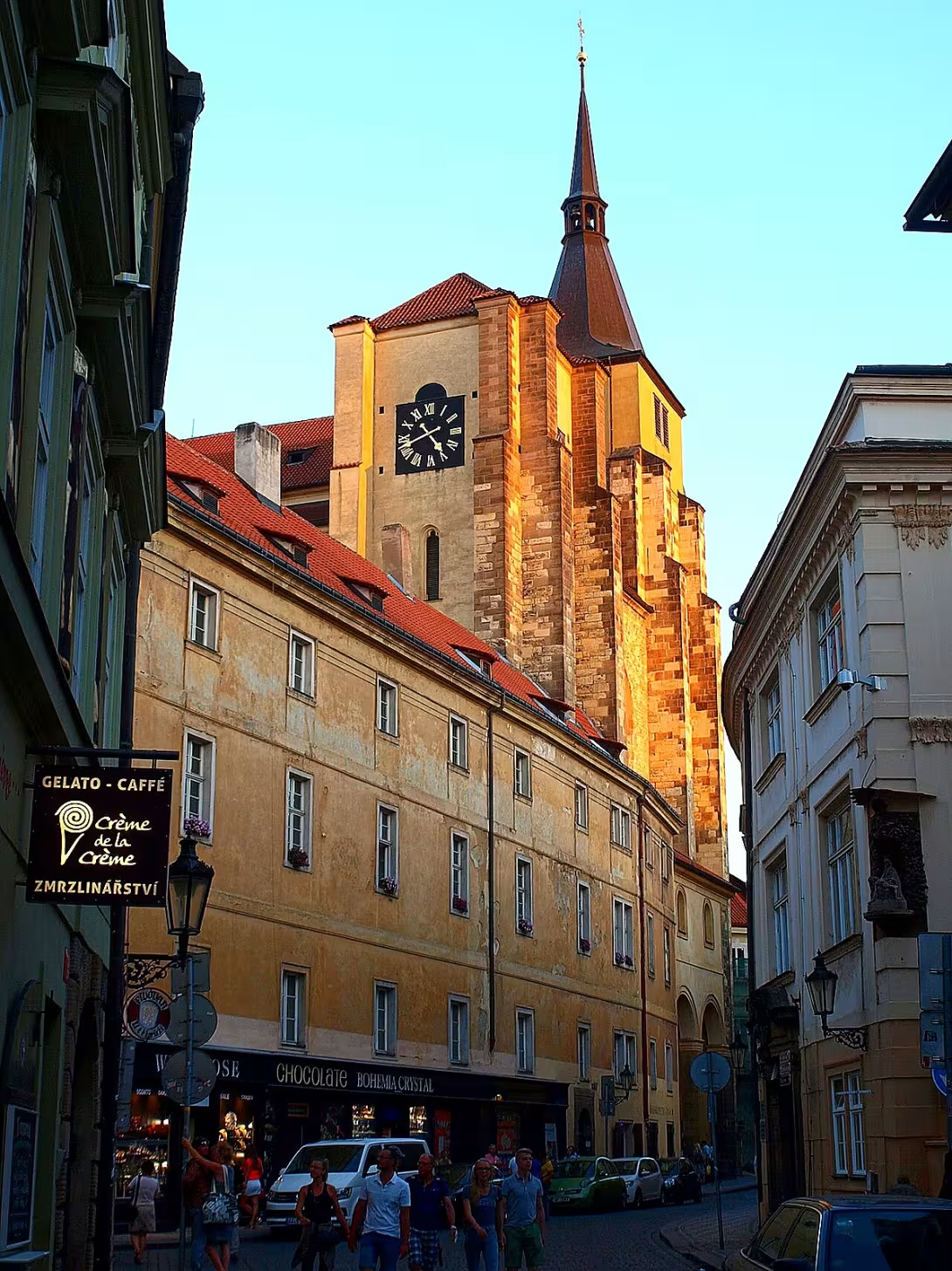
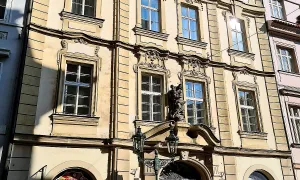
The Dominican monastery in the Old Town of Prague is an important Baroque convention at the church of St. Gilje, which manages the order of the brothers of preachers. The building on Husova Street is a complete architectural block. It has been associated with the work of Dominicans since 1625 and is now a centre of both spiritual and cultural life.
The history of the Order in the Old Town dates back to the Middle Ages, when monks lived at the church of St. Kliment. In the 16th century, the order temporarily moved to the Anezka monastery near the church of St. Francis. The Dominicans came to the current place in Husova and Jilska Street in 1625. This period of post-white mountain reCatholisation and the Thirty Years' War has fundamentally affected religious and political conditions in the Czech Kingdom.
The original building of the monastery complex consisted of various objects which the order gradually bought up until 1656. After 1663 there was a major Baroque unification of the complex, the architect Carlo Lurago. The resulting block is defined by the streets of Husova, Jalovcova, Jilská and Zlatá.
The monastery is owned by the Order of the Brothers of Preachers. In the course of the 20th century he went through dramatic changes. In 1950 it was violently closed, the Greek community was displaced and dissolved. It was only after the Velvet Revolution in 1990 that the Dominicans could return to their activities.
Today, the monastery serves as the seat of the Czech Dominican province and parish near St. Jilji; The rooms are also used by the Polish Roman Catholic parish. A significant part of the monastery's life is the Dominican 8 discussion platform that links Christian faith with current social topics.
This object represents a valuable example of baroque architecture, which bears the imprint of centuries of order in the centre of Prague. Visiting this place offers insight into the history and contemporary spiritual and intellectual activities of Dominicans in the immediate vicinity of Old Town Square and Klementine.
Then and now
Drag the slider to compare how the landmark may have looked when it was built with the view today.
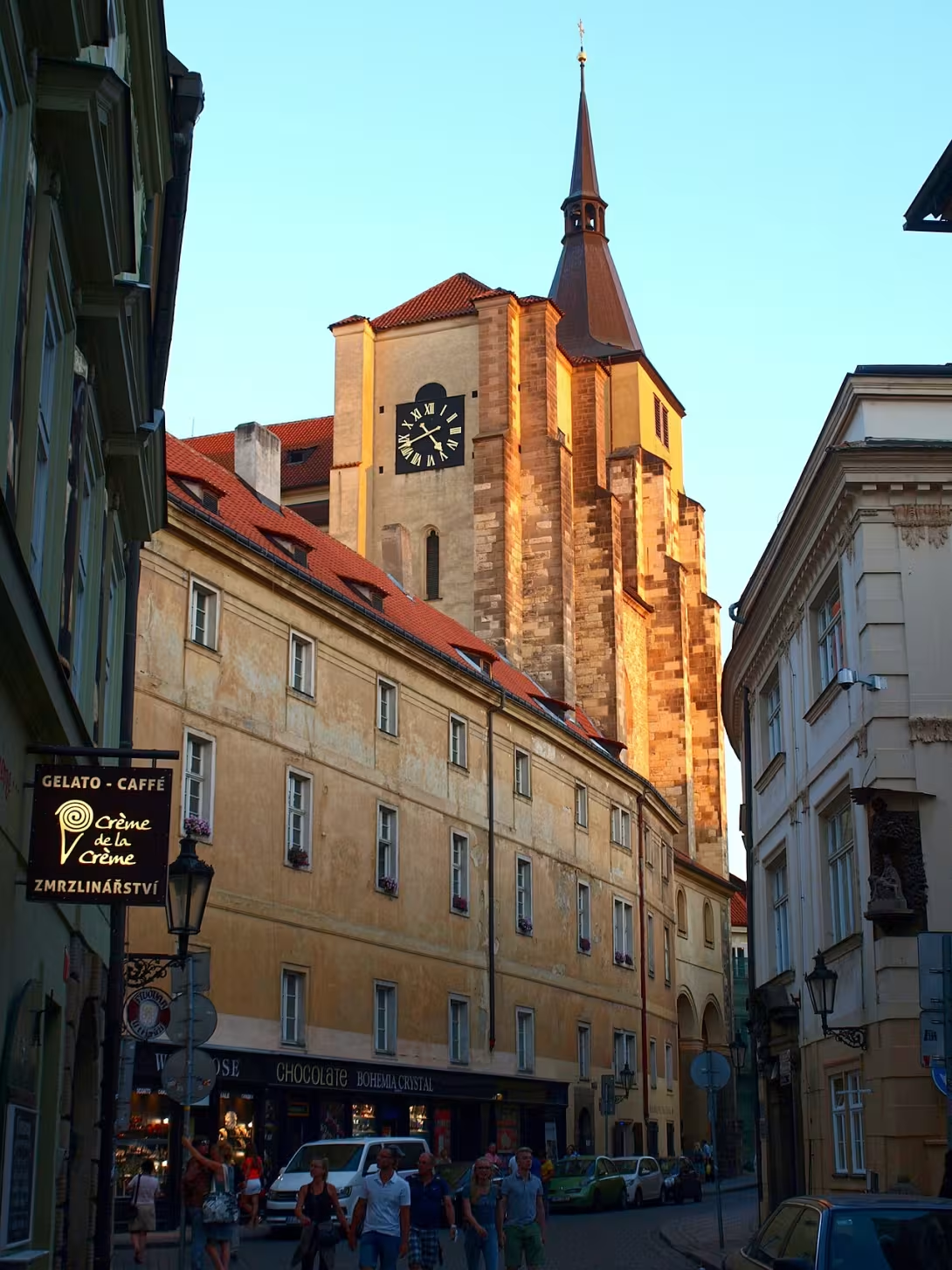
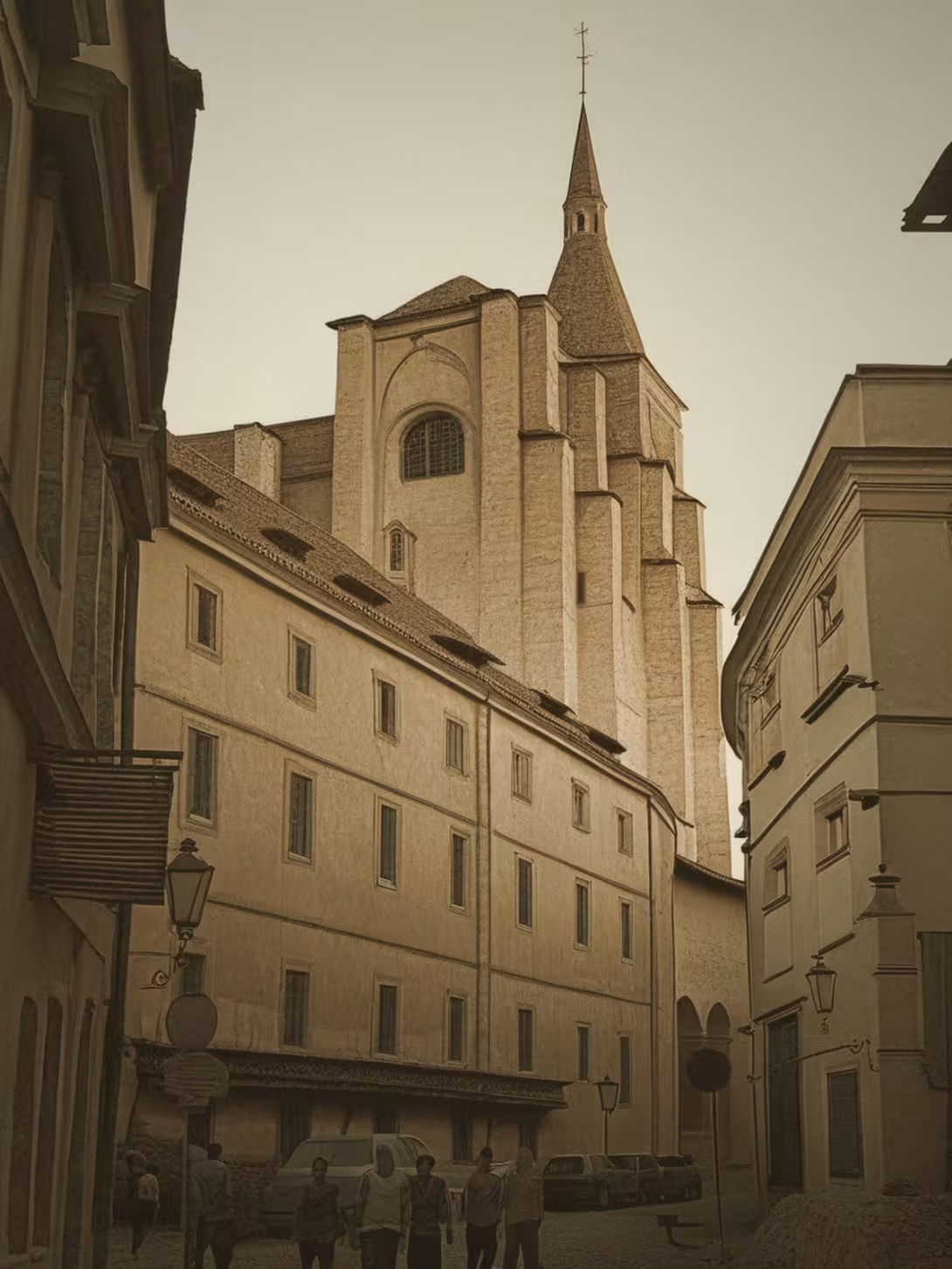
The historical appearance on the left is an AI-generated visualisation and serves as inspiration only.
Historical milestones
- 1625
- The Dominicans will settle in the present place at St. Gilji's Church.
- 1663
- Initiating building unification of objects under Carl Lurago's leadership.
- 1950
- Violent displacement and dissolution of the community under Action K.
- 1990
- Restoring the work of the Convention after the Velvet Revolution.
Architectural development
The original building consisted of various objects purchased by Dominicans until 1656. After 1663, a major building unification of the entire block took place in the Baroque style, the author of which was Carlo Lurago. The complex is defined by the streets of Husova, Jalovcova, Jilská and Zlatá.
Historical events
1625: the arrival of Dominicans in place, 1950: the violent abolition of the monastery under Action K, 1990: the renewal of the Convention after the Velvet Revolution.
Owners
Order of Preachers Brothers (Dominicans)
Points of interest
- The Dominican monastery is an important baroque convention at the church of St. Gilji, which manages the order of the brothers of preachers. - The building in Husova Street consists of a complete architectural block, the author of which was architect Carlo Lurago. - With the action of Dominicans in the present place, the monastery has been connected since 1625. - In 1950, the monastery under Action K was violently closed and the religious community was displaced and dissolved. - Part of the life of the monastery is the Dominican 8 discussion platform, which links Christian faith to current social topics.
Guide
Show guide text
This text was created by artificial intelligence and has not been editorially reviewed. It may contain inaccuracies.
Welcome to the heart of Prague's Old Town. You're standing right here where history can't just be read in books, but where you can literally feel it in every breath and every stone block around you. In front of your eyes is the Dominican monastery, an important baroque convention, which is an inherent symbol of this neighborhood and also a silent witness to the many dramatic events that shaped our country. Feel this atmosphere, this sense of stability in the midst of a busy city that has been here for centuries. In front of you, there is a space that is not just a set of buildings, but a living organism that has undergone enormous development, decline, and rise.
Let's go back deep into the past together to understand why this place is so special. The story of this monastery is inseparably linked to the order of the brothers of preachers known as the Dominicans. Their activities at this particular site began in 1625. This was the time when Prague was changing, when the Baroque style began to spread on the streets and when religious and political power tried to leave its permanent mark in the architecture of the city. The Dominicans then took over the administration of the nearby church of St. Gilji and since then this convention has become their home, their centre of spiritual and intellectual life. Imagine the times when these streets were filled with bells and voices of monks who have been teaching and preaching for centuries.
Now pay attention to what you see around you. If you look at the overall appearance of the buildings on Husova Street, you will notice their unusual uniformity. This object is not just a random cluster of houses built in different times. On the contrary, they form a complete architectural block that acts harmonically and firmly. This uniformity is not the work of chance, but the result of the brilliant work of an important architect who was Carlo Lurago. In the seventeenth century, namely around 1663, Lurago began a large reconstruction, which aimed to unify various individual objects into a single whole. Thanks to his vision, you now perceive this baroque character and the fortress this monastery radiates. Feel how the buildings intertwine and create a solid line between the inner calm of monastic life and the outer movement of the city.
But the history of this place is not just a story of architectural triumph and spiritual stability. It is also the story of deep suffering and unexpected interruption of continuity. If you attempt to examine in spirit the fate of the people who lived here, you will encounter a very dark period. In 1950, the fate of the Dominicans changed sharply. As part of a politically motivated event known as Action K, the monastery was violently closed. The community has been dissolved and the people who have built their home and service here for centuries have been expelled. This moment represented a brutal break in history, trying to erase the presence of order from this place. The monastery, which was a symbol of endurance, became a symbol of oppression and silence, which would last forever.
Although silence seemed to be eternal in these areas, history tends to return to its original purpose. After many years, when the monastery was not fully in the service of its original purpose, a fundamental change came. With the end of the totalitarian regime and after the events of the velvet revolution, the Convention was restored in 1990. It was a period of hope and identities found again. The Dominicans could return to replenish their role in the heart of Prague. This return was not only a victory of faith, but also proof that even the greatest political upheaval could not completely destroy the legacy that had been built for centuries.
The interesting thing that may interest you now when you look at these buildings is the invisible force that holds this whole thing together. Think about how there were two conflicting forces in these walls: the pursuit of architectural perfection and the pursuit of political control. The monastery on Husov Street stands as a monument to resistance to time and the human will that tried to destroy it. It is a place where the Baroque elegance of Carlo Luraga meets the tragedy of 1950 and the subsequent triumph of 1990. Every detail, every line of this architectural block carries a trace of these events.
Now that you've gained a broader view of this important entity, I suggest you continue your walk around the old town. Let yourself be carried away by the atmosphere of the alleys that are as rich in stories as this monastery. Perhaps you will stop at the church of St. Jilji, which is so closely connected to this place, or go deeper into the labyrinth of historical paths. But remember, right here, before this monastery, you have felt the weight of history, which is not just a static fact, but a living experience. Thank you for choosing to explore this story with us. We wish you a beautiful and inspiring rest of your trip to Prague.
Tips for visitors
To visit the monastery and the Holy Church We recommend the Jilji morning hours on working days when the quieter atmosphere is suitable for a tour of architecture and contemplation. You will avoid the biggest burden of tourists from adjacent main routes.
The location in the Old Town is in a restricted parking zone, so we strongly recommend using public transport. The current connection and the nearest stops can be easily verified in online search engines. Arrival by car directly to the monastery is not practical for visitors.
When visiting the interior of the church and the monastery, we recommend to have a shoulder cover and suitable clothing that respects the spiritual character of the place. Photography is allowed without lightning, with the best lighting conditions to capture baroque details and monastery architecture being around noon when light penetrates the windows into the main spaces.
In the immediate vicinity within 30 minutes walk you can visit the Old Town Square, take a walk through the historic Charles Street, see the extensive complex of Klementina or visit the nearby Bethlehem Chapel.
For families with children, the visit is suitable as part of a walk through the history of Prague. We recommend explaining to the children the rest of the sights. Due to the historical tiles around the monastery we recommend to choose comfortable shoes and consider using a lighter pram.
Businesses nearby
Events nearby

Zdroj akcí: otevřená data měst a obcí ČR (Národní katalog otevřených dat) a kalendář akcí Národního památkového ústavu.
Nearby
Old Town Square, Charles Street, Klementinum, Bethlehem Chapel.
Accommodation nearby
Trips and activities nearby
Guided tours, tickets and activities nearby from GetYourGuide
Affiliate link: if you buy from the partner, we may receive a commission. The price for you does not change.
Search tours and activities →Themed route
1. Bethlehem Kaple, religious object. It is an important place associated with Czech reform. 2. Old Town Square , square. Here you will find the heart of old Prague and its most important sights. 3. Klementinum, historical complex. This Baroque whole represents a fascinating combination of science and history. 4. Karl street , historic alley. This path will guide you through the picturesque corners of the old town. 5. Dominikánský klášter (Staré Město), monastery area. The main destination of the trip offering peace and rich spiritual heritage.
Seasonal recommendations
In spring the monastery surrounds the fresh air and the waking city. Soft spring light pleasantly illuminates historical walls and creates a calm atmosphere. We recommend wearing layered clothes so you don't get caught up in the weather. The ideal time for a visit is in the morning, when crowds of tourists are still relatively small.
The summer season brings intense sun and hot air that contrasts with the cold of stone space. The atmosphere is full of energy and excitement of the season. Due to large groups of visitors, it is best to come at the opening. Choose light and breathable materials to make you comfortable while walking through Old Town.
Autumn is characterized by golden light and slightly cooled air, which gives the monument a nostalgic touch. The area around the monastery is more peaceful and prudent at this time. It's practical to carry a waterproof jacket or scarf. The best thing is to visit a place in the afternoon when the sun throws long shadows.
In winter, the freezing air and short days dominate, creating an intimate and quiet mood. In advent time, the neighborhood is lit up and full of expectations. Don't forget the warm clothes and the tight shoes. Pay attention to opening times that may be shorter in this period than in summer.
Visualizations and artistic views


The visualisations are generated by artificial intelligence and serve as inspiration.
Photos from the area
Real photos taken near the monument


Zdroj a licence jsou uvedeny u každého snímku.
Tips from visitors
No tips yet. Be the first!
Log in and add your tip.
Sources and literature
Fotografie: VitVit / CC BY-SA 4.0 — Wikimedia Commons. The author and licence also appear when you hover over the image.
Faktickým podkladem tohoto textu byl článek na Wikipedii, jehož autory jsou přispěvatelé Wikipedie. Článek je dostupný pod licencí CC BY-SA 4.0.
Location on the map
Příběhy a pověsti
Legendy, pověsti a příběhy spjaté s touto památkou
Fotografie návštěvníků
Zatím žádné fotografie. Buďte první, kdo přidá fotografii z návštěvy!
Přihlaste se a přidejte svou fotografii nebo hodnoťte.
Za ověřenou návštěvu v aplikaci získáte víc bodů — poznáme podle GPS, že jste na místě.
Reviews and comments