



Domy U Bílků a U zlaté lodi Building complex
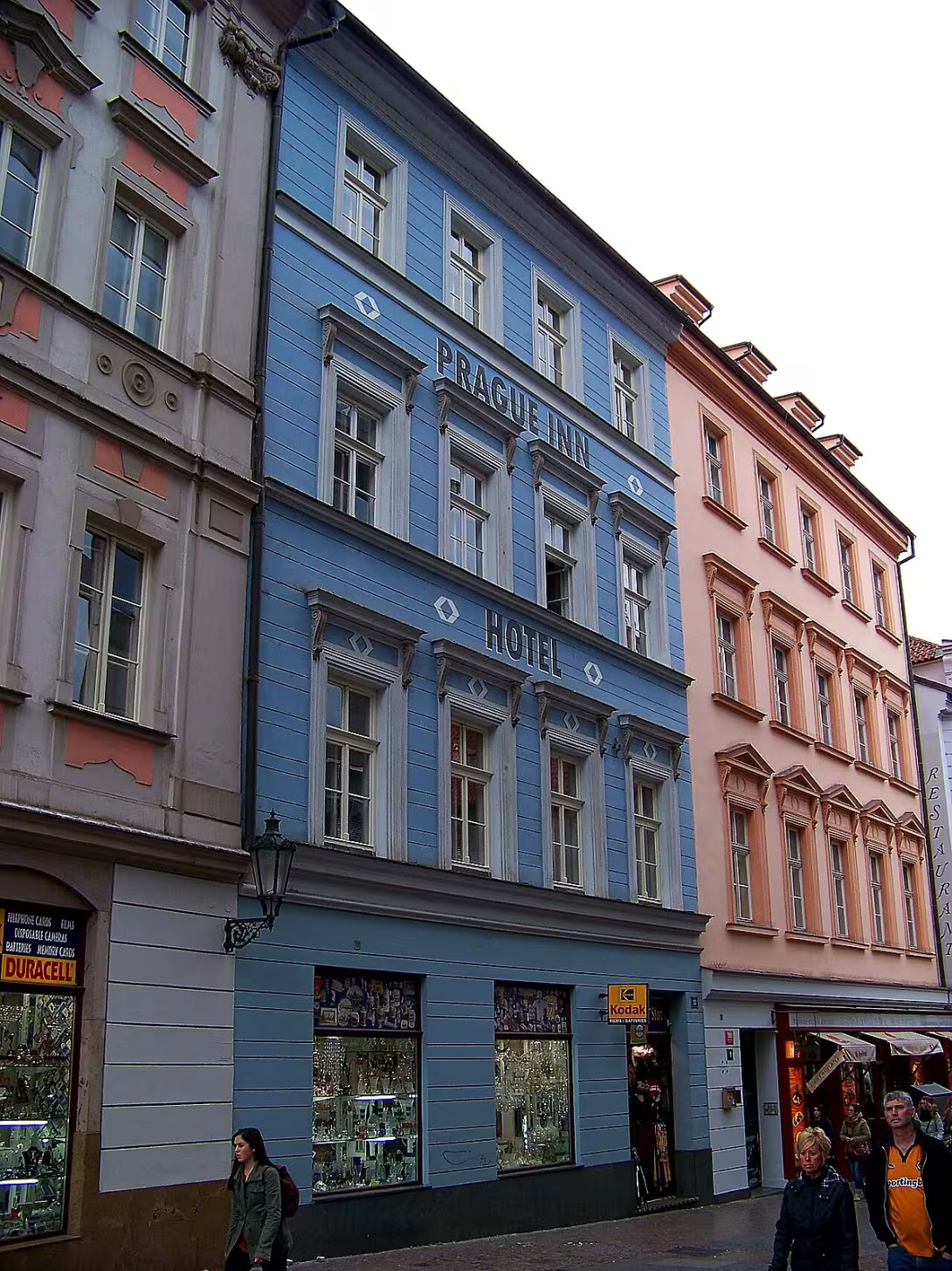
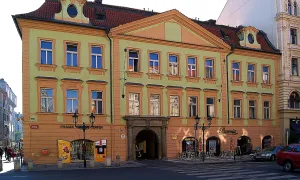
Domy U Bílků a U zlaté lodi is a classical complex located in the historical heart of Prague, specifically at the address of the bridge 379 / 10 in the village Staré Město. These protected cultural monuments are remarkable by their architectural design and historical context associated with their creator Josef Svobová. They originated in the first half of the 19th century; houses no. 379 and 380 were built in 1849 and 1863 according to the plans of this architect.
Josef Svoboda, known for his ability to integrate classical elements into the urban environment, designed these buildings as part of a wider urbanisation process in Prague. His plans reflected the need to modernise and improve living conditions in the city, which was typical of the period of the industrial revolution. House architecture U Bílky and U golden boat is characterized by symmetrical solutions and classical details, in accordance with its architectural style.
The history of these buildings is directly linked to their creator and position under the urbanisation plan. Josef Svoboda was a key figure in shaping the urban architecture of the time, and his works are still appreciated for their aesthetic and historical importance. Although specific information about owners or dramatic changes in property is missing, it is clear that these buildings were part of a dynamic urban environment.
Today, the houses of the Bílk and the Gold Boat are not only protected by monuments, but also accessible to visitors. Their historical importance and architectural beauty make this complex of buildings an interesting destination for anyone who mentions Prague. Visiting these houses is an opportunity to appreciate not only Josef Svoboda's artistic talent, but also a deeper understanding of urban history and its evolution.
These buildings bear witness to the changes Praha experienced during the 19th century, and remind us of the importance of preserving cultural heritage for understanding our roots. Visiting these monuments is not only a way to the past, but also an inspiration for the recognition and appreciation of the architectural achievements that shaped the city today.
Historical milestones
- 1849
- New building of house No. 379 according to plans of Josef Svoboda.
- 1863
- New building of house No. 380 according to plans of Josef Svoboda.
Points of interest
- It is a classical complex in the centre of Prague designed by Josef Svoboda. - Houses with numbers 379 and 380 were built in 1849 and 1863. - Buildings were created as part of a wider urbanization process to modernise the city during the industrial revolution. - Architecture is typical of its symmetrical solutions and classical details. - These protected buildings are now accessible to visitors.
Guide
Show guide text
This text was created by artificial intelligence and has not been editorially reviewed. It may contain inaccuracies.
Welcome to the heart of Prague, the historical part of Old Town, where every stone tells its own story. Please stop for a moment and take a deep look at the atmosphere of this place. Right now you're facing a very interesting total of buildings we know as Domy U Bílků a U zlaté lodi. Look in front of you at these buildings, which are located on the street on the bridge. It's a place where the daily rush of a modern city meets with the silent testimony of the past century. When you look at these houses, you might see their connection and the way they fit into the overall rhythm of the surrounding building. These are buildings that have been with us for decades and today are protected as cultural monuments, which means the state has recognised their value for our common history and identity.
Let us now look together at how these houses were built and in what context they were built. Let us transfer our thoughts to the middle of the nineteenth century, until Praha began to transform and evolve into a modern metropolis. The first of these houses, bearing a descriptive number of three hundred seventy-nine, was built as a new building in a thousand eight hundred forty-nine. At that time, it was a crucial step in developing this particular part of the street. A little later, in the year one thousand eight hundred sixty-three, a new building of the neighboring house with the number three hundred eighty followed. Both of these buildings have one common name which was linked to their creation. Plans for both houses were prepared by Josef Svoboda. Although today the name of this author may not be known as the names of the great masters of world architecture, his work remains here and forms the basic framework of what you see before you. It is fascinating to think that one person helped shape the appearance of this place over 14 years, thereby ensuring a certain uniformity and harmony of the whole complex.
Now pay attention to the architecture itself. Since you're standing right in front of them, I suggest you slowly wipe the entire facade of both buildings. Notice how these houses treat each other and how they form one continuous whole. Watch the facade lines and see how windows and entrances are laid out. Although we don't know every single detail of the inner device, the outer appearance itself tells us about the ambitions of the time in which they were created. Look up and try to imagine what this street looked like in a thousand eight hundred forty-nine when the first house was finished. There was probably a whole different life, different sounds and different smells. Josef Svoboda, when designing these houses, had to take into account not only the functionality, but also how the buildings are registered in the historical environment of Old Town. It is this ability to adapt to the surroundings that is why these houses act naturally and organically, as if they were ever there.
When we think about the people who were connected to this place, we have to acknowledge that history leaves us in a certain state of tension in this case. We don't know the specific names of the prominent figures who would live or work here and who would be written in chronicles. But that is where one of Prague's greatest spells lies. These houses are not just the chosen ones, but they belong to thousands of anonymous residents who went through them, who lived in them, loved, worked and dreamed. Imagine all the generations of people walking out this door into the streets of Old Town this morning. Maybe there were small craftsmen, businessmen, or officials who made up the city's heartbeat. Although their names are not in the textbooks, their tracks are embedded in the walls of these houses themselves. Every step that someone stepped up from, and every window that someone was watching happening on the Bridge Street is part of the invisible story of this place.
You may now be interested in one question, which is very common in Prague and in this case it is very convenient. Look at the names of these houses. The whites and the gold ship. Why were the houses called that? In times when there were no home numbers as we know them today, people used so-called home signs. They were image symbols that helped people orient themselves in the city. Names like the Gold Boat or the White House were probably based on these symbols that were placed on the facade. Imagine how people agreed at a gold boat meeting without having to know the exact address. It's basically an old navigation system that today replaces maps in our phones. The mystery remains why this particular symbol of the ship was chosen or why the house was called the White House. Was it because of the owner, or perhaps because of the goods sold here? These secrets remain hidden in the depths of time, and we can only imagine them, which gives the whole place some charm and depth.
Now, if you look at these buildings again, do you see them a little differently? They're not just walls of stone and mortar, they're living archives that survived changes in regimes, wars, and technological revolutions. The fact that they are protected today as cultural monuments is a promise that future generations will be able to stand in the same place as you and think about Josef Svobov and the people who lived here more than a hundred and fifty years ago. It is a reminder that stability and continuity are very valuable in our hasty world.
Now that we've looked at these two houses and seen their history, I suggest you continue to explore the area. Staré Město has another piece of Prague puzzle hidden in every street and yard. Come slowly away from the houses of the Bílky and the golden ship and see how the rhythm of the city changes, how the old facades intersect with new elements. Let yourself be curious and discover details that others may overlook. Thank you for stopping by this silent witness in Prague history for a moment. I wish you a pleasant continued journey and many new discoveries in our beautiful city. Goodbye.
Tips for visitors
For the best experience we recommend a visit in the morning, when sunlight best illuminates historical facades of buildings U Bílky and U golden boat. At this time, the details of architecture are most visible and the light is most suitable for observation.
Transportation to the place is very easy because it is located in the center of the city. The location is available by foot and by public transport; you can easily verify the current connection in the traffic controller.
When walking, we recommend to carry comfortable shoes, which is suitable for historic alleys. For photography, the best places on the opposite side of the street are where you can capture the entire facade of buildings in the best possible light.
For families with children the tour of this place is interesting thanks to rich architectural details that children can observe. Within the framework of the information provided, there are no other specific visit points in the immediate vicinity.
Frequently asked questions
Can the monument be visited?
The building is in use (offices, a school, shops and the like). The interior is generally accessible only during operating hours and tours are not usually offered; we have not verified the details. You can see the exterior from the street.
Where is the monument?
Location: Na můstku 379/10, Staré Město, Praha, Hlavní město Praha. The map on this page shows the exact spot.
Why is the monument protected?
It is listed in the Central List of Cultural Monuments of the Czech Republic as a cultural monument (register no. 38452/1-186).
Businesses nearby
Do you run a restaurant, accommodation, shop, museum, rental, wellness or other visitor service near this monument? Show yourself directly to the people heading to it — this is how they will see you in the app and on the web:
Events nearby

Zdroj akcí: otevřená data měst a obcí ČR (Národní katalog otevřených dat) a kalendář akcí Národního památkového ústavu.
Nearby
➜ Zobrazit interaktivní přehled okolí – restaurace, ubytování, půjčovny a další místa v okruhu 15 km.
Data: OpenStreetMap contributors, okruh 15 km.
🏰 Historické památky
- Clam-Gallasův palác v Praze (0.4 km – Husova 156/21)
- Dům U Kohouta (0.5 km)
- Hlávkova kolej (1.2 km – Gorazdova 1994/9)
- Kolovratský palác ve Valdštejnské (1.3 km – Valdštejnská 150/4)
- Vojenský historický ústav Praha (1.6 km – U Památníku 1600/2)
- Jaroslav Vrchlický (1.9 km)
- Gorlice (2.1 km)
- Cihelná brána (2.1 km – V pevnosti 46/1)
🍽️ Restaurace a stravování
- McDonald's (0.5 km – Vodičkova 736/15)
- Legenda (1.3 km)
- Restaurant River's smokelab (1.6 km – Lidická 2)
- Pizzerie U Tučňáka (1.7 km – náměstí 14. října 1)
- Yi Xiang Ge (5.1 km)
- Švejk restaurant U Brázdů (5.3 km – U Svobodárny 18)
- Pizzeria Cerreto (5.4 km)
- Šnyt (5.5 km – Kovářská 16)
🏨 Ubytování
- Old Prague Hotel (0.3 km – Skořepka 421/5)
- The Mozart Prague (0.6 km – Karoliny Světlé 208/34)
- Old Town Jewel Apartments (0.7 km – Elišky Krásnohorské 10/2)
- Hotel AXA (1.1 km – Na Poříčí 40)
- EA Hotel Tosca (1.6 km – Blanická 718/10)
- Theatrino (2.1 km – Bořivojova 1216/53)
- Hotel Olšanka (2.4 km)
- Plaza Prague Hotel (3.3 km)
🚲 Půjčovny a sport
- Kieser Training (0.5 km)
- Velox Sport (1.7 km)
- Centrum volného času Botič (1.7 km)
- JUN (1.8 km – Haškova 629/7)
- Pavé Cycles (2.0 km – Chvalova 1577/12)
- Florbal expert (2.0 km)
- U Tyrše (2.3 km – Jaselská 464/38)
- Virus Sport (2.4 km – Černomořská 235/5)
🥾 Turistika a příroda
- Informační a rezervační centrum (0.7 km – Maiselova 38/15)
- Pražský hrad (1.8 km)
- Petřínka (1.8 km)
- Masarykova vyhlídka (2.1 km)
- Vyšehrad (2.2 km)
- ÚAMK, a.s. (4.9 km – Na Strži 1837/9)
- Vyhlídka Emy Destinnové (5.6 km)
- Gabrielka (5.9 km)
Accommodation nearby
Trips and activities nearby
Guided tours, tickets and activities nearby from GetYourGuide
Affiliate link: if you buy from the partner, we may receive a commission. The price for you does not change.
Search tours and activities →Themed route
Thematic cruise route Staré Město
1. Domy U Bílků a U zlaté lodi (building complex) - Type: historical complex, architectural monument - Why is it worth a visit: This complex represents a key part of an ancient city face with a rich history. The architecture of the houses U Bílky and U zlálky is a representative example of Gothic and Baroque, an ideal place to understand urban development.
2. Old Town Hall - Type: historical building, monument - Why is it worth visiting: It is located in the same neighborhood as the main destination and is known for its tower clock. It is an iconic place with a rich history that offers a view of the Old Town Hall and its surroundings.
3. Old Town Square - Type: public space This central square is the heart of Old Town. It is famous for its historic buildings and atmosphere, which offers a view of the architectural beauty of the area.
4. Old Town Hall Tower - Type: historical tower - Why is it worth visiting: The tower is the highest construction of Old Town and offers a unique view of the whole city. It is an ideal place for those who want to get a perspective view of historical monuments.
5. Old Town Square (remote view) - Type: panoramic view - Why is it worth a visit: After visiting the tower enjoy a stop and look at the entire Old Town Square, which is surrounded by historic buildings. This view completes the touching atmosphere of local architecture.
This route offers a comprehensive view of the history and architecture of Old Town, with an emphasis on key places around the main destination.
Seasonal recommendations
Spring brings fresh air and fine light to Old Town to highlight the details of the facades. The atmosphere is full of expectations and the awakening energy of the city. I recommend wearing more layers of clothing because the weather is variable. The best time to visit is in the morning, when the streets are still relatively quiet.
In the summer months it dominates bright sun and hot air, creating a pleasant contrast to the cold walls of historic buildings. There are very many people in the season, so it is best to come first thing in the morning to avoid the biggest crowds. Remember light summer clothes and plenty of water to go.
Autumn season is characterized by golden light and slightly cooled air, which gives the memory a melancholy touch. The number of visitors is falling, which allows a more peaceful tour of architectural details. It is convenient to carry a lighter jacket or sweater and plan a visit to the late afternoon when the lighting is softest.
Winter brings short days and frosty air, which in advent time complements the cozy atmosphere of the surroundings. Buildings look mysterious and impressive in the winter's shrub. It is necessary to wear warm winter clothes and to check the opening times, which are often shorter in this period.
Visualizations and artistic views


The visualisations are generated by artificial intelligence and serve as inspiration.
Photos from the area
Real photos taken near the monument

Zdroj a licence jsou uvedeny u každého snímku.
Tips from visitors
No tips yet. Be the first!
Log in and add your tip.
Sources and literature
Photos: ŠJů / CC BY-SA 3.0 — Wikimedia Commons. The author and licence also appear when you hover over the image.
Location on the map

Příběhy a pověsti
Legendy, pověsti a příběhy spjaté s touto památkou
Fotografie návštěvníků
Zatím žádné fotografie. Buďte první, kdo přidá fotografii z návštěvy!
Log in a přidejte svou fotografii nebo hodnoťte.
Za ověřenou návštěvu v aplikaci získáte víc bodů — poznáme podle GPS, že jste na místě.
Reviews and comments