






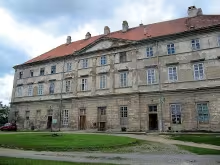
Drnholec Castle stands as a testament to Renaissance architectural elegance in the market town of Drnholec, located in the South Moravian Region of the Czech Republic. This historical monument is situated on a rocky outcrop above the left bank of the Dyje River, offering visitors insight into its storied past and cultural significance. Originally built as a medieval fortress, it underwent significant transformation during the 16th century under the patronage of the Tiefenbach family, evolving into an elegant Renaissance palace that reflects the cultural shifts of its era.
The castle's origins trace back to at least 1277 when it was first mentioned in documents. By the 14th century, Drnholec had become a market town and came under the rule of a branch of the Liechtenstein family. The Tiefenbach family acquired the estate in 1578 and initiated its transformation into a Renaissance residence. This period marked significant architectural changes, with Italian stonemasons Antonio Silva and Elia Canevale leading a reconstruction in 1585 that introduced a two-story design characterized by classical facades and intricate stucco work.
The castle's architecture is notable for its blend of Gothic and Renaissance elements. The original Gothic core from the 14th century was expanded upon during the Renaissance, resulting in a structure that showcases late Renaissance stucco work from the end of the 16th century. A major reconstruction in 1837 further altered its appearance by removing the northern wing, standardizing the castle's current form.
Ownership and administration of Drnholec Castle have seen several transitions over the centuries. After the Tiefenbach family, it passed to the Sternberg family following the death of the last Teuffenbach in 1653. The estate was later owned by the Trautmansdorff family from 1708 until 1828, after which it became part of Ferdinand's Noble Seminary in Olomouc. In 1828, the castle came under the administration of the Theresian Military Academy in Vienna and remained so until 1918. Post-World War I, it was incorporated into the Czechoslovak state, and following the Velvet Revolution in 1989, it became privately owned.
Throughout its history, Drnholec Castle has witnessed various cultural and political shifts. The transformation from a medieval fortress to a Renaissance palace during the 16th century coincided with the spread of Renaissance ideas across Europe and increased tensions due to Ottoman incursions in Central Europe. These historical contexts have shaped the castle's architectural evolution and its role as a cultural monument.
Today, Drnholec Castle is preserved as a cultural monument, accessible to visitors who wish to explore its rich history and architectural beauty. The surrounding landscape, with remnants of the Dyje River's former meanders, adds to the site's charm. Visitors can appreciate the castle's historical significance and enjoy views of the Moravian-Austrian border.
Drnholec Castle is a remarkable example of Renaissance architecture and a symbol of the cultural transformations that have shaped Central Europe. Its well-preserved state makes it a worthwhile destination for those interested in history, architecture, and the stories embedded within its walls. A visit to Drnholec Castle offers an opportunity to step back in time and experience the legacy of the families who once called this elegant palace home.
Historical milestones
- 1277
- The castle is explicitly mentioned in documents.
- 1585
- Reconstruction into a two-story Renaissance palace by Antonio Silva and Elia Canevale.
Architectural development
Drnholec Castle underwent significant architectural changes from its origins as a medieval fortress to its transformation into a Renaissance palace. The 16th-century reconstruction introduced a two-story design with Italian stonemasons' influence, characterized by classical facades and intricate stucco work. Further modifications in the 19th century standardized the structure's appearance.
Historical events
16th century: Transformation from medieval fortress to Renaissance palace.
1585: Reconstruction into a two-story Renaissance castle by Italian stonemasons Antonio Silva and Elia Canevale.
1837: Major reconstruction, resulting in the current appearance of the castle.
Owners
Tiefenbach family (16th century)
Trautmansdorff family (1708-1828)
Ferdinand's Noble Seminary in Olomouc (post-1828)
Theresian Military Academy, Vienna (1828-1918)
Czechoslovak state (post-1918)
Private owner (post-1989)
Points of interest
- Drnholec Castle's transformation into a Renaissance palace in the 16th century was significantly influenced by Italian stonemasons Antonio Silva and Elia Canevale, showcasing the cross-cultural exchanges of that era.
- The castle underwent a major architectural change in 1837 when its northern wing was removed, altering its appearance to what is seen today, reflecting changing tastes and functional needs over time.
Guide
Show guide text
Welcome to the enchanting Drnholec Castle, a jewel nestled on a rocky outcrop above the gentle flow of the Dyje River in Jihomoravský kraj. As you stand here, take a moment to absorb the serene beauty surrounding this historic site. The castle's elegant silhouette against the sky is a testament to its rich history and architectural evolution.
Drnholec Castle first emerged into historical records in 1277 as a medieval fortress. Over time, it transformed dramatically under the influence of cultural shifts and visionary patrons. By the 16th century, Kryštof z Tiefenbachu initiated a significant transformation, commissioning Italian stonemasons Antonio Silva and Elia Canevale to reimagine the castle into a two-story Renaissance palace in 1585. This period marked an era of cross-cultural exchange, with Italian craftsmanship infusing local traditions.
As you explore, notice how the castle's architecture reflects its storied past. The harmonious blend of medieval fortifications and Renaissance elegance speaks volumes about the cultural influences that shaped it. Although specific architectural details are not visible from here, take a moment to appreciate the overall structure—the way it commands attention with its historical gravitas.
The Tiefenbach family played an instrumental role in the castle's history. Rudolf z Tiefenbachu later continued their legacy of transformation and preservation, ensuring that Drnholec remained a cultural monument through the ages. Their influence is evident in every stone and archway, inviting you to delve deeper into its narrative.
One intriguing aspect of Drnholec Castle is its architectural evolution during 1837 when it underwent another significant change. While details from this period are less documented, such transformations hint at an ongoing story of adaptation and resilience.
As your visit comes to a close, we invite you to continue exploring the grounds and imagining the lives once lived here. Drnholec Castle offers not just a glimpse into history but also a chance to connect with the cultural tapestry that has woven itself through time. Thank you for joining us on this journey; may it inspire further exploration and discovery.
Businesses nearby
Do you run a restaurant, accommodation, shop, museum, rental, wellness or other visitor service near this monument? Show yourself directly to the people heading to it — this is how they will see you in the app and on the web:
Nearby
Drnholec Castle is located on a rocky outcrop above the Dyje River, near the village of Drnholec. The surrounding landscape includes remnants of the river's former meanders and offers views of the Moravian-Austrian border.
Accommodation nearby
Themed route
Drnholec Castle and Surroundings Thematic Walking Tour
1. **Drnholec Castle (Castle) Begin your journey at Drnholec Castle, perched on a rocky outcrop above the Dyje River. This historic site offers an intriguing glimpse into medieval architecture with its well-preserved fortifications and scenic views of the surrounding landscape. Explore the castle's towers and ramparts to appreciate the strategic importance it once held along the Moravian-Austrian border.
2. **Dyje River Remnants (Natural Landscape) A short walk from Drnholec Castle, follow the trails that lead you through the remnants of the Dyje River's former meanders. This area provides a unique opportunity to observe how natural forces have shaped the landscape over time. The serene environment is perfect for a leisurely stroll or a moment of reflection amidst nature.
3. **Views of the Moravian-Austrian Border (Scenic Viewpoint) Continue your exploration by heading towards viewpoints that offer panoramic views of the Moravian-Austrian border. These spots are ideal for capturing breathtaking photographs and appreciating the expansive vistas that stretch across the region. The contrast between the natural beauty and historical significance makes this a must-see highlight.
4. **Drnholec Village (Village) Conclude your tour by visiting the charming village of Drnholec, nestled at the base of the castle's rocky outcrop. Wander through its quaint streets to experience local culture and history up close. The village offers a peaceful atmosphere where you can unwind after an enriching day exploring the area.
This thematic walking tour provides a comprehensive exploration of Drnholec Castle and its immediate surroundings, offering insights into both historical and natural attractions in the Jihomoravský kraj region.
Seasonal recommendations
Spring: The arrival of spring at Drnholec Castle is marked by a vibrant transformation as the surrounding landscape bursts into life with blooming flowers and lush greenery, creating an enchanting atmosphere perfect for leisurely strolls through nature. The gentle warmth of the season brings out the castle's historical beauty in soft light, enhancing its architectural details. Visitors are advised to dress in layers to accommodate fluctuating temperatures throughout the day. While spring can attract a moderate number of visitors eager to enjoy the revitalized scenery, arriving early in the morning is recommended to avoid larger crowds and fully appreciate the serene environment.
Summer: Summer at Drnholec Castle offers long days filled with warm sunshine, making it an ideal time for exploring both the castle's rich history and its picturesque gardens. The lush greenery and vibrant flowers provide a beautiful backdrop for outdoor activities, while the castle itself is bathed in golden light that accentuates its historical features. However, this is also the peak tourist season, so visitors should plan to arrive early to avoid crowds. Comfortable walking shoes and sun protection are essential due to the increased foot traffic on the grounds and prolonged exposure to sunlight.
Autumn: Autumn at Drnholec Castle presents a stunning display of fall foliage as leaves change into fiery hues of red, orange, and yellow, creating an atmospheric setting that enhances the castle's historical allure. The cooler temperatures provide a comfortable environment for exploring the site without the summer crowds. This is an excellent time to appreciate the tranquility of the grounds while enjoying the crisp air and scenic views. Visitors should dress warmly in layers to adapt to the changing weather conditions throughout the day, ensuring a pleasant experience as they wander through the beautifully transformed landscape.
Winter: Winter at Drnholec Castle offers a unique charm with its snow-covered surroundings that transform the historic site into a picturesque winter wonderland. The cold air and shorter days create an intimate atmosphere for exploring the castle's history in solitude, away from the bustling tourist seasons of other times of year. However, visitors should be prepared for colder temperatures by dressing warmly in layers, including hats and gloves, and checking opening hours as they may vary during this season. Despite potential weather-related challenges, winter provides a serene backdrop that highlights the castle’s architectural beauty in a different light.
Visualizations and artistic views


Vizualizace jsou generovány umělou inteligencí a slouží jako inspirace.


Tips from visitors
No tips yet. Be the first!
Log in and add your tip.
Location on the map


Příběhy a pověsti
Legendy, pověsti a příběhy spjaté s touto památkou
Reviews and comments