






Dům čp. 500 Villa
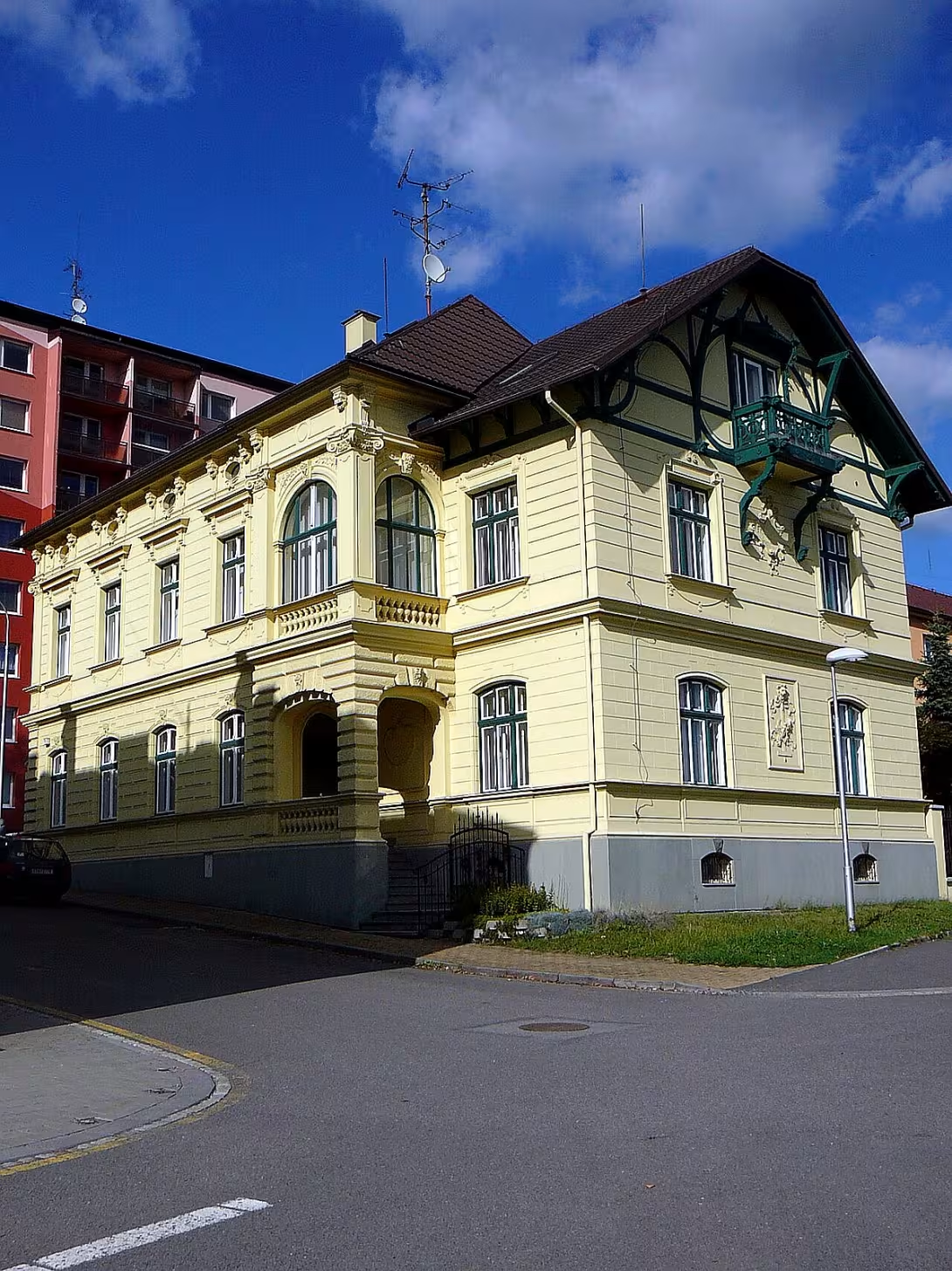
Vila Emila Haukeho in Frýdek-Místek is a historicist villa designed by Emil Hauke between 1901 and 1902. This architectural gem showcases elements of the Secession style, making it notable as a protected cultural monument since 1994. Situated in an area known for both industrial heritage and natural landscapes, this villa stands out as a testament to early 20th-century Bohemian architecture during the Austro-Hungarian Empire.
Emil Hauke conceived the villa in September 1901, reflecting his architectural vision at the turn of the century. This period marked significant cultural and architectural developments in Bohemia, part of the Austro-Hungarian Empire, where historicist styles flourished alongside emerging Secession influences. The construction of Vila Emila Haukeho between 1901 and 1902 embodied both traditional and modern elements.
Architecturally, the villa features a single-story structure with gabled roofs and a distinctive west-facing risalit housing the main entrance. Segmental or rectangular windows adorned with stucco decorations are typical of the Secession style. Originally, it included a tower above the main entrance, which no longer exists today. The facade is enhanced by decorative elements such as bosage and suprafenestrae, adding to its historicist charm.
Emil Hauke was both the architect and original owner of this villa in the early 20th century. His dual role ensured that the design closely aligned with his vision for a functional yet aesthetically pleasing residence. Over time, the villa has maintained its historical significance and architectural integrity, remaining protected as a cultural monument since 1994.
While specific events at the villa are not extensively documented, its construction period and subsequent designation as a protected site highlight its importance in regional history. The villa's design reflects broader trends of the era, making it an intriguing subject for those interested in early 20th-century architecture and Bohemian cultural heritage.
Today, Vila Emila Haukeho stands as a well-preserved example of historicist architecture with Secession influences. Visitors can appreciate architectural details such as wooden paneling, stucco decorations, and Secession-style flooring in the upper rooms. The central hall features a two-sided sandstone staircase, offering insight into the villa's original design intent.
Vila Emila Haukeho is worth visiting for its architectural beauty and historical significance. It provides a tangible connection to the cultural and artistic movements of early 20th-century Bohemia. As a protected monument, it invites visitors to explore and appreciate the intricate details that make this villa a remarkable piece of heritage in Frýdek-Místek.
Then and now
Drag the slider to compare how the landmark may have looked when it was built with the view today.
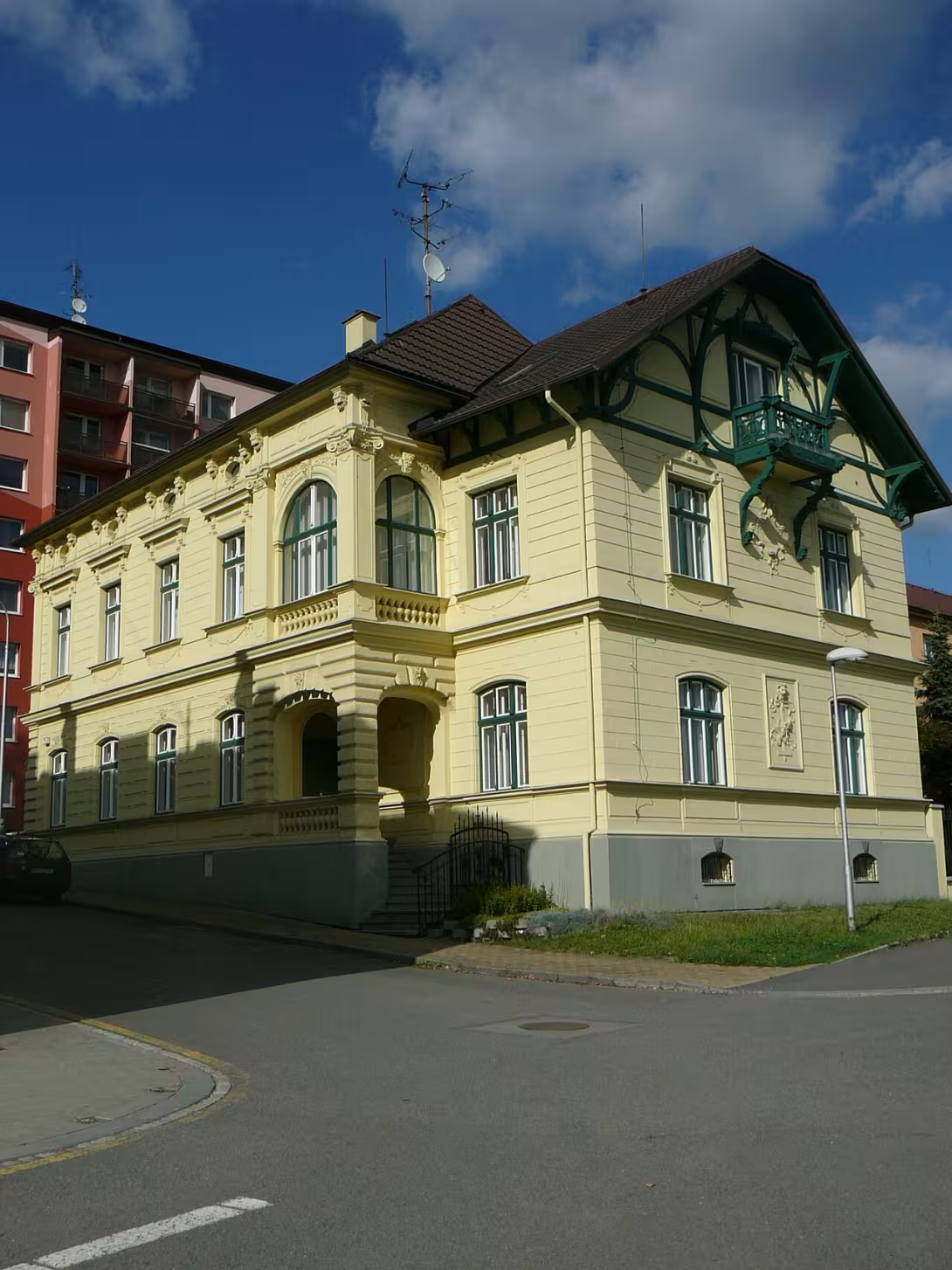
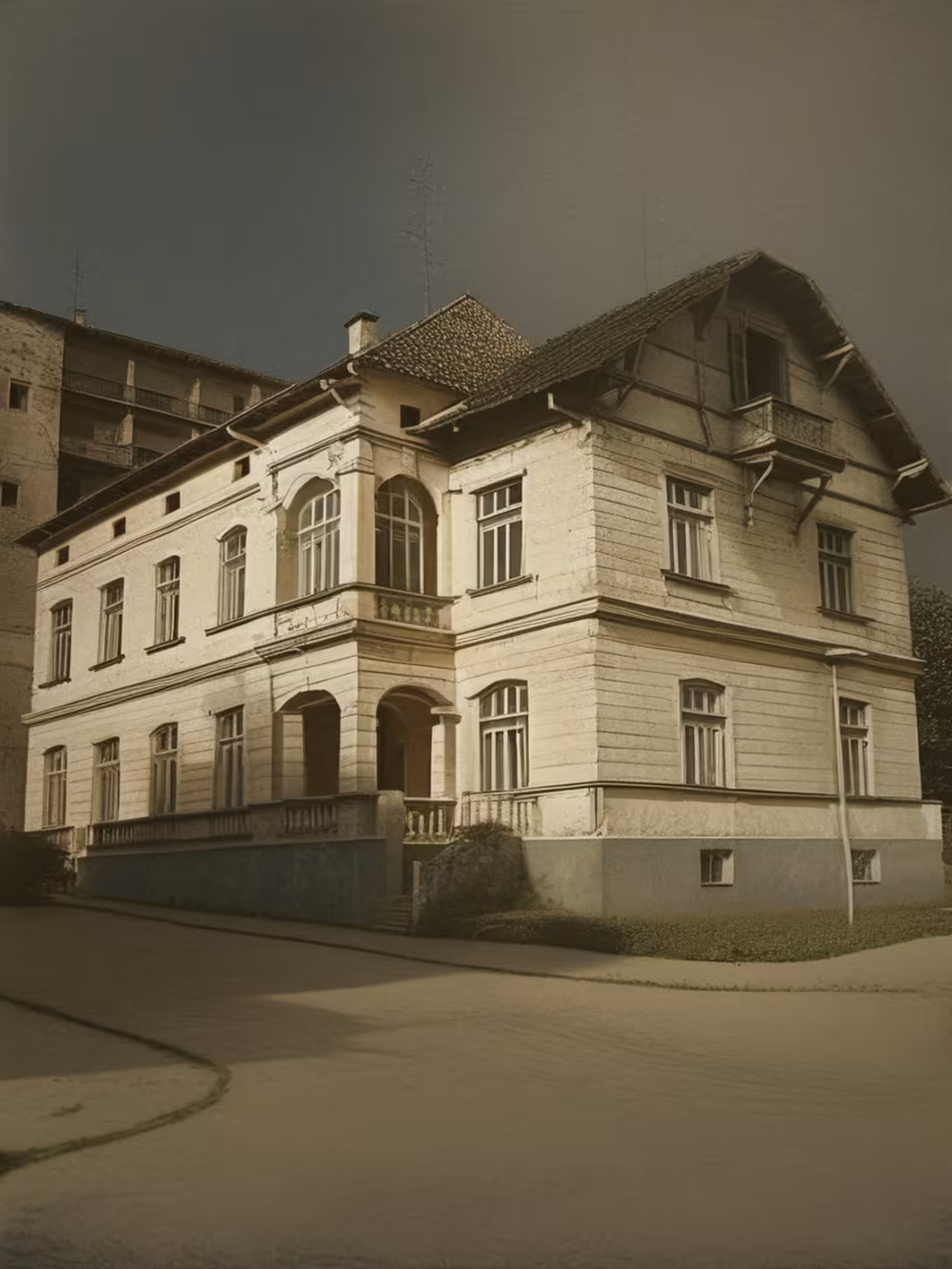
The historical appearance on the left is an AI-generated visualisation and serves as inspiration only.
Historical milestones
- 1901
- Emil Hauke conceived the design of Vila Emila Haukeho.
- 1902
- Construction of Vila Emila Haukeho completed.
- 1994
- Vila Emila Haukeho designated as a protected cultural monument.
Architectural development
Vila Emila Haukeho is characterized by its historicist style with Secession elements. The building features a gabled roof system, segmental or rectangular windows, and stucco decorations. Originally, it included a tower above the main entrance which no longer exists.
Historical events
The villa was designed by Emil Hauke in September 1901.
Construction of the villa took place between 1901 and 1902.
Owners
Emil Hauke (original owner, early 20th century)
Points of interest
- Vila Emila Haukeho in Frýdek-Místek is a historicist villa designed by Emil Hauke between 1901 and 1902. - This architectural gem showcases elements of the Secession style and has been a protected cultural monument since 1994. - The villa features a single-story structure with gabled roofs, segmental or rectangular windows adorned with stucco decorations, and decorative elements such as bosage and suprafenestrae. - Emil Hauke was both the architect and original owner of this villa in the early 20th century. - Visitors can appreciate architectural details like wooden paneling, stucco decorations, and Secession-style flooring in the upper rooms.
Guide
This guide is narrated by a synthetic voice generated by artificial intelligence.
Show guide text
This text was created by artificial intelligence and has not been editorially reviewed. It may contain inaccuracies.
The Villa of Builder Emil Hauke, the house with address number 500 in Frýdek-Místek, is the work of the builder himself. He developed the project in September 1901 and the house was built between 1901 and 1902. Since 1994, it has been a protected cultural monument.
The villa is designed in a historicizing style, that is, with inspiration from older styles, and complemented with Art Nouveau elements. It is a two-story detached house on an approximately rectangular floor plan, covered by a system of gable and hip roofs.
The house served both as a residence and a workplace. The main entrance on the west side led into the office and studio of builder Hauke. It is located in a single-axis risalit, that is, a part of the façade that protrudes from the rest of the wall, and is approached by steps. The entrance to the private quarters was on the opposite, garden side, in the east façade.
The entrance door is framed by a molded door frame, known as a jamb, with an arch. To the right of the door, there is stucco decoration in the plaster featuring cherubs, so-called putti, holding tools: a brush, a palette, a set square, and an axe. The windows on the floor of the risalit are four-part and their parapet is decorated with small cones. Above the main entrance, there once stood a tower with a pyramidal roof and timber framing. However, it has not survived.
The façades of both stories are decorated with rustication, that is, the plastic articulation of the plaster. The windows are either segmentally arched or rectangular. Stucco decorations adorn both their parapets and the areas above the windows. The south façade is terminated by a gable with timber framing and a small wooden balcony. On the ground floor, between the windows, there is a stucco relief of a lion's head with tools, among which are a triangle, a drawing pen, and a scroll of paper.
Inside, the main circulation space is a central hall with a two-flight sandstone staircase and a stone railing. In the rooms on the upper floor, wooden wall paneling, stucco decoration, and Art Nouveau tilework have been preserved.
Tips for visitors
The best time to visit the Vila Emila Haukeho is during late spring or early autumn when the weather is pleasant, allowing for comfortable exploration of both the villa's interiors and its surrounding natural landscapes. These seasons offer vibrant colors in nature, enhancing the experience of visiting this historicist architectural gem.
For those preferring not to drive, local buses provide access to Frýdek-Místek, where the villa is located.
When visiting Vila Emila Haukeho, it's recommended to bring comfortable walking shoes as you'll likely explore both the villa and its surrounding areas. A camera or smartphone for photography is also suggested, especially if you're interested in capturing the Secession style architecture of the villa against the backdrop of Frýdek-Místek’s natural landscapes.
For photography enthusiasts, the best spots around Vila Emila Haukeho are those that capture its architectural beauty during the golden hours—shortly after sunrise or before sunset. The lighting at these times can accentuate the villa's intricate designs and complement the surrounding nature.
Nearby attractions within a 30-minute drive include several historical sites and natural landscapes, offering visitors a broader experience of Frýdek-Místek’s rich industrial heritage and beautiful surroundings. These make for excellent additional stops on your itinerary.
Frequently asked questions
Can the monument be visited?
This is a residential or farm building, not a museum with opening hours. Please view it from public space and respect the owners' privacy. We have no information about access to the interior.
Where is the monument?
Location: Frýdek, Moravskoslezský kraj. The map on this page shows the exact spot.
Why is the monument protected?
It is listed in the Central List of Cultural Monuments of the Czech Republic as a cultural monument (register no. 1000119498).
Businesses nearby
Do you run a restaurant, accommodation, shop, museum, rental, wellness or other visitor service near this monument? Show yourself directly to the people heading to it — this is how they will see you in the app and on the web:
Nearby
Vila Emila Haukeho is situated in Frýdek-Místek, an area known for its industrial heritage and natural landscapes. The region features several other historical sites and natural attractions within a 5 km radius.
Accommodation nearby
Themed route
Frýdecká Industrial Trail
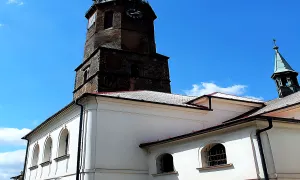
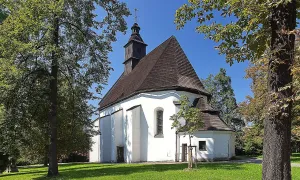
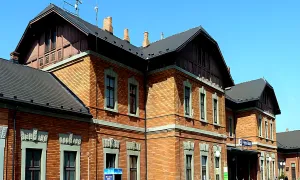
1. Dům čp. 500 (Vila Emila Haukeho), historical villa, is worth visiting for its unique architecture and history. The villa was built in 1905 for Emil Hauke, a prominent industrialist and entrepreneur. 2. Frýdecká Waterworks, technical monument, is worth visiting for its unique architecture and history. The waterworks were constructed in 1905 and were among the first modern water treatment facilities in the region. 3. Frýdecká Railway Station, technical monument, is worth visiting for its history and architecture. The station was built in 1899 and served as an important transportation hub in the region. 4. Church of Saint James, church, is worth visiting for its history and architecture. The church was constructed in the 14th century and is among the oldest churches in the region.
Seasonal recommendations
Jaro
In the spring season, house no. 500 in Frýdek is surrounded by blooming trees and flowers, creating a pleasant atmosphere. It's also unique for its open windows and doors that allow fresh air to enter. Practical tips: Visitors are advised to arrive early to avoid crowds that typically gather during the main summer season. The best time to visit house no. 500 is in the morning hours or late afternoon when there are fewer people.
Léto
In summer, house no. 500 is surrounded by greenery and flowers, creating a pleasant atmosphere. It's also characterized by warmth and sunshine, which create a comfortable environment for touring. Practical tips: Visitors are advised to arrive early to avoid crowds that typically gather during the main summer season. The best time to visit house no. 500 is in the morning hours or late afternoon when there are fewer people.
Podzim
In autumn, house no. 500 is surrounded by colorful leaves, creating a pleasant atmosphere. It's also characterized by cooler weather, which requires warmer clothing. Practical tips: Visitors are advised to bring warm clothing and arrive early to avoid crowds that typically gather during the main summer season. The best time to visit house no. 500 is in the morning hours or late afternoon when there are fewer people.
Zima
In winter, house no. 500 is surrounded by snow and cold, requiring warm clothing and a shorter tour. Practical tips: Visitors are advised to bring warm clothing and arrive early to avoid the limited visiting time. The best time to visit house no. 500 is in the morning hours or when there are fewer visitors.
Visualizations and artistic views


The visualisations are generated by artificial intelligence and serve as inspiration.
Photos from the area
Real photos taken near the monument


Zdroj a licence jsou uvedeny u každého snímku.
Tips from visitors
No tips yet. Be the first!
Log in and add your tip.
Sources and literature
Photos: Kovar / CC BY-SA 3.0 — Wikimedia Commons. The author and licence also appear when you hover over the image.
Faktickým podkladem tohoto textu byl článek na Wikipedii, jehož autory jsou přispěvatelé Wikipedie. Článek je dostupný pod licencí CC BY-SA 4.0.
Location on the map


Příběhy a pověsti
Legendy, pověsti a příběhy spjaté s touto památkou
Fotografie návštěvníků
Zatím žádné fotografie. Buďte první, kdo přidá fotografii z návštěvy!
Log in a přidejte svou fotografii nebo hodnoťte.
Za ověřenou návštěvu v aplikaci získáte víc bodů — poznáme podle GPS, že jste na místě.
Reviews and comments