






Kostel svatého Jana Křtitele (Frýdek) Church
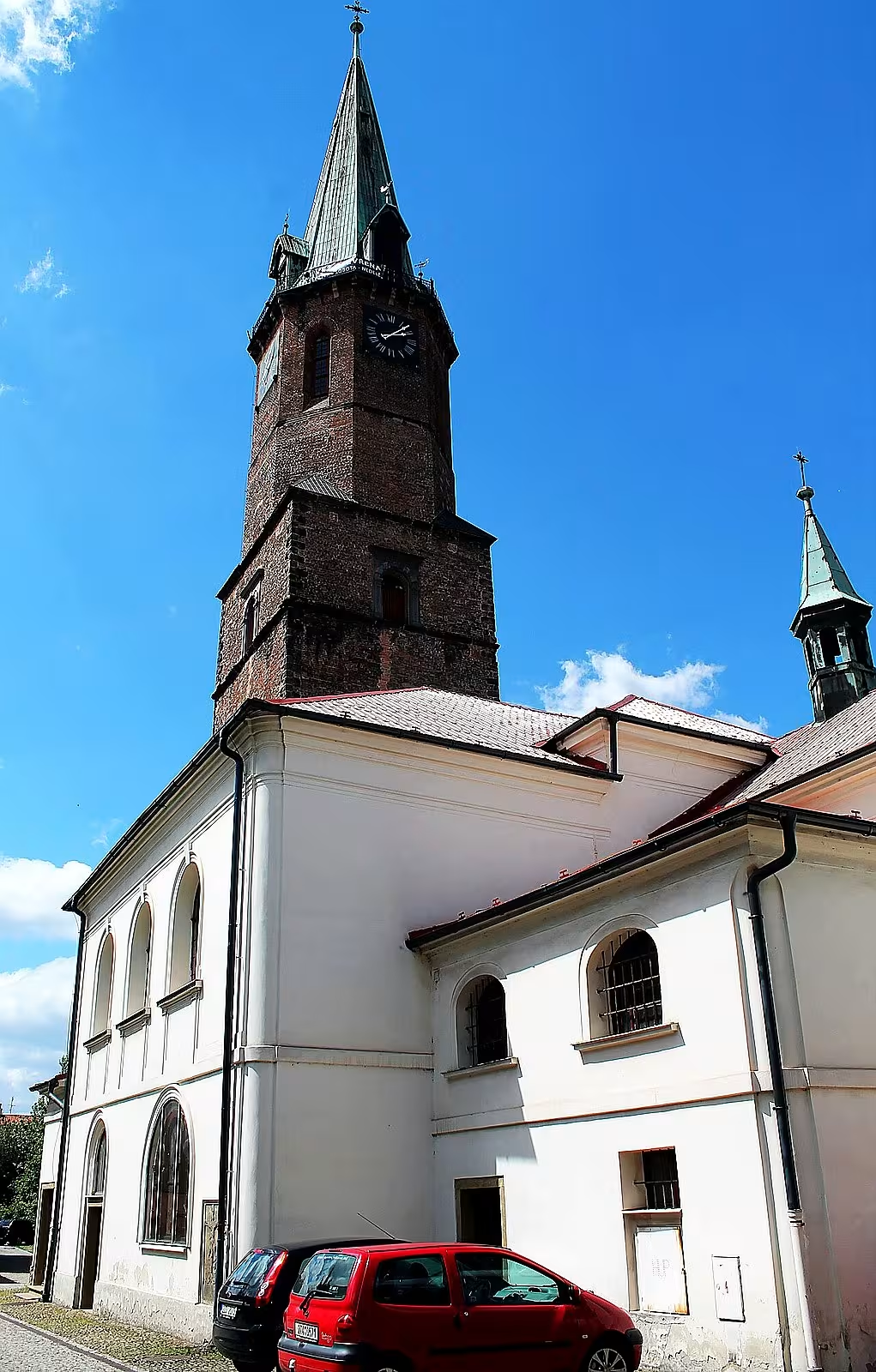
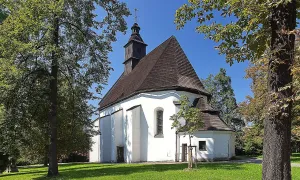
The church of St. John the Baptist is located in Frýdku-Městka near Frýdek Square and represents one of the oldest buildings in the city. It is a single-boat basilical structure with caples and crypt, which was created gradually over three centuries. Due to its history and architectural uniqueness, it deserves the attention of any visitor interested in Czech Christian heritage.
The oldest mention of the church is unofficial and dates back to the 14th century, when the city of Frýdek was founded in the vicinity of the older chateau of Teschen princes near the river Ostravice. The presbytery of the present church is supposed to be the original Gothic core from the second half of the 14th century, as evidenced by its архитектонic features - extended Gothic windows and characteristic vaults. The first official mention of the church dates back to 1447 in the Opolské Archyaohny roster. During the following century there was an expansion - in 1490 a Chaplain place was established, and a quarter of a century later the chapel of St. Anne was added, already in written sources documented to 1524.
In the middle of the 16th century Frýdek reformed and the church found itself under the administration of Lutheran priests. Although there are no significant changes in its internal equipment from this period, it has been preserved here until the current worn-out chalice from the period of reformation. Bigger building interventions were only a century later. In 1604 the surrounding wall was increased, both parts of the temple encapsulated and a circle was built. A year later, the cemetery was consecrated, surrounded by a wall with five wedged chapels with scenes of Christ's suffering.
But the biggest wrinkle in the history of the church was the disaster of 1688. On April 12th came a huge fire that destroyed the parish church, parish, school, part of the chateau and local suburb. The damage was terrifying, and a large part of the population lost a roof over their heads. The credit of the then vicar Henry Samuel Wolf, who himself contributed to the reconstruction and organized the collections, was compensated for insufferable damage within 12 years. Wolf let the church not only be restored, but also extended by the chapel of the Holy Cross, new altars and three parish bells. He also built the chapel of Our Lady of Pain and the chapel of John Nepomuk. Plus, he built the parish building again. The repaired church was consecrated in 1699 by Bishop John Brunetti.
The architectural emblem of the church is a prismatic tower dating back to the late 16th century. The interior contains a crypt under the side chapel of St. Anne, where important personalities contributing to the parish were buried. The upper part of the tower is today a permanent exhibition dedicated to the history of the Frýdek parish.
Visit of the church. Jan the Baptist is suitable for anyone interested in Czech medieval architecture, Baroque and restoration of cultural heritage in difficult times. The memory tells the story of the persistence of the parish and the individuals who led it through countless obstacles.
Then and now
Drag the slider to compare how the landmark may have looked when it was built with the view today.
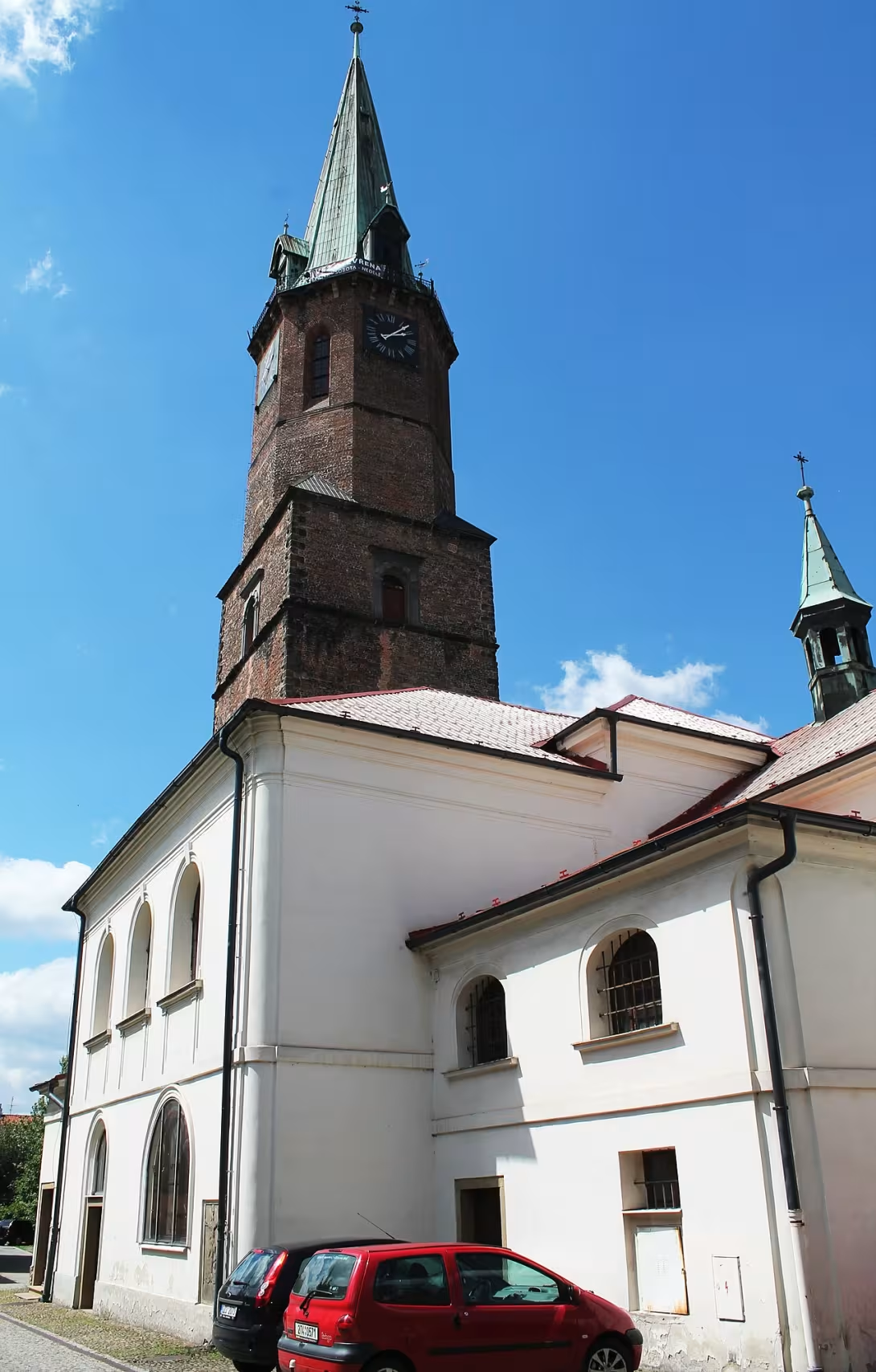

The historical appearance on the left is an AI-generated visualisation and serves as inspiration only.
Historical milestones
- 1447
- The first official mention of the church in the Opolské Archyaha inventory.
- 1524
- The documented existence of St. Anne's Chapel, one of the oldest preserved parts of the church.
- 1688
- A catastrophic fire that destroyed the church, rectory and part of the city, followed by a large recovery.
- 1699
- The consecration of the restored church by Bishop John Brunetti.
Architectural development
The original Gothic core of the church comes from the second half of the 14th century, especially presbytery with irregular arch. In the 15th century a boat and chapel of St. Anne was built, documented in 1524. In the 16th century a prismatic tower was built and the church underwent modifications after the fire in 1592. In the 17th century there was a Baroque reconstruction after the fire of 1688, including the expansion of chapels and new altars.
Historical events
The first written mention from 1447 in connection with Opolské Archyaheny.
A great fire in 1688, which destroyed the church, the rectory and part of the city, followed by extensive restoration.
The consecration of the restored church in 1699 by Bishop Jan Brunetti.
The establishment of the Kapla place in 1490 by Prince Kazimir II.
Points of interest
- The church of St. John the Baptist is one of the oldest buildings in Frýdek and has been established gradually over three centuries.
- Its original Gothic core, the presbytery, comes from the second half of the 14th century, as evidenced by Gothic windows and vaults.
- The first written mention of the church is from 1447, but unofficial documents date back to the 14th century.
- In 1688 he was destroyed by a big fire, which destroyed the rectory, school and part of the city, but was restored and expanded within 12 years.
- In the interior there is a crypt under the chapel of St. Anne, where important personalities contributing to the parish were buried.
Guide
This guide is narrated by a synthetic voice generated by artificial intelligence.
Show guide text
This text was created by artificial intelligence and has not been editorially reviewed. It may contain inaccuracies.
Welcome to St. John the Baptist Church. You're standing right where time has stopped and where every stone wall and every line of this building are trying to tell a story that has been going on for centuries. Feel this atmosphere, this sense of seriousness and calm that radiates from this monumental building. Before your eyes is one of the oldest and most important buildings in Frýdek, which is not just an ordinary house for prayer, but a real witness to the history of the whole city and the whole region. While you're looking at his face, try to imagine what this place looked like hundreds of years ago, when the bells first sounded here and when the first people started building the foundations for something that would last for generations.
Now let's go back deep into the past together to understand how this church was created. His history is not a one-time event, but a fascinating process that lasted for three centuries. This temple was not built quickly, but grew gradually, layer by layer, like a living organism that adapted to the times in which people lived. Although it does not appear officially in the historical records until 1447, when it was mentioned in the Opolské Archyaha inventory, its roots go much further. Already in the second half of the fourteenth century, the most important was laid here - the Gothic core, which gives the construction its deep, historical essence. So this church is not just a cluster of matter, it is a sum of many epoch that collide and intertwine here.
Now pay attention to the architecture itself and try to see the details you have right in front of you. The church is a single-boat basilical building, which means that its inner space is designed to act monumentally and at the same time concentrated. If you look at certain parts of the building, especially the presbytery, you can see the true heart of goth in the eyes of an experienced observer. It is here that you can see traces of the original 14th century, which appear in the form of specific gothic windows and vaults. These elements are proof of how powerful and lasting the original vision of builders was. But now look up. Your eyes should be directed towards the dominance of the whole neighborhood - the tall, prismatic tower. It is not as old as the very core of the church, for it comes from the late sixteenth century, but its presence determines the whole character of this place. It is this tower that rules the horizon and serves as a beacon for anyone who goes for a walk in Frýdek.
But the history of this place was not always about peace and spiritual ascension. We must prepare for a chapter that is full of tension and tragedy. Imagine 1688. That was the year that brought unprecedented suffering to the city and to this church. A catastrophic fire that was kindled didn't just burn parts of the dwelling, but it hit the very heart of the parish. He destroyed the church, destroyed the rectory and left nothing but ashes and ruins. Even the high tower you're watching at the time was badly damaged by fire. It was the moment when it seemed that the history of this place could end. But it is at these moments that the power of the human spirit and faith is shown. The recovery that followed was extremely extensive and required huge efforts from the entire local community. This process of reconstruction was so successful that in 1699 Bishop Jan Brunetti could solemnly consecrate a renewed church. This event meant a new beginning, a new life for the parish, and confirmation that this place is indestructible.
Looking at the church you can realize how many personalities and events have taken place here over the centuries. In addition to the names that we may only recall confused today, such as the said Bishop Brunetti, people whose names are linked to the bloom and restoration of this place have left a trail. In the history of the parish, countless moments of life took place, from baptism to funerals that shaped the identity of this city. And if you're interested in how this history connects over time, pay attention to the top of the tower. That is where there is a special exhibition called Views into the history of the parish Frýdek. It's a place where you can observe not only the surroundings from a height, but the very flow of time that surrounds you right now.
But there is one interesting thing that may surprise you. The church is not just one whole, but consists of different parts that were created at different times. For example, St. Anne's chapel, which we already know about in 1524, represents one of the oldest preserved parts of the church. It is fascinating though that while the whole city was changing, modernising and rebuilding, these tiny, but incredibly old parts of the church remained preserved as anchors in time. This church is like a book that has hundreds of pages and each side is written in different letters and different styles.
Now that you've been through the fundamental pillars of this history, I suggest you start further exploration. You may choose to enter and feel the silence of the inner space, or go towards the tower to try to understand the perspective people had on this place centuries ago. Every step you take around this church can lead you to another surprise. Thank you for choosing to devote your time to this historic monument and for trying to look into its secrets. Read the story of the church of St. John the Baptist not as a dry list of data, but as a live story of survival, renewal and continued duration. We'll brigade, but history remains. We'll brigade, but this church will still be here. See you next time you discover the beauty of Frýdek.
Tips for visitors
{'paragraph': 'The best time to visit the church of St. John the Baptist is during the morning hours, ideally Monday to Wednesday, when the place is quieter and you can see the interior without crowds. If you prefer sunlight, I recommend a visit in the morning when the rays illuminate the gothic windows and create picturesque shadows on the stone walls. In the summer months it is advisable to bring light clothes and sunglasses because the sun in the historical monument can be intense.'}
{'paragraph': 'The church is available by car for which several parking lots are available in the vicinity. It is recommended to park in public parking lots near Frýdek Square, which is just a few minutes' walk away. For visitors by public transport it is advisable to get off at a stop in the centre of Frýdek and then walk. Check current connection and time intervals in the traffic search engine. '}
{'paragraph': 'When visiting, wear comfortable shoes because the church and its surroundings offer several stairs and uneven surfaces. Next, I recommend you take a small towel or cloth, as dust may accumulate on historical stones. To take pictures, bring a lens with a larger focus to capture a detailed display of gothic details and interior. The best light for photos can be found in the morning or afternoon sun, when the light is softer and creates pleasant shadows.'}
{'paragraph': 'In the vicinity of the church, a Baroque building with a chapel is worth visiting is only a few dozen meters away. This 18th century building offers an interesting view of the architecture of the time and is an ideal complement to visit the church. For families with children it is advisable to visit Frýdek Square, where there are several historic houses and the possibility for children to see the old stone details and statues.'}
{'paragraph': 'For families with children, a visit to St. John the Baptist Church is very interesting because children can watch Gothic paintings and statues that are often fascinating to them. I recommend that you bring a small notebook and a pencil for children to draw interesting details that they see. In the vicinity of the church it is also possible to find small cafes and shops where children can relax and taste something sweet. It is advisable for younger children to take a backpack with toys that will entertain them during a longer walk.'}
Frequently asked questions
Is Kostel svatého Jana Křtitele (Frýdek) open to the public?
Yes, the church is open to visitors throughout the year. It is important, however, to check the current information on the official website or in the telephone question.
How do I get to the place by car / public transport?
You can reach the road II / 479 by car. Parking is limited, therefore we recommend the use of public public public transport from Frýdku-Místka or Ostrava.
How much is the entrance fee and is it paid on the spot?
The entrance is free, but during the visit it is possible to donate to the monument maintenance fund.
Is the tour suitable for children and seniors?
Yes, the church offers comfortable stairs and enough space to circumvent. For children, there may be an interesting historical story about the church.
How long does the tour take?
The tour takes approximately 30 minutes, but you can spend more time understanding history and architecture.
What are the opening times and booking is required?
Opening hours may vary, usually the church is accessible from 9: 00 to 17: 00. Reservation is not necessary.
What's interesting in the immediate vicinity?
In the area there is a Frýdlantý chateau and historic street with local shops. It's the perfect place to explore after church.
For kids
Imagine going back to the past and getting off on the old stones of St. John the Baptist Church in Frýdek. You feel cold stone steps beneath your feet that lead to ancient times when people had different clothes and way of life. Everything here seems like a movie with magical moments.
Businesses nearby
Do you run a restaurant, accommodation, shop, museum, rental, wellness or other visitor service near this monument? Show yourself directly to the people heading to it — this is how they will see you in the app and on the web:
Nearby
- Near the church stands a Baroque hospital from the 18th century, originally serving as chapels and chaplains.
- The historic square with surrounding houses, which are part of the urban monument zone.
- Natural boundary of the city Frýdek, which in the past was an important transport artery.
Accommodation nearby
Themed route
Thematic cruise route Frýdek
1. Church of St. John the Baptist * Type: * Historical landmark * Why is it worth visiting: * The Church of St. John the Baptist is the oldest sacral building in Frýdek, built already in the 14th century. His Gothic architecture and rich history attract visitors from all over the world.
2. Baroque Hospital Building with Chapel * Type: * Architectural memorial * Why is it worth a visit: * This Baroque building, located up to 200 metres from the church, was originally a hospital and served as a chapel and a spiritual residence. It is a significant testimony to the historical function and architecture of the 18th century.
3. Frýdek Square * Type: * Historical urban area * Why is it worth visiting: * Frýdek Square is the heart of the history of the city, surrounded by houses belonging to the city monument zone. Its historic environment offers a view of architecture and the spirit of the past centuries.
4. The River Ostravice * Type: * Natural boundaries * Why is it worth visiting: * The river Ostravice serves as the natural boundary of the city Frýdek. It is a place where you can enjoy a quiet moment and look at historical buildings from a different angle.
This route offers visitors the opportunity to discover not only the main sacral monument, but also other historically and architecturally important places around Frýdek.
Seasonal recommendations
Spring Spring at St. John the Baptist Church offers a unique atmosphere where light penetrates the windows at a new angle and illuminates the stained glass in fine, pastel shades. The surroundings of the church awaken to life - flowering trees and green meadows create a pleasant contrast with stone architecture. In this period the interior is colder, so visitors often gather at the windows to enjoy the sun's rays. Practical advice: Spring is ideal for a quiet visit, but in April and May the first tourist groups may appear. Light clothing is recommended, but with the possibility to cover the shoulders, and a visit in the morning when the church is still relatively empty.
Summer Summer brings to the church full of sun, which illuminates the interior with more intense light and creates playful shadows on the stone walls. There are green parks and forests out there that attract walks before or after visiting. In the main summer season, however, the church becomes a popular target for families and tourists, so it is often crowded at noon. It is recommended to arrive early in the morning or in the afternoon when heat is less demanding. Light clothes and plenty of water are necessary, but don't forget your hat or sunglasses to keep the sun from stopping you from admiring the details.
Autumn The autumn light in the church has a golden touch that illuminates the stained glass and statues in fine shades of orange and brown. Outside, the leaves in the trees change colour and create a magical atmosphere that is projected even inside the church. In addition, the holiday of St. Catherine is close in November, when there are sometimes small services or memorial events. Practical advice: Autumn is the quietest period, but in October rain may appear, so it is advisable to carry an umbrella. Hot clothes with long sleeves and comfortable shoes are ideal, and a visit in the morning will ensure pleasant weather.
Winter The winter light in the church of St. John the Baptist is softer and dimmer, but the stained glass shines in darker shades, which gives the interior a mysterious atmosphere. Outside is a snow landscape that creates a calm and quiet mood. In advent time, the church becomes a place of prayer and Christmas concerts, so it is advisable to find out in advance the opening hours that can be shortened. Practical advice: In winter it is advisable to wear warm clothes, hat and gloves, and visit the church in the afternoon when the outside is the quietest. It is also important to check whether the church is open, as opening times may change in December.
Visualizations and artistic views


The visualisations are generated by artificial intelligence and serve as inspiration.
Photos from the area
Real photos taken near the monument

Zdroj a licence jsou uvedeny u každého snímku.
Atmosphere of the place
This atmospheric visualisation of the place and period was generated by artificial intelligence. It is not real footage of the location.
Tips from visitors
No tips yet. Be the first!
Log in and add your tip.
Sources and literature
Fotografie: Hons084 / CC BY-SA 4.0 — Wikimedia Commons. The author and licence also appear when you hover over the image.
Faktickým podkladem tohoto textu byl článek na Wikipedii, jehož autory jsou přispěvatelé Wikipedie. Článek je dostupný pod licencí CC BY-SA 4.0.
Location on the map


Příběhy a pověsti
Legendy, pověsti a příběhy spjaté s touto památkou
Fotografie návštěvníků
Zatím žádné fotografie. Buďte první, kdo přidá fotografii z návštěvy!
Přihlaste se a přidejte svou fotografii nebo hodnoťte.
Za ověřenou návštěvu v aplikaci získáte víc bodů — poznáme podle GPS, že jste na místě.
Reviews and comments