






Sekerova vila Villa
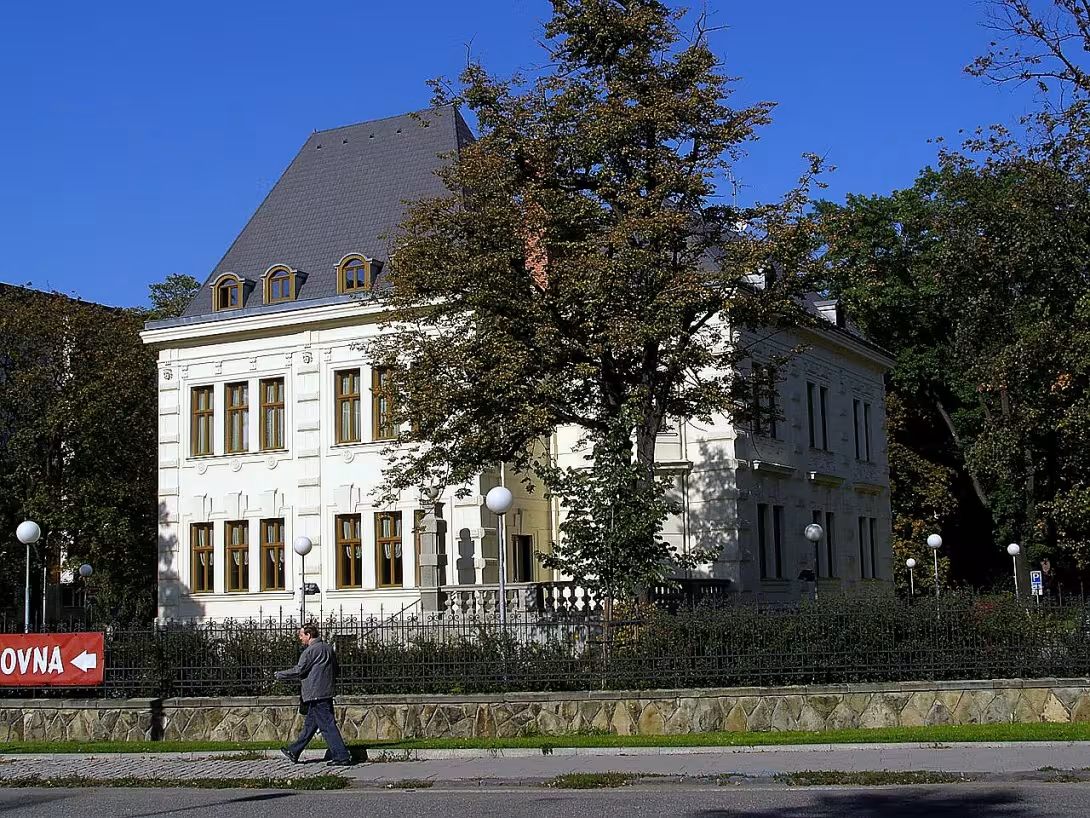
Sekerova Vila, also known as Neumannova Vila, exemplifies Art Nouveau architecture in Frýdek-Místek on Slezská Street. Built at the end of the 19th century, it stands out for its architectural beauty and historical significance. Designated a cultural monument due to its unique design and rich history, it is an important site for those interested in Czech heritage.
The villa's origins date back to 1898 when textile entrepreneurs Julius and Leopold Neumann commissioned its construction during a period of industrial growth within the Austro-Hungarian Empire, which included Bohemia. This era marked the tail end of the Art Nouveau movement, influencing the villa’s design with characteristic decorative elements.
Architectural brilliance is attributed to Rudolf Aulegk, a local architect and builder. The single-story building features gabled roofs typical of the secessionist style. Notably, the smaller southeast wing has two-story triangular dormers and conical roofs, while the larger northwest wing includes a risalit with an intricately carved wooden main entrance door. The façade is adorned with bossage, and its windows are framed by shutters, enhancing its aesthetic appeal.
Ownership of Sekerova Vila has changed over time. Initially built for Julius and Leopold Neumann, economic challenges in the 1930s forced them to sell it to lawyers Zdeněk and Ladislav Seker. Following World War II, the state confiscated the villa, which later served as a museum and then a city library. In 1991, it was officially recognized as a cultural monument, including its garden and fence.
Throughout its history, Sekerova Vila has experienced various transformations in use and ownership. After being sold to Zdeněk and Ladislav Seker during an economic downturn, it underwent confiscation post-1945. These changes reflect broader socio-economic shifts occurring in Europe at the time. In 2007, the villa underwent extensive reconstruction to ensure its preservation for future generations.
Today, Sekerova Vila stands as a testament to architectural innovation and historical resilience. It remains accessible to visitors who wish to explore its unique design and learn about its storied past. Its significance is underscored by its role in housing cultural institutions like the Lašské muzeum and the city library, making it an invaluable part of Frýdek-Místek’s heritage.
Visiting Sekerova Vila offers a glimpse into the rich tapestry of Czech history and architecture. Its preservation as a cultural monument ensures that this beautiful example of Art Nouveau continues to inspire and educate those who appreciate historical landmarks. Whether drawn by its architectural elegance or intrigued by its historical narrative, Sekerova Vila is undoubtedly worth exploring.
Then and now
Drag the slider to compare how the landmark may have looked when it was built with the view today.
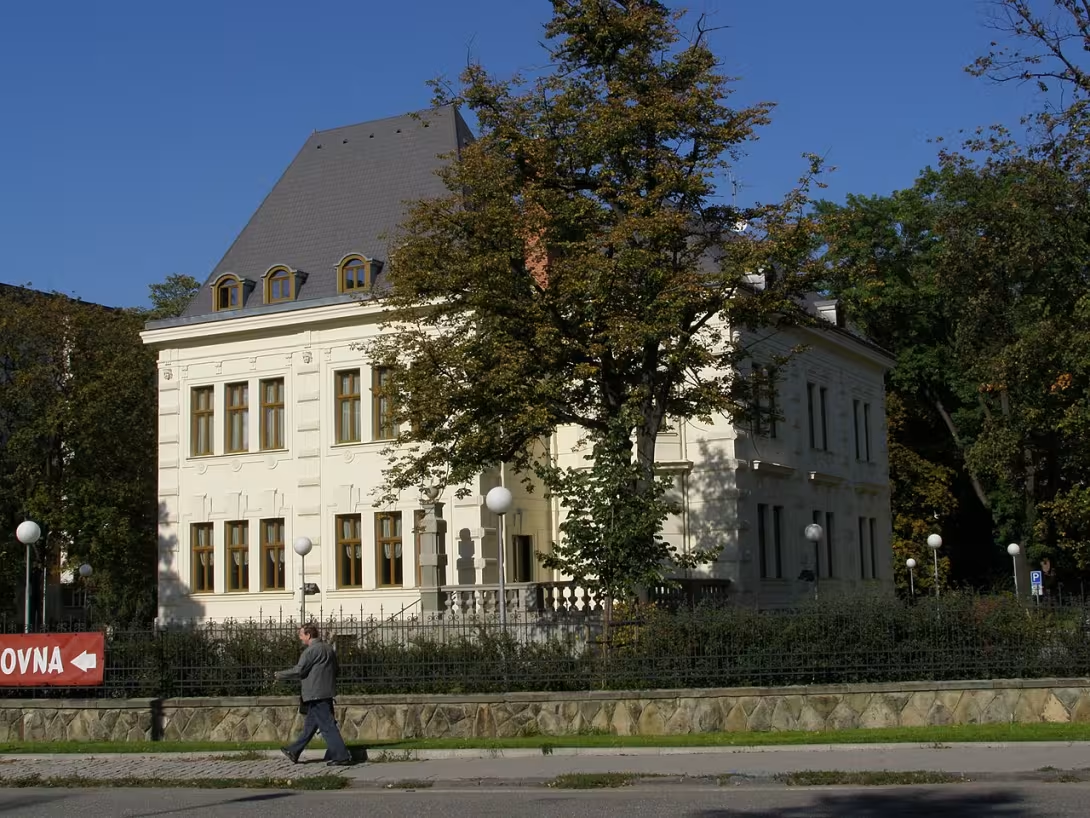
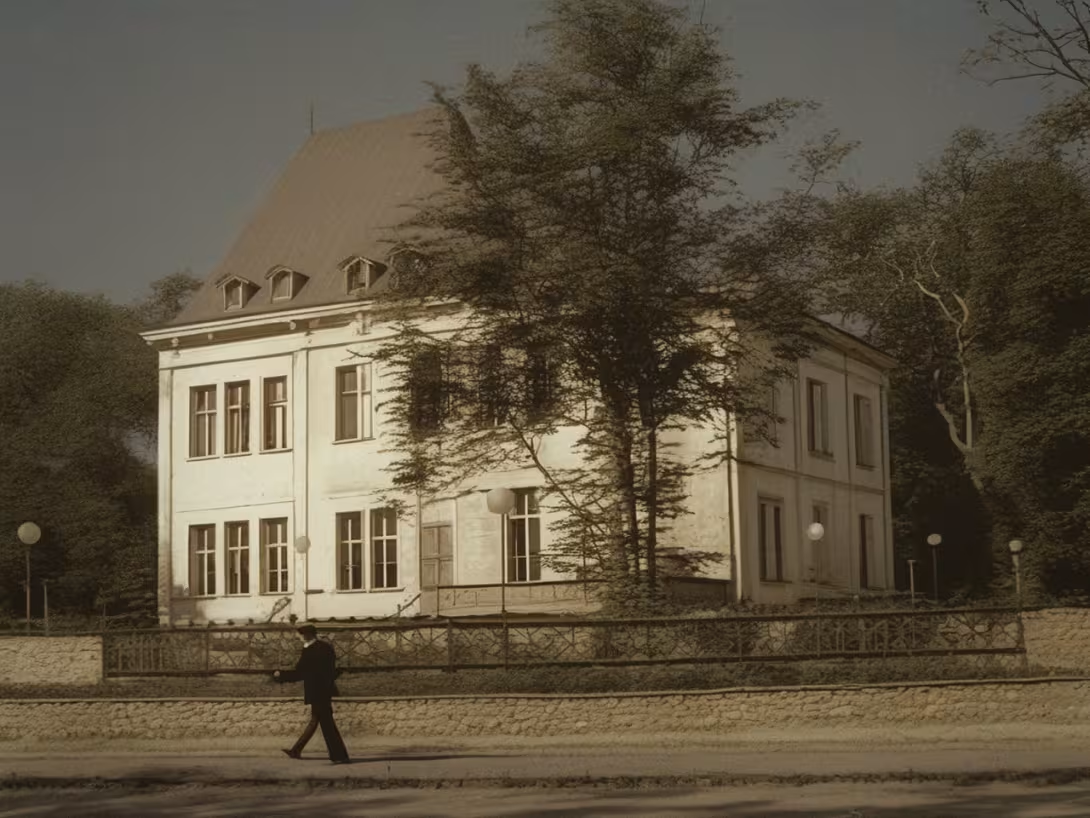
The historical appearance on the left is an AI-generated visualisation and serves as inspiration only.
Historical milestones
- 1898
- Construction of the villa completed.
- 1991
- Declared a cultural monument along with its garden and fence.
- 2007
- Extensive reconstruction of the villa and garden.
Architectural development
Designed by Rudolf Aulegk, the villa features a single-story structure with gabled roofs. The smaller southeast wing is adorned with two-story triangular dormers and conical roofs, while the larger northwest wing includes a risalit with a main entrance flanked by intricately carved wooden doors. The building's façade is decorated with bossage, and its windows are framed with shutters.
Historical events
Built in 1898 for Julius and Leopold Neumann.
Sold to Zdeňek and Ladislav Seker in the 1930s due to economic hardship.
Confiscated post-1945, later housed a museum and library.
Owners
Initially owned by textile entrepreneurs Julius and Leopold Neumann in the late 19th century, the villa was sold to lawyers Zdeněk and Ladislav Seker during the economic crisis of the 1930s. After World War II, it was confiscated by the state.
Guide
This guide is narrated by a synthetic voice generated by artificial intelligence.
Show guide text
This text was created by artificial intelligence and has not been editorially reviewed. It may contain inaccuracies.
Sekerova villa, also known as Neumannova villa, stands on Slezská Street in Frýdku-Místku. It is a freestanding Art Nouveau building from the end of the nineteenth century. Since nineteen ninety-one it has been protected as a cultural monument, including the garden and fencing.
The villa was created in eighteen ninety-eight. It was built by the brothers Julius and Leopold Neumannové, textile entrepreneurs. During the economic crisis in the nineteen thirties, the Neumannové family had to sell it. It was purchased by the brothers Zdeněk and Lev Sekerovi, who were lawyers. After nineteen forty-five the villa was confiscated. Later it housed the Lašské museum and after that the municipal library. In two thousand seven the villa underwent an expensive reconstruction along with the garden.
The design of the villa was created by local architect and builder Rudolf Aulegk. The building is one storey, covered by hipped roofs and consists of two wings. The smaller southeastern wing is finished on both sides with a two-storey three-sided bay window with a pyramidal roof. From the larger northwestern wing protrudes a risalit, that is a projecting part of the building, in which is the main entrance. The house can be entered from three sides and on each of them are double wooden doors decorated with carving. On the northeastern side both wings are connected by a rusticated arch, on whose top is a vase.
Rustication, that is a surface treatment resembling stone blocks, also decorates the façade. The windows are framed with decorative edgings, which are called chamfers. Below the cornice are motifs of heads modelled in stucco.
Tips for visitors
The best time to visit Sekerova vila is during the late spring or early autumn months, when the weather is mild and pleasant for exploring both the villa and its surroundings. This period offers a comfortable climate that enhances your experience of the Art Nouveau architecture without the crowds typical of peak tourist seasons. Additionally, these times often coincide with blooming gardens in the area, adding to the aesthetic appeal.
Alternatively, public transportation serves the area well; you can use local buses or trams that connect Frýdek-Místek with other parts of the city. For the most current routes and schedules, it's best to check a reliable travel app or website.
When planning your visit, consider bringing comfortable walking shoes as there are several cultural sites within a 5 km radius worth exploring on foot. A camera is also recommended for capturing the unique architectural details of the villa. For photography enthusiasts, early morning light provides soft illumination that accentuates the intricate designs typical of Art Nouveau style.
For families with children, Sekerova vila offers an engaging experience as it's part of a culturally rich area in Frýdek-Místek. Nearby attractions within 30 minutes include other historical sites and natural features that can make for a fulfilling day out. These spots provide educational opportunities and fun activities suitable for all ages, ensuring a memorable visit for the whole family.
Frequently asked questions
Can the monument be visited?
Some buildings of this kind are open for guided tours, others serve another purpose or are privately owned. We have not verified whether and when this monument is open – please ask the operator.
What are the opening hours and admission?
We have not verified the opening hours or admission. Current information is published by the operator.
Where is the monument?
Location: Frýdek, Moravskoslezský kraj. The map on this page shows the exact spot.
Why is the monument protected?
It is listed in the Central List of Cultural Monuments of the Czech Republic as a cultural monument (register no. 1000162028).
Businesses nearby
Do you run a restaurant, accommodation, shop, museum, rental, wellness or other visitor service near this monument? Show yourself directly to the people heading to it — this is how they will see you in the app and on the web:
Nearby
Located on Slezská Street, the villa is surrounded by urban development typical of Frýdek-Místek. The area includes other cultural sites and natural features within a 5 km radius.
Accommodation nearby
Themed route
Frýdek-Místek Walking Tour
Stop 1: Sekerova vila Visit the unique Art Nouveau villa built in 1906 for the industrialist František Sekera. Admire the villa's eclectic architecture and beautiful garden.
Stop 2: Frýdek-Místek Town Hall (Frýdek-Místek Town Hall) Walk to the town hall, a beautiful example of Art Nouveau architecture, and take a photo with the town's iconic clock tower.
Stop 3: Slezská Street (Slezská Street) Explore the charming Slezská Street, lined with shops, cafes, and restaurants, and get a feel for the local culture.
Stop 4: Church of St. Nicholas (Church of St. Nicholas) Visit the beautiful Church of St. Nicholas, a stunning example of Gothic architecture, and admire its intricate stone carvings.
Stop 5: Frýdek-Místek Market (Frýdek-Místek Market) End your tour at the bustling market, where you can sample local specialties and souvenirs.
Seasonal recommendations
Jaro: In the spring season, Sekerova Villa is surrounded by blooming trees and flowers, creating a pleasant atmosphere. It's an ideal time to visit the villa to enjoy fresh air and beautiful nature. We recommend visiting the villa in the spring season to delight in the first rays of spring sunshine and crisp air. The best time to visit the villa is in April or May when the weather is pleasant and not too sunny.
Léto: In summer, Sekerova Villa is an ideal place for relaxation and rest. Thanks to the warm weather, you can enjoy the beauty of the villa and its surroundings without overcrowding. We recommend visiting the villa in summer to delight in warm weather and beautiful nature. The best time to visit the villa is in June or July when the weather is hottest and driest.
Podzim: In autumn, Sekerova Villa is surrounded by beautifully colored leaves on trees, creating a pleasant atmosphere. It's an ideal time to visit the villa to enjoy the beauty of the autumn season. We recommend visiting the villa in autumn to delight in the beauty of autumn colors and crisp air. The best time to visit the villa is in September or October when the weather is pleasant and not too cold.
Zima: In winter, Sekerova Villa is closed and only open for limited hours. We recommend visiting the villa in winter to enjoy peace and quiet. The best time to visit the villa is in December or January when the weather is driest and strongest. Don't forget warm clothing, as the villa can be cold.
Visualizations and artistic views


The visualisations are generated by artificial intelligence and serve as inspiration.
Photos from the area
Real photos taken near the monument

Zdroj a licence jsou uvedeny u každého snímku.
Tips from visitors
No tips yet. Be the first!
Log in and add your tip.
Sources and literature
Photos: Daniel Baránek / CC BY-SA 3.0 — Wikimedia Commons. The author and licence also appear when you hover over the image.
Faktickým podkladem tohoto textu byl článek na Wikipedii, jehož autory jsou přispěvatelé Wikipedie. Článek je dostupný pod licencí CC BY-SA 4.0.
Location on the map

Příběhy a pověsti
Legendy, pověsti a příběhy spjaté s touto památkou
Fotografie návštěvníků
Zatím žádné fotografie. Buďte první, kdo přidá fotografii z návštěvy!
Log in a přidejte svou fotografii nebo hodnoťte.
Za ověřenou návštěvu v aplikaci získáte víc bodů — poznáme podle GPS, že jste na místě.
Reviews and comments