






Fara u svatého Haštala, Praha Parish house
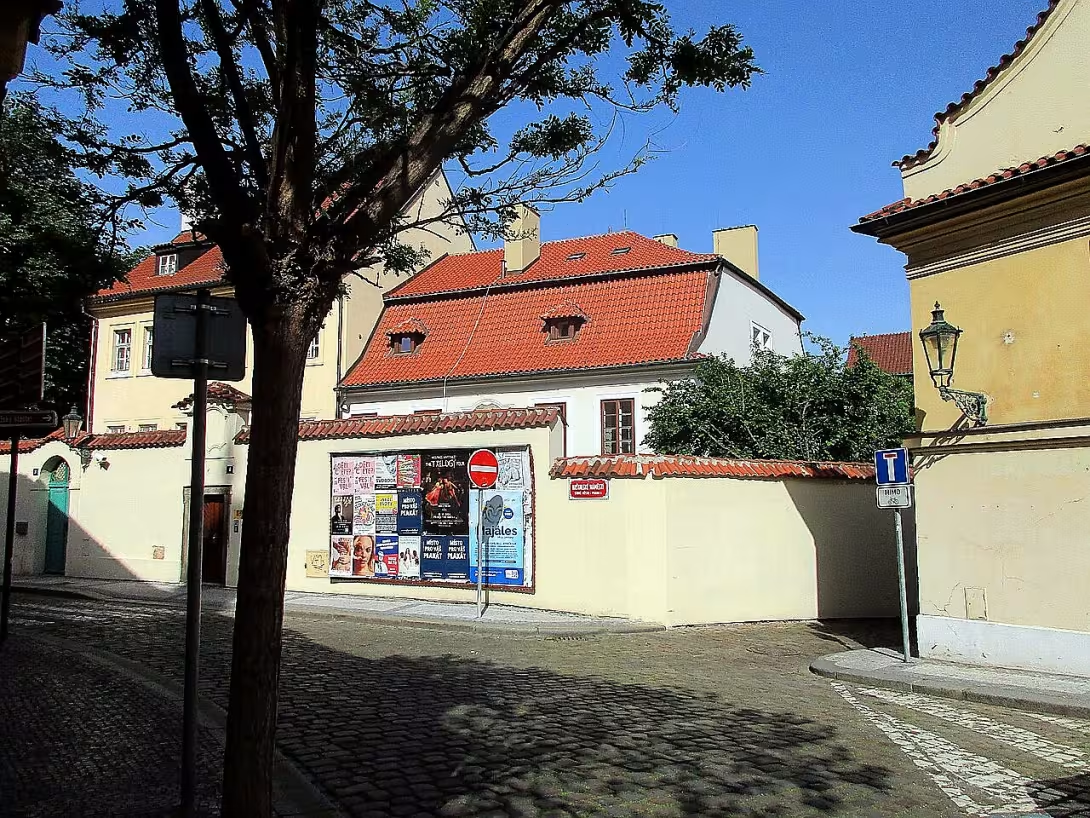
The Hashtali parish, located northwest of the church of St. Hashtala in Old Town in Prague, is a storey house with a trapezoid plan built in Baroque style. This monument is protected as a real cultural monument of the Czech Republic and serves as the seat of the Apostolic Exarchate of the Greek Church in the Czech Republic. Its history is closely linked to the neighboring Hastal school and its architecture reflects the changes that it has been subjected to over the centuries.
The history of the Hashtali parish dates back to 1400, when the house is first mentioned in sources. In 1620 Voršil Skrátová sold the House to the officials of the sins of St. Hashtal, who converted it into a school and later into a rectory. During the 16th century, land was bought into it, indicating its gradual development. In 1689, damaged by the French fire and in 1713, the eastern part of the house was converted into a rectory. Another reconstruction took place between 1741- 1743, which contributed to his present baroque appearance.
Architecturally, the Haštalská rectory is characterized by its trapezoidal plan and late Baroque facades, which are divided by the lisen frames. On the main facade is the rest of the Renaissance plastering with sgraffite in a stucco-lined frame. The interior of the rectory contains a rectangular stone portal with handles and a coiled arch that contributes to its unique appearance. The doors on the floors have profiled frames and original rococo fittings, which gives the building a historical character.
The property of the Hashtali parish has undergone several changes. After the sale of Vorshila Šcretová in 1620, the house was converted into a school and later into a rectory, reflecting its changing purpose over the years. It is currently the seat of the Apostolic Exarchate of the Greek Catholic Church in the Czech Republic, which underlines its religious importance.
The Haštalská rectory is now accessible to visitors and is worth visiting not only because of its historical value, but also because of its unique architecture. Its importance is enhanced by its location in the Old Town and its proximity to the church of St. Hastala, which makes it a key part of the cultural heritage of Prague. Visiting this monument offers an opportunity to explore the rich history and architecture that enrich this area.
The Hashtali parish is not only witnessing many changes over the centuries, but also a reminder of the spiritual life of the Old Town. Its history and architecture reflect the rich cultural context of Bohemia during the Baroque era and remain an important part of the local heritage. Visiting this monument offers a unique view of the past and a reminder of the lasting value of historical objects in our everyday life.
Historical milestones
- 1400
- The house is first mentioned in the sources.
- 1620
- The house was sold to Voršil Šcretová to the officials of St. Hastal's.
- 1713
- The eastern part of the house was converted into a rectory.
Architectural development
The house was located in 1404 at the cemetery near the church of St. Hashtala and during the 16th century the land was purchased. In 1689 it was damaged by a French fire, in 1713 part of the house was rebuilt into a rectory and between 1741- 1743 another reconstruction took place.
Historical events
- 1400
- The house is first mentioned in the sources.
- 1620
- The house was sold to Voršil Šcretová to the officials of St. Hastal's.
- 1713
- The eastern part of the house was converted into a rectory.
Owners
In 1620 Voršil Skrátová sold the house to the officials of St. Hashtal's soul, who converted it into a school and later into a rectory.
Points of interest
The Haštali rectory is a storey house with a trapezoid floor plan built in Baroque style. - This monument is protected as a real cultural monument of the Czech Republic and serves as the seat of the Apostolic Exarchate of the Greek Church in the Czech Republic. - The history of the Haštal parish dates back to 1400, when the house is first mentioned in the springs. - In 1689 damaged by the French fire and in 1713 the eastern part of the house was converted into a rectory. - Architecturally, the Haštal rectory is characterized by its trapezoid plan and late baroque facades, which are divided by the lisen frames.
Guide
Show guide text
This text was created by artificial intelligence and has not been editorially reviewed. It may contain inaccuracies.
Welcome to one of the quieter and quieter streets of Prague's Old Town. Please stop for a moment and take a deep look at the atmosphere of this place. You're standing in front of a building called the Haštal rectory. It's where time stopped and where every layer of plaster tells its own story from the past. Take a look at this storey house, which stands northwest of St. Hastala's church. At first glance, it may seem inconspicuous to you, but if you look at it more carefully, you will see that it carries the trail of several centuries of Prague history.
Let us now take a look together at how this building was built and how its path led. The history of this house is very deep and dates back to the beginnings of the Particle century. By the time Staré Město was densely built by craftsmen and merchants, this house was first mentioned in the letter springs already in the year thousand four hundred. Imagine how many ages and events this house has survived. He saw the bloom of medieval Prague, survived fires and wars. An interesting break in his history was the year one thousand six hundred twenty. It was this year that a woman named Voršil Šcretová sold the house to the officials of the soul of St. Hashtala. It was a period of great change when the ownership of many Prague properties changed. An important milestone then came in the year one thousand seven hundred thirteen, when the eastern part of the house was converted into a rectory, i.e. a housing and administrative space for the clerics. Since then, the building has acquired its character, which we still perceive.
Now pay attention to the architecture itself. Look at the overall form of the house. If you could see his floor plan, you would find it's shaped like a trapezoid. This is quite common in Prague Medieval and Baroque, because the houses had to fill the space between neighbouring buildings and follow the line of old streets. The whole house is built in a baroque style, which you can tell by its balance and some grandeur. Please note the facade, i.e. the outer surface of the house. See those vertical stripes that divide the wall into several parts? We call them lisen frames. These elements give the building a rhythm and structure so that it does not act as one flat wall.
But here comes something truly fascinating. If you look very carefully at the plaster, you can see the remains of the Renaissance period. There are preserved parts of the older plaster with sgraffite. Sgradito is an old decorating technique where two layers of plaster of different colours were applied and the top one was scratched in a fresh state to create an image or ornament. It's like the house is wearing an older, Renaissance dress under its baroque dress, which today is just easy to spot. It's a fascinating feeling when you see how it drags time over time.
If we could look inside at this moment, there would be other architectural treasures. The entrance to the house is characterized by a rectangular stone portal, which in summer gives a sense of stability and endurance. The interior is dominated by a rolling vault, which is typical of older Prague houses and ensured a solid ceiling construction. and if you looked at the details of the door or furniture, you would have encountered the original rococo fittings. The Rococo, which came after the Baroque, brought to architecture and design softness, lighter shapes and playfulness, which is reflected in precisely these metal details.
Although we do not know the names of the particular architects who designed this house, we see the craftsmanship of the people of our time. There were no world revolutions in this house, but there were people who made up the daily life of Prague's Old Town. Voršila Šcretová, which we mentioned, is one of the few personalities whose name ties to home, and reminds us that even behind these great historical data were specific people with their life stories.
Now I want to impress you with one interesting thing that makes this house unique even now. The Haštalské fara is not only a historical monument protected by the state as a real estate cultural monument of the Czech Republic. This building also has a contemporary, very important spiritual dimension. It serves as the seat of the Apostolic Exarchate of the Greek Catholic Church in the Czech Republic. It is therefore a place where the history of old Prague meets the spiritual life of a community that combines the traditions of Eastern Christianity with the recognition of the Pope. It is fascinating to imagine that in a house that originated more than six styles ago, it still pulses life and performs its role as a centre of faith and governance.
When you're standing in front of this building, try to imagine the sound of the streets around you changing. From the sounds of horse hooves and the screams of merchants in the year one thousand four hundred, to the baroque peace of the rectory, to today's noise of the modern city. The Hashtali rectory is like a silent guard who watches everything and doesn't say anything, but everything shows us through his lisen, sgraffite and stone portal.
Now that you know the story of this house, I suggest you go around it again slowly and try to find those Renaissance footprints in the facade details. Feel the contrast between the Baroque form and Renaissance decoration. It is a small piece of Prague which is not as crowded with visitors as Charles Bridge, but does not give in to its value and history.
Thank you for stopping by the Hashtali parish with me. I hope you are interested in this short trip to the past and that you are now seeing this house with different eyes. We now invite you to explore the streets of Old Town. Let yourself be guided by curiosity and discover other hidden pearls of our city. I wish you a pleasant journey and a beautiful day in Prague. Goodbye.
Tips for visitors
The best time to visit the Hastal parish is in the early afternoon or at the end of spring, when the sun lights up the facade and the surrounding streets are less busy. The Baroque architecture in these hours appears in its full glory.
Parking near the farm is not easy, therefore we recommend using public transport. The best way to get here is a bus or a tram passing through Old Town. You can verify the current connection in the traffic search engine.
When visiting, bring protective clothing because the interior of the rectory may not always be warm. It is also advisable to carry a camera or mobile phone to capture the beauty of baroque architecture and historical surroundings.
Photography of the Hashtali parish offers some interesting perspectives. The best light is in the early afternoon, when the sun lights the facade from the left. From Anezské street you can also capture a breathtaking view of the church of St. Hashtala and the square.
In the vicinity of the rectory is the Church of St. Hashtala, which is an important historical monument. In addition, you can explore the Old Town Square and its surroundings, where you can find other cultural and historical attractions.
Businesses nearby
Do you run a restaurant, accommodation, shop, museum, rental, wellness or other visitor service near this monument? Show yourself directly to the people heading to it — this is how they will see you in the app and on the web:
Events nearby

Zdroj akcí: otevřená data měst a obcí ČR (Národní katalog otevřených dat) a kalendář akcí Národního památkového ústavu.
Nearby
Kostel svatého Haštala
Haštalské náměstí
Anežská ulice
Accommodation nearby
Trips and activities nearby
Guided tours, tickets and activities nearby from GetYourGuide
Affiliate link: if you buy from the partner, we may receive a commission. The price for you does not change.
Search tours and activities →Themed route
Thematic cruise route: Fara u svatého Haštala, Praha
1. The rectory of St. Hashtala (rectory) This rectory is not only the spiritual centre of the village Staré Město, but also an architectural pearl with a rich history. Its Baroque appearance and interior are an excellent example of building art from the past century.
2. Church of St. Hashtala (Church) The church is the oldest sacral object in Prague and is located right next to the rectory. Its Gothic shield and history dating back to the 11th century make it an essential business card for anyone who travels to the Old Town.
3. Hastal Square (Square) This place is an ideal place to relax and view the surrounding sights. Its quiet environment offers an opportunity to enjoy the beauty of the Old Town while looking into the history of the area.
4. Anezka Street (Street) A short walk along Anez Street leads to other historical monuments and offers a view of architecturally interesting houses. This alley is part of the Old Town, which attracts its authenticity and peace.
This route will guide you through a short walk through the historical places of Prague, where each step reveals new chapters of the past.
Seasonal recommendations
Spring: In the spring season, the rectory of St. Hastalus in Prague is celebrated by the freshness of nature and the return of life to the green orchards of Old Town. Sun rays penetrate through flowering trees, creating unique lighting that emphasizes architectural details of the monument. At this time the atmosphere is calm and welcoming, ideal for a relaxed walk. Visitors should consider visiting early in the day to enjoy mild temperatures before people arrive and avoid the weather with rain that are common in early spring. Adequate clothing should include layers because temperatures can vary greatly at different times of the day.
Summer: In summer, the rectory of St. Hashtala is surrounded by lively flowering and full of tourists who are attracted to the centre of Prague. The sun day creates ideal conditions for photography, but also represents the potential for a hot, dazzling atmosphere. Visitors should come early in the morning or late in the evening to avoid the high noon hours and crowds that are common in the main summer season. It is important to wear short gloves, sunglasses and enough drinking medicine, while light shoes can help keep your feet dry on the moist parts of the journey.
Autumn: In the autumn period, the rectory at St. Hashtala offers visitors views in the flames of golden and red leaves that decorate the trees of Old Town. The atmosphere is calm and welcoming, with mild temperatures that allow long walks without discomfort. At this time the openness of the monument can be limited due to preparations for winter periods or special events, so it is good to look at the current information. Visitors should wear layered clothes and perhaps an umbrella, because the weather may be irregular with sudden collisions.
Winter: Winter visit to the rectory at St. Hashtala offers a unique atmosphere in the ice climate, when medieval architecture is illuminated by the light of winter days. Less people and shorter opening times make the visit peaceful and intimate. The warm clothes, including the hat and gloves, are essential for the comfort of walking along the freezing roads of the Old Town. Visitors should be aware that some parts of the monument need not be opened due to winter conditions or maintenance, so it is good to check before planning the visit.
Visualizations and artistic views


The visualisations are generated by artificial intelligence and serve as inspiration.
Photos from the area
Real photos taken near the monument

Zdroj a licence jsou uvedeny u každého snímku.
Tips from visitors
No tips yet. Be the first!
Log in and add your tip.
Sources and literature
Photos: Alena Pokorná / CC0 — Wikimedia Commons. The author and licence also appear when you hover over the image.
Faktickým podkladem tohoto textu byl článek na Wikipedii, jehož autory jsou přispěvatelé Wikipedie. Článek je dostupný pod licencí CC BY-SA 4.0.
Location on the map

Příběhy a pověsti
Legendy, pověsti a příběhy spjaté s touto památkou
Fotografie návštěvníků
Zatím žádné fotografie. Buďte první, kdo přidá fotografii z návštěvy!
Log in a přidejte svou fotografii nebo hodnoťte.
Za ověřenou návštěvu v aplikaci získáte víc bodů — poznáme podle GPS, že jste na místě.
Reviews and comments