






Historická výstavní budova Slezského zemského muzea Museum building
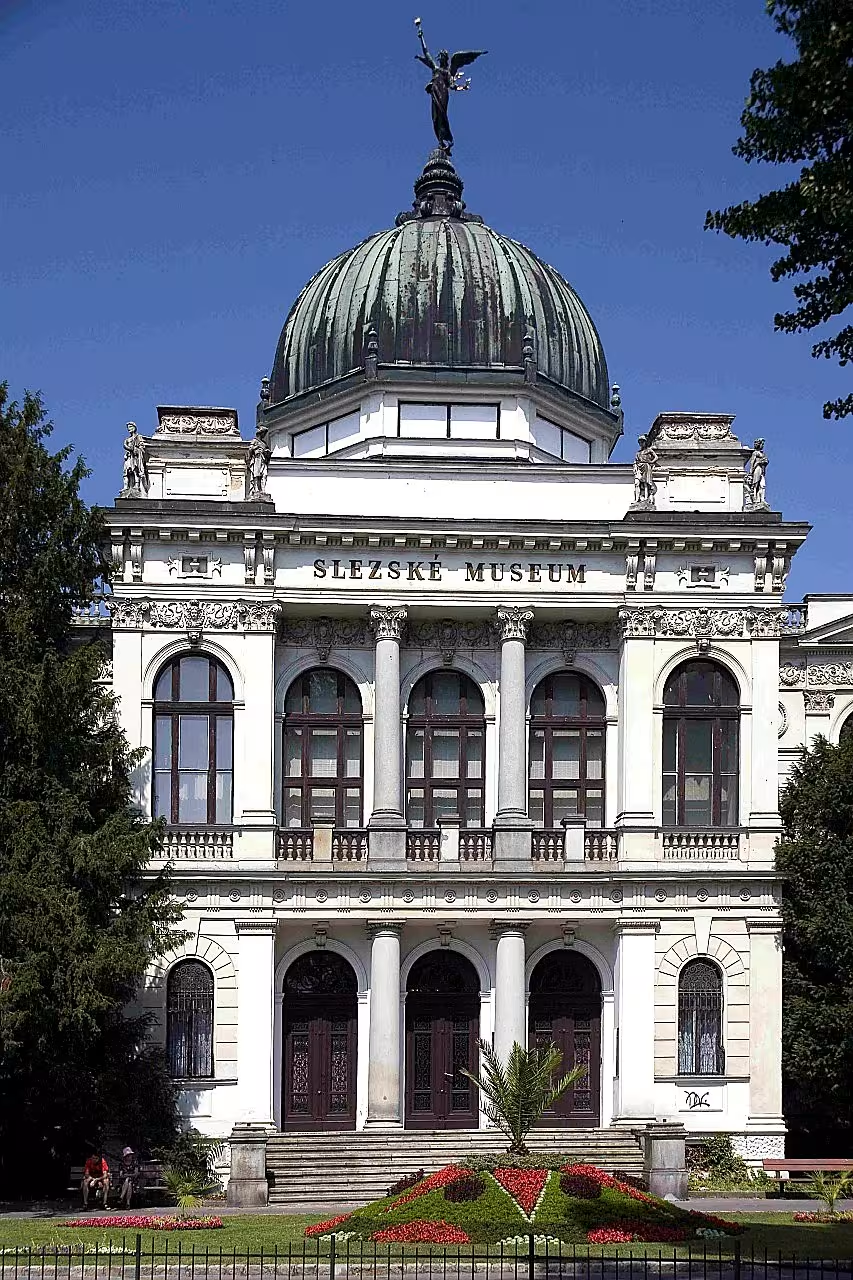
Historická výstavní budova Slezského zemského muzea in Opava is a monumental non-Renaissance building that serves as one of the main exhibition sites of this museum. The building was built in 1893- 1895 and is protected as a cultural monument of the Czech Republic.
The building was built for the purposes of the Museum of Arts, founded in 1882 at the initiative of the Chamber of Commerce and Trade. The institution also financed the construction that took place on the land donated to the princes of Liechtenstein. Originally, the building was designed as the Museum of Emperor Franz Joseph for arts and crafts.
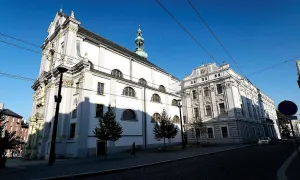
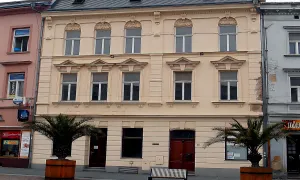
The project was developed by Vienna architects Johann Scheiringer and Franz Kachler. The building has an almost square floor plan and its texture is based on a late Renaissance. The decoration of the dome was created by the Viennese sculptor Theodor Friedel, who produced the statue of Genius and the sculpture of Pegasus. The richly decorated facade, turned into a city park, decorated with allegorical figures Painting, Sculpture and Architecture by Viennese sculptor Karl Schwerz. The side facade is situated on Komenský Street.
The fate of the building was complicated during the 20th century. In the spring of 1945, the construction was seriously damaged during the bombing. The subsequent ten-year reconstruction led to a modernist interior that respected the original layout and outer mantle of the building. In 1955, the first post-war exhibition was made available and in 1981 the second, focused on the development of nature and society in the North Moravian Region. In 1985, the building was declared a cultural monument.
Before 2010, the building faced serious technical problems such as rain water leak or the state of the dome over the street track, and its use was often temporary. The necessity of a comprehensive solution was a result of the physical state of the object and the absence of conceptual use which would reflect the current state of research in the field of the history and culture of Czech Silesia. After extensive reconstruction, the building was reopened to the public in May 2012 with a new exposure to Silesia.
This exhibition uses all three floors and for the first time includes cellar spaces. The content is divided into four main sections: Nature Silesia, Wings of Ideas, Encyclopedia Silesia and History Silesia. The Department of Nature of Silesia draws closer to the geological development, where the Czech Masiv and the Carpathian System meet. Within the geologic part is presented the Hornosley pelvis with the deposits of coal in Ostrava-Karvinsky region. Silesia is also an important area of the quarter-top glacier and there are Silesian volcanoes, such as the Great Rage, Carbon Hill, Interona and Bílčice.
The fossils in the exposure show the development of plants and animals from primordial to quarter mountains. The second-upper sediment in the mountains of the Moravian-Silesian Beskyd are also rich. Strutber limestone with coral reef and gypsum deposits in the Kobeřice area are unique. The botanical part presents the mesozoists, lichens and mouths, along with herbarians from protected areas such as the Great Kotlina, Pradad, Mionší or Radhosti. The zoological part represents the development from single-celled forms to molluscs and arthropods to vertebrates.
Part of the Wing of Ideas focuses on the period from the end of the 18th century to the First World War, which was a period of intense intellectual and rational development for the current Czech Silesia.
The historical exhibition building is a key point for understanding the history and nature of the region. Her visit offers a deep insight into Silesia's wealth through a modern museum presentation.
Then and now
Drag the slider to compare how the landmark may have looked when it was built with the view today.
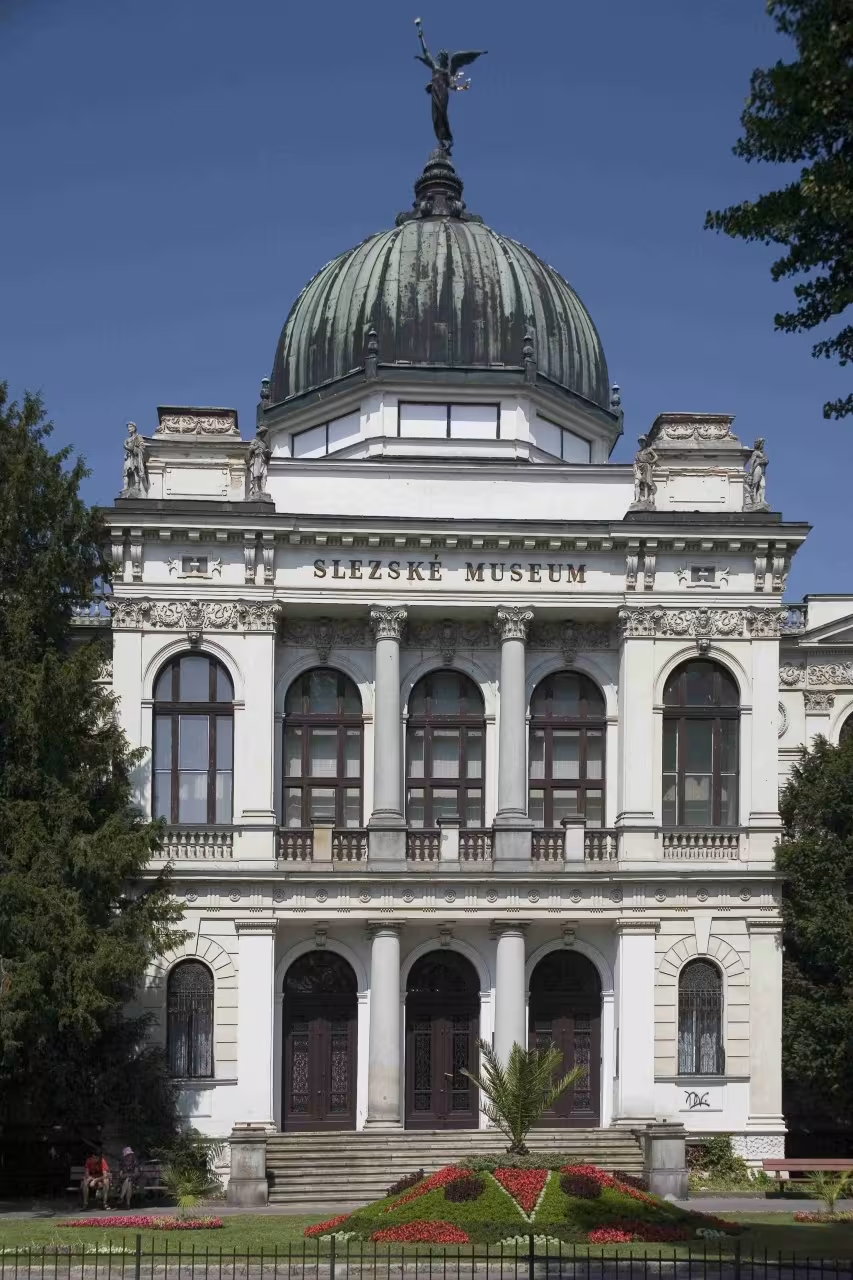
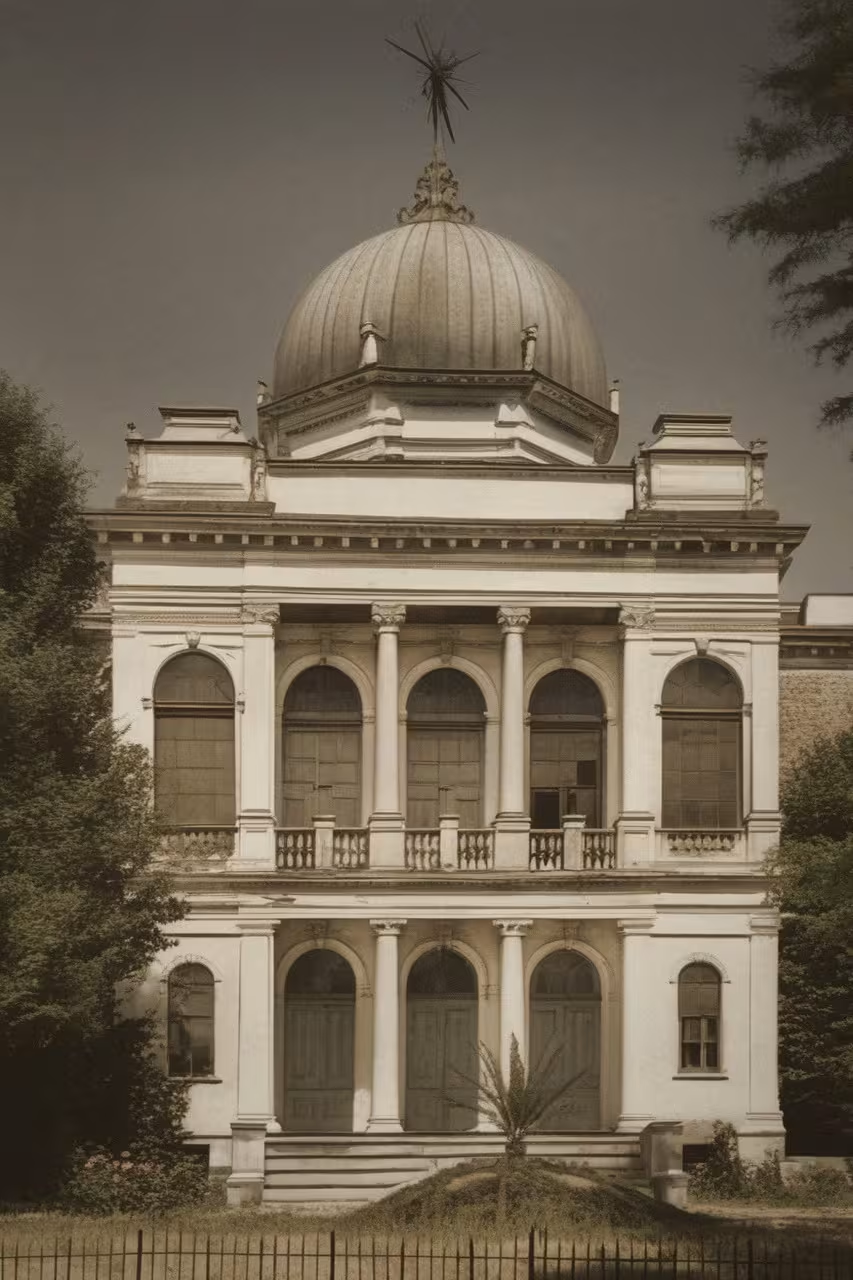
The historical appearance on the left is an AI-generated visualisation and serves as inspiration only.
Historical milestones
- 1882
- Museum of emperor Franz Joseph for arts and crafts.
- 1895
- Building completion.
- 1945
- Serious damage to the building by bombing.
- 1985
- The building declaration for a cultural monument.
- 2012
- Opening a renovated building with a new Silesia exposure.
Architectural development
The building is a free-standing non-Renaissance building on almost square ground plan. After the war damage in 1945, the reconstruction leading to a modernist solution of the interior took place. The latest extensive renewal was completed in 2012.
Historical events
1895: Completion of building construction. 1945: Serious damage during bombing. 1985: Announcement of a cultural monument. 2012: Opening of the renovated building.
Owners
The Chamber of Commerce and Trade (Finance), the princes of Liechtenstein.
Points of interest
- Historická výstavní budova Slezského zemského muzea is a monumental Neo-Renaissance building built in 1893- 1895. - The building was built for the purposes of an art museum based on the initiative of the Chamber of Commerce and Trade. - The project was developed by Vienna architects Johann Scheiringer and Franz Kachler. - The decoration of the dome was created by the Viennese sculptor Theodor Friedel, who produced the statue of Genius and the sculpture of Pegasus. - The building was badly damaged during the bombing in the spring of 1945.
Guide
Show guide text
This text was created by artificial intelligence and has not been editorially reviewed. It may contain inaccuracies.
Welcome to the historic exhibition building of the Silesian Museum, one of the most important cultural objects of Opava. You are standing in front of a monumental facade, which in its charming appearance tells of rich history and architectural art. The building boasts elegant lines of the late Renaissance, making it unique in this place. Discover the atmosphere of this place where every detail tells stories from the past.
Let's dive into the history of this important building. In 1882 the Museum of Emperor Franz Joseph for Arts and Crafts was founded at the initiative of the Chamber of Commerce and Trade, which was intended to serve as a centre of cultural heritage of the region. In 1893- 1895, this exhibition building was built according to the design of the Vienna architects Johann Scheiringer and Franz Kachler to provide a suitable environment for the museum. The building became not only a home of works of art, but also a symbol of the cultural development of Silesia.
Look up at the distinctive facade of the building and notice its monumental structure. The late Renaissance elements that the architects included in the design add nobility and elegance to the construction. These details are not only visually engaging, but also testifying to the artistic trends of the late 19th century.
The key personalities that contributed to this site were Theodor Friedel and Karl Schwerzek. Their efforts to establish a museum and promote cultural heritage have been reflected in the existence of this building, which today is not only a monument to architecture, but also a place full of historical stories.
The interesting thing about this place is its resilience and ability to recover. In 1945 the building was severely damaged by bombing, but thanks to the efforts of many people it was subsequently successfully reconstructed and declared a cultural monument in 1985. Today, it hosts modern exhibitions focused on Silesia heritage, bringing new life to historical walls.
We will now invite you to explore this fascinating building again. Go through her halls and be enchanted by the works of art and the history that lives here. We hope this guide inspired you to further discover this rich cultural center. Thank you for your visit and wish you a pleasant tour!
Tips for visitors
For the best experience from the tour of the historic exhibition building of the Silesian Regional Museum in Opava we recommend a visit in calmer hours, usually on Tuesday or Wednesday when there is less attendance. The morning light is ideal for admiring architectural details of the facade from 1893- 1895, which originally served as the seat of the Museum of Emperor Franz Joseph for arts and crafts. This will avoid crowds and enjoy the atmosphere of this important cultural object in peace.
Transport availability is ensured for both cars and public transport. If you arrive by car, in the heart of the city Opava-Město parking can be complicated in peak, so consider parking at the edges of the center and a short walk. For passengers by public transport, the location is easily accessible, but specific connections and times of departure are recommended to check currently in the search engine or on the carrier's website as they can change.
When visiting, bring comfortable shoes, as you will move around the historical areas and surroundings. We also recommend having drinking water and a light snack if you plan a longer stay. If you are interested in a detailed tour of architectural elements, a small laptop or mobile phone may be useful for taking notes or photos that you can later compare with historical records.
Photography is very attractive in this monument due to its excellent condition and historical character. The best places to take pictures are the outside facade and the entrance portal, where daylight is beautifully reflected. For interior images we recommend using natural lighting from windows, which emphasizes historical elements of the building. However, always check in advance the rules for photography within the exposures that can be limited to protect the exhibits.
In the immediate vicinity is located the town park in Opava, which is ideal for a short walk before or after visiting the museum. The park offers a quiet environment and green areas that contradict the historical architecture of the museum. For families with children this combination of cultural experience and outdoor stay is a great way to spend the afternoon. Children can enjoy movement in the park while adults enjoy the atmosphere of the historic center of Opava.
Businesses nearby
Do you run a restaurant, accommodation, shop, museum, rental, wellness or other visitor service near this monument? Show yourself directly to the people heading to it — this is how they will see you in the app and on the web:
Events nearby
Zdroj akcí: otevřená data měst a obcí ČR (Národní katalog otevřených dat) a kalendář akcí Národního památkového ústavu.
Nearby
Opava City Park.
Accommodation nearby
Themed route
1. Historická výstavní budova Slezského zemského muzea (Museum Exposition) - Explore various historical exhibitions and collections inside the building. 2. Museum reservoir (Monuments area) - Take a walk around the inner space, which is part of the entire area. 3. Town Park in Opava (Park) - Complete the relaxation trip in a pleasant natural environment close to the museum.
Seasonal recommendations
Spring: Historická výstavní budova Slezského zemského muzea offers a unique atmosphere for visitors in the spring, where newly grown tree leaves are projected on the facade of the building and add freshness to the surrounding environment. The sunny days complement the interior of the exhibition halls with warm lighting, which increases the attractiveness of the visit. For those who plan their way to Opava this season, it is advisable to prepare light clothes for a daily visit and perhaps a little more warm coat for a cooler afternoon. The best time to visit is usually the noon time when the crowds are least burdened.
Summer: In summer, the historical exhibition building becomes a popular destination for visitors looking for cultural entertainment. Sunshine days and warm weather attract many people, which can lead to longer fronts on the entrance staircase. The interior of the building is lit by natural light, which gives the spaces a wonderful brightness. It is recommended to visit the museum early this afternoon to avoid the biggest crowds. Due to warm days, it is advisable to prepare light clothes and water.
Autumn: Autumn season offers visitors to the historical museum in Opava an atmosphere full of coloured leaves that decorate the wood building. The sunny afternoon is the perfect time for a tour, when the lighting in the interiors is the most beautiful and nature around the museum offers views full of color. Days become colder, so it is advisable to prepare clothes according to temperature. The best time to visit is an early afternoon when the crowds are least burdened.
Winter: Winter in the historic exhibition building of the Silesian Museum brings a peaceful and intimate atmosphere to visitors. The sunny days illuminate the interior clearly, allowing a more detailed tour of the exhibitions. Freezing weather can affect visitors and shorten museum opening times, so it is important to check the current times before visiting. Visitors are advised to wear warm clothes and consider entering the building already in the afternoon when the cooler hours start.
Visualizations and artistic views


The visualisations are generated by artificial intelligence and serve as inspiration.
Photos from the area
Real photos taken near the monument

Zdroj a licence jsou uvedeny u každého snímku.
Tips from visitors
No tips yet. Be the first!
Log in and add your tip.
Sources and literature
Fotografie: Fotoarchiv Slezského zemského muzea / CC BY-SA 3.0 — Wikimedia Commons. The author and licence also appear when you hover over the image.
Faktickým podkladem tohoto textu byl článek na Wikipedii, jehož autory jsou přispěvatelé Wikipedie. Článek je dostupný pod licencí CC BY-SA 4.0.
Location on the map

Fotografie návštěvníků
Zatím žádné fotografie. Buďte první, kdo přidá fotografii z návštěvy!
Přihlaste se a přidejte svou fotografii nebo hodnoťte.
Za ověřenou návštěvu v aplikaci získáte víc bodů — poznáme podle GPS, že jste na místě.
Reviews and comments