






Hrad Zlín Castle ruin
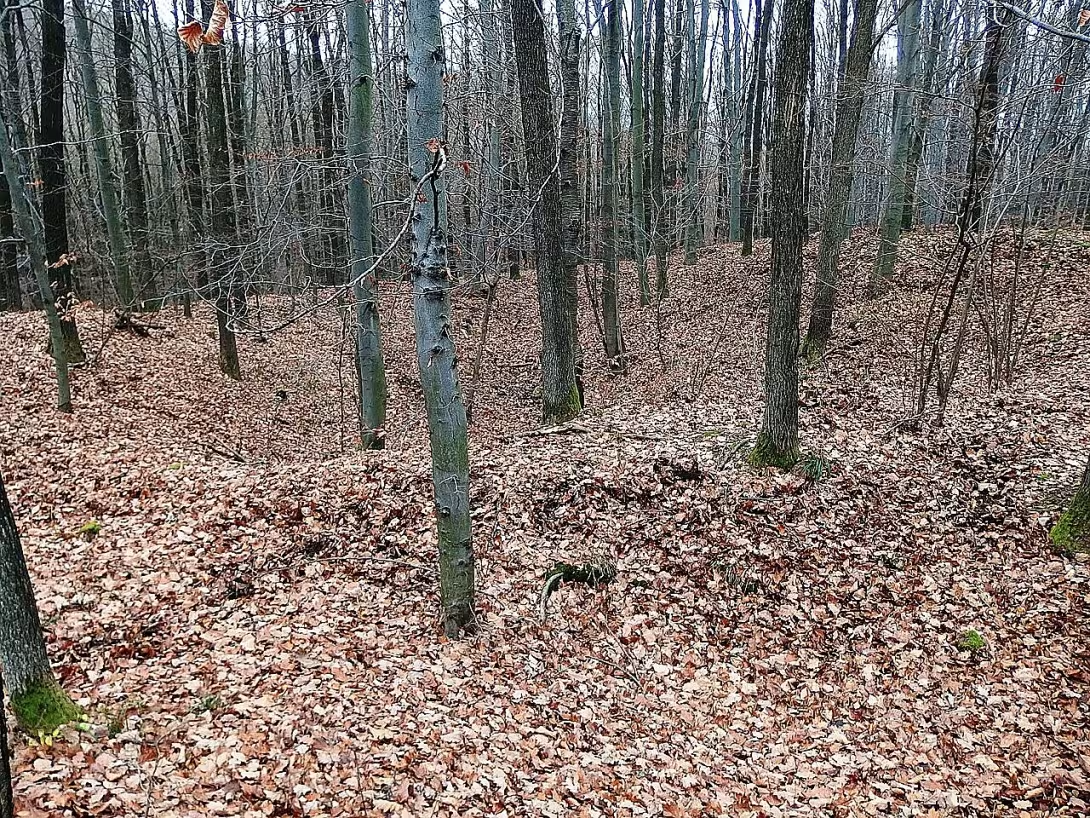
The Zlín castle ruin is located at the top of Barabbas in the Vizovická mountains near the summer camp Hradisko. This medieval building dates back to the middle of the 13th century and is significant in its strategic position over trade routes and complex history of owners.
The castle was probably founded in the middle of the 13th century by Wilhelm of Hustopeč, one of the leading courtiers of the Moravian Margrave and the Czech King Přemysl II. Otakar. During his time, Zlín became the center of a newly formed estate. The exact location of the castle was not known for a long time and was the subject of disputes. Older historical studies assumed that the castle stood at the site of today's castle in the city centre, but later research confirmed the folk tradition that located the castle just on Hradisk, approximately 1.5 km south of today's church.
The castle complex occupies a convenient position on the elongated back of the island, which is protected on three sides by steep cliffs. The castle core has the shape of a trapezoid and its dimensions are approximately 47 to 42 meters. The object is surrounded by a boulder up to two meters high. The entrance to the castle was situated from the south side and the castle was surrounded by a moat 10 to 15 metres wide. The eastern part of the castle is heavily disturbed by the mining of the stone. Archaeological research carried out in 1938 and 1940 revealed the foundations of a brick building made of opposites and sandstone with dimensions of 8,2 to 5,4 metres, which was probably built on dry land. Underneath the building there was a cellar cut into the rock ground. More far away, about 100 meters south of the centre of the castle core, there is a distinct circular object that can be moved forward by fortification or siege bastion.
After the likely demise of the castle at the beginning of the 14th century in connection with the war attacks of Matúš Čák Trenčiansky, the castle was reused by Herbort of Zlína. In 1358, the lords of the House of Sternberk acquired a castle where they lived until the end of the 14th century. In Hussite wars, Petr Roman z Vítovic bought it, and later King Matyah Korvinus gave it to his captain William Tetouro of Tet. In this era, a fortress was established at today's town, which was probably last rebuilt in the 16th century. After the damage to Bočkajovci in 1605, the fortress was converted to a castle. The original feudal residence on Hradisk was permanently abandoned in the first half of the 16th century.
The castle served as a strategic point above the important crossroads leading, for example, towards Luhačovice, Uherský Brod or Vizovice. In the past Hradisko also served as an important supply of easily accessible stone. The folk tradition of the castle states that it was large, had two towers and a secret escape underground corridor. During the archaeological survey, gothic keys and parts of iron fittings were found.
The ruin is protected as a cultural monument and is located at a height of 364 meters above sea level. The most accessible route leads from the Kudlov ridge from today's Fabian district. This monument represents an important historical point in the landscape of the Vizovické výština, which is worth visiting for those interested in medieval history.
Then and now
Drag the slider to compare how the landmark may have looked when it was built with the view today.
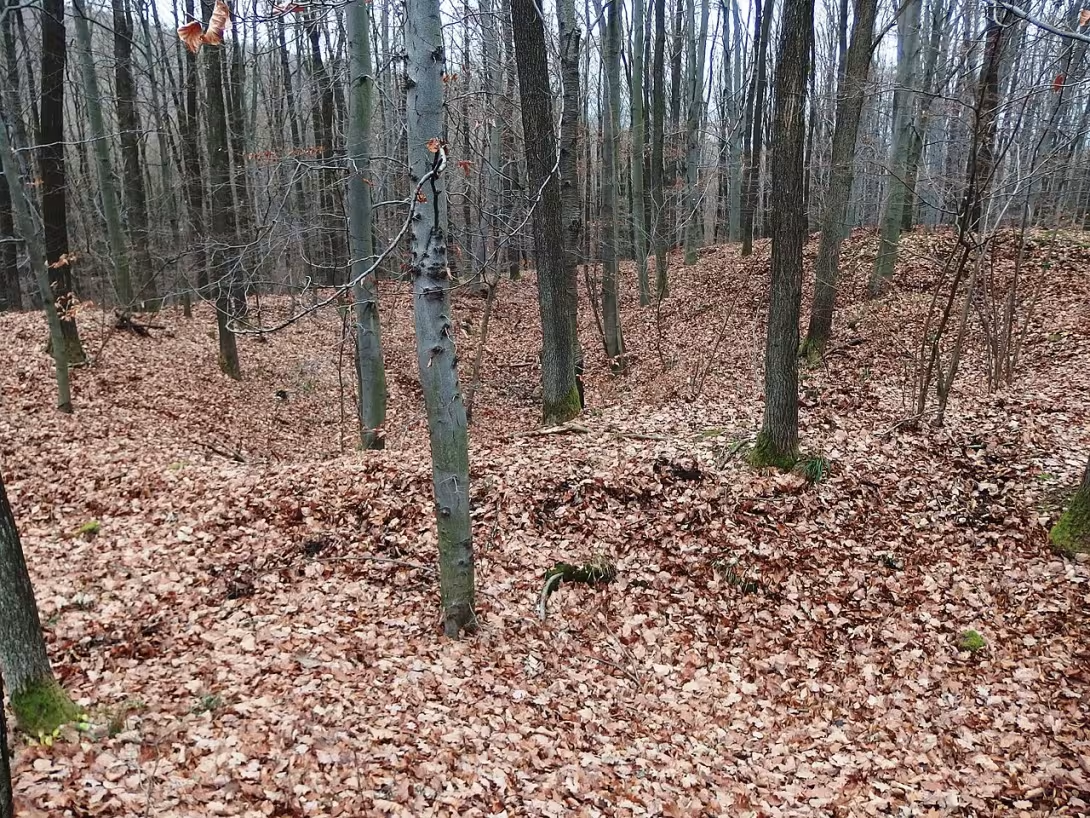
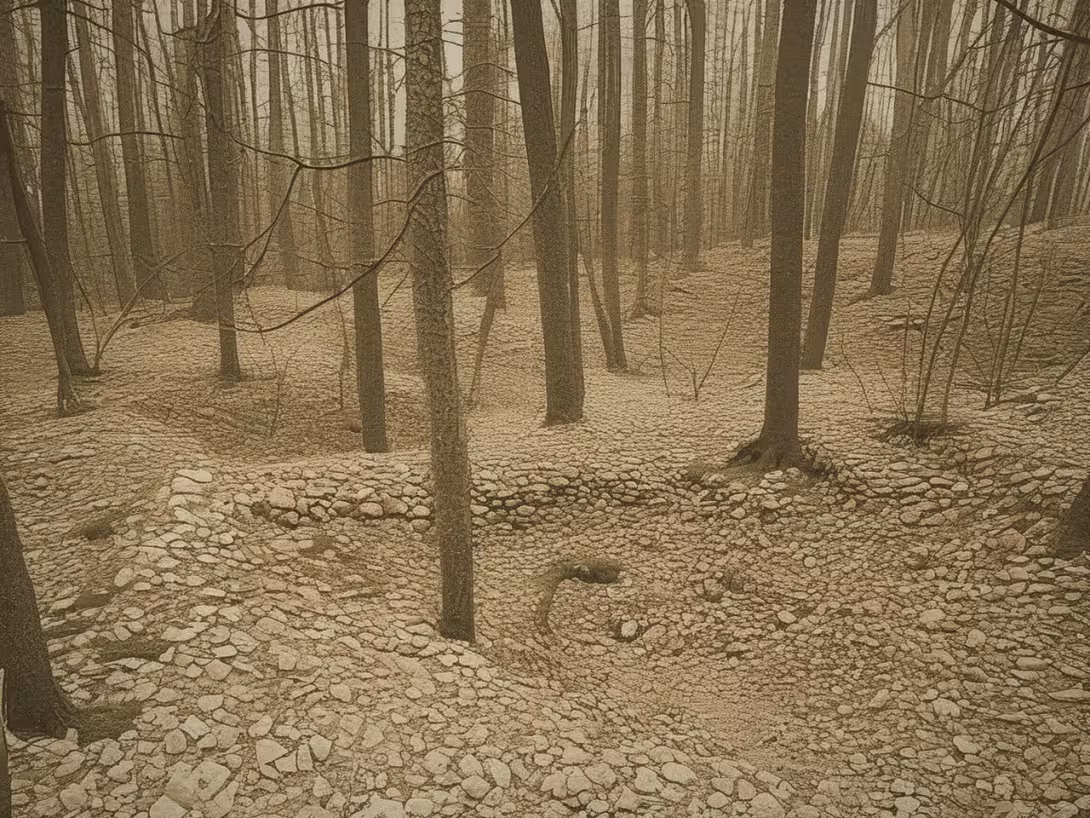
The historical appearance on the left is an AI-generated visualisation and serves as inspiration only.
Historical milestones
- half of the 13th century
- Likely to establish a castle by Wilhelm of Hustopečí
- Beginning of the 14th Century
- Likely demise of the castle in connection with the wars of Matouš Čák
- 1358
- Obtaining of the castle nobles of the genus Sternberk
- End of the 14th Century
- End of the seat of the family of Černberk in the castle
- 1605
- Damage to the fortress Bočkajovci and subsequent reconstruction to the castle
- 1938-1940
- Archaeological research revealing the foundations of brick buildings
Architectural development
The castle was probably last rebuilt during the reign of William Tetour or Peter Roman. In the 16th century the castle was rebuilt into a castle, which shows architectural development from the castle to a more modern castle.
Points of interest
- The castle was probably founded in the middle of the 13th century by William of Hustopeč. - The castle core has the shape of a trapezoid and its dimensions are approximately 47 to 42 meters. - Archaeological research revealed the foundations of the brick building from the spuce and sandstone with an underground basement cut into a rock. - In the archaeological survey, there were gothic keys and parts of iron forging. People's tradition states that the castle was large, had two towers and a secret escape underground corridor.
Guide
Show guide text
This text was created by artificial intelligence and has not been editorially reviewed. It may contain inaccuracies.
Welcome to the summit of Barabbas. You are standing right where heaven meets history, and before your eyes a view of the ruins of castle Zlín is spread. Do you feel the fresh wind that is endlessly shining across the Vizovická hill? You may now wonder what happened here once when these stone remains were not just silent witnesses of time, but a living heart of the entire region. Even if you see the fragments of the walls and the broken foundations today, try to close your eyes for a moment and let yourself pass through the atmosphere of this place. Imagine that you are not only a visitor, but a pilgrim who comes to a strong bastion that once dominated the surrounding countryside.
Let's go back deep into the past together to understand why this mountain was chosen for this very important mansion. In order to understand the origin of the castle, we must look at the mid-13th century. At a time when power relations in the country were constantly changing and security was the most valuable commodity, it probably started to build there. Historical records and probable derivation tell us that Vilém z Hustopečí was behind the founding of this castle. His decision wasn't random. Hrad Zlín was built not only for a beautiful view, but above all as a strategic point. His position over important trade routes gave him incredible weight. Whoever controlled this peak controlled the movement of goods, men and troops that were in this valley. This powerful position was the key to the wealth and influence that the castle represented at the time.
Now pay attention to what you can see directly around you, even though the castle is now a shadow of its past glory. Even though there are no longer high towers or decorative roofs, its basic geometry is still evident. If you look at the area where you're standing right now, you'll notice that the castle core has a specific shape of a trapezoid. Its dimensions are approximately 47 to 42 meters. This clear and solid structure gives us an idea of how the construction was designed for maximum defense. Notice also the material from which these remains are composed. Looking at the broken fragments of the walls, you can see the structure of the opposites and sandstone. These natural materials that you see here were the building block at the time of construction. These are rocks that have resisted the winds and the rains for hundreds of years. Although the architects who designed this castle remained unknown in history, their work is still evident in every piece of this stone.
But the history of this place is much more than just a story about stones and geometry. It's a story about people whose ambitions and conflicts left their mark. The fate of the castle was closely linked to the great figures of the time. In the early 14th century, the castle was in danger. In the context of the devastating wars led by the mighty Matouš Čák, the castle probably disappeared. It was a time of chaos and constant struggle for power, when even the strongest fortresses could have fallen. Yet the castle did not disappear completely from history. In a thousand and three hundred and ten eight, this place was won by nobles of the mighty family of the sternberk. For them, the castle was an important residence until the end of the 14th century their operation ended here. The next chapter was written by family lines, which gradually took turns changing the character of this place. There was another fundamental change in the seventeenth century, namely the year of the thousand and six hundred and five. After damage to the fortress, the Bočkajovce family tried to rebuild the castle. So we see how this place turned from a military fortress into a noble mansion and later in an attempt at a more luxurious residence. Each era has left its own energy in this space.
Now I want to invite you to think about something you can't see at first sight. What's underneath the surface that you're standing on right now? What happens in the depths of the earth under your feet? One of the greatest secrets of this place is the findings that revealed archaeological research in the years one thousand nine hundred thirty-eight to one thousand nine. It was at that time that scientists discovered that there was much more beneath the surface than meets the eye. The most interesting discoveries include an underground cellar which was cut directly into a solid rock. Imagine the work and effort that was needed to create space in such a difficult terrain to store supplies or protect the population. This hidden underground part of the castle gives the place even more mystery and reminds us how important the ability to survive at a relentless time when enemies could appear at any time.
You're standing in a place where power, strategy and human destinies collided. Even though there are only fragments of the past today, the atmosphere of this peak still allows you to feel the breath of history. I suggest you continue your walk around the ruins, observe the details of the walls and enjoy the view that Barabbas offers you. Let yourself be driven by imagination and enjoy the peace that this place offers. Thank you for visiting Castle Zlín.
Tips for visitors
For the best experiences we recommend a visit in the late spring period or autumn, when the weather is more stable and the views of Vizovicka hill are brightest. For photography is the ideal time around sunset, when soft light beautifully highlights the stone remains of the ruins and creates interesting shadows.
The castle can be reached by car and through public transport. The current parking possibilities in the area and specific timetables please check in advance in internet search engines or on the official site of the monument.
Since you are in the field of ruins, it is necessary to bring with you firm and comfortable shoes. We also recommend taking with you enough drinking water and small refreshments that you can enjoy directly in nature.
In the vicinity of the castle, within a short journey, you can visit the Church in Zlín or explore the surrounding nature of the Vizovická surface. Another interesting location nearby is summer camp Hradisko.
For families with children, a visit is a great way to spend time outside, but it is necessary to count on the unequal surface of historical remains. We advise children to ensure safe movement and to pay more attention when passing through ruins.
Businesses nearby
Do you run a restaurant, accommodation, shop, museum, rental, wellness or other visitor service near this monument? Show yourself directly to the people heading to it — this is how they will see you in the app and on the web:
Nearby
Visual surface
Church in ZlínA (about 1.5 km from the castle)
Summer Camp Hradisko
Accommodation nearby
Trips and activities nearby
Guided tours, tickets and activities nearby from GetYourGuide
Affiliate link: if you buy from the partner, we may receive a commission. The price for you does not change.
Search tours and activities →Themed route
1. Church in ZlínA (sacral monument) - Historical building located approximately 1.5 km from the castle. 2. Hrad Zlín (ruins of the castle) - The main destination of the trip, which offers a tour of historical ruins. 3. Summer Camp Hradisko (area) - A place for summer recreation in this location. 4. Visual surface (natural area) - A vast landscape that can be seen from around here.
Seasonal recommendations
In spring, the ruins of castle Zlín awaken together with nature. The light is fine and scattered, which greatly highlights the structure of old stone walls between freshly green leaves. The atmosphere is fresh and full of new energy. For the visit I recommend layered clothes because the morning cold can take turns with afternoon heat. The roads to the ruins can be even wet after winter, so it is worth choosing stronger shoes.
The summer season brings to the castle intense sunlight and full of crowns of trees that create a pleasant shadow around the ruins. The atmosphere is lively and hot, which is ideal for lovers of history in full light. Due to the increased attendance in the main summer season, it is best to arrive early in the morning to avoid the biggest crowds and the most intense noon heat. Don't forget enough drinking water and headgear.
Autumn is the most romantic time for this historic site. The leaves change colour into golden and red shades, which, combined with the morning mist, creates a mysterious and melancholy mood. Lighting is low and dramatic at this time, which is ideal for shooting ruins. I recommend you take a waterproof jacket and shoes with good grip, because wet leaves can make the paths covered slippery.
Zimą causes the ruins of the castle Zlín stoze and up to frosty. Without leaves, the stone structures are visible throughout their roughness and in the advent time or in the snowfall they are very quiet and lonely. The day is short, so plan to visit around the noon hours when there is the most light. It is necessary to wear very warm clothes, including windbreaker, because in the open space at the ruins can blow strongly.
Visualizations and artistic views


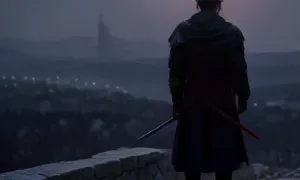
The visualisations are generated by artificial intelligence and serve as inspiration.
Tips from visitors
No tips yet. Be the first!
Log in and add your tip.
Sources and literature
Fotografie: Palickap / CC BY-SA 4.0 — Wikimedia Commons. The author and licence also appear when you hover over the image.
Faktickým podkladem tohoto textu byl článek na Wikipedii, jehož autory jsou přispěvatelé Wikipedie. Článek je dostupný pod licencí CC BY-SA 4.0.
Location on the map

Příběhy a pověsti
Legendy, pověsti a příběhy spjaté s touto památkou
Fotografie návštěvníků
Zatím žádné fotografie. Buďte první, kdo přidá fotografii z návštěvy!
Přihlaste se a přidejte svou fotografii nebo hodnoťte.
Za ověřenou návštěvu v aplikaci získáte víc bodů — poznáme podle GPS, že jste na místě.
Reviews and comments