



Husův sbor v Nuslích Church
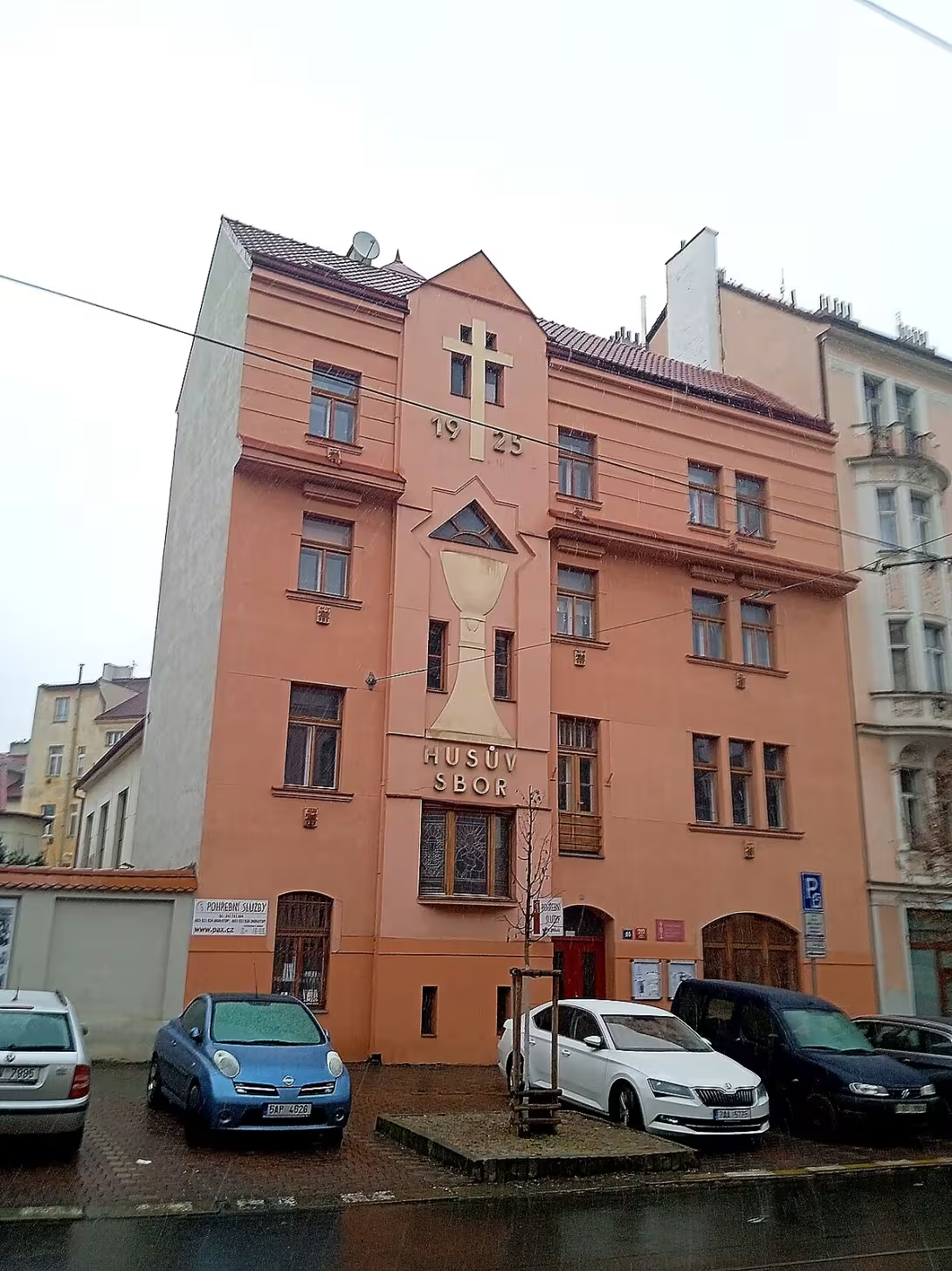
Husův sbor v Nuslích is an important religious structure of the Czechoslovak Hussite Church in Prague's Nusle district. Built in 1925, it symbolizes early 20th-century reformist zeal and resilience within Czech history. This church embodies the spirit of the Hussite movement and played a crucial role during the May Days of 1945 as a sanctuary for those affected by conflict.
The origins of Husův sbor are rooted in early 20th-century religious reforms in Czechoslovakia. The establishment of the Czechoslovak Hussite Church marked a shift from traditional Catholic practices, reflecting broader societal changes towards national identity and independence. In Nusle, Antonín Procházka distributed copies of Český misál, sparking public gatherings that led to the church's formation. By 1920, these efforts resulted in a religious community in Nusle, with official approval following in 1923. The first service under a new liturgy by Patriarch Dr. Karel Farský took place that year, solidifying the community’s foundation.
Architecturally, Husův sbor was designed by Václav Prokop and constructed under Augustin Korb's guidance in 1925. Local craftsmen contributed to its creation, reflecting strong community dedication. Notable features include four original bells inscribed with names of figures like Jan Hus and Jan Žižka, though these were melted down during World War II for wartime purposes. Inside, the church originally housed artworks such as a communion table, stained glass windows by Veselý firm, and other artistic elements that have since been replaced or lost.
Throughout its history, key figures like Antonín Procházka, Karel Farský, Martin Zeman, Arnošt Šimšík, and Gustav A. Procházka played significant roles in the church's development and administration. The community faced challenges, including excommunication from the Catholic Church and disputes that led to meetings at alternative venues like the Rokoko cinema hall.
Today, Husův sbor remains a place of historical and cultural significance. Visitors can appreciate its architectural features and understand its role in Czech religious history. Its resilience during times of conflict and embodiment of national identity make it noteworthy for those exploring Prague's rich heritage. The church continues to be accessible to the public, offering insight into a pivotal chapter of Czechoslovakia’s past.
Then and now
Drag the slider to compare how the landmark may have looked when it was built with the view today.
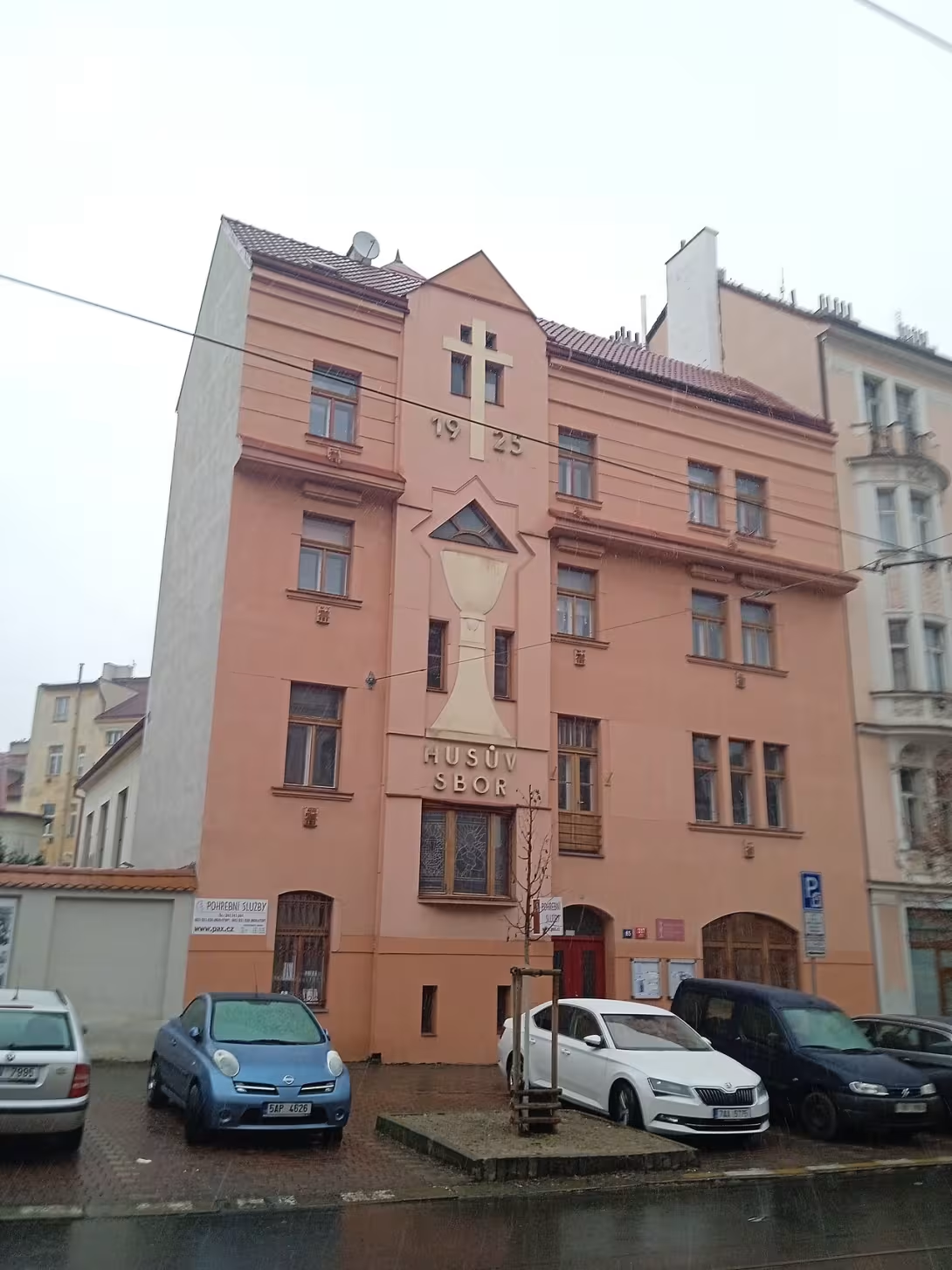

The historical appearance on the left is an AI-generated visualisation and serves as inspiration only.
Historical milestones
- 1920
- Establishment of the religious community in Nusle.
- 1923
- Official approval of the Nusle religious community and first service under a new liturgy.
- 1925
- The church was officially opened with a service conducted by Bishop Gustav A. Procházka.
Architectural development
The church, designed by Václav Prokop and constructed under the guidance of Augustin Korb, involved numerous local craftsmen in its creation. It features original elements such as four bells with inscriptions dedicated to prominent figures like Jan Hus and Jan Žižka. The interior includes a communion table, stained glass windows, and other artworks that were later replaced or lost.
Historical events
1920: Establishment of the religious community in Nusle following public gatherings led by Antonín Procházka.
1923: Official approval of the Nusle religious community and first service under a new liturgy by Patriarch Dr. Karel Farský.
1925: The church was officially opened with a service conducted by Bishop Gustav A. Procházka.
Points of interest
- During World War II, the four original bells of Husův sbor in Nusle were melted down for wartime purposes, a fate that befell many historical artifacts during this period. - The church served as a sanctuary during the May Days of 1945, providing refuge to those affected by conflict, highlighting its role as a place of safety and community support amidst turmoil. - Antonín Procházka's distribution of Český misál in Nusle sparked public gatherings that eventually led to the establishment of the church, showcasing grassroots efforts in religious reform. - The first service under a new liturgy was conducted by Patriarch Dr. Karel Farský in 1920, marking a significant moment in the formalization and recognition of the Czechoslovak Hussite Church community. - Disputes with the Catholic Church led to excommunication and necessitated meetings at alternative venues like the Rokoko cinema hall, illustrating the church's complex relationship with traditional religious authorities.
Guide
This guide is narrated by a synthetic voice generated by artificial intelligence.
Show guide text
This text was created by artificial intelligence and has not been editorially reviewed. It may contain inaccuracies.
The Hus Assembly Hall on Táborská Street in Prague's Nusle district belongs to the Czechoslovak Hussite Church. It acquired its present appearance through reconstruction in nineteen twenty-five. Nusle played a fundamental role in the founding of this church.
Antonín Procházka stood at its origin, expanding the Czech Missal published by Karel Farský on December eighteenth, nineteen nineteen. The calling of people to Christmas services foreshadowed the proclamation of the Czechoslovak Church in the Church of Saint Nicholas in the Old Town Square on January eighth, nineteen twenty. The meaning of the new church was then discussed in the Nusle National House by progressive women Božena Šťastná and Anna Štechová.
The Nusle religious congregation was founded on May seventh, nineteen twenty through a lecture by Karel Farský. The spiritual administration was taken over by priests Martin Zeman, Arnošt Šimšík, and Karel Janda, who were excommunicated from the Catholic Church for this. The believers initially gathered in the Church of Saint Václav. In the nineteen twenty census, thirty-eight point five percent of Nusle's residents declared themselves for the new church. At that time it was still an independent city, and it was not incorporated into Greater Prague until nineteen twenty-two.
The year nineteen twenty-three was a turning point. In February the congregation was officially approved. Due to disputes with the Catholic Church, the meetings were moved to the Rokoko cinema hall, later known as Tatra. In September the Council of Elders met for the first time in the Nusle Sokol gymnasium across the way, which had been purchased from the Sokol organization for four hundred thousand crowns. On the feast of Saint Václav, a service according to the liturgy of patriarch Karel Farský was held for the first time in the Church of Saint Václav.
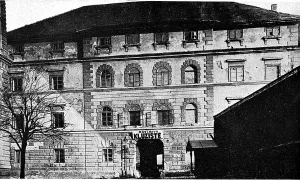
The reconstruction of the gymnasium was carried out by Augustin Korb according to a design by Václav Prokop. A number of local tradespeople participated in it, from carpenters and plumbers to painters and glaziers. The assembly hall was solemnly opened on December thirteenth, nineteen twenty-five with a service by bishop Gustav Procházka.
Augustin Korb also donated four bells with inscriptions dedicated to Jan Hus, Jan Žižka, Jan Amos Komenský, and Karel Farský. During the Protectorate they were confiscated and melted down for war purposes.
The interior was furnished with an altar table by architect Kašpar, a cross by woodcarver Kotyza, a painting of Jesus by painter Baruch, which no longer survives, and stained glass windows by the Karlin firm Veselý. Three colored windows in the apse from nineteen twenty-five with the inscriptions Hus, Komenský, and Masaryk have been preserved to this day. The organ acquired in nineteen twenty-eight was later replaced.
In the May days of nineteen forty-five, the dead and wounded from the barricades were brought to the assembly hall courtyard.
Tips for visitors
The best time to visit Husův sbor v Nuslích is during the late spring or early fall when the weather is pleasant, allowing for a comfortable stroll around the area and an unhurried exploration of the church's architecture. These seasons offer optimal lighting conditions for photography, with softer light enhancing the intricate details of the structure. Additionally, visiting outside peak tourist seasons can provide a more serene experience.
Public transportation is highly recommended as it provides convenient access to the church and surrounding areas.
When visiting Husův sbor v Nuslích, it's advisable to wear comfortable walking shoes as you may want to explore the nearby area on foot. Bringing a camera is recommended to capture the unique architectural details and serene ambiance of the church. Additionally, carrying a light jacket can be useful due to variable weather conditions in Prague.
For photography enthusiasts, some of the best spots to capture Husův sbor v Nuslích are from the surrounding streets where the building's façade is fully visible against the sky. Early morning or late afternoon provides the most favorable lighting for photographs, casting long shadows and highlighting architectural features. Inside the church, natural light filtering through windows can create beautiful interior shots.
Nearby attractions within a 30-minute walk include various historical sites and cultural landmarks in Prague. Visitors can explore other significant religious structures or enjoy local cafes and parks to relax after their visit. These nearby locations offer additional context to Prague's rich history and provide a well-rounded experience for those interested in the city's heritage.
For families with children, Husův sbor v Nuslích offers an educational opportunity to learn about Czechoslovak Hussite Church history and early 20th-century architecture. The church is generally accessible and safe for children, but it’s advisable to keep them engaged by explaining the historical significance of the site. Nearby parks can provide a space for kids to play after exploring the church.
Frequently asked questions
Can the monument be visited?
Religious buildings are usually open mainly during services; at other times a visit is normally arranged with the parish or the operator. We have not verified specific times.
Where is the monument?
Location: Praha, Hlavní město Praha. The map on this page shows the exact spot.
Businesses nearby
Do you run a restaurant, accommodation, shop, museum, rental, wellness or other visitor service near this monument? Show yourself directly to the people heading to it — this is how they will see you in the app and on the web:
Events nearby

Zdroj akcí: otevřená data měst a obcí ČR (Národní katalog otevřených dat) a kalendář akcí Národního památkového ústavu.
Accommodation nearby
Trips and activities nearby
Guided tours, tickets and activities nearby from GetYourGuide
Affiliate link: if you buy from the partner, we may receive a commission. The price for you does not change.
Search tours and activities →Themed route
Trasa: Husův sbor v Nuslích
1. Husův sbor v Nuslích (hlavní cíl) Tento kostel je významnou sakrální stavbou a architektonickou dominantou Nuslí. Stojí za návštěvu pro svou jedinečnou architekturu a historii.
2. Nuselský most (cca 1 km) Tento železobetonový most je významnou technickou památkou a nabízí nádherný výhled na řeku Vltavu a okolí.
3. Sluneční náměstí (cca 1,5 km) Toto malé náměstí je známé pro své sluneční hodiny a nabízí klidné prostředí pro odpočinek a relaxaci.
4. Nuselská radnice (cca 2 km) Radnice v Nuslích je krásnou funkcionalistickou stavbou, která stojí za návštěvu pro svou architekturu a historii.
Seasonal recommendations
Jaro: In the spring, Husův sbor in Nusle is surrounded by blooming trees and flowers, creating a pleasant atmosphere. The lighting is also unique, being softer and more enjoyable than in other seasons. We recommend bringing warm clothing as it can be chilly at night.
Léto: During the main summer season, Husův sbor in Nusle is crowded with tourists, so we recommend arriving early to avoid long lines. The atmosphere is warm and sunny but also quite busy. We suggest bringing an umbrella or sunglasses for sun protection.
Podzim: In autumn, Husův sbor in Nusle is surrounded by beautiful fall foliage colors. The atmosphere is calm and pleasant, ideal for those who want to visit the church without crowds. Unique to this season is that the lighting is softer and more enjoyable than at other times of year. We recommend bringing warm clothing as it can be chilly at night.
The atmosphere is calm and dark, ideal for those who want to visit the church quietly. Unique to this season is that the church is lit only by candles, creating a pleasant ambiance. Practical tips: we suggest bringing warm clothing and protecting your head from the cold.
Visualizations and artistic views


The visualisations are generated by artificial intelligence and serve as inspiration.
Photos from the area
Real photos taken near the monument


Zdroj a licence jsou uvedeny u každého snímku.
Tips from visitors
No tips yet. Be the first!
Log in and add your tip.
Sources and literature
Photos: Loktušák77 / CC BY-SA 4.0 — Wikimedia Commons. The author and licence also appear when you hover over the image.
Faktickým podkladem tohoto textu byl článek na Wikipedii, jehož autory jsou přispěvatelé Wikipedie. Článek je dostupný pod licencí CC BY-SA 4.0.
Location on the map
Příběhy a pověsti
Legendy, pověsti a příběhy spjaté s touto památkou
Příběh: Husův sbor v Nuslích
Bylo to v pondělí ráno, kdy Martin Zeman se našel stojící u Husův sboru v Nuslích s hlavou zahalovanou do široké čepice a rukama sklopenýma dolů. Mračné oblo…
Číst příběh
Pověst: Husův sbor v Nuslích
Staří obyvatelé Nuslí vyprávějí, že zvony Husova sboru v Táborské ulici nezahynuly tak docela, jak by se zdálo. Traduje se, že v posledních dnech dubna roku …
Číst příběhFotografie návštěvníků
Zatím žádné fotografie. Buďte první, kdo přidá fotografii z návštěvy!
Log in a přidejte svou fotografii nebo hodnoťte.
Za ověřenou návštěvu v aplikaci získáte víc bodů — poznáme podle GPS, že jste na místě.
Reviews and comments