



Jelení příkop Park
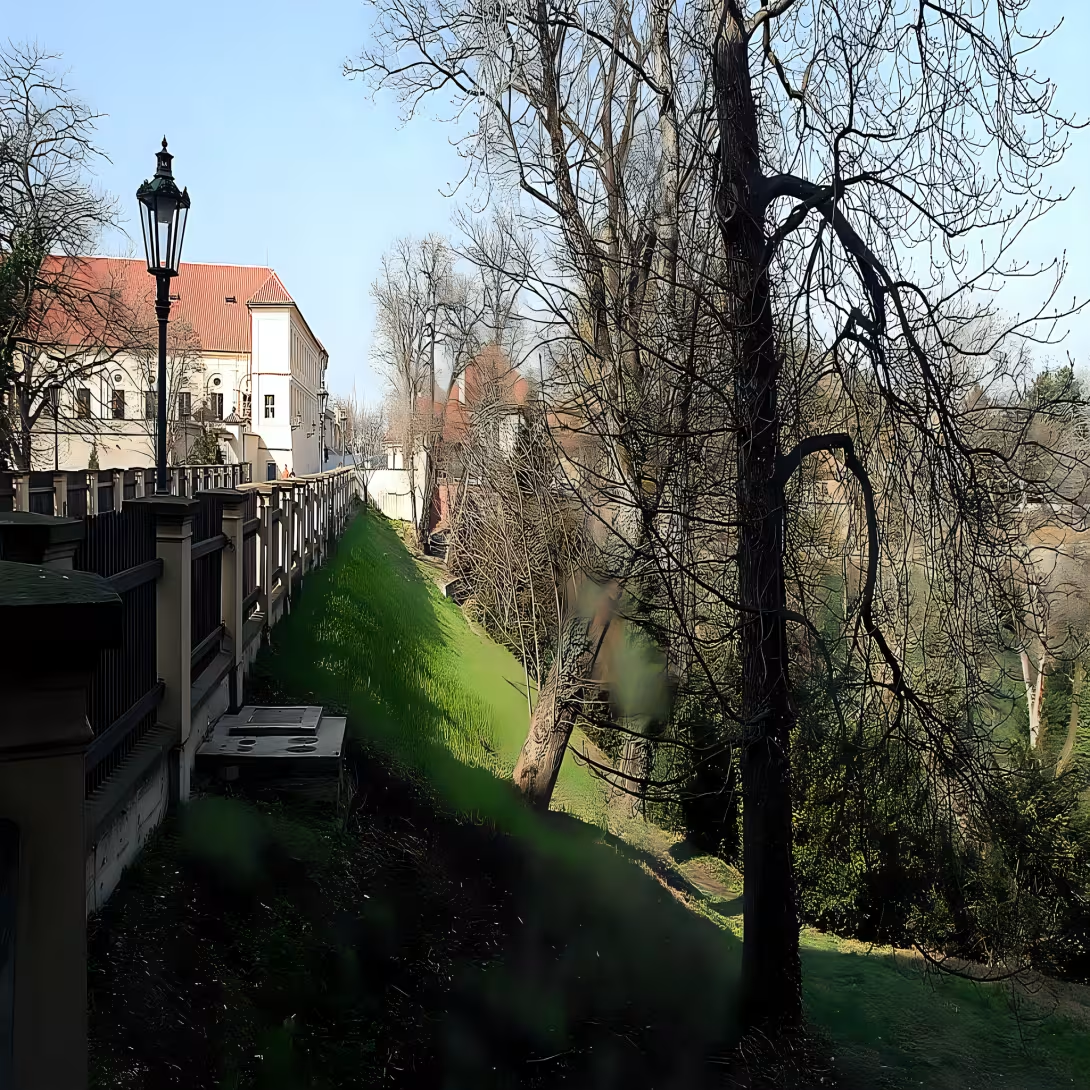
Jelení příkop represents a natural gorge extending over eight hectares along the Brusnice stream. Originally, it was a parlour formed by the terrain through which the stream flowed freely. Over time it was regulated and partly pushed into the pipeline to better serve the needs of Prague Castle.
The beginnings of its transformation fall back to Ferdinand I when the moat was transferred through the Dust Bridge. The bridge connected the Castle directly to the Royal Garden and had a strategic function - it formed a defensive barrier protecting the site. The Ситуace changed during the reign of Rudolf II, when high animals were introduced into the ditch for hunting. That is the purpose of the name. The deer breeding was allegedly completed during the French occupation of Prague in 1742, when all the animals were shot. Half a century later, behind Marie Terezie, the bridge was covered by a boulder that divided the moat into an area of over three hectares and the lower part larger, which measured more than five hectares.
For the twentieth century, it left tragic traces in the ditch. On May 8, 1945, in the last days of the German occupation, there was a massacre of 21 Czech prisoners and civilians on the ramp above the moat. Then the long decades of moat for the public closed. Only President Václav Havel was made available. In the 1990s, the architect Petr Hlaváček participated in the reclamation of the upper part. The festival of electronic dance music was held here in 1998 and the lower part was first made available to the public in 1999.
The crucial moment for uniting both parts of the trench came at the turn of the millennium. In September 2002, a pedestrian tunnel was opened, which led through the Powder Bridge. The project was prepared by architect Josef Pleskota and the tunnel was awarded for architectural processing abroad.
The upper part hides the remains of rich history. In the place of the former home of the bear, there is a sandstone statue of the Potential by Franta Úprka. The gift from the students of the burning stone school was dedicated to the 75th birthday of Tomáš Garrigua Masaryk. The bear was founded by Masaryk in the 1920s for bears Misha and Reich, which he received from Russian legionnaires. The space ended in the '50s. The meadow with the possibility of resting is today modified on the site. Above the moat is Masaryk's view with project architect Jože Plečnika, which offers an unusual view of Castle, Hradčany and Petřín.
The lower part is accessible from Chotko Road or through the gate of the royal fig shop. The connecting tunnel in the Dust Bridge thus allowed the connection of these two separate parts to be restored. Currently, the moat hosts various cultural and social events and serves as a public space full of history and nature.
Then and now
Drag the slider to compare how the landmark may have looked when it was built with the view today.
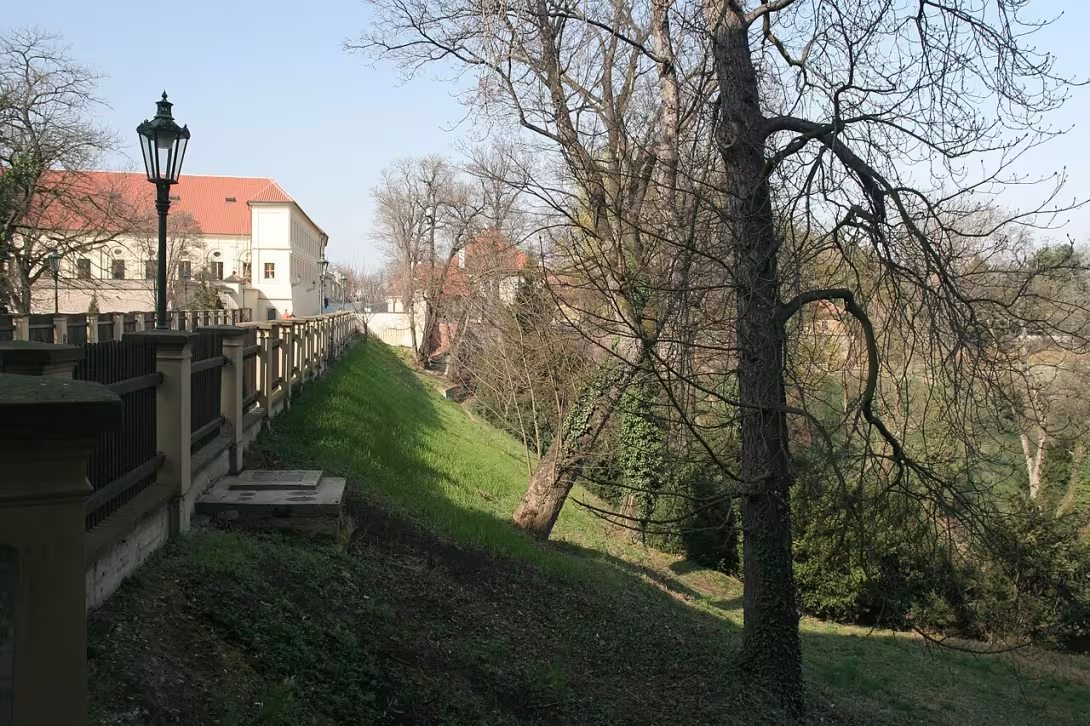

The historical appearance on the left is an AI-generated visualisation and serves as inspiration only.
Historical milestones
- 1742
- The end of deer breeding during the French occupation of Prague.
- 1945
- Massacre 21 Czech prisoners and civilians on the ramp above the moat.
- 1998
- There was an electronic dance music festival in the Upper Deer Trench.
- 2002
- A tunnel was opened for walking through the Powder Bridge according to the Josef Pleskot project.
Architectural development
The moat was bridged by the Dust Bridge already under Ferdinand I. to connect the Castle with the Royal Garden. Behind Marie Terezie the bridge was covered with a sprinkled bead, dividing the space into the upper and lower parts. In the 1990s, the Upper Trench underwent extensive reclamation. At the turn of the millennium, a modern concrete tunnel was built for pedestrians according to the design of Josef Pleskot, who connected both parts again.
Historical events
1742: End of rearing deer during the French occupation of Prague. 1945: Massacre of 21 Czech prisoners and civilians on the ramp above the moat. 1998: Festival of Electronic Dance Music in Upper Deer Trench. 2002: Opening a pedestrian tunnel in the body of the Powder Bridge.
Owners
Since Jelení příkop is part of Prague Castle, its owner is the Administration of Prague Castle. This institution takes care of the administration and maintenance of the monument and ensures its accessibility to the public. In 2021, the Upper Jelení příkop was reopened after several years of closing, while the Lower Part was made available in December 2022.
Points of interest
- Jelení příkop is a natural gorge on more than eight hectares along the Brusnice stream, which has been regulated over time and partly pushed into the pipeline. - The name of the trench dates back to the time of Rudolph II, when high animals were introduced here to hunt, while deer breeding ended during the French occupation in 1742 by shooting all animals. - On 8 May 1945, twenty Czech prisoners and civilians were massacred on the ramp above the ditch. - In the 1920s, President Masaryk set up a bear trench for bears Misha and Reich by Russian legionnaires who died in the 1950s. - In September 2002, a pedestrian tunnel was opened, which was designed by architect Josef Pleskota, who won an award for architectural processing abroad.
Guide
This guide is narrated by a synthetic voice generated by artificial intelligence.
Show guide text
This text was created by artificial intelligence and has not been editorially reviewed. It may contain inaccuracies.
Jelení příkop is a natural ravine that separates the bastion of Prague Castle from its northern approaches. It runs along the Brusnice stream from U Brusnice street to the great curve of the Chotkova overpass and covers over eight hectares. The embankment of Powder Bridge divides it into Upper and Lower ravine, which are connected by a pedestrian tunnel.
The Brusnice stream originally flowed freely through the ravine, but later it was regulated and partially diverted into pipes. Under Ferdinand the First, the ravine was bridged by Powder Bridge, which connected the Castle with the Royal Garden. Initially it served only as a defensive barrier. But during the reign of Emperor Rudolf the Second, they introduced large game animals here that were hunted, and that is where the ravine gets its name from. The keeping of deer reportedly ended in 1742, when they were all shot during the French occupation of Prague. Under Maria Theresa, the bridge was covered with an earth rampart. This divided the ravine into an upper part covering over three hectares and a lower part of more than five hectares.
A dark chapter occurred on May eighth, 1945. On the ramp above the ravine, German soldiers massacred twenty-one Czech prisoners and civilians.
In the second half of the twentieth century, the ravine was closed to the public. It opened again under President Václav Havel. In the nineties, architect Petr Hlaváček participated in the renovation of the Upper ravine, and the lower part was opened to the public for the first time on June fifth, 1999. The tunnel under the Powder Bridge embankment, designed by Josef Pleskot, was opened on September third, 2002, and its creators received awards for it both at home and abroad. After several years of closure, the Upper ravine reopened in spring 2021, and the Lower ravine on December eleventh, 2022.
At the bottom of the Upper ravine lies a meadow and next to it a former bear keeper's house with a bear pit, an artificial cave with two barred pseudo-gothic portals. President Masaryk had the bear pit built in the nineteen twenties for bear cubs named Míša and Ríša, which he received as a gift from legionnaires from Russia. It was destroyed in the nineteen fifties. Opposite the house stands a sandstone sculpture titled Nocturnal Wanderer by Franta Úprka. Students from the Hořice stone masonry school gave it to Masaryk for his seventy-fifth birthday. It originally stood in the middle of the meadow, where a base remains from it, and a large circle in the lawn.
The grotto, an artificial ruin with a fountain and a double staircase, did not survive the era of normalization. Its location is now covered by a filled-in northern slope.
Above the ravine opposite the Šternberský Palace stands the renovated Masaryk Lookout by architect Josip Plečnik. The President liked to rest there under a linden tree. From the lookout, there is an unusual view of the Castle grounds, of Hradčany, and of Petřín.
Tips for visitors
Best time to visit The Deer Trench is early in the morning or in the morning when it is quiet and nature is still waking up, which amplifies the magical atmosphere of this historic gorge. For transport to the place use walking from Hradčan or nearby area; the current connection by public transport is best checked in the online connection search engine. Take a walk with you mainly with comfortable fixed shoes because the roads lead through natural terrain, as well as a bottle of drinking water, or a snack to make your rest in green. For photography, a deep ravine with a stream of Brusnice offers great scenery, with the best light for pictures capturing walls and greenery in the morning or late afternoon. Within 30 minutes' walk you can visit Prague Castle, the Royal Garden, Chotka Sets, Petrin and picturesque Hradčany. Families with children will appreciate enough space to discover natural corners and explore a historic place where children can safely walk along the creek.
Frequently asked questions
Can the monument be visited?
Parks and gardens are often open to the public, but some have opening hours or are part of a closed site. We have not verified the entry conditions.
What are the opening hours and admission?
We have not verified the opening hours or admission. Current information is published by the operator.
Where is the monument?
Location: Hradčany, Hlavní město Praha. The map on this page shows the exact spot.
Why is the monument protected?
It is listed in the Central List of Cultural Monuments of the Czech Republic as a national cultural monument. It is protected as part of a larger listed ensemble.
Businesses nearby
Do you run a restaurant, accommodation, shop, museum, rental, wellness or other visitor service near this monument? Show yourself directly to the people heading to it — this is how they will see you in the app and on the web:
Events nearby

Zdroj akcí: otevřená data měst a obcí ČR (Národní katalog otevřených dat) a kalendář akcí Národního památkového ústavu.
Nearby
Prague Castle, Royal Garden, Chotko Sets, Petrin, Hradčany
Accommodation nearby
Trips and activities nearby
Guided tours, tickets and activities nearby from GetYourGuide
Affiliate link: if you buy from the partner, we may receive a commission. The price for you does not change.
Search tours and activities →Themed route
1. Prague Castle Type: Historical area Why is it worth a visit: You can start your trip in this famous area, which offers a unique atmosphere and a wonderful view of the entire capital. From here you can easily move to other stops in close proximity.
2. Royal Garden Type: Historical park Why is worth a visit: Located in the immediate vicinity of Prague Castle and offers a quiet environment full of greenery, historical buildings and landscaped roads. It is an ideal place for a pleasant and peaceful walk.
3. Jelení příkop Type: Park Why is worth a visit: The main destination of our route is a deep, natural valley flowing through the creek, which serves as a unique park right under the walls. It offers shady trails, romantic corners, and a great escape from urban activity.
4. Chotka sets Type: Park Why is it worth a visit: These historical sets follow on to Jelení příkop and represent the oldest public park in the capital. They provide wonderful views of the Vltava and surrounding landscape.
5. Petrin Type: Top and park Why is it worth a visit: You can finish the trip on this popular hill full of large orchards and pawns. It is a great place for a final walk with a view of the entire Hradčany.
Seasonal recommendations
Spring in the Deer Trench in Hradčany brings out the awakening of nature, when the steep slopes of the Brusnice stream turn green to fresh bulls and the first spring onions under the castle walls bloom. The sun penetrates still low above the horizon through the thin crowns of trees and creates fine shadows and a unique game of light on an ancient wall. In this period you will meet only a minimum of tourists, which guarantees total peace and quiet. Solid waterproof shoes are suitable, because roads can be muddy and wet after winter melt, and a light windbreaker against cold spring wind. The ideal time to visit is in the morning, when the morning fog gives the entire valley a mysterious atmosphere.
Summer moons offer a welcome escape from the city's heat in a deep valley, as the dense vegetation of grown trees provides deep shade and natural cooling. The sun's rays only penetrate the leaves timidly and create mosaic lights that highlight the depth and wilderness of this otherwise modified park. The atmosphere is more lively because more visitors are flowing through here towards Prague Castle. Since this is the main season, we recommend to leave early in the morning or vice versa in the late afternoon when the crowds are slightly distracted. Put on breathtaking clothes and comfortable walking shoes, don't forget the insect repellent.
Autumn turns Jelení příkop into a paint palette full of shades of yellow, orange and red, which perfectly contradict the dark stone of the walls. The light is low, soft and creates long shadows that underscore the melancholy and romantic character of the whole site. Nature is slowly stored to sleep and falling leaves reveal hidden views of architectural details of the castle. Compared to the summer, it is noticeably looser, you will find the locals walking. Take a warmer sweater, scarf and closed shoes, because the fallen leaves can slide wet. You will experience the most beautiful light for photography in the late morning, when the sun passes through the foggy mist.
Winter brings fairy tales to Deer's trench, especially when the snow cover covers steep slopes and dampens all the noise of the surrounding city. The lighting is very specific, the shadow comes early in the afternoon and the white snow reflects light lamps along the footpath and creates a magical atmosphere. Visiting is the lowest in this period, often you will have the whole valley to yourself. The key is to choose really warm winter clothes, hat, gloves and high shoes with anti-slip soles, because the roads need not be maintained immediately due to the difficulty of the terrain. The best time to visit is around noon, when the outside is warmer and the sun at least lights up the peaks of the surrounding buildings for a while.
Visualizations and artistic views


The visualisations are generated by artificial intelligence and serve as inspiration.
Photos from the area
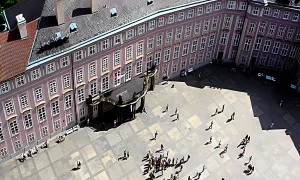
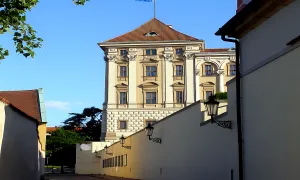
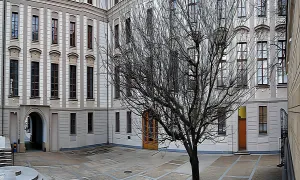
Real photos taken near the monument

Zdroj a licence jsou uvedeny u každého snímku.
Tips from visitors
No tips yet. Be the first!
Log in and add your tip.
Sources and literature
Photos: che / CC BY-SA 2.5, rozlišení zvýšeno umělou inteligencí — Wikimedia Commons. The author and licence also appear when you hover over the image.
Faktickým podkladem tohoto textu byl článek na Wikipedii, jehož autory jsou přispěvatelé Wikipedie. Článek je dostupný pod licencí CC BY-SA 4.0.
Location on the map

Příběhy a pověsti
Legendy, pověsti a příběhy spjaté s touto památkou
Fotografie návštěvníků
Zatím žádné fotografie. Buďte první, kdo přidá fotografii z návštěvy!
Log in a přidejte svou fotografii nebo hodnoťte.
Za ověřenou návštěvu v aplikaci získáte víc bodů — poznáme podle GPS, že jste na místě.
Reviews and comments