






kaple svaté Barbory (Chotyně) Chapel
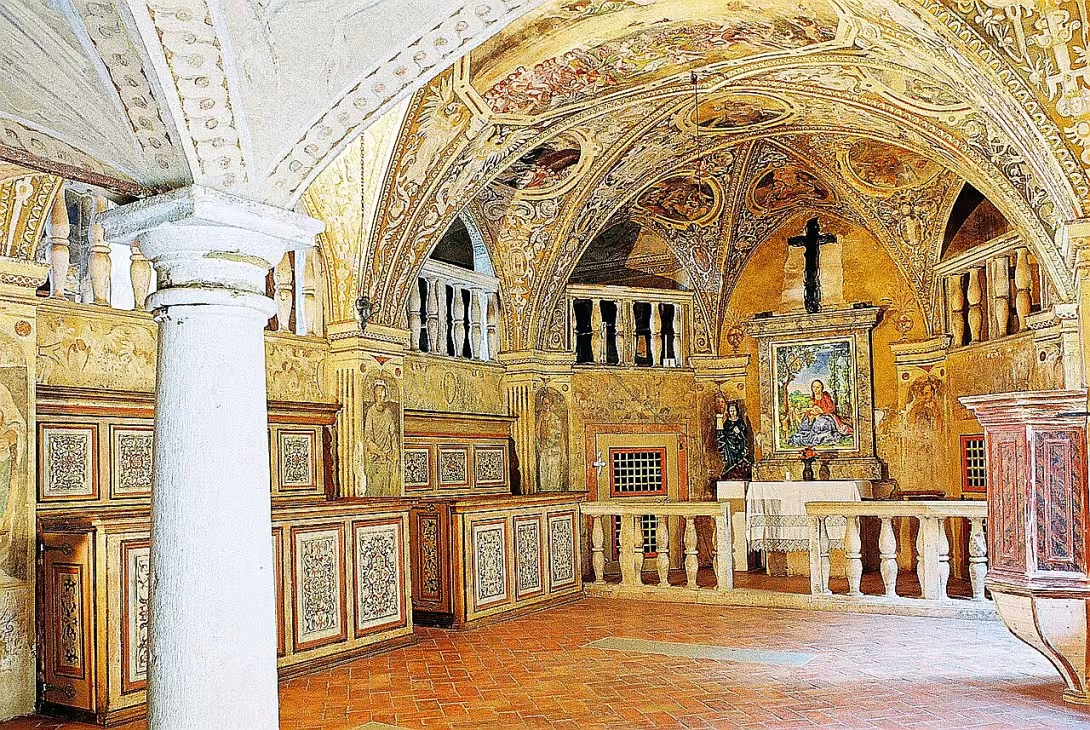
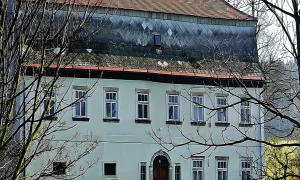
The Chapel of Saint Barbara in Chotyně is a notable example of Renaissance architecture within the Grabštejn Castle complex. Located in the municipality of Chotyně, Liberec District, this chapel stands out for its intricate decorations and historical significance. Built in 1569 by Jiří Mehl ze Střelic, it features elaborate frescoes and architectural elements that highlight its importance as a sacred space from the Renaissance period in Bohemia. The interior boasts ceiling paintings attributed to Heinrich Bocksberger, showcasing grotesques, angelic figures, saints, and allegories of Virtues and Vices. Recognized for its cultural value since 1966, this monument is a testament to the artistic and architectural advancements of its time.
The Chapel has been documented as early as the late 14th century, with records from 1387, 1391, and 1393 indicating its longstanding presence. However, it underwent significant transformation in 1569 when Jiří Mehl ze Střelic undertook a Renaissance reconstruction. This period marked a cultural shift within Bohemia, then part of the Habsburg Monarchy, where there was an increased interest in art, architecture, and humanism across Europe. The chapel's redesign during this era reflects these broader cultural transformations.
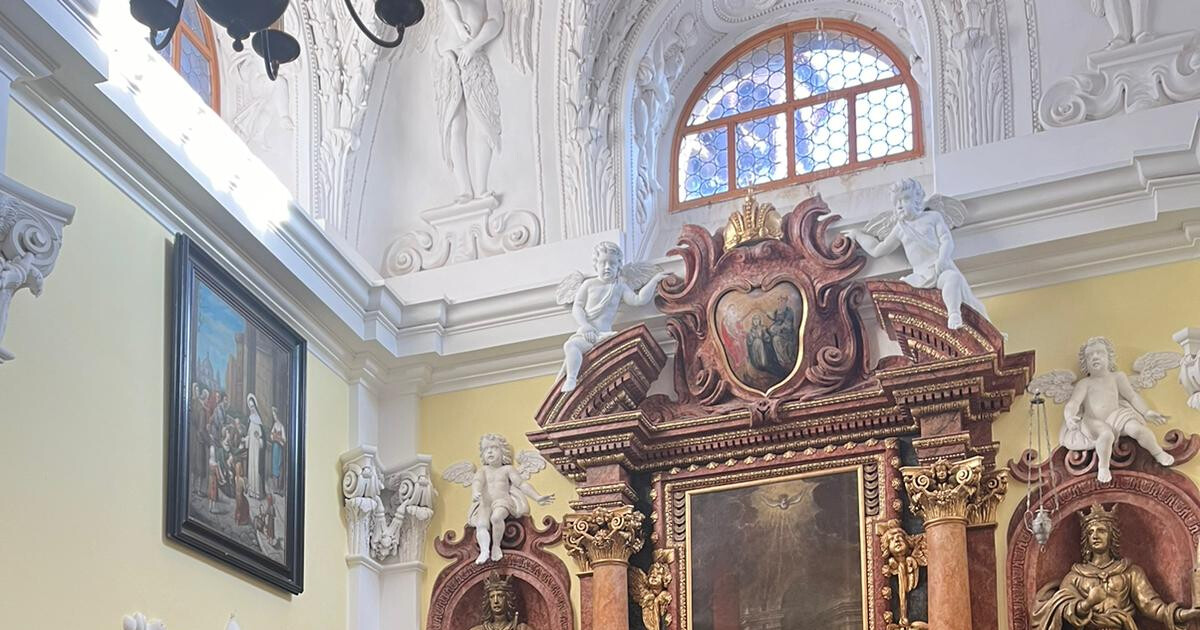
Architecturally, the Chapel is characterized by its rectangular shape with two windows and a ceiling supported by three cross vaults with ribs. The northern side features a barrel vault resting on pilasters, between which an ambulatory and oratory are situated. At the back, there is a brick choir supported by two columns. The entire interior is adorned with frescoes from the second half of the 16th century, attributed to Heinrich Bocksberger, a painter of Salzburg origin. These paintings include grotesques, figures of angels, saints, and allegories of Virtues and Vices, alongside medallions depicting scenes from the lives of Jesus Christ and the Virgin Mary. The main medallion features an image of the Last Judgment.
The chapel's furnishings include a framed altarpiece with two levels, housing a copy of an original Renaissance panel depicting Mary tending a garden by a Saxon master from the early 16th century. The original painting was damaged in a fire at the Gallas Palace in Vienna in 1843. Additionally, there is an image of the Crucifixion by Josef Bergler from 1819 on the altarpiece's predella, and a Gothic woodcut of Saint Barbara on the altar mensa. Four benches from the 16th century are decorated with painted grotesques. In front of the chapel stands a hall with its original staircase leading to the choir.
The Chapel of Saint Barbara has been well-preserved through various restorations, including significant work by Pavel Bergner in 1908 and a comprehensive restoration between 2005 and 2009. Today, it remains accessible to visitors who can appreciate its historical and artistic significance. The chapel's blend of Renaissance architecture and intricate frescoes makes it a valuable cultural monument worth visiting for those interested in the rich history and artistry of Bohemia during this transformative period.
The Chapel of Saint Barbara is not only a remarkable example of Renaissance art and architecture but also a window into the cultural shifts of 16th-century Bohemia. Its preservation as a cultural monument ensures that future generations can continue to explore and appreciate its historical significance. Visitors are invited to experience this unique blend of history, art, and architecture in person, gaining insight into the rich heritage of the region.
Then and now
Drag the slider to compare how the landmark may have looked when it was built with the view today.
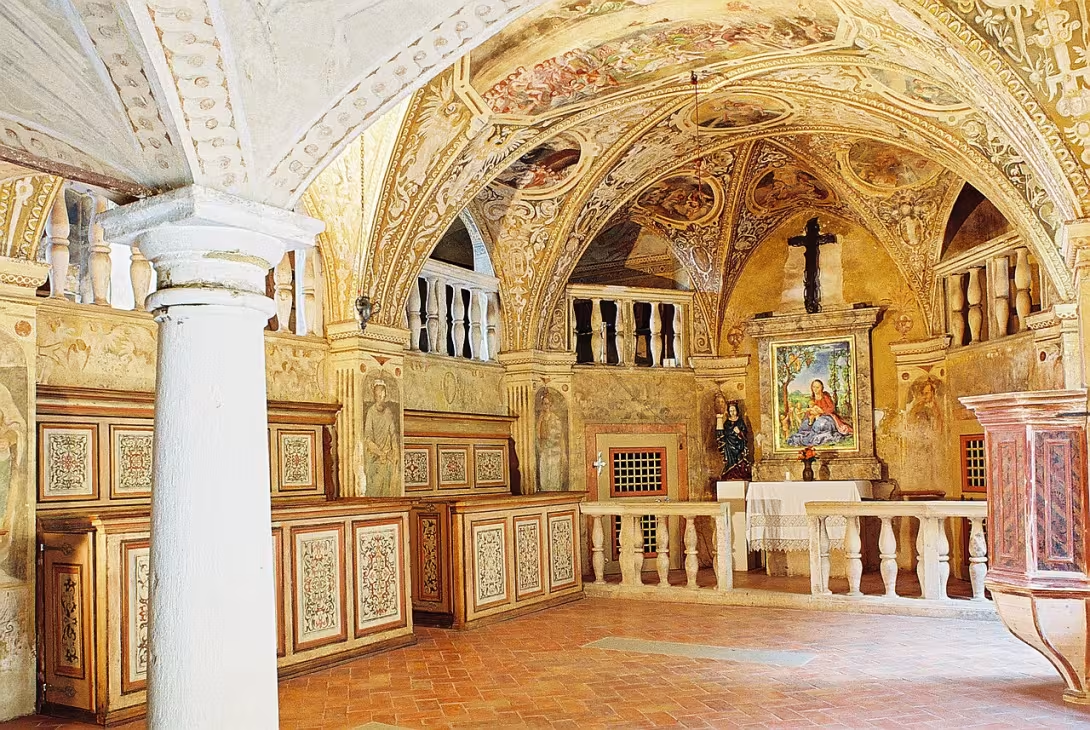

The historical appearance on the left is an AI-generated visualisation and serves as inspiration only.
Historical milestones
- 1387
- The chapel was first documented.
- 1391
- The chapel was again documented.
- 1393
- Further documentation of the chapel occurred.
- 1569
- Jiří Mehl ze Střelic reconstructed the chapel in Renaissance style.
Architectural development
Originally documented as early as the late 14th century, the chapel underwent significant transformation in 1569 when it was redesigned in the Renaissance style by Jiří Mehl ze Střelic. The interior frescoes were originally painted during this period but were later overpainted at the beginning of the 19th century and restored in 1908 by Pavel Bergner from Prague.
Historical events
The chapel was documented in the years 1387, 1391, and 1393.
In 1569, Jiří Mehl ze Střelic undertook its Renaissance reconstruction.
Points of interest
- The Chapel of Saint Barbara's ceiling paintings by Heinrich Bocksberger are notable for their intricate depiction of grotesques and allegorical figures, reflecting the Renaissance fascination with blending art and humanism.
- Despite its rich history dating back to the late 14th century, the chapel underwent a significant transformation in 1569 under Jiří Mehl ze Střelic, marking it as one of the few surviving examples of Renaissance architectural influence within Bohemia's sacred spaces.
- The chapel houses a copy of an original Renaissance panel depicting Mary tending a garden by a Saxon master from the early 16th century. This artwork survived after the original was destroyed in a fire at the Gallas Palace in Vienna, highlighting its historical resilience and cultural value.
- Among the chapel's furnishings is a Gothic woodcut of Saint Barbara on the altar mensa, providing an intriguing contrast between the Renaissance frescoes inside and the older artistic styles represented by this piece.
- The Chapel has undergone multiple restorations to preserve its architectural integrity and artistic features, with significant work done in 1908 by Pavel Bergner and a comprehensive restoration from 2005 to 2009, ensuring its continued accessibility for future generations.
Guide
This guide is narrated by a synthetic voice generated by artificial intelligence.
Show guide text
This text was created by artificial intelligence and has not been editorially reviewed. It may contain inaccuracies.
The Chapel of Saint Barbara is part of the Grabštejn castle and chateau near Chotyně in the Liberec Region. It is a richly decorated sacred space whose present form dates from 1569. For its decoration and elaborate interior furnishings, it ranks among the most significant examples of Renaissance and early Mannerism in Bohemia. Together with the entire castle and chateau, it has been protected as a cultural monument since 1966.
The chapel at Grabštejn is documented as early as 1387, 1391, and 1393. The Renaissance reconstruction was carried out in 1569 by Jiří Mehl of Střelice. The original figural and ornamental paintings were repainted at the beginning of the nineteenth century. In 1908, the paintings were restored by Pavel Bergner from Prague. The chapel's most recent restoration took place between 2005 and 2009.
The chapel has a rectangular floor plan and two rectangular windows. It is vaulted with three cross vaults with ribs. On the north side, prismatic pillars support the vault, and between them runs an upper gallery with an oratory. In the rear section there is a built-in choir loft on two columns. A original staircase from the hall before the chapel leads to it.
The entire interior is covered with wall paintings from the second half of the sixteenth century. According to the latest research, their author is most likely Heinrich Bocksberger, a painter of Salzburg origin. He is also considered to be the author of the famous Small Lenten cloth in nearby Žitava. The paintings depict grotesques, angels, saints, and allegories of Virtues and Vices. On the walls and vaults are medallions with scenes from the life of Jesus Christ and the Virgin Mary. The main medallion depicts the Last Judgment.
The most significant piece of furnishing is the two-story frame altar. It bears a copy of a Renaissance panel painting depicting the Virgin Mary tending to a garden. The original was painted by a Saxon master at the beginning of the sixteenth century and hung in the Gallasburg palace in Vienna. The painting was damaged in a fire in 1843. In the superstructure of the altar is a Crucifixion painting by Josef Bergler from 1819. On the altar table stands a Gothic wooden sculpture of Saint Barbara. The chapel furnishings also include four benches from the sixteenth century, decorated with painted grotesques.
Frequently asked questions
Can the monument be visited?
Religious buildings are usually open mainly during services; at other times a visit is normally arranged with the parish or the operator. We have not verified specific times.
Where is the monument?
Location: Chotyně, Liberecký kraj. The map on this page shows the exact spot.
Why is the monument protected?
It is listed in the Central List of Cultural Monuments of the Czech Republic as a national cultural monument. It is protected as part of a larger listed ensemble.
Businesses nearby
Do you run a restaurant, accommodation, shop, museum, rental, wellness or other visitor service near this monument? Show yourself directly to the people heading to it — this is how they will see you in the app and on the web:
Events nearby


Zdroj akcí: otevřená data měst a obcí ČR (Národní katalog otevřených dat) a kalendář akcí Národního památkového ústavu.
Accommodation nearby
Trips and activities nearby
Guided tours, tickets and activities nearby from GetYourGuide
Affiliate link: if you buy from the partner, we may receive a commission. The price for you does not change.
Search tours and activities →Themed route
Route: Chotyně and its Surroundings
1. Chapel of Saint Barbara (Chotyně) - The main highlight of the route is the beautiful Chapel of Saint Barbara in the center of the village of Chotyně. The chapel is notable for its unique architecture and history. Its construction was completed in 1725 and is dedicated to Saint Barbara, the patron saint of miners and butchers.
2. Mining Museums (Chotyně) - Near the chapel are the mining museums that showcase the history of mining in the region. The museums offer interesting exhibits and informational materials about ore extraction and the history of mining activities in the area.
3. Church of Saint Wenceslas (Chotyně) - Another attraction nearby is the Church of Saint Wenceslas, located in the center of the village. The church is notable for its architecture and offers a peaceful place for rest and relaxation.
4. War Memorial (Chotyně) - Near the church is the war memorial that commemorates the victims of both world wars. The memorial symbolizes respect for the victims and reminds us of the historical events that took place in the region.
5. Town Square (Chotyně) - The final stop on the route is the town square in the center of the village. The square is peaceful and offers a chance to rest and relax.
Seasonal recommendations
Jaro
In the spring season, St. Barbara's chapel is surrounded by lush nature and flowers. The atmosphere is calm and serene, ideal for relaxation. The lighting is natural, with sunlight streaming through the windows to create a pleasant glow. We recommend visiting the chapel in the spring when nature is in full bloom and the chapel is encircled by flowers and trees. The best time to visit is in March or April, when the weather is mild and not too sunny. We suggest bringing a camera to capture beautiful spring scenes.
Summer
In the summer season, St. Barbara's chapel is surrounded by greenery and is ideal for families with children. The atmosphere is relaxed and pleasant, perfect for unwinding. The lighting is natural, with sunlight streaming through the windows to create a warm glow. We recommend visiting the chapel during the summer months when the weather is sunny and warm. The best time to visit is in June or July, when it's at its hottest and most agreeable. We suggest bringing sunscreen so visitors can protect their faces from the sun.
Autumn
In the autumn season, St. Barbara's chapel is surrounded by colorful foliage and is ideal for nature lovers. The atmosphere is calm and serene, perfect for relaxation. The lighting is natural, with sunlight streaming through the windows to create a warm glow. We recommend visiting the chapel during the autumn months when the weather is cool and the sunlight is pleasant. The best time to visit is in September or October, when the weather is mild and not too sunny. We suggest bringing a camera so visitors can capture beautiful autumn scenes.
Winter
In the winter season, St. Barbara's chapel is surrounded by snow and is ideal for lovers of winter landscapes. The atmosphere is calm and serene, perfect for relaxation. The lighting is artificial, as sunlight is scarce in winter. We recommend visiting the chapel during the winter months when the weather is cold and snowy. The best time to visit is in December or January, when it's at its coldest and most agreeable. We suggest bringing warm clothing so visitors can comfortably stay in the chapel.
Visualizations and artistic views


The visualisations are generated by artificial intelligence and serve as inspiration.
Photos from the area
Real photos taken near the monument


Zdroj a licence jsou uvedeny u každého snímku.
Atmosphere of the place
This atmospheric visualisation of the place and period was generated by artificial intelligence. It is not real footage of the location.
Tips from visitors
No tips yet. Be the first!
Log in and add your tip.
Sources and literature
Photos: Jan Čížek; Original uploader was Grabstejn at cs.wikipedia / Public domain — Wikimedia Commons. The author and licence also appear when you hover over the image.
Faktickým podkladem tohoto textu byl článek na Wikipedii, jehož autory jsou přispěvatelé Wikipedie. Článek je dostupný pod licencí CC BY-SA 4.0.
Location on the map
Příběhy a pověsti
Legendy, pověsti a příběhy spjaté s touto památkou
Fotografie návštěvníků
Zatím žádné fotografie. Buďte první, kdo přidá fotografii z návštěvy!
Log in a přidejte svou fotografii nebo hodnoťte.
Za ověřenou návštěvu v aplikaci získáte víc bodů — poznáme podle GPS, že jste na místě.
Reviews and comments