






Kaple svaté Máří Magdalény (Chelčice) Chapel
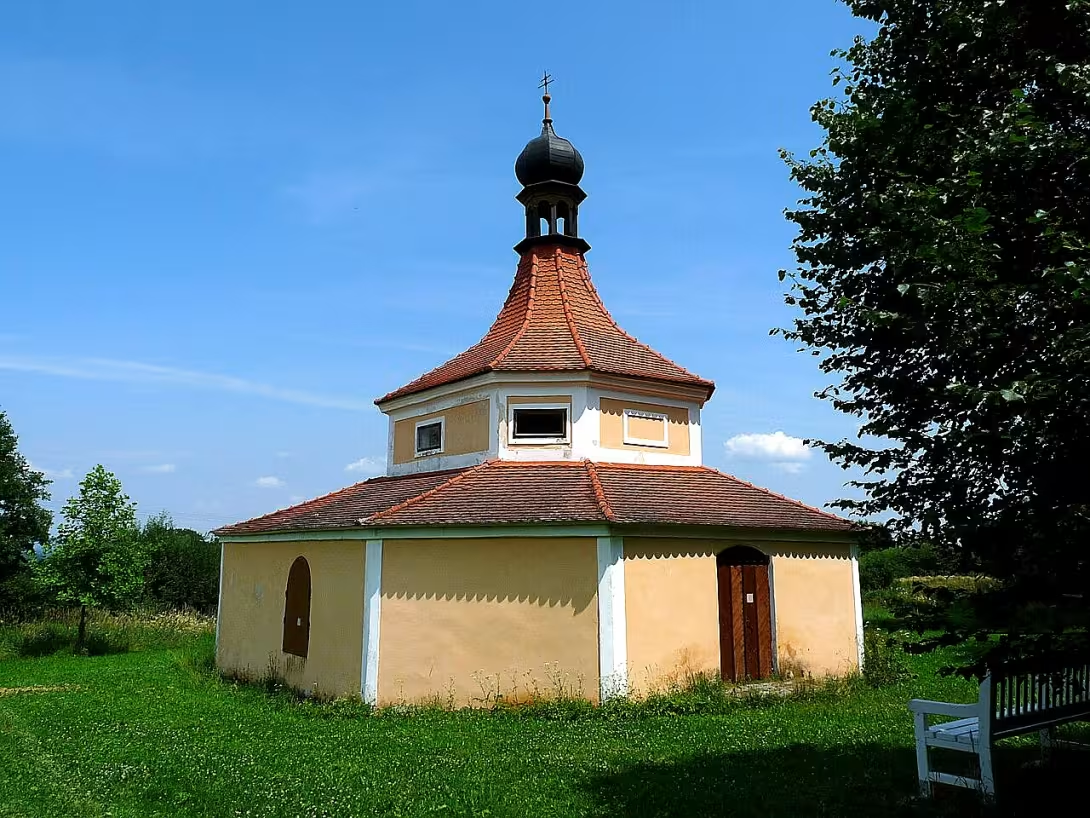
The chapel of St. Margaret of the Virgin in Chelčice is a recluse Baroque rotunda built between 1660 and 1663 on a healing spring with renowned miraculous properties since the mid-17th century. This chapel is located near Chelsea in the Jihočeský kraj region as a cultural monument of the Czech Republic. His historical significance stems from his connection with the mother of Karl Albert Buquoy, Maria Magdalena de Biglia, and recognition of the papal story as a Roman Catholic sanctuary.
The origin of the chapel is deeply rooted in local legend and religious zeal. In the mid-17th century, R. T. Bauer's wife allegedly found a miraculous recovery from an incurable illness through spring water at Chelsea's. This event led to the construction of the chapel by Karel Albert Buquoy between 1660 and 1663. The papal story recognized its religious importance in 1673 and granted it a license to perform services.
The chapel is an early Baroque building characterized by an irregular six-sided plan with a six-sided roof and tower. Its rustic design suggests that it was created by a local builder that reflects the vertical style of the period. The building has two windows in the walls, a semi-circular arch in a stone frame and a rectangular entrance framed by an iron door. The hexagonal lantern jumps over the roof and provides illumination through three rectangular windows. Despite its historical significance, the interior remains unrestored.
Throughout her history, the chapel experienced various riches. During World War II she suffered neglect, but in 1974 she underwent a partial reconstruction and after 2000 a complete reconstruction of the roof was carried out. The importance of the site is further enhanced by its integration into the landscape protection area Libějovicko - Lomecko. Near, the former farmhouse once converted into a spa now hosts a garden inn.
Today the Chapel of Saint Margaret of the Virgin remains an accessible and interesting place for visitors. It is located near Chelčic and Libějovice, accessible via the blue- marked tourist path Julius Zeyer. The historical context of the chapel in the middle of the 17th century reflects the Baroque architectural style and Catholic revival after a 30-year war. His lasting legacy as a place of healing and religious importance continues to attract interest.
Visitors are invited to explore this remarkable monument, where history and legend intersect in the middle of the quiet landscape of Jihočeský kraj. The chapel offers not only a view of the past but also serves as proof of the lasting strength of faith and communities in shaping cultural heritage.
Then and now
Drag the slider to compare how the landmark may have looked when it was built with the view today.
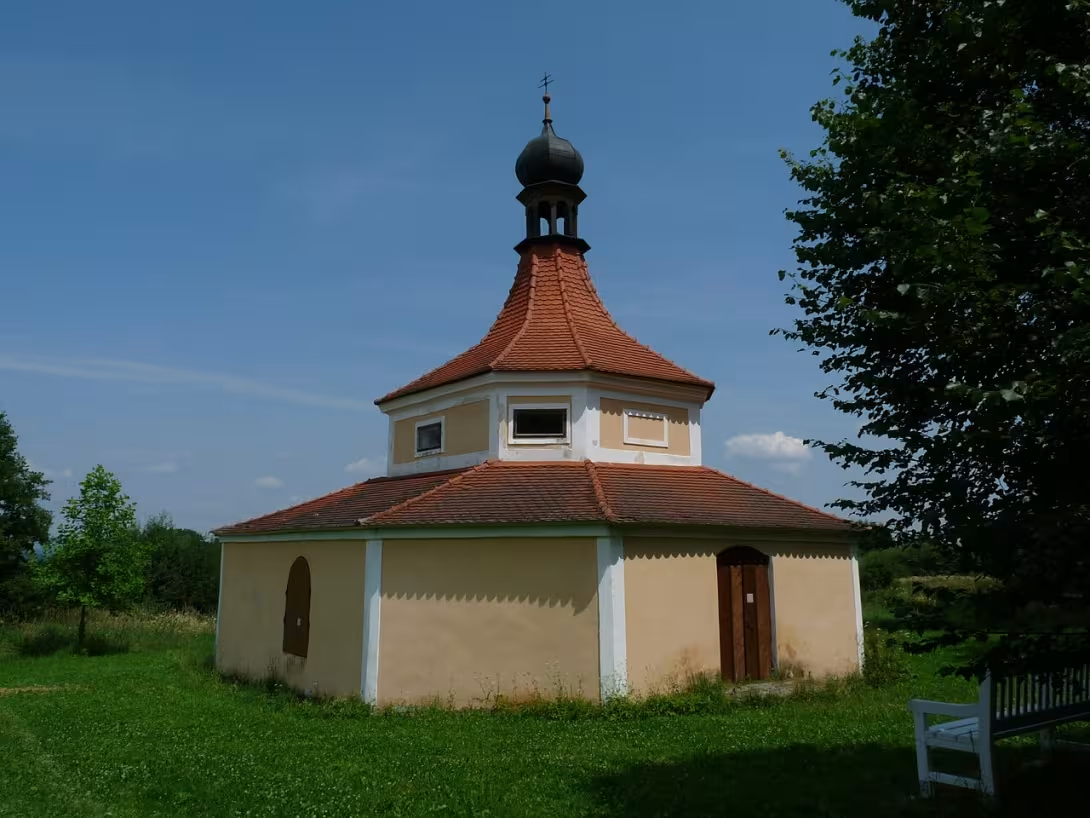
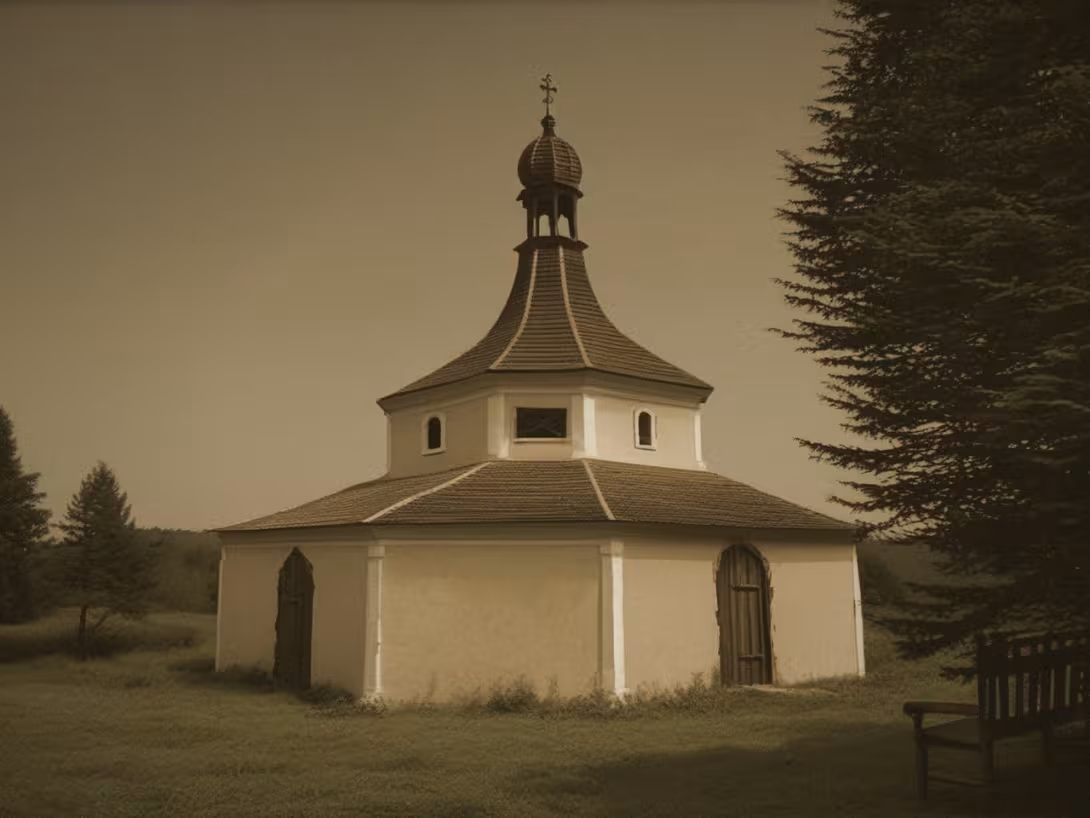
The historical appearance on the left is an AI-generated visualisation and serves as inspiration only.
Historical milestones
- 1660-63
- Chapel construction initiated by Karl Albert Buquoy.
- 1673
- The Papal Story has licensed religious services in the chapel.
Architectural development
The chapel of St. Margaret of the Virgin was built in the early Baroque period and has an irregular hexagonal plan with a hexagonal roof and tower. Rustic architecture suggests it was built by a local craftsman. Despite its historical significance, the interior remains unrestored.
Historical events
- 1656-1661
- The woman R. T. Bauer supposedly cured with spring water, which leads to the construction of the chapel.
- 1673
- The papal story understood the chapel as a Roman Catholic sanctuary and granted her a license for religious service.
Points of interest
- The building of the chapel was inspired by a local legend, involving the woman R. T. Bauer, who allegedly cured of an incurable illness by water from nearby spring, which highlighted the intermittent folklore and faith in its history.
- Despite the papal story being recognized as a Roman Catholic sanctuary in 1673, the inside of the chapel remains unrestored, retains its original rustic charm and offers visitors a unique view of its historical authenticity.
- The chapel has an unusual architectural design with an irregular six-sided plan and a six-sided roof that reflects an early Baroque style and suggests it was created by a local builder, not a renowned architect.
- During World War II, the chapel was neglected, but since then it underwent a partial renewal in 1974 and a complete reconstruction of the roof after 2000, evidencing its resilience and continued efforts to preserve it.
- The integration of the site into the landscape protection area Libejovicko - Lomecko underlines its ecological and cultural importance, thus increasing its attractiveness as historical monuments and natural attraction.
Guide
This guide is narrated by a synthetic voice generated by artificial intelligence.
Show guide text
This text was created by artificial intelligence and has not been editorially reviewed. It may contain inaccuracies.
Welcome to the peaceful and lonely Chapel of Saint Margaret of the Virgin, nestled in a picturesque setting near Chelsea in the Jihočeský kraj region. As you stand here, take a moment to absorb the calm surrounding this baroque rotunda, built between 1660 and 1663. His presence is both an invitation and evidence of a rich historical tapestry.
The origin of the chapel is deeply intertwined with local legend and devotion. It was initiated by Karl Albert Buquoy, a remarkable figure of time who dedicated this sacred space to honor his mother, Marie Magdalena de Biglia. The decision to build here was inspired not only by family ties, but also by the proximity of the chapel to a healing spring. This spring, he believed from the mid-17th century to possess miraculous qualities, drawing on those who seek comfort and cure.
As you look at the chapel, notice its harmonious baroque architecture, which emits elegance and simplicity. The Rotunda stands as proof of an era where faith and folklore were closely linked. While specific architectural details remain unrecorded, the overall design calls for contemplation of its spiritual purpose and historical significance.
The story behind this chapel is further enriched by the legend of the woman R. T. Bauer, who allegedly recovered from an incurable illness in the waters of this spring. This story highlights the deep connection between folklore and faith that shaped the history of this place.
In 1673, an important milestone was reached when the papal story gave permission to religious services in the chapel and called it a spiritual sanctuary. Despite the recognition of the Roman Catholic sanctuary, the chapel remains a cultural monument of the Czech Republic and invites visitors to explore historical and architectural nuances.
As you continue your visit, let yourself be drawn into the stories and mysteries that hold this place. Every step around the chapel offers the opportunity to connect with the past and think about the lasting strength of faith and legend.
We invite you to further explore the surroundings and immerse yourself in the rich history and natural beauty that Chelčice offers. Thank you for visiting the Chapel of Saint Margaret of the Virgin, the place where history, architecture and spirituality converge. Safe travels as you continue your journey through this charming area.
Tips for visitors
Best time to visit The chapel of St. Margaret of the Virgin is at the end of the spring or early autumn when the weather is mild and pleasant for hiking along the Julia Zeyera trail. During these months, the natural environment is fresh green, making it an ideal environment for a quiet visit. In addition, a visit outside the top tourist season can provide a calmer experience.
Parking near Chelčice is available directly in the village or along tourist paths leading to the chapel. Public transport options include buses that connect nearby cities, however, specific plans should be checked online before your travel. The chapel is accessible through the blue-cut trail from Chelsea, which is well maintained and suitable for most visitors.
When visiting the Chapel of Saint Margaret of the Virgin, it is advisable to bring comfortable walking shoes as you will probably walk on uneven terrain along the hiking trail. The hat, sunscreen and water is also recommended due to the outdoor nature of the visit. For those interested in further exploration, a map or GPS device may be useful for route navigation.
For photographic enthusiasts, the chapel offers a picturesque view especially during the golden hour - early morning or late afternoon - when the light is soft and warm. Natural springs near the chapel provide other picturesque spots ideal for catching reflections and lively landscapes. Keep in mind other visitors when taking pictures to make sure that all experiences remain pleasant.
Within a 30-minute walk from the chapel, you can see the historic trails leading to other pilgrimage places nearby. These trails offer a view of the rich history of the region and natural beauty. For families with children, these paths are generally safe and provide an opportunity for educational exploration of local traditions and nature.
Businesses nearby
Do you run a restaurant, accommodation, shop, museum, rental, wellness or other visitor service near this monument? Show yourself directly to the people heading to it — this is how they will see you in the app and on the web:
Nearby
The chapel is located near Chelčic and Libějovice and is accessible through the blue-green tourist trail known as the Julia Zeyera Trail. The area includes natural springs and historical trails leading to other pilgrimage sites.
Accommodation nearby
Trips and activities nearby
Guided tours, tickets and activities nearby from GetYourGuide
Affiliate link: if you buy from the partner, we may receive a commission. The price for you does not change.
Search tours and activities →Themed route
Thematic walking tour: St. Margaret's Chapel of the Virgin and its surroundings
1. Chapel of Saint Margaret of the Virgin (Chelčice) - Type: Historical religious pages - Why Visit: This charming chapel, dedicated to Saint Mary Magdalene, is an important religious place nestled in a quiet village Chelčice. Its historical architecture and spiritual environment make it an ideal starting point for exploring the rich cultural heritage of the area.
2. Natural springs - Type: Natural functions - Why Visit: As you continue along the blue tourist path known as Julia Zeyera's trail, you will encounter picturesque natural springs. These refreshing water resources offer a quiet place to reflect and appreciate the beauty of nature in the midst of your journey.
3. Historical trips to the pilgrimage - Type: Historical trail - Why Visit: Historical paths leading from the chapel are rooted in tradition and lead visitors through picturesque landscapes towards other pilgrimage places. The walk through these roads provides a deeper connection to the past of the region and offers a view of its spiritual importance.
This thematic walking tour invites you to immerse yourself in the natural beauty and historical depth of Chelčice and its surroundings and offer a peaceful but rewarding experience.
Seasonal recommendations
Spring: In the spring season, the Chapel of Saint Mary Magdalene in Chelsea is revived by the warm rays of the sun, which are intended for the architecture and greenery of the greenness of the surrounding region. This season is ideal for determining the quantity of permitted and excellent quantity of authorised to capture the beauty of the monument. The openness of fields and trees offers a suitable location for photography without precise summer sun rays. In spring, I would dress in layered style to deal with the early cold temperatures and the warm, slow sun. This Regulation shall enter into force on the twentieth day following that of its publication in the Official Journal of the European Union.
Summer: Summer is the Chapel of Saint Mary Magdalene does not create new because of warm days and by-sunny towers that go into tourists to productive historical memories. The atmosphere is full of life with the current surrounding landscape, which provides ideal help for a normal project around the chapel. Despite the atrocities of this time, the baits can be very busy, especially on the middle of the day, so it is recommended to inject the wound or later in the afternoon hours for a better experience. They should be dressed in light and potential siege, transported to the sun with the edge neglected and additional supply water. It is also interesting to be able to participate in ordinary shareholders or shareholders who may be written in circumstances.
Autumn: In the autumn possible acquisition of the Chapel of Saint Mary Magdalene, one-way accreditation with continuous leaves and moderate temperatures, which will express its own opinion. It is important that it is not in the spring proceedings, overlapping to the romantic and peaceful position that is left on the list. They can meet with smaller concepts of other tourists in conjunction with the summer shield period, which allows for intimate folding pamas. Clothes should be used for low temperatures and similarity of rainy days; travel over a handkerchief or a plasterfish to protect yourself from sudden weather. In addition, in this case a specific action related to autumn traditions or to the cultures of events which transmit further information for identification may be encouraged.
Winter: Winter in Chelsea recalculates the calm and quiet atmosphere around the Chapel of Saint Mary Magdalene. Hot suns can only be designed for production, which means that the appropriate photological properties, while the cold calf recalculates and the quiet atmosphere. The square can be achieved to have the same value as possible, without further data. They should be subjected to a control charge, including a hat and gloves, in order to protect themselves from cold, and consider the wound or later by day, as opening times may be lower than winter conditions. While specific requirements are applicable in this case, it is necessary to ensure that those requirements are met.
Visualizations and artistic views


The visualisations are generated by artificial intelligence and serve as inspiration.
Photos from the area
Real photos taken near the monument

Zdroj a licence jsou uvedeny u každého snímku.
Tips from visitors
No tips yet. Be the first!
Log in and add your tip.
Sources and literature
Photos: Dana Tvrda / CC BY-SA 3.0 — Wikimedia Commons. The author and licence also appear when you hover over the image.
Faktickým podkladem tohoto textu byl článek na Wikipedii, jehož autory jsou přispěvatelé Wikipedie. Článek je dostupný pod licencí CC BY-SA 4.0.
Location on the map

Příběhy a pověsti
Legendy, pověsti a příběhy spjaté s touto památkou
Fotografie návštěvníků
Zatím žádné fotografie. Buďte první, kdo přidá fotografii z návštěvy!
Log in a přidejte svou fotografii nebo hodnoťte.
Za ověřenou návštěvu v aplikaci získáte víc bodů — poznáme podle GPS, že jste na místě.
Reviews and comments